At the Euronaval exhibition, General Atomics presented an unusual concept: an F/A-18E/F Super Hornet launches a large missile carrying seven small Vektrex glide munitions. The company did not officially identify the missile, but its shape closely resembles the AIM-174B Gunslinger, the air-launched version of the ship-based SM-6 interceptor.
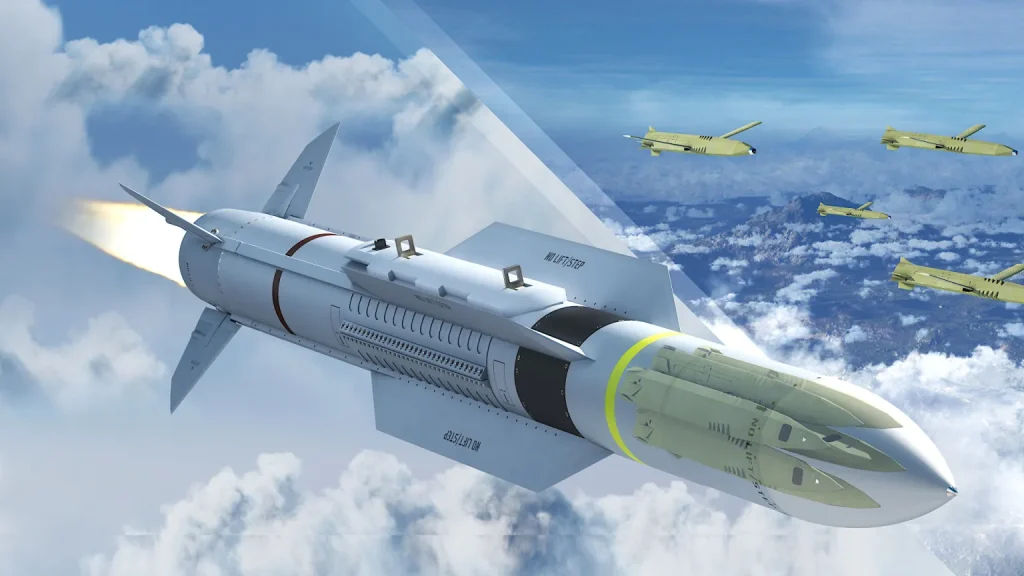
The standard AIM-174B is designed to engage aircraft at very long ranges. It is approximately five meters long, weighs around 830 kilograms, and uses an active radar seeker. In the proposed configuration, the seeker and warhead would apparently be replaced by a compartment containing seven Vektrex projectiles. The missile would then serve as a high-speed booster and delivery vehicle, carrying the munitions to high altitude before releasing them to deploy their wings and independently approach separate targets.
Vektrex was originally developed as a guided 155mm artillery projectile. After leaving the barrel, it separates from its sabot, deploys aerodynamic surfaces, and transitions into gliding flight. General Atomics claims a range of approximately 120 kilometers when fired from an artillery piece, together with the ability to engage moving targets and maintain accuracy in GPS-degraded environments. Its modular payload could also accommodate reconnaissance sensors or electronic warfare equipment instead of a conventional warhead.
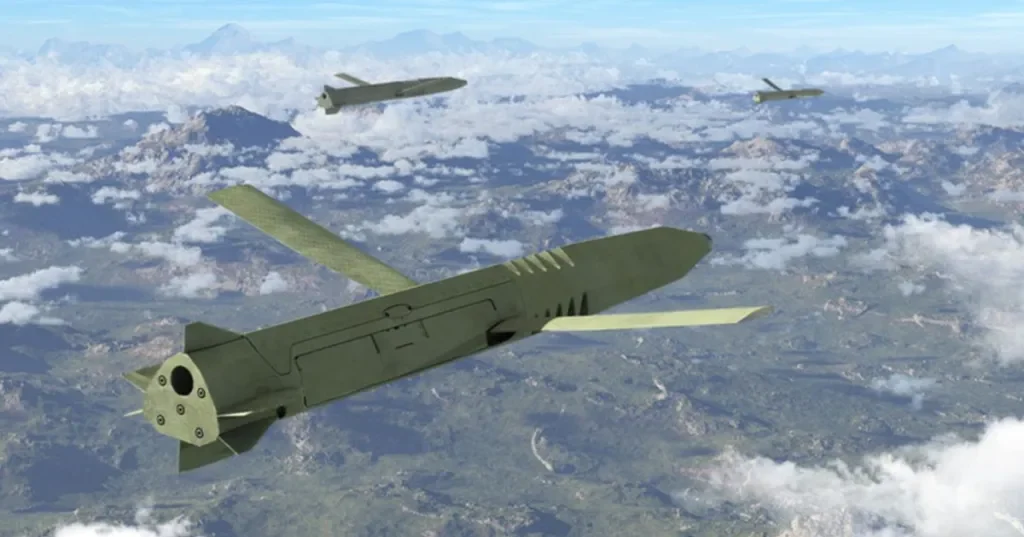
Air launch would significantly expand the projectile’s capabilities. An F/A-18 could release the carrier missile without entering the target area’s air defense zone, while each missile would deliver seven guided projectiles. They could simultaneously attack radars, missile launchers, ships, or other dispersed targets. In theory, a Super Hornet carrying four such missiles could deploy as many as 28 independently guided munitions.
However, the General Atomics image remains only a concept. The system’s range, the Vektrex payload weight, the separation mechanism, and the cost of the modified carrier missile are unknown. It has not even been confirmed that the proposal would use a production AIM-174B; the company may simply have depicted a carrier with similar dimensions. Claims of a combined range exceeding 600 kilometers therefore remain speculative rather than an officially stated performance figure.
Conclusion: The concept is not simply about extending range. It turns a single heavy missile into a delivery vehicle for a small swarm that can separate near the target and attack multiple objectives. If the proposal reaches flight testing, the AIM-174B could gain an entirely new role — shifting from a long-range aircraft killer to an airborne carrier for massed stand-off strikes.
Sources: TWZ, Naval News, US Navy