An Old Howitzer Turned Into a 203mm Mortar: Why Serbia Wants a Weapon Firing 100kg Projectiles

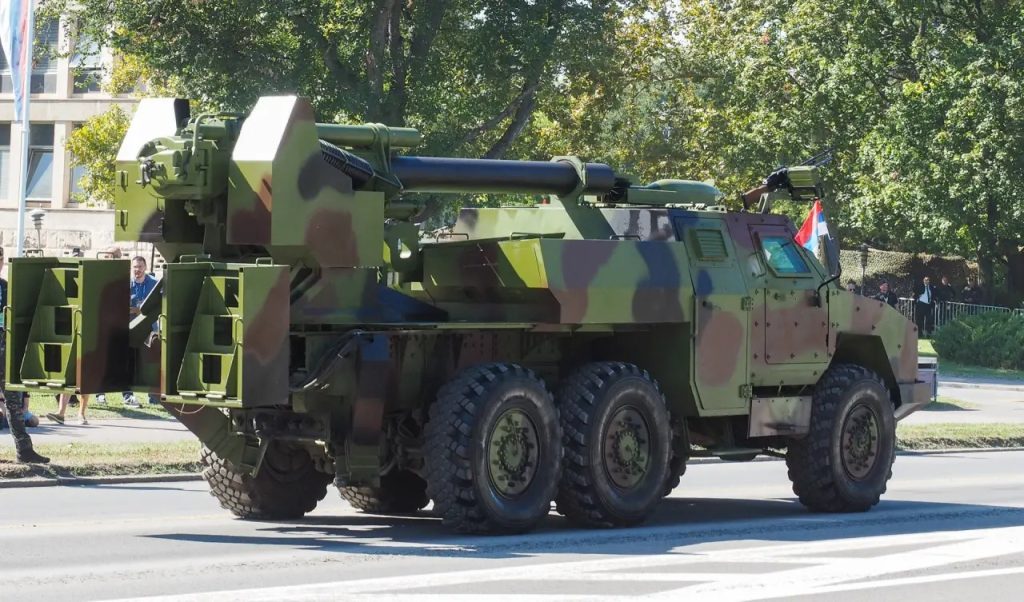
Against a backdrop of long-range howitzers, precision-guided ammunition, and strike drones, Serbia’s new artillery system looks almost like a return to the mid-20th century. The TSMB M-25 is designed to engage targets at ranges of only 6–12 kilometres, but each of its 203mm projectiles weighs approximately 100 kilograms and carries up to 27 kilograms of explosive material.
Serbia is effectively trading range for the destructive power of a single impact. Where a conventional 155mm howitzer might require several rounds, the M-25 is intended to fire one enormous projectile, fold away its weapon, and immediately leave the position. The result is an unusual combination of an old howitzer design, a mortar-like trajectory, and a modern wheeled platform.
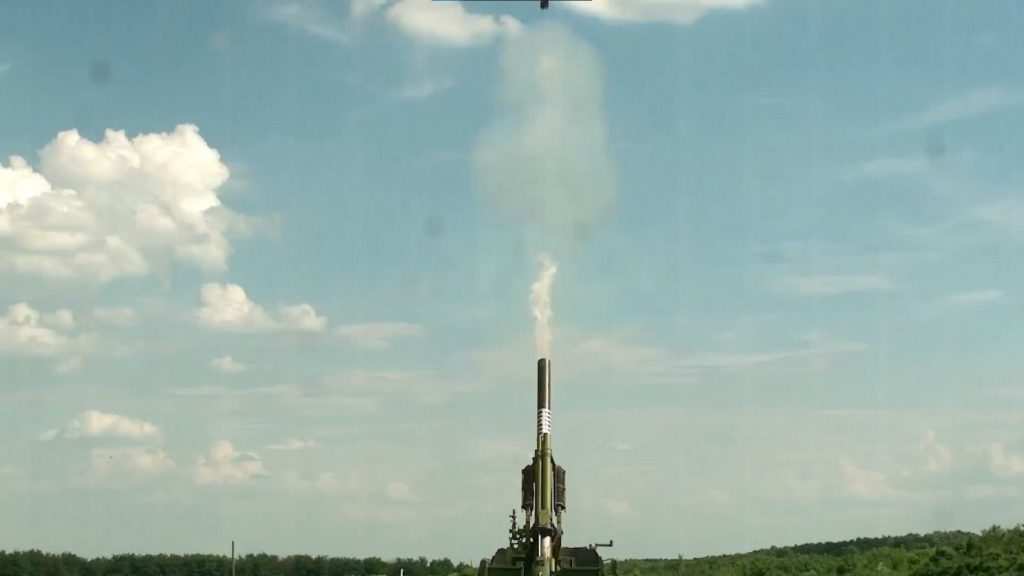
The first images of the system appeared at the Partner 2025 defence exhibition in Belgrade. In October 2026, the Serbian Ministry of Defence released footage of it firing, confirming that the project had reached at least the field-testing stage. However, the results of those trials, the rate of fire actually achieved, and the M-25’s readiness for serial production remain undisclosed.
Inspired by Ukraine or Simply a Coincidence?
The original Defense Express article links the appearance of the Serbian system to the use of 240mm M-240 mortars by Ukrainian units in the conflict zone. The logic is understandable: recent combat experience has once again demonstrated that a heavy projectile descending almost vertically can remain an effective weapon against fortified positions.
There is, however, no evidence of a direct connection between the two projects. Neither the Serbian Ministry of Defence nor the Military Technical Institute has stated that the M-25 was developed in response to the use of the M-240. Institute representatives have instead explained that the system originated from the Serbian military’s own requirements: the armed forces wanted a weapon with a more powerful projectile and a steep trajectory capable of striking targets behind hills, buildings, and other obstacles.
The use of heavy mortars in the conflict zone may have confirmed the continued relevance of the concept, but it cannot currently be described as the direct reason for the M-25’s development. The Serbian weapon has its own technical rationale and differs considerably from the Soviet 240mm M-240.
A Howitzer That Wanted to Become a Mortar
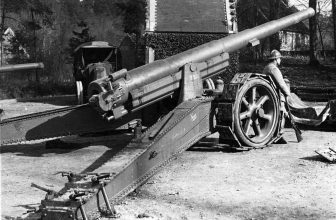
The M-25 is based on technical solutions from the 155mm M-65 howitzer, the Yugoslav version of the American M114, a design dating back to the 1940s. Serbian engineers retained elements such as the recoil mechanism but installed a new 203mm, 24-calibre barrel and an automated loading system.
The resulting weapon is difficult to classify as a conventional mortar. It has a substantial recoil system, digital fire control, and many characteristics of a standard howitzer, but fires along a high-arching trajectory at elevations of up to 75 degrees. The Serbian Ministry of Defence therefore describes it as a “heavy self-propelled mortar,” while some accounts use the more accurate term “gun-mortar.”
A mechanised device moves the massive projectile into the loading position. The weapon must return to a specific orientation before the 100-kilogram round can be loaded through the muzzle. The stated rate of fire is up to three rounds per minute, although there is no confirmation that this performance has been demonstrated during trials.
Horizontal traverse is limited to approximately 47 degrees. To engage a target located significantly farther to either side, the crew would have to reposition the entire vehicle. The steep trajectory, however, allows the projectile to pass over terrain obstacles and strike the roof of a fortification, which is usually less heavily protected than its frontal section.
One Hundred Kilograms for a Single Hit

The standard 203mm projectile is approximately 1.75 metres long and has a muzzle velocity of around 400 metres per second. With a total weight of roughly 100 kilograms, it carries about 27 kilograms of explosive material. The manufacturer claims a continuous destruction radius of up to 75 metres, although the actual effect would depend on the fuze, soil, terrain, and type of target.
A dedicated ammunition family is being developed for the M-25. It is expected to include high-explosive and concrete-piercing projectiles intended to destroy shelters and fortified structures. The Serbian Ministry of Defence has also mentioned thermobaric explosive compositions, rocket-assisted ammunition for extended range, and the possible integration of a Precision Guidance Kit, or PGK.
A guided projectile could make the concept genuinely interesting. If a 100-kilogram round can be directed accurately against a particular fortification, the need for a high rate of fire and large ammunition expenditure is reduced. The weapon could fire one or two rounds and leave its position before counterfire begins.
Without course correction, the M-25 becomes a more questionable proposition. When firing unguided ammunition, accuracy would depend on the quality of the projectiles, weather data, target coordinates, and crew training. Several rounds might be needed to strike a relatively small target, while every additional shot increases the time the vehicle remains exposed.
A Giant Mortar on an Old Truck
The entire weapon is mounted on a three-axle FAP 2026 all-terrain chassis with a 6×6 configuration. This truck was originally produced for the Yugoslav People’s Army, but its payload capacity and cross-country mobility made it suitable for the new project. The complete system weighs approximately 19 tonnes and has a four-person crew housed in a protected cabin.
The M-25 is equipped with inertial navigation, a ballistic computer, digital communications, and a separate gunner’s computer. After receiving target coordinates, the vehicle should theoretically be able to stop, determine its own position, calculate firing data, and open fire without lengthy preparation.
On roads, the chassis can reportedly reach speeds of up to 80 km/h. This mobility is intended to compensate for the system’s primary weakness: its limited range. With a maximum reach of only 12–12.5 kilometres, the M-25 must operate relatively close to the line of contact, where it could be detected by reconnaissance drones, acoustic sensors, and counter-battery radars.
The entire concept therefore depends on shoot-and-scoot tactics. The power of each projectile is intended to reduce the number of rounds required, while the wheeled platform should minimise the time needed to leave the firing position. The Serbian Ministry of Defence has not disclosed how quickly the M-25 can transition from travelling to firing configuration and back again.
Why Build a Giant Mortar With a Range of Only 12 Kilometres?
In terms of range, the M-25 is inferior to almost every modern 155mm self-propelled howitzer. Conventional systems of that calibre can engage targets at 30–40 kilometres, while rocket-assisted and specialised projectiles can travel considerably farther. The Serbian mortar would be unable to compete on equal terms in a conventional long-range artillery engagement.
Its intended role is much narrower: destroying bunkers, buildings, mountain positions, field fortifications, and other targets where the power of a single impact matters more than range. The steep trajectory is particularly useful in mountainous terrain and urban areas, where low-trajectory fire can be blocked by natural or artificial obstacles.
In this respect, the M-25 occupies a position between a conventional howitzer and a more expensive guided missile system. Its 203mm projectile should be cheaper than a missile while delivering a comparably heavy explosive payload. A customer could gain a specialised weapon for destroying fortifications without maintaining combat aircraft or purchasing a full-scale missile complex.
This niche may interest countries with limited defence budgets, especially if Serbia offers the M-25 together with ammunition, fire-control equipment, and reconnaissance drones. Serbia’s defence industry already has experience exporting artillery and multiple-launch rocket systems, so the project may be intended for foreign customers as well as the domestic armed forces.
The Main Problem Does Not Weigh 100 Kilograms
The enormous projectile is both the weapon’s principal advantage and a source of difficulties. The M-25 will require a separate logistics system, dedicated ammunition vehicles, and equipment for handling its rounds. The vehicle’s onboard ammunition capacity has not been disclosed, but the size of the projectiles means it is unlikely to be large.
The unusual calibre also creates dependence on a single supplier. Unlike widely available 155mm ammunition, M-25 projectiles cannot be purchased from numerous manufacturers. Any customer would have to obtain the entire ammunition package from Serbia and maintain a separate production, supply, and repair chain for a relatively small number of weapons.
The guided projectile remains another uncertainty. The Ministry of Defence speaks of possible PGK integration, but there is a substantial difference between being able to fit a guidance kit and possessing a completed, serially produced precision round. Without one, the advertised concept of “one shot, one target” may remain largely a promotional claim.
For now, the TSMB M-25 should be regarded as an experimental system rather than a production-ready weapon. Serbia has demonstrated a functioning prototype and released footage of initial firing trials, but it has not announced a contract, the beginning of deliveries, or formal acceptance into service. It is not even clear whether the Serbian Armed Forces will become the first customer or whether the system will be offered directly to foreign buyers.
Nevertheless, the M-25 should not be dismissed as a pointless return to the artillery of the past. Serbian engineers are attempting to solve a thoroughly modern problem: delivering a large quantity of explosive material onto a fortified target, doing so more cheaply than with a missile, and leaving before return fire arrives. Whether they can transform an old howitzer design into a viable “sniper mortar” will depend less on the enormous barrel than on the accuracy of its ammunition and the speed of the complete system.