Armstrong Whitworth Argosy: How Britain Invented the Airplane of the Future but Failed to Produce It on a Mass Scale

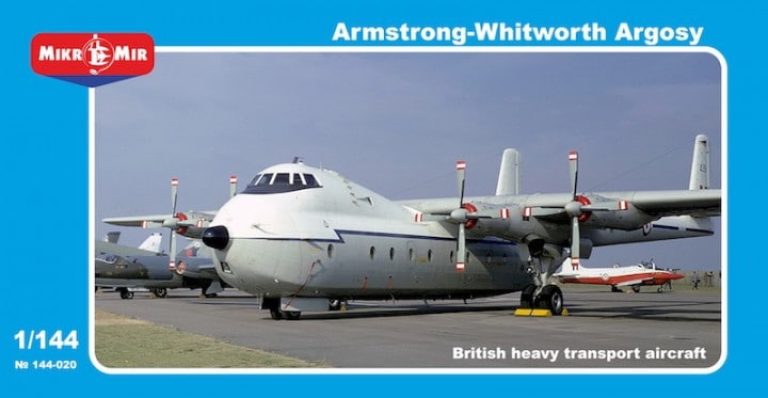
The Armstrong Whitworth Argosy (often referred to simply as the Argosy) is a British medium-sized transport aircraft developed in the late 1940s and early 1950s as a versatile heavy cargo aircraft. The Argosy became one of the most notable British designs of the postwar period, combining an original layout, a large payload capacity, and the ability to perform both civilian and military missions, including cargo transport, passenger transport, and troop airdrops.
Origin and Purpose
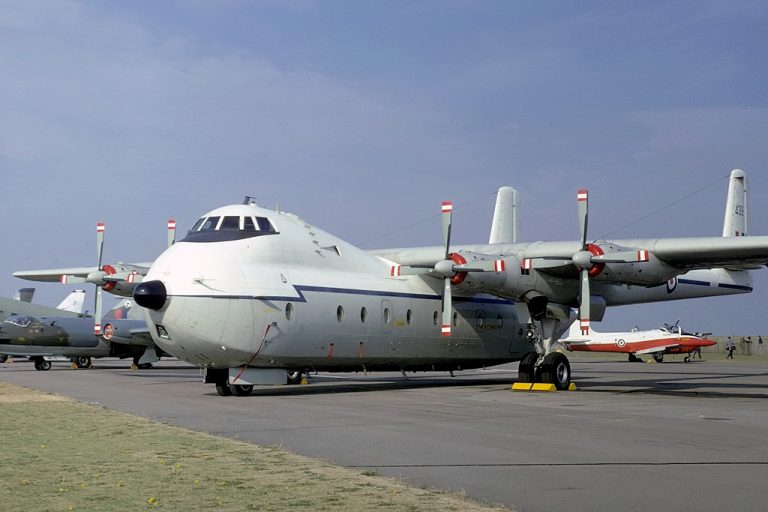
The aircraft was developed by Armstrong Whitworth Aircraft, a subsidiary of the major British aerospace conglomerate Vickers-Armstrongs. The Argosy program was launched in the early years following World War II, when the United Kingdom and its allies needed modern transport aircraft for global operations, support for colonial territories, and the deployment of troops to remote regions.
The Argosy was originally designed as a purely military cargo aircraft capable not only of transporting heavy loads over long distances, but also of conducting parachute drop operations, air evacuations, and a range of support missions. Later, civilian variants were developed based on this design and operated by airlines around the world.
Design and Features

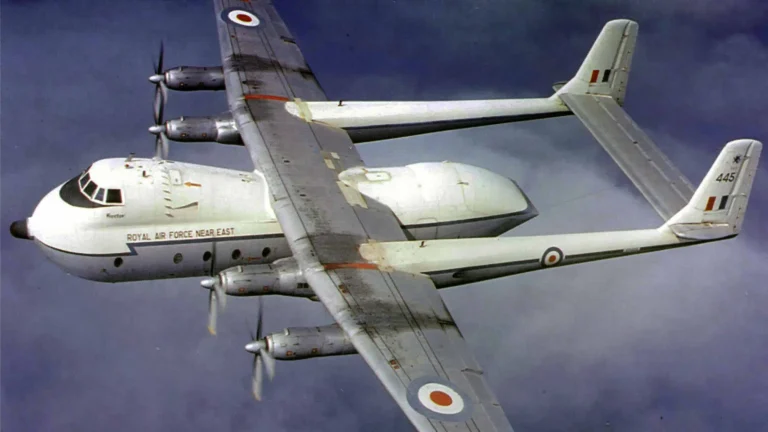
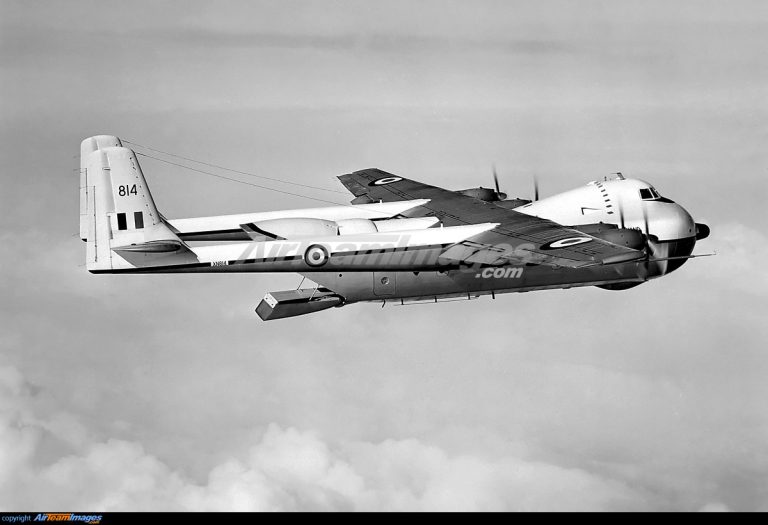
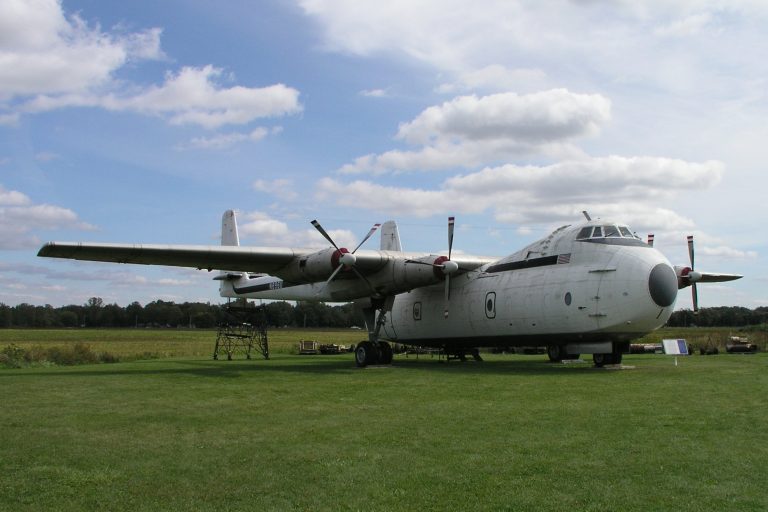
One of the Argosy’s distinctive features was its twin-beam layout with a high wing and an extended cargo compartment. This design provided excellent stability, wide door openings, and convenient loading and unloading from either side.
Key design features:
- A high-mounted wing mounted on struts, allowing for the installation of a large hatch for freight vehicles.
- A biplane-beam (twin-tail) configuration that improved stability at low speeds and made handling easier at small airfields.
- A spacious cargo compartment with wide doors, which made the Argosy ideal for large loads, containers, military equipment, and large shipments of goods.
- The option to install ramps for the automatic unloading of oversized cargo.
This configuration allowed the Argosy to operate on unpaved and short runways, which was particularly important for aviation in areas with inadequate infrastructure.
Civilian and military versions
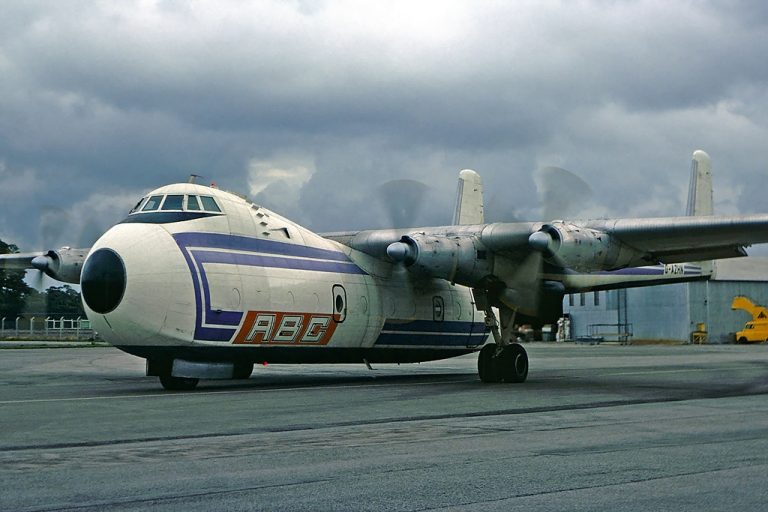
Civilian versions
Civilian versions of the Argosy were built to order for airlines, which used the aircraft as an air freighter to transport commercial cargo on intercontinental and regional routes. The aircraft was distinguished by its large payload capacity, reliability on long-haul flights, and the ability to use elevators and loading mechanisms directly on board.
Military Variants
The military versions were equipped with additional systems for:
- parachute airdrops of cargo and personnel,
- mitigating interference during landing in severe weather conditions,
- conducting medical evacuations.
The Argosy was also used to transport armored vehicles on disassemblable platforms, artillery systems, and other heavy equipment, making it a vital link in the logistics chain of the Army Aviation.
Technical Specifications (Summary)
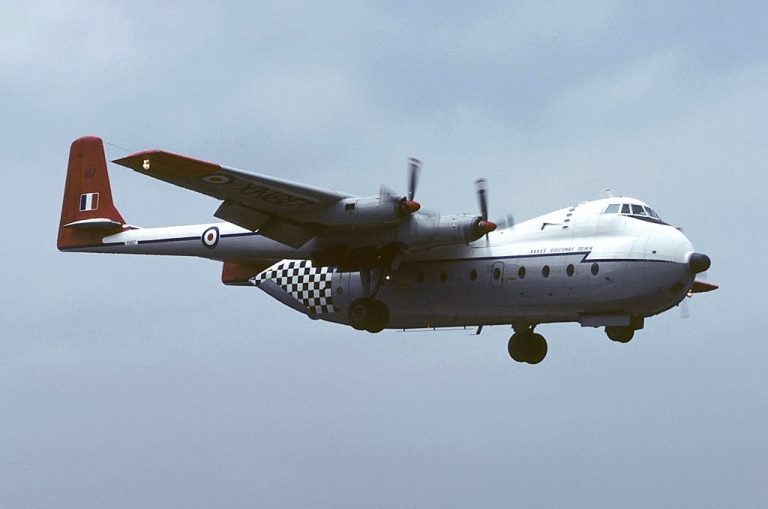
- Type – Medium Transport Aircraft
- Crew: 3–4 people (pilots + flight engineer/operator)
- Length: ~26.5 m
- Wingspan ~3.5 m
- Curb weight: ~17,000–18,000 kg
- Maximum takeoff weight: ~38,000–39,000 kg
- Engines – 4 × piston/turboprop powerplants (depending on the version)
- Cruising speed: ~430–470 km/h
- Practical ceiling ~ 7,600–8,500 m
- Maximum range: ~3,000–3,500 km
- Payload – up to ~10–12 metric tons
Operational History
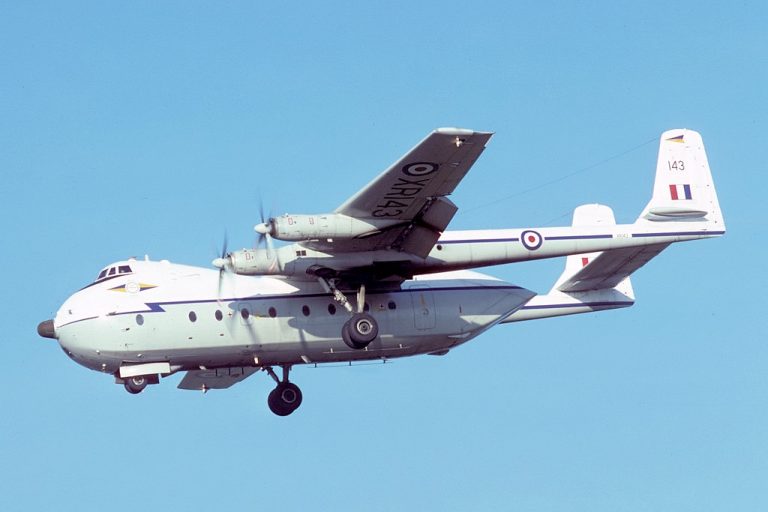
The Argosy first took to the skies in the early postwar years, and it was soon put into service by both commercial airlines and the air forces of several countries. The United Kingdom, Australia, New Zealand, South Africa, and several other countries used it as a reliable cargo aircraft in a variety of climatic conditions.
In civil aviation, it became an alternative to the American and European transport aircraft of the time thanks to its fuel efficiency, its ability to operate from short and unpaved airfields, and its large cargo hold.
In military aviation, the Argosy was used for the following missions:
- expedited freight transport;
- air resupply of remote units;
- parachute drop;
- evacuations and humanitarian transport.
The Benefits of Argosy
Argosy’s success was largely due to the following strengths:
Versatility
The aircraft was capable of performing a wide range of tasks—from routine cargo transport to parachute drops and medical evacuation missions.
Working in Challenging Conditions
The Argosy remained operational at unpaved and non-standard airfields, making it indispensable for aviation in countries with limited infrastructure.
Capacity and Load Capacity
The spacious cargo compartment made it possible to transport large-sized equipment, large containers, and other heavy items.
Why Argosy Is Important to the History of Aviation
The Armstrong Whitworth Argosy became one of the first multipurpose transport aircraft in the postwar world, combining several unique qualities at once:
- the ability to perform both civilian and military tasks;
- high reliability;
- versatility of use;
- adaptation for use in various climatic and operating conditions.
It marked a significant milestone in the development of air transport, laying the groundwork for more modern cargo aircraft.
Conclusion
The Armstrong Whitworth Argosy was not just a cargo plane, but a versatile aerial platform that played a significant role in the development of 20th-century aviation. It combined the ability to carry heavy cargo, perform airdrops, transport personnel, and carry out humanitarian missions. Thanks to its flexibility and reliability, the Argosy became a significant milestone in the history of both civil and military aviation.