Artificial Intelligence Will Save Pilots: Experiments with AI-Powered Missile Evasion on the X-62A Vista Aircraft

The development of artificial intelligence is increasingly making inroads into the field of military aviation: scientists and engineers are testing how autonomous systems can assist humans in extreme situations. One such effort was a series of tests on the General Dynamics X-62 VISTA experimental aircraft, during which the artificial intelligence demonstrated the ability to detect and evade a simulated missile attack without pilot intervention—effectively saving the crew through autonomous maneuvers.
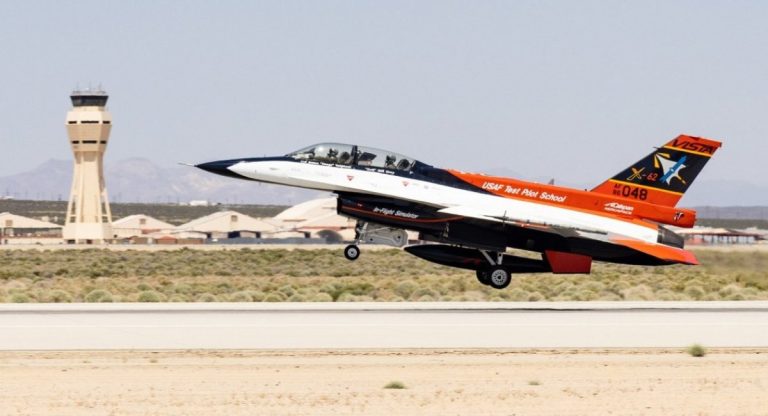
The test codenamed “Have Remy”
The test program was named “Have Remy”—a reference to the animated film in which a rat controls a human chef. The main goal of the tests is to see how artificial intelligence can automatically respond to a threat with minimal human intervention. At the Air and Space Forces Association conference, the developers presented results showing that an AI-controlled aircraft successfully “evaded” a simulated anti-aircraft missile by detecting the threat and performing tactical maneuvers without the pilot’s assistance.
When the system detects a signal indicating a possible missile launch, the pilot does not need to manually control the aircraft—the computer reacts faster and more accurately than a human is capable of doing under stressful conditions. This is precisely the point emphasized by O. J. Sanchez, deputy director of Lockheed Martin’s Skunk Works division: the system responds to the threat in a way that preserves the pilot’s life and ensures the aircraft’s survival.
Quick Response and Depth of Learning
Similar technology has already been discussed in other sources: The AI was pre-trained using billions of simulations, after which it underwent more than 100 test phases in live flight, where it autonomously piloted the aircraft and performed evasive maneuvers to avoid threats while withstanding significant G-forces. This demonstrates that modern machine learning methods can indeed transfer skills from a virtual environment to real-world flight—a challenge that engineers have long been working to overcome.
What questions remain?
Although the results look impressive, the project has one key unresolved issue: to what extent can a pilot trust such a system? On the one hand, autonomous intelligence reacts faster than a human and is capable of acting in critical situations where every second determines whether the crew survives or not. On the other hand, any software glitch could pose an additional risk with the same consequences. At the conference, experts emphasized that building trust between the pilot and AI is one of the key challenges for future development.
The Future of Aviation with AI Assistants
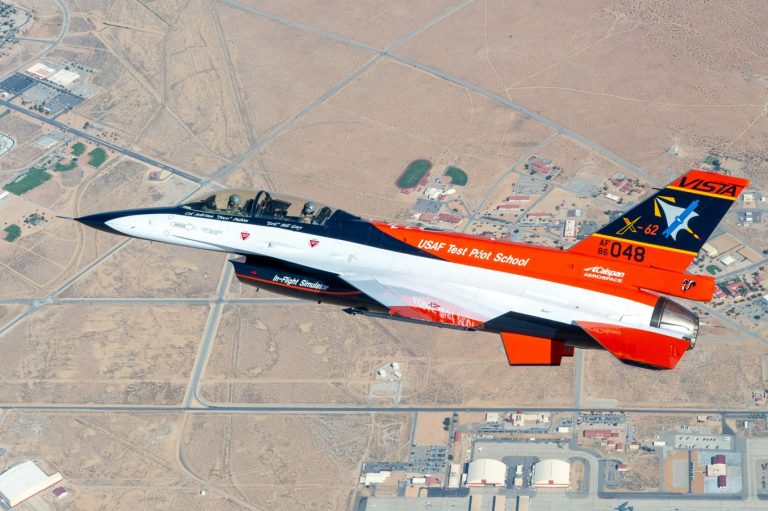
The tests on the X-62A Vista are yet another example of how artificial intelligence is changing the approach to combat aircraft control. Such systems can be particularly useful in high-stress situations, when it is difficult for a human to quickly process a flood of information and make decisions.
Even if autonomous evasion maneuvers do not become standard on piloted fighter jets in the coming years, they could prove to be very useful for unmanned combat aircraft, where AI-based control is already becoming a key element.
Based on material from https://en.defence-ua.com/weapon_and_tech/skunk_works_proves_ai_can_save_pilot_lives_by_autonomously_dodging_missiles_in_x_62a_vista_tests-17638.html