Edmund Rumpler Flugzeugwerke (Rumpler) began its operations in the aviation industry with the licensed production of Etrich Taube monoplanes, which it manufactured from 1911 to 1914. In early 1914, Dr. Edmund Rumpler began designing the first biplanes. They were no less successful than the Taube—that same year, one of them completed an eighteen-hour nonstop flight from Berlin to Constantinople. At the start of the war, the company was producing two types of biplanes: the Rumpler 4A (subvariants 4A13, 4A14) with a wheeled landing gear and the Rumpler 4B (subvariants 4B1, 4B2, 4B11, 4B12) with a twin-float landing gear. All of the listed types saw combat, but the first of them, officially designated the Rumpler B.I, was produced in numbers several times greater than those of the second. Belonging to the “B” category of aircraft (unarmed two-seat biplane), the Rumpler B.I had no defensive armament and was used in 1914 and 1915 as an observation and reconnaissance aircraft on the Western and Russian fronts. In addition to the parent company, Pfalz also manufactured Rumpler B.I aircraft under license. A total of 198 B.I aircraft were produced, which was a significant number for that time.
At Rumpler, perhaps inspired by the success of the B.I aircraft, another multipurpose two-seat biplane was developed in 1915, which received the internal designation 5A2. After successful trials with the German military, the 5A2 was adopted under the designation Rumpler C.I and entered serial production.
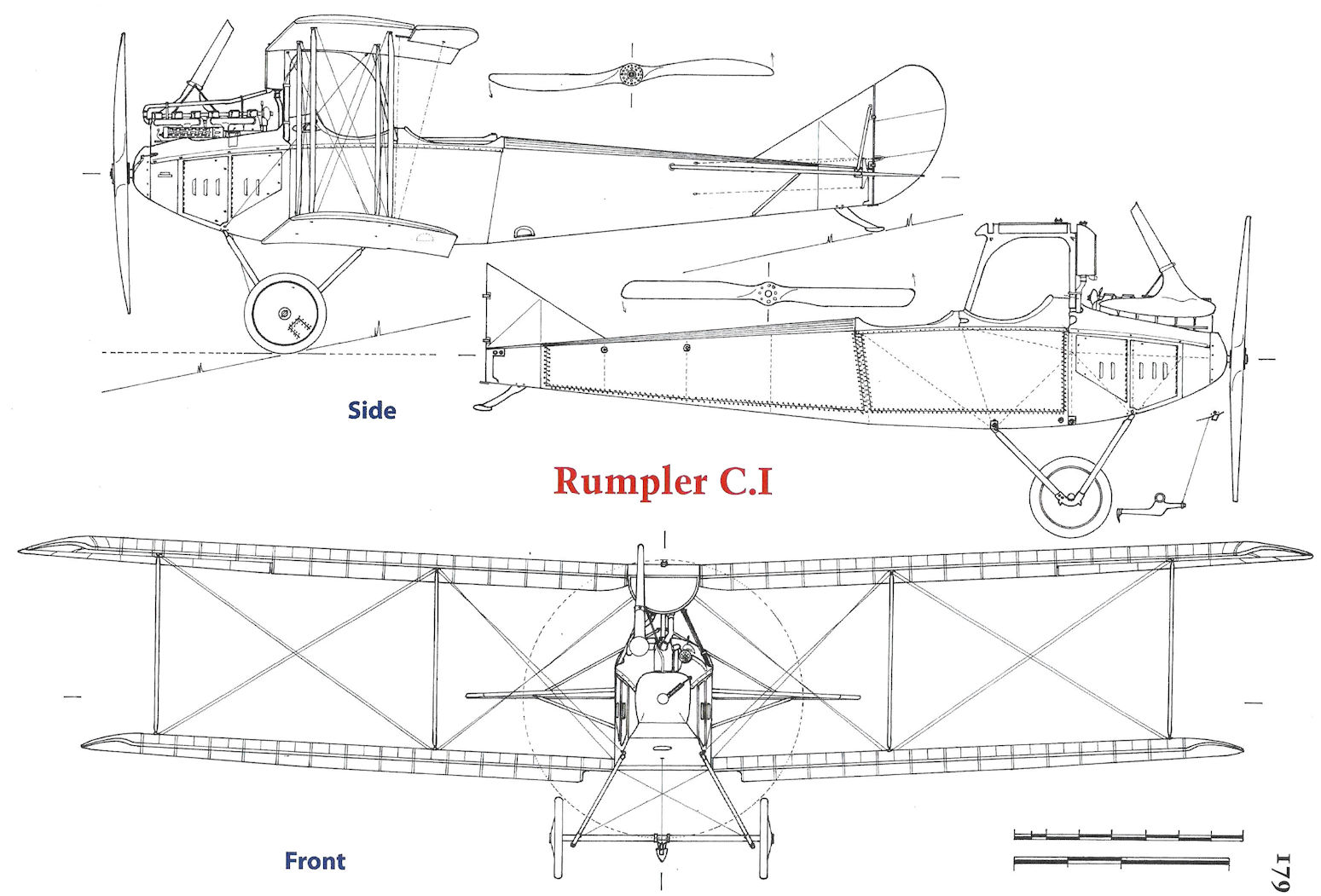
Diagram of the Rumpler C.I reconnaissance aircraft, side and front views. Drawing from flyingmachines.ru
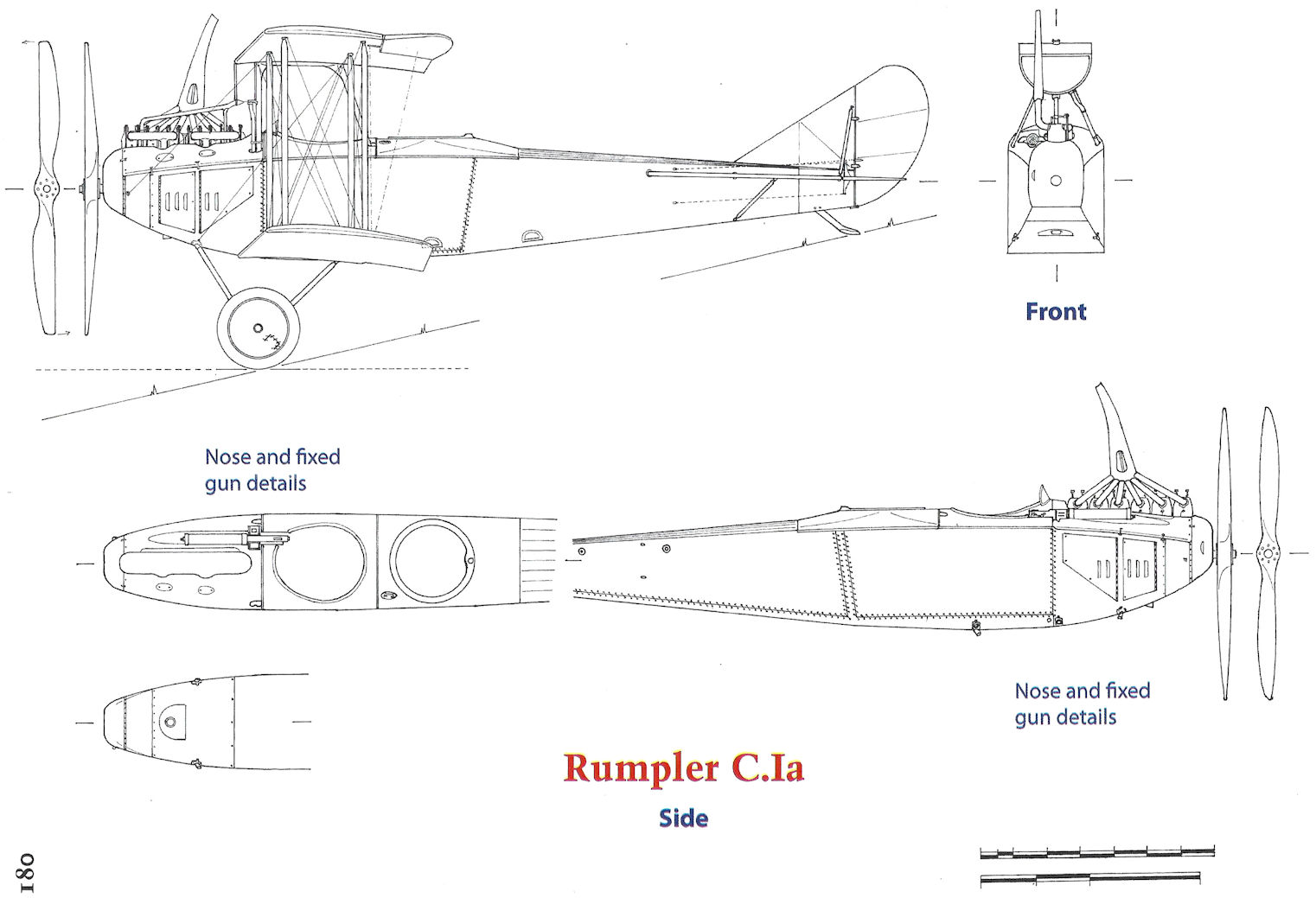
Diagram of the Rumpler C.I reconnaissance aircraft, side and front views. Drawing by flyingmachines.ru
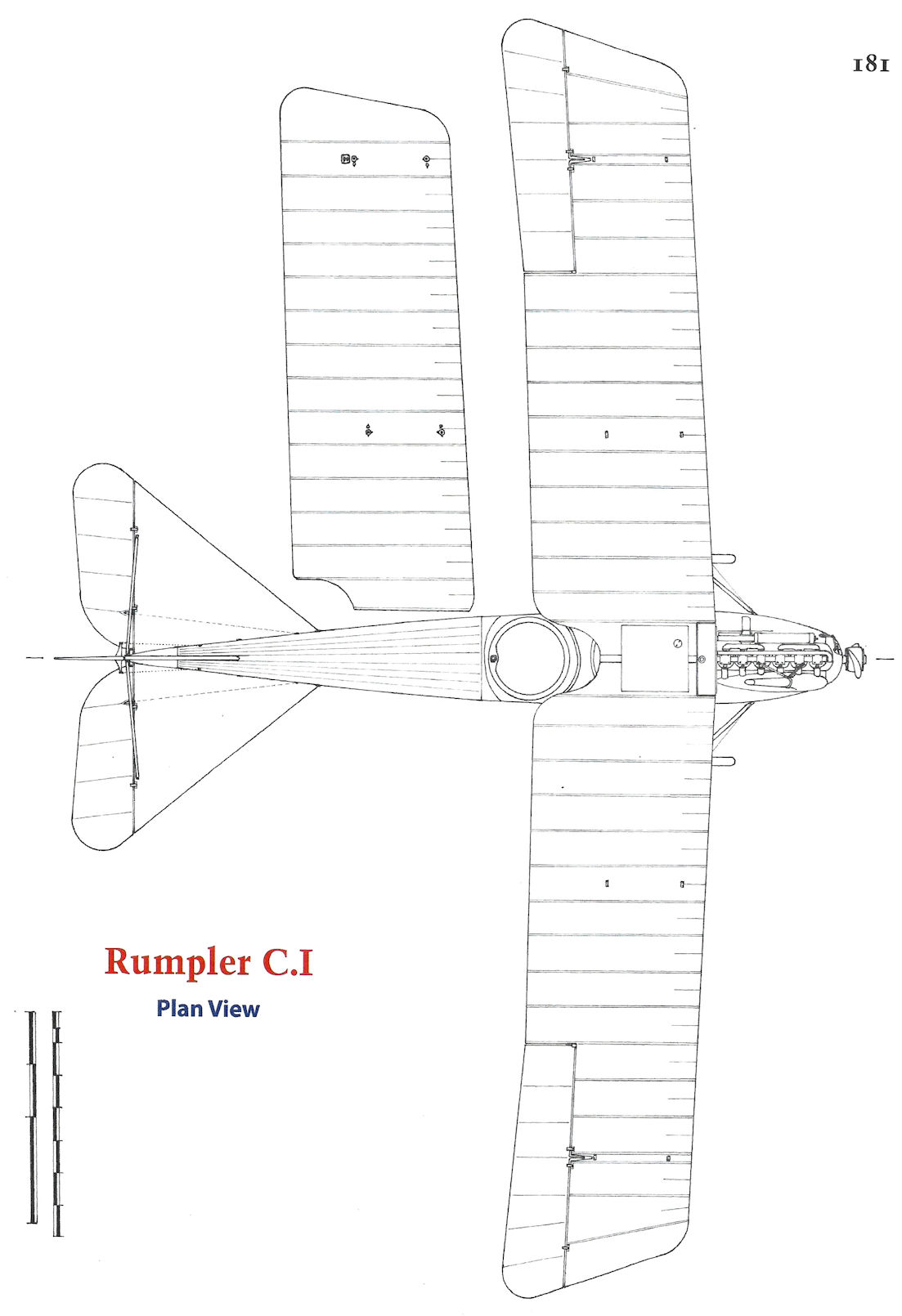
Diagram of the Rumpler C.I reconnaissance aircraft, top views. Drawing from flyingmachines.ru
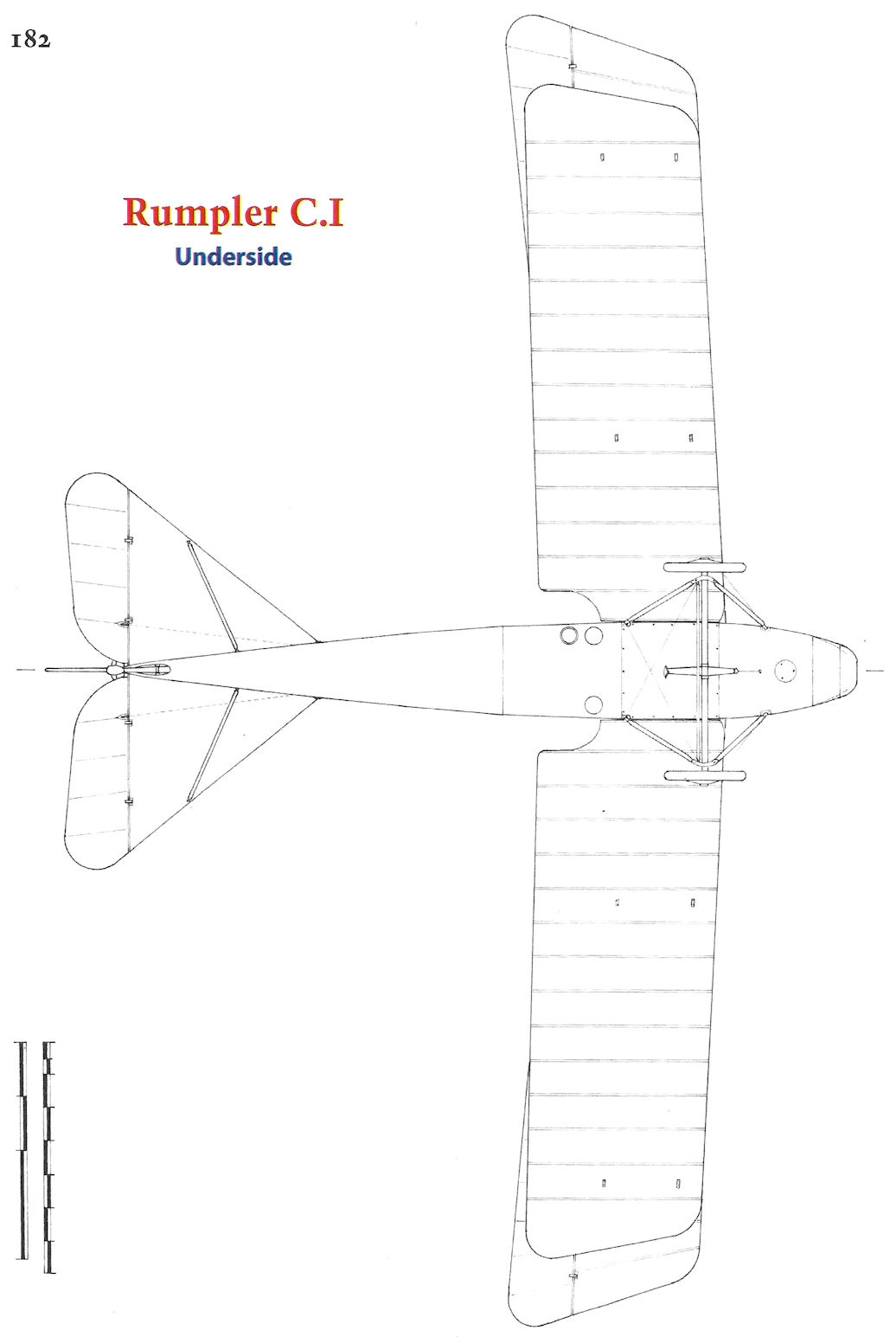
Diagram of the Rumpler C.I reconnaissance aircraft, bottom views. Drawing from flyingmachines.ru
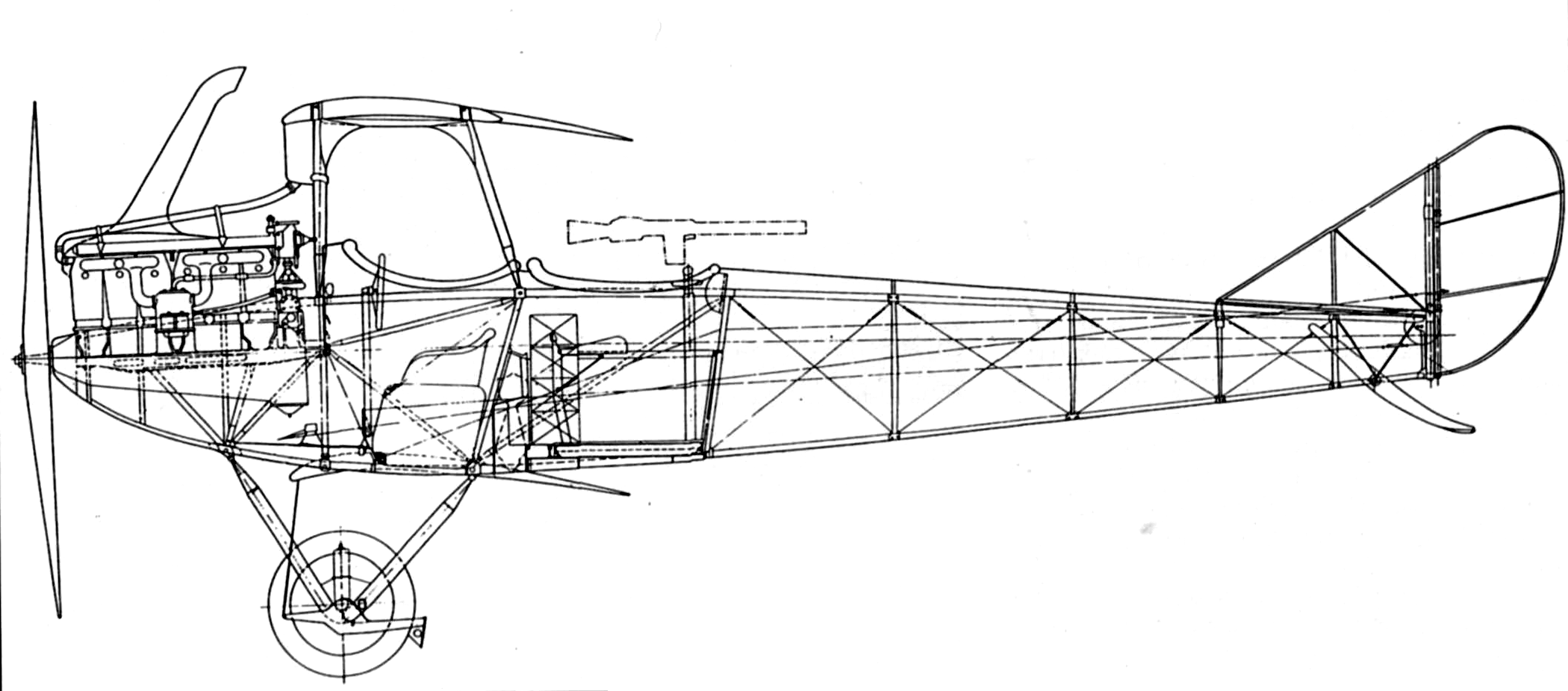
Layout diagram of the Rumpler C.I. reconnaissance aircraft. Drawing from airwar.ru
The Rumpler C.I was equipped with a liquid-cooled Mercedes D.III inline six-cylinder engine rated at 160 l.s. (118 kW). The design of the Rumpler C.I incorporated several new and unusual features. The fuselage’s structural system was a hybrid design. It was based on four wooden spars, but from the front end to the rear cockpit, they were connected to one another by steel tubes, whereas behind the rear cockpit, they were connected by wooden members. In the front section of the fuselage, plywood—partially reinforced with metal sheets—was used as the skin, while the rear section was covered with fabric, which was also used to cover the wings and tail.
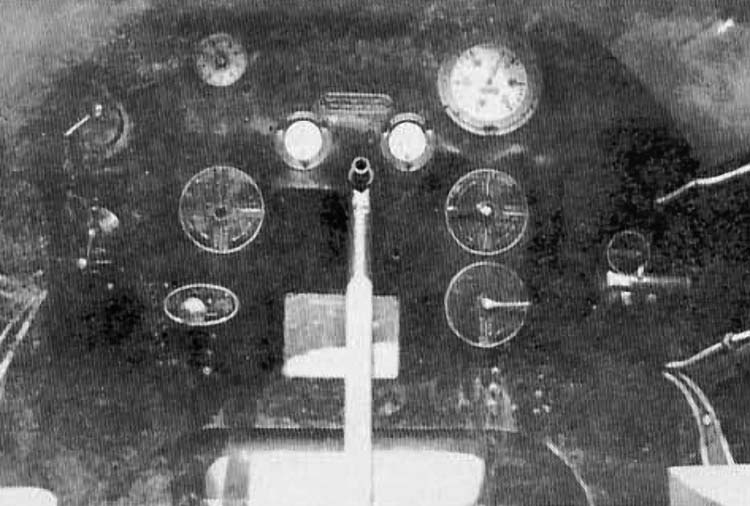
The cockpit of a Rumpler C.I. reconnaissance aircraft. Photo courtesy of airwar.ru
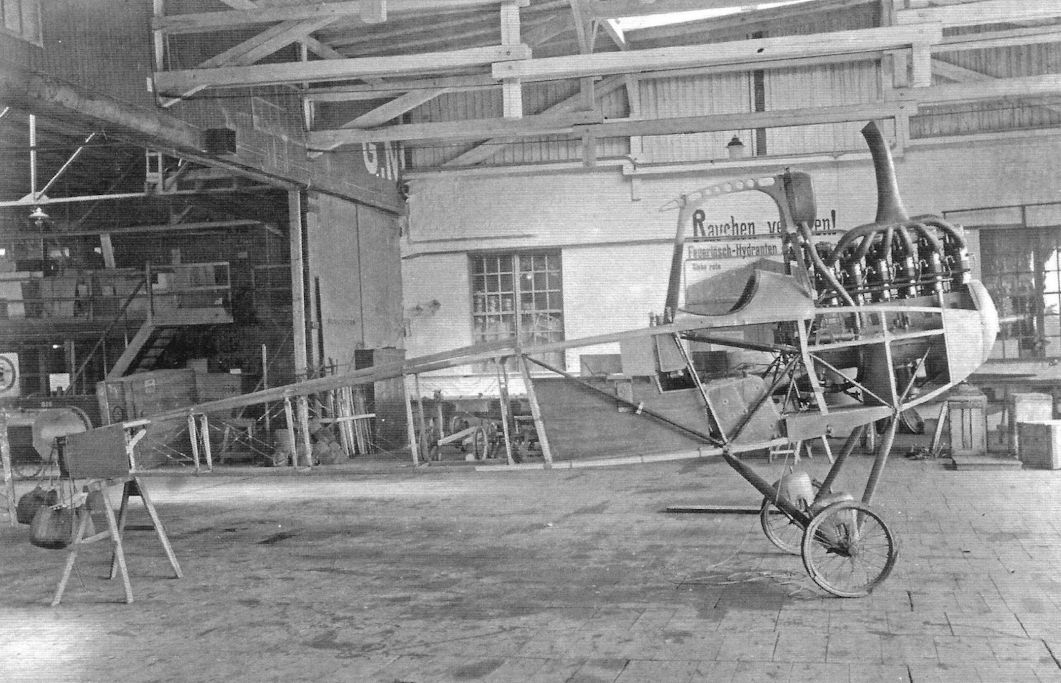
The fuselage of the Rumpler C.I (Germ) reconnaissance aircraft—with its lack of skin—clearly reveals the structural framework. Photo: flyingmachines.ru
The twin-spar wings had wooden ribs and spars; the components subjected to the highest loads were made of steel tubes, from which the tail assembly’s structural framework was welded. Steel tubes were also used to construct the inter-wing and center-plane struts, as well as the supports for the main landing gear struts. A distinctive feature of the aircraft’s swept-back wings was the very small (16 mm) upper wing sweep and the use of a wooden strip as the trailing edge instead of a steel cable. The Rumpler C.I was equipped with a semicircular radiator mounted just below the leading edge of the upper wing’s center section. A conventional spur-type brake was mounted on the inter-wheel axle; the main landing gear wheels were cushioned by rubber cords, but on most production aircraft, when rubber was in short supply, these were replaced with steel springs. Initially, the armament consisted solely of a mountable 7.92-mm Parabellum LMG.14 machine gun, mounted in the rear cockpit on a Schneider ring mount, and small bombs weighing approximately 100 kg.
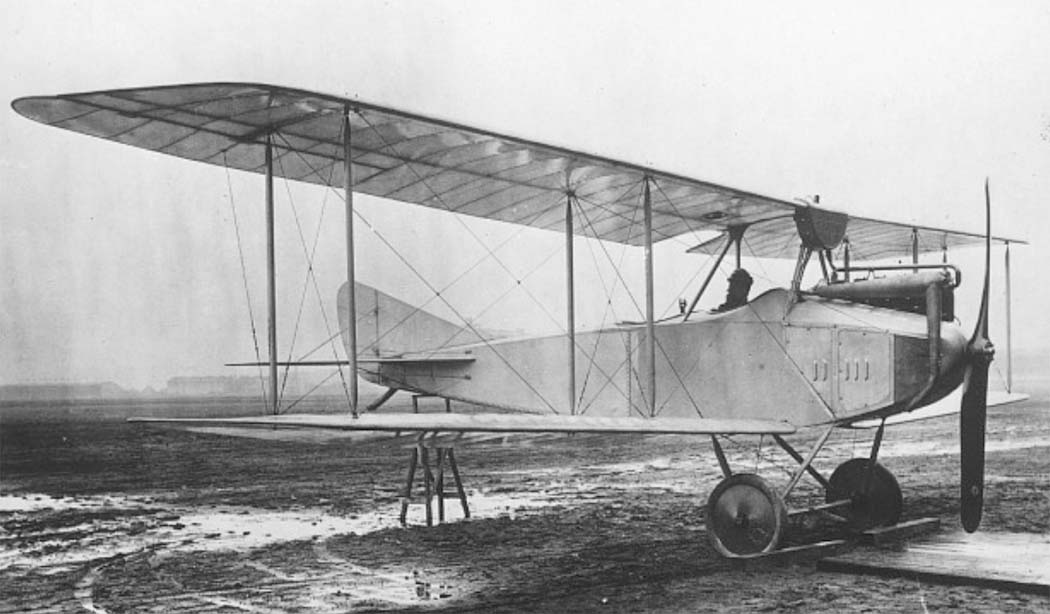
A prototype of the Rumpler C.I. reconnaissance aircraft. Photo courtesy of airwar.ru
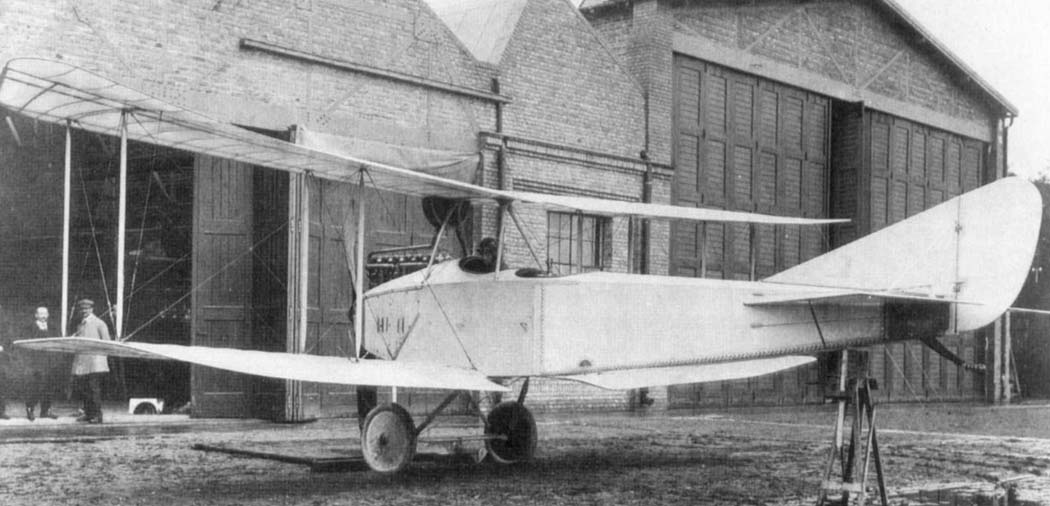
A prototype of the Rumpler C.I. reconnaissance aircraft. Photo courtesy of airwar.ru
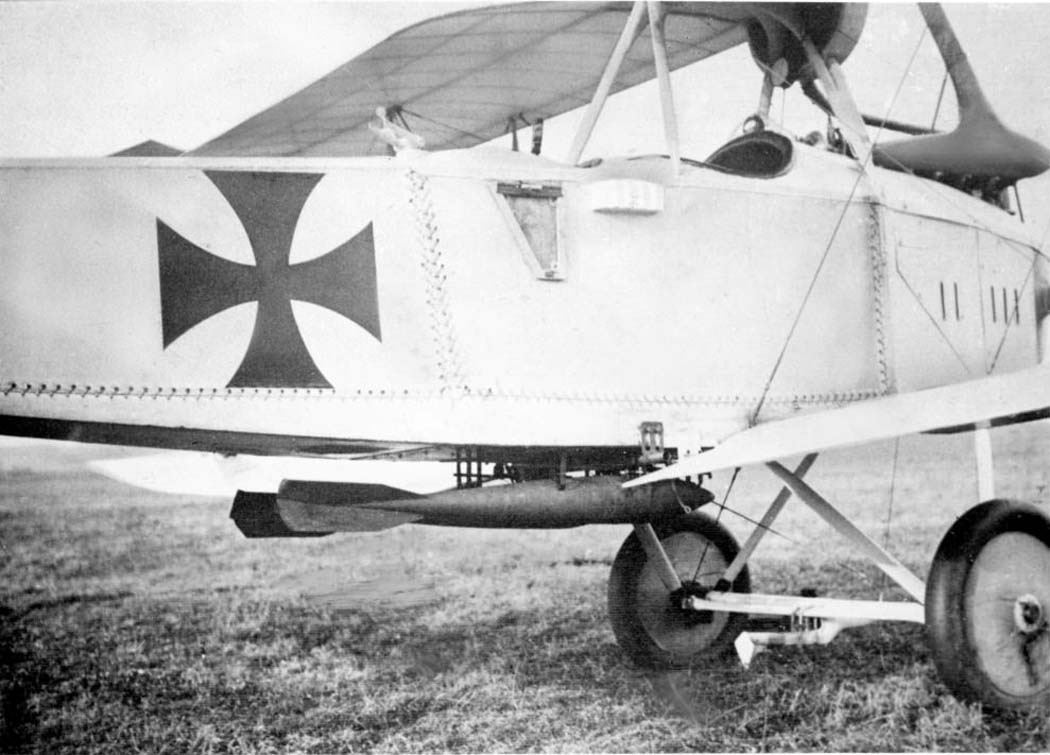
50-kg bombs under the fuselage of a Rumpler C.I. reconnaissance aircraft. Photo: airwar.ru
Among the “C” category aircraft (armed two-seat biplanes) used by the German military aviation’s field aviation units (Feld Flieger Abteilung) in 1915, the Rumpler C.I. became one of the most successful and popular. No notable incidents from the combat use of this type of aircraft have been recorded. The “Rumplers,” serving as the workhorses of the German Air Force, conducted visual and aerial photographic reconnaissance, directed artillery fire, and carried out bombing raids on ground targets in 1915–1916. The C.I served alongside the later C.Ia version, which differed from the base model by being equipped with a water-cooled, six-cylinder Argus As.III engine rated at 180 l.s. (132 kW). In addition to field aviation units, the “Rumpelers” operated as part of the 1st Bomber Wing (Kampfgeschwader 1; Kagohl 1).
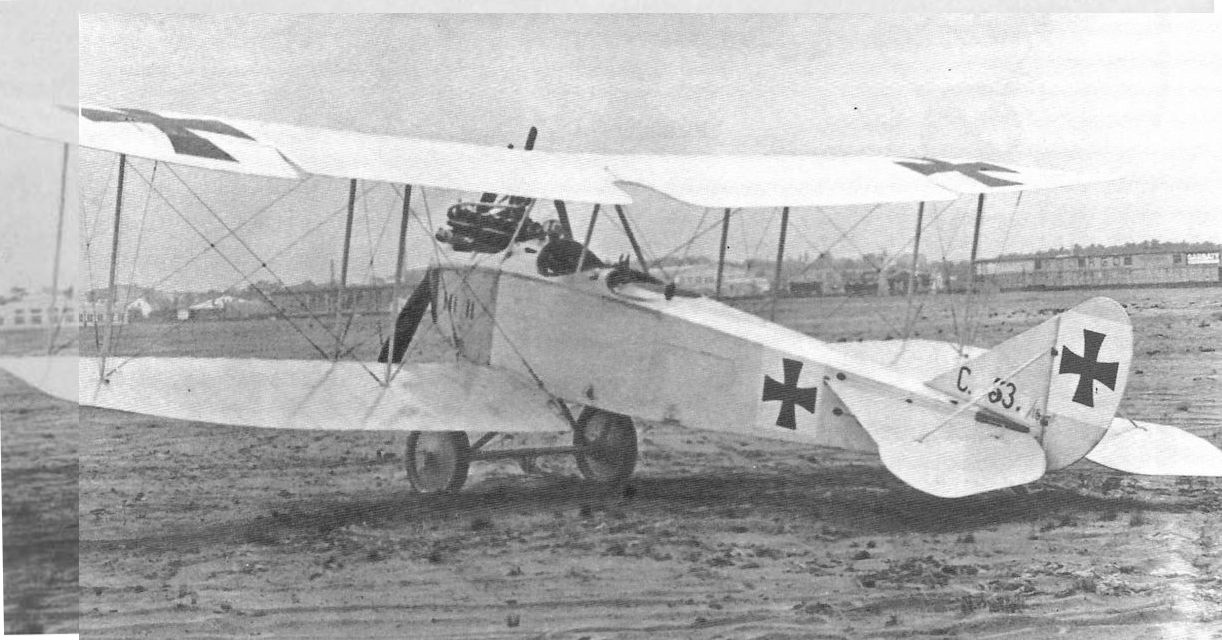
A Rumpler C.I (53/15) reconnaissance aircraft from the first production series, equipped with a 160-horsepower Mercedes D III engine. The aircraft is armed with a fixed 7.92-mm Spandau machine gun and a movable Parabellum machine gun of the same caliber. Photo: flyingmachines.ru
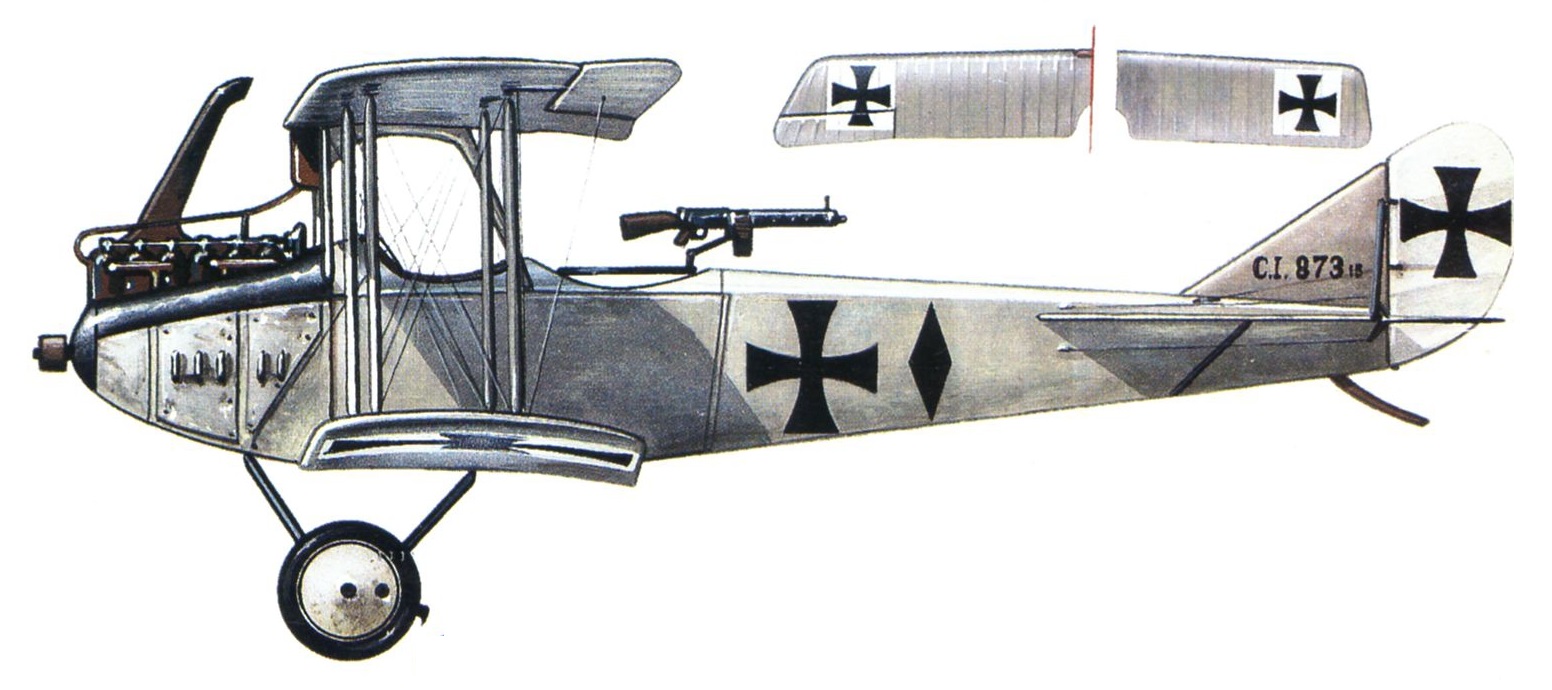
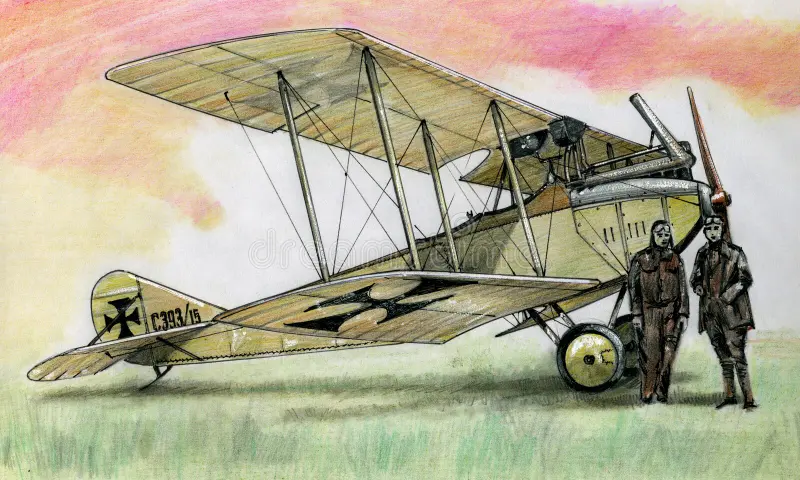
In 1915, Rumpler C. I. reconnaissance aircraft served with the German military aviation on the Western Front. Aircraft of this type were painted entirely in a light gray-cream color. As a result of combat operations, the aircraft’s surfaces showed traces of oil, exhaust fumes, and dirt. The illustration shows a Rumpler C.I (873/15) with identification marks (a black swastika) placed on the wing within white squares.
To defend against Allied fighter planes, which began appearing in large numbers around the turn of 1915–16, the C.I and C.Ia models were equipped with a synchronized 7.92-mm LMG.08/15 machine gun. Aircraft of the new series were produced not only by the parent company Rumpler, but also, under license, by Germania Flugzeugwerke, Märkische Flugzeugwerke (MFW), Hannoverische Waggonfabrik, and Albert Rinne Flugzeugwerke. By October 1916, the German military aviation fleet included more than 250 C.I and C.Ia aircraft. In 1917, when the “Rumplers” had become obsolete for combat on the Western Front, they continued to be used on a fairly large scale on the Russian Front, as well as in Macedonia, Greece, and Palestine. For example, in the spring of 1917, eight new C.I.s were delivered to Damascus, from where they were redeployed south and took part in the Battle of Gaza. The “Rumpelers” played a significant role: they monitored the movements of enemy troops and promptly relayed their locations to the German command. The C.I.s were highly effective at bombing Allied cavalry, but it was practically impossible to use the aircraft for photographic reconnaissance, as high temperatures damaged the gelatin emulsions on the photographic plates. It should also be noted that one of the C.I.s was used by General Kresse as his personal transport aircraft. The general signaled the Rumpler by laying out a large white cloth flag on the ground. Any account of the Rumpler’s combat use would be incomplete without mentioning that on June 18, 1917, the Rumpler C.Ia was shot down by Captain Alexander Kazakov—the top ace of the Imperial Air Force (17 solo victories, 12 shared).
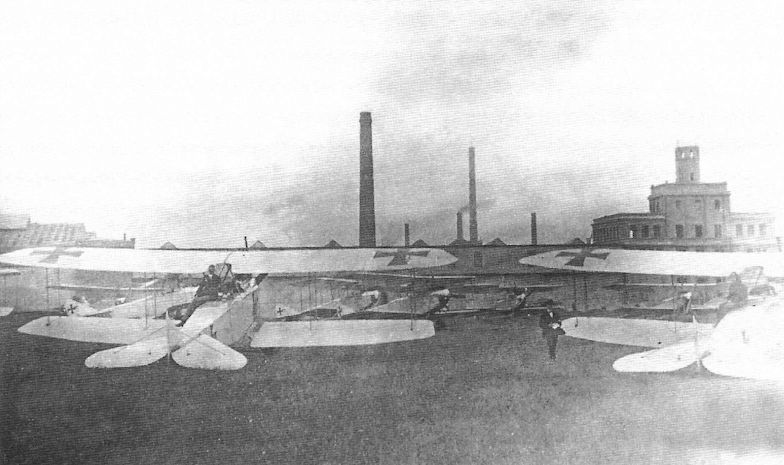
Rumpler C.Ia (Han) reconnaissance aircraft at the Hannoverische Waggonfabrik factory. Photo: flyingmachines.ru
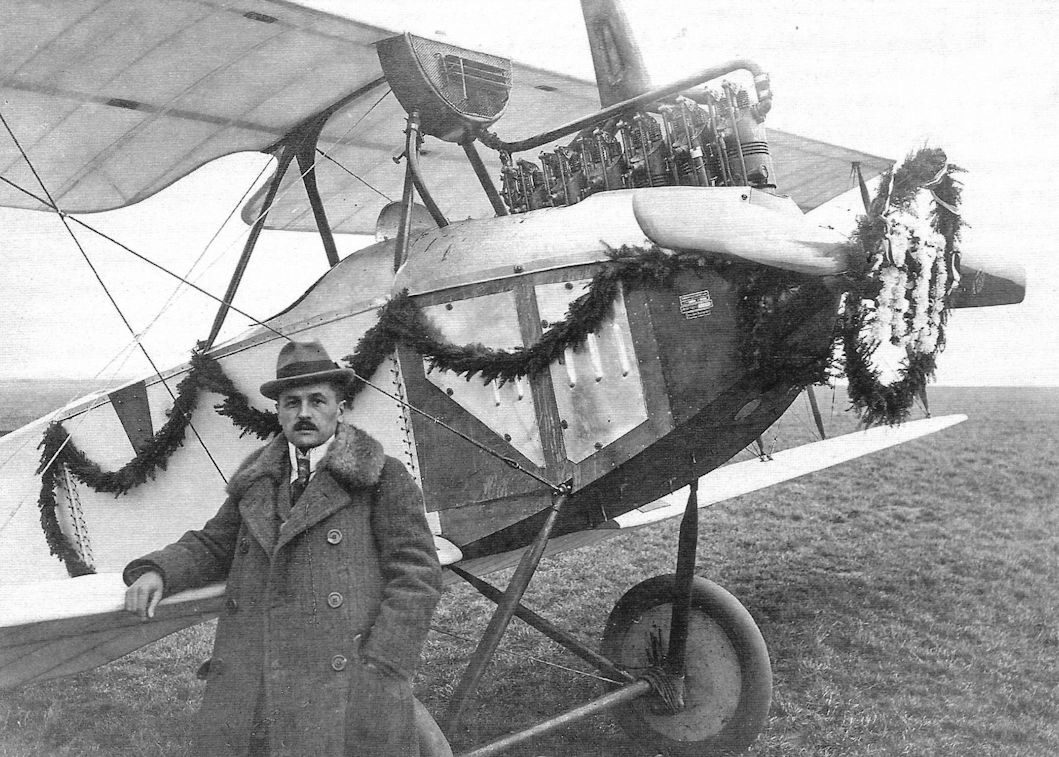
The 100th Rumpler C.I (Germ) reconnaissance aircraft manufactured under license. Standing in front of the aircraft is Edwin Leiber, director of Germania. Photo: flyingmachines.ru
After they no longer met military requirements, the German C.I.s continued to serve as training aircraft. In 1918, Bayerische Rumpler-Werke (Bayru)—the Bavarian division of Rumpler—even developed and began mass-producing an unarmed training version equipped with a 150-l.s. (115 kW) and dual controls. The total number of C.I and C.Ia aircraft built is unknown, but all evidence suggests that it exceeded 1,000.
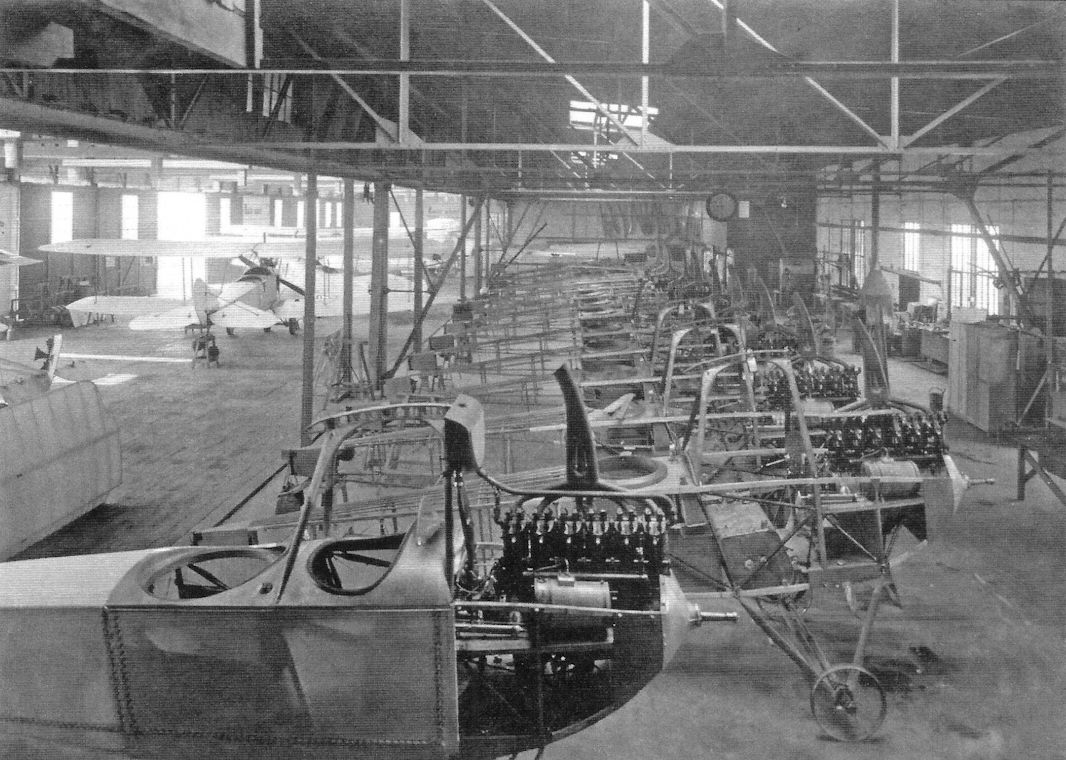
An assembly line for Rumpler C.I. (Germ) training aircraft equipped with Benz Bz.III engines. Photo from flyingmachines.ru
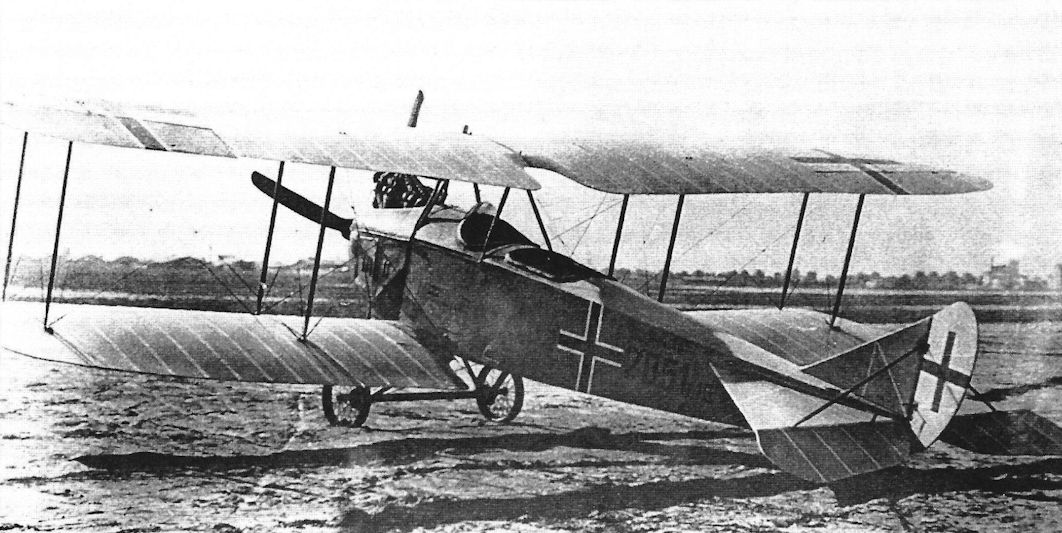
The Rumpler C.I (Bayru) 7051/18 was built as a training aircraft. The photograph was taken at Adlerhof in the fall of 1918 (note that the aircraft bears 1918-model identification markings) while the aircraft was undergoing acceptance tests. Photo: flyingmachines.ru
In conclusion, it should be noted that the Rumpler C.I. reconnaissance aircraft became one of the characters in the story “The Bait” from the first collection of short stories by “Biggles,” *The Camels Are Coming* (published in 1932). The story is set in 1918 on the Western Front, and the obsolete “Rumpler” is used as a decoy to lure Allied fighters.
FLIGHT AND TECHNICAL SPECIFICATIONS
Type: Rumpler C.I
Purpose: reconnaissance aircraft
Status: Mass production
Manufacturer:
• Edmund Rumpler Aircraft Works (design)
• Germania Aircraft
Works• Märkische Aircraft Works (MFW)
• Hannoverische
Waggonfabrik• Albert Rinne Aircraft Works
Crew: 2 people
Powerplant: a single Mercedes D.III liquid-cooled inline six-cylinder engine, producing 160 l.s. (118 kW) and driving a two-bladed fixed-pitch wooden propeller
Dimensions:
Wingspan: 12.15 m
; Length: 7.85 m
; Height: 3.06 m
; Wing area: 35.70 m²
Weight:
Empty aircraft: 793 kg
; takeoff weight: 1,333 kg
Flight characteristics:
Maximum speed: 152 km/h
; time to climb to 3,000 meters: 25 minutes
; service ceiling: over 5,000 m
; range: 540 km
Source: Text: Jiří Hornát, Illustration: Petr Kolmann, “Aircraft 14–18. Rumpler C.I,” *Letectvi+Kosmonautika*, April 1994, p. 51/258; 1994-12, p. 76/950
Translation first published at – https://vk.com/@710541705-vozdushnye-rabochie-pervoi-mirovoi-rumpler-c-i