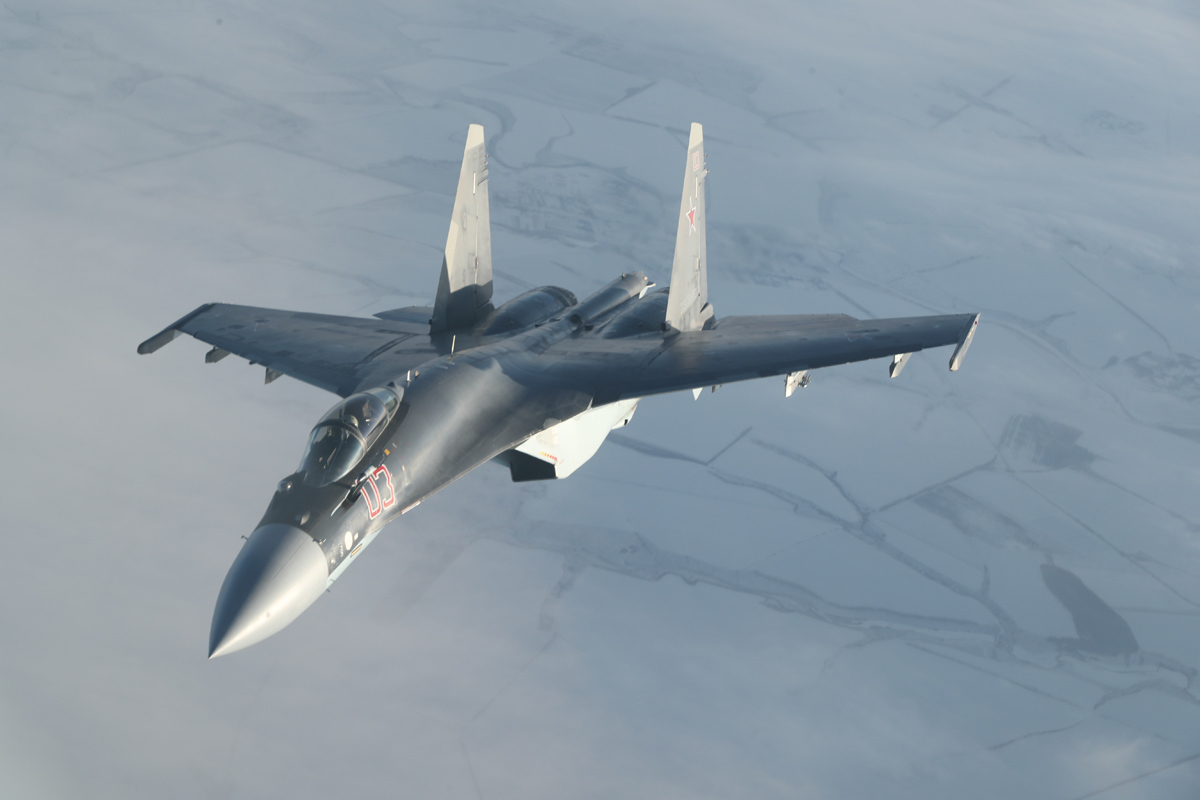
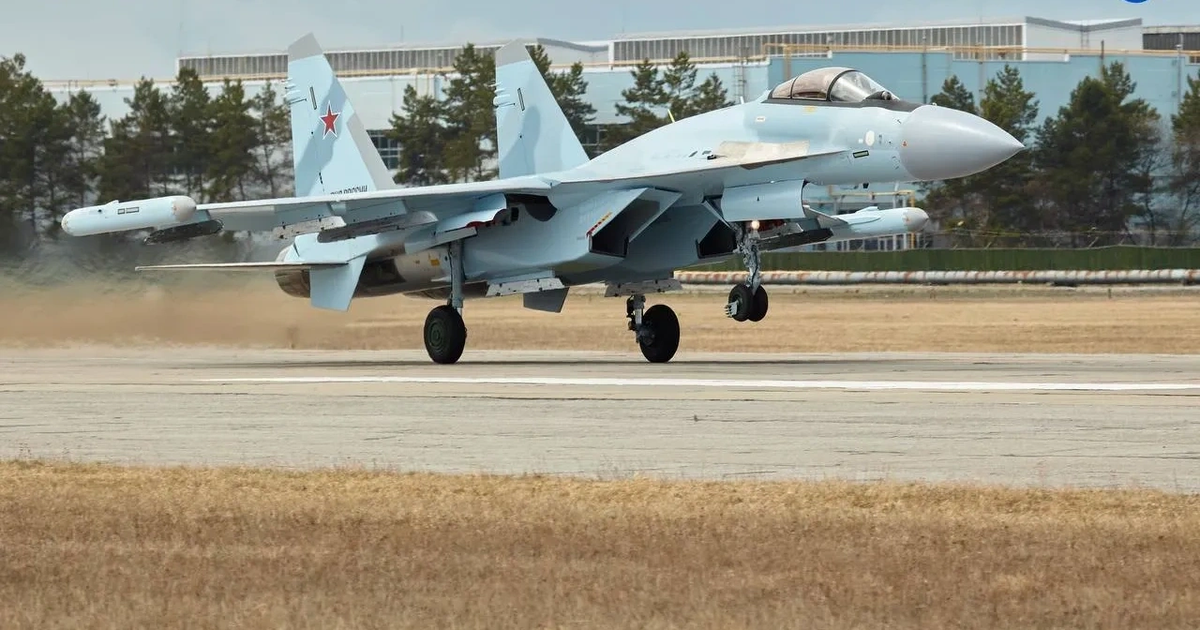
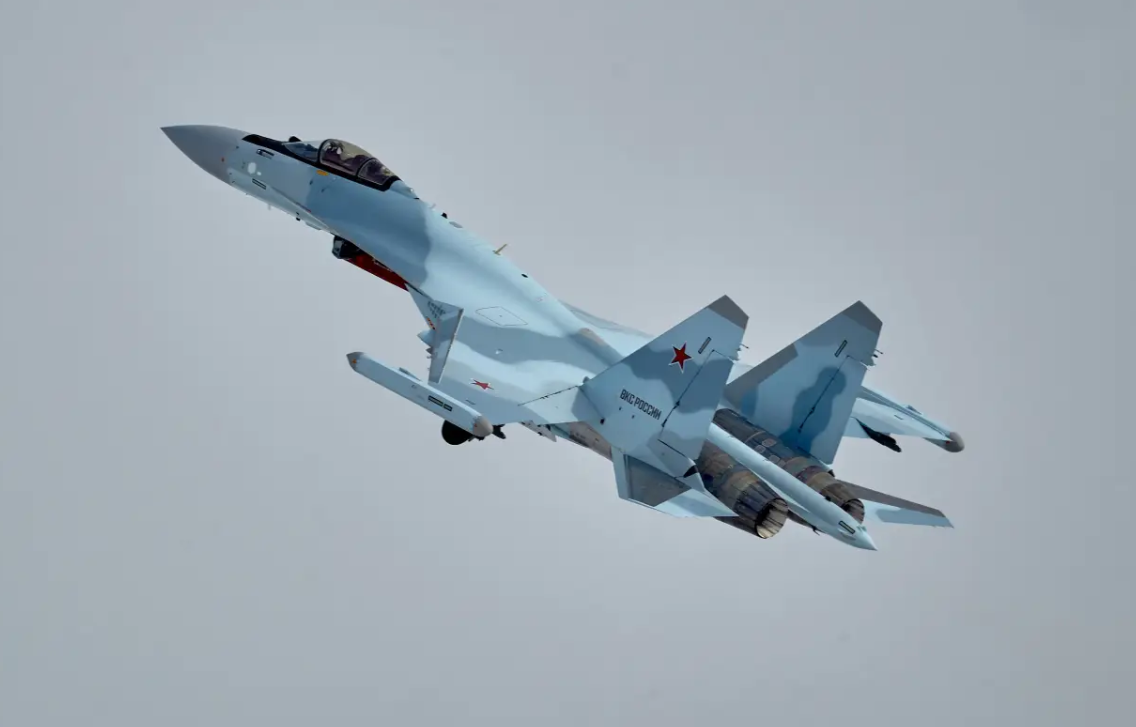
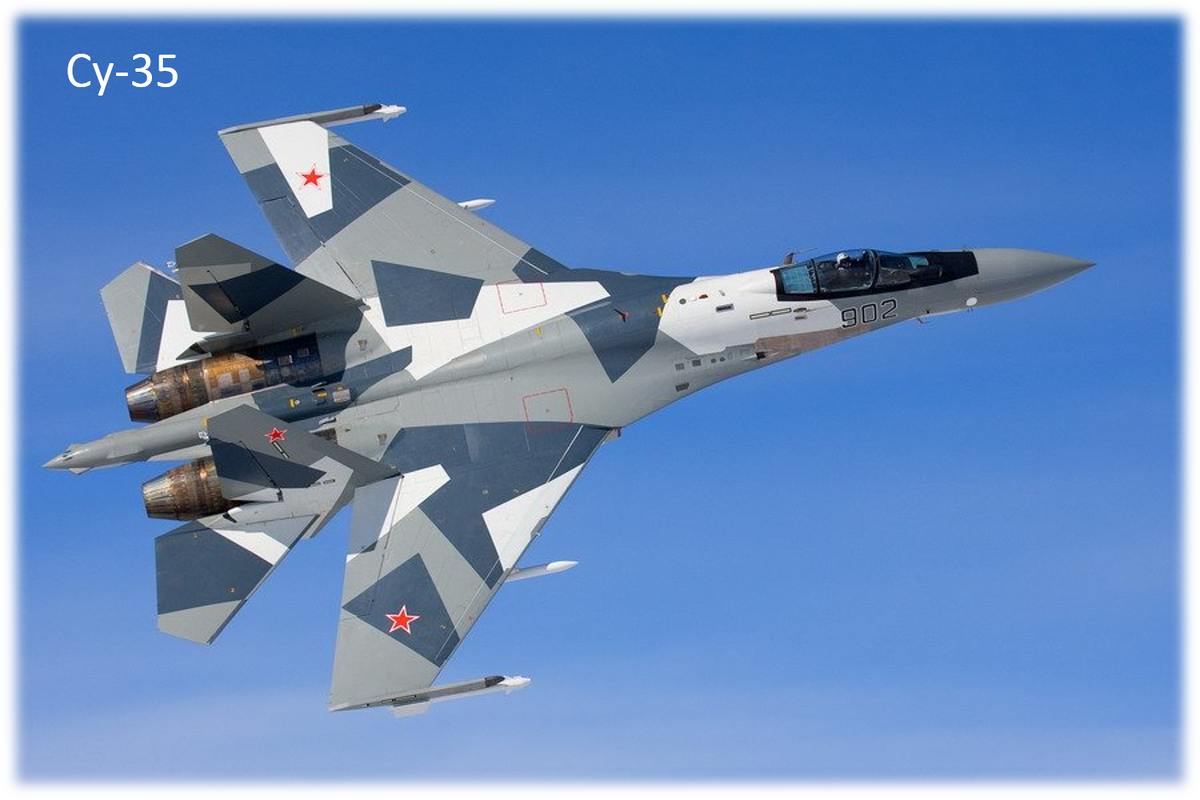
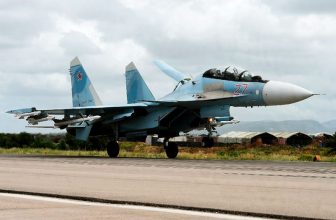
In the early 2000s, they decided it was time to give the legendary Su-27 a new lease on life. Not just a quick fix, but something truly new! And that’s how the Su-35 was born.
Imagine this: they take a proven fighter jet—and pack it full of cutting-edge technology. Sounds bold? Well, the designers pulled it off!
What has changed?
- The controls have become more responsive. It’s as if the plane has started to “sense” the pilot—it responds to the slightest movement and is more responsive than before.
- Maneuverability was top-notch. The fighter twisted and turned, entering turns so effortlessly that the pilots could only shake their heads in admiration.
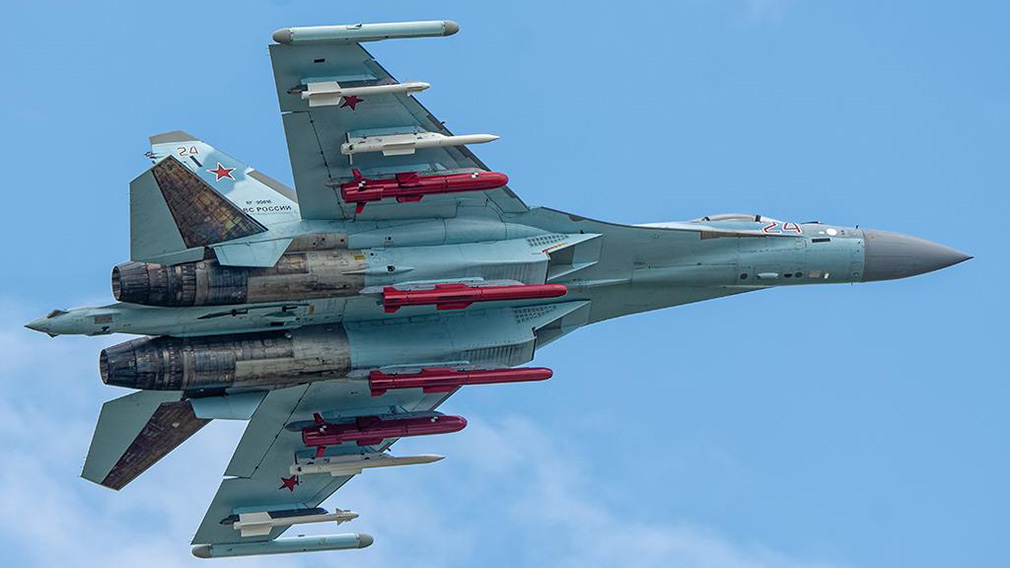
- Its weaponry is more powerful. It’s no longer just an “air-to-air” fighter—it’s a versatile combat aircraft: powerful in the air and capable of striking accurately on the ground.
- Range—greater. You can fly farther without having to check the map for gas stations. Freedom—that’s what it means!
The Su-35 turned out to be more than just an improved version—it became a testing ground for bold ideas. Everything that later went into production was tested on it.
“The Su-35 marked an important step in the evolution of Russian fighter jets, allowing for the testing of a number of technologies that were later applied to the Su-35S,” notes the “Voennoe Obozrenie” website.
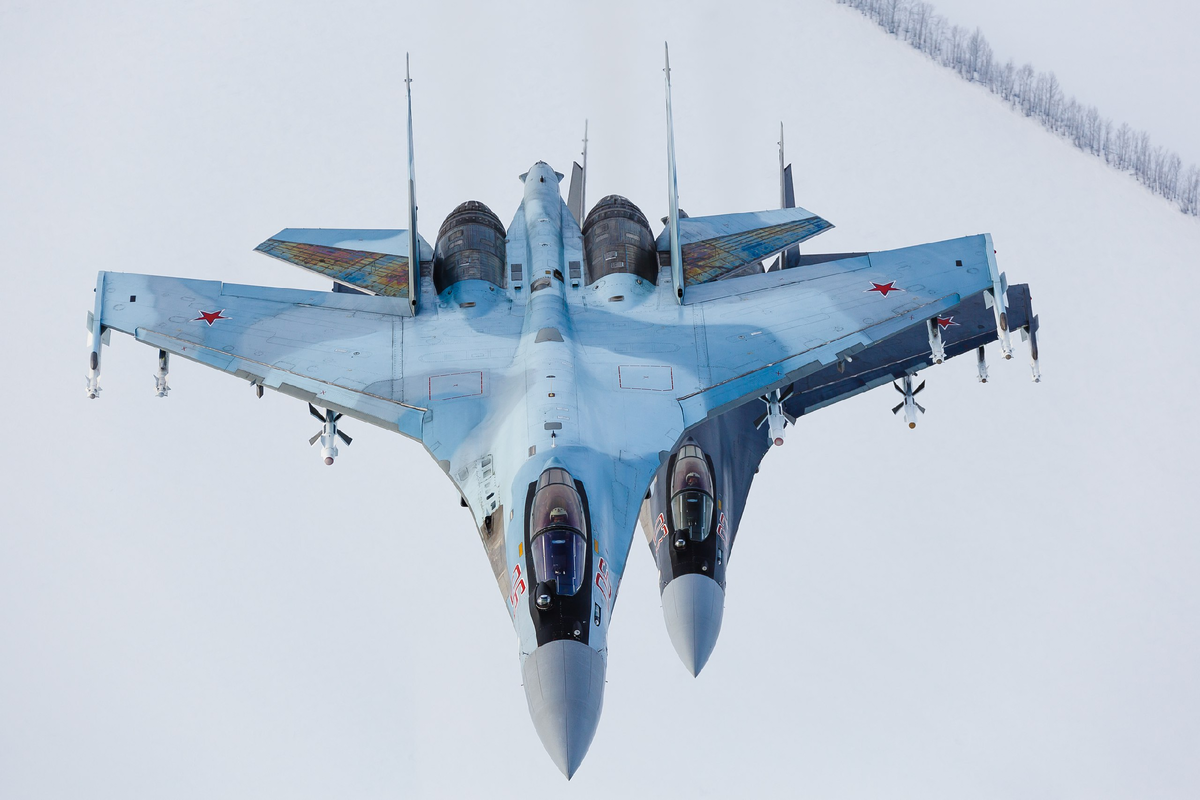
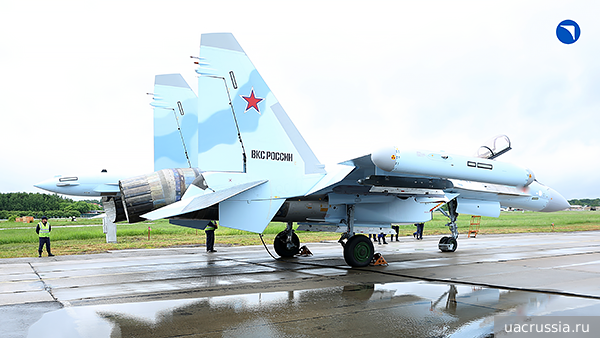
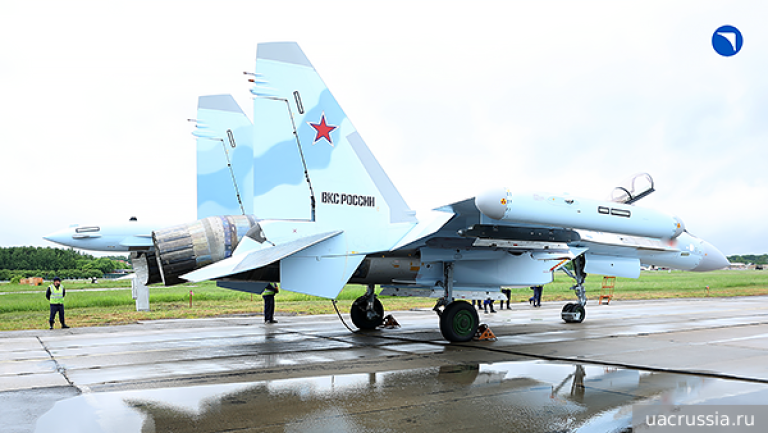
And now—meet the Su-35S! If the Su-35 was a bold experiment, this is a fully realized masterpiece, ready for combat. The letter “S” isn’t just a letter—it’s a mark of quality: “serial,” perfected to the highest standard.
What have they improved here? Well, almost everything!
- The radar has sharp eyes. Now the plane can spot the enemy from far away. Before, it could only see them up close; now, it can see them from far away. Can you tell the difference? It’s like switching from regular glasses to binoculars!
- The engines are powerful. With thrust vectoring, the fighter works wonders in the sky: it hovers, spins, and changes direction in a fraction of a second. Pilots say, “It’s like magic—but it’s science!”
- The cockpit is modern. The old gauges have been replaced by bright displays. The pilot can see everything: where the enemy is, where his own forces are, and where to fly. It’s convenient, intuitive, and stylish!
- The design is sturdy. The reinforced fuselage can withstand any conditions. Whether it’s Arctic cold or tropical heat, the aircraft is ready for action.
- Maintenance is easier. Mechanics can now get the plane ready for takeoff faster. Less hassle—more flights. Isn’t that great?
“The Su-35S is a full-fledged 4++-generation multirole fighter capable of operating effectively in both air-to-air combat and against ground targets,” emphasizes the magazine *Arsenal of the Fatherland*.
Let’s compare them in practice: a table of specifications
To make the difference clearer, let’s summarize the key parameters in a table:

Interesting Details
-
The Su-35S became the first Russian fighter jet with thrust-vectoring engines to enter mass production. Previously, such technology had only been used on prototype aircraft.
-
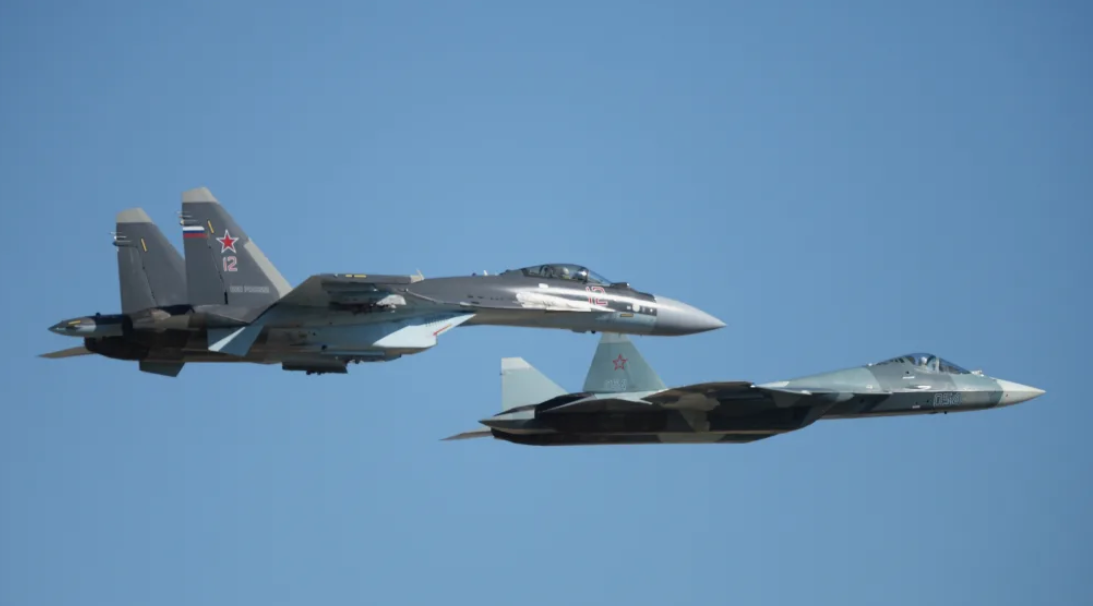
The Su-35S was used to test solutions that were later incorporated into the Su-57. It turns out that it served as a sort of bridge between generations.
-
The fighter jet has been displayed at international air shows on more than one occasion.
-
During the tests, the pilots performed aerobatic maneuvers in the Su-35S that were previously considered nearly impossible for heavy fighters: the “Pugachev’s Cobra” and the “Bell.”
Why bother understanding these differences at all?
It may seem that the differences between the Su-35 and the Su-35S are merely technical details of interest only to specialists. But in reality, understanding these differences helps:
-
Do not confuse experimental solutions with operational capabilities;
-
to more accurately assess the capabilities of a modern Russian fighter jet;
-
to see how our aviation industry is evolving: from testing new ideas to mass production.
Conclusion
The Su-35 and Su-35S are related like a rough draft and the final version of a painting. The former served as a testing ground. It helped validate new technologies and determine what works and what doesn’t. The latter is the finished product: reliable, powerful, and ready for real-world missions. Distinguishing between them is important not merely as a formality, but to truly understand how modern Russian combat aviation is structured.