China’s HQ-9B air-defense system has been presented for the first time not merely as a long-range surface-to-air missile system, but as a weapon capable of intercepting maneuvering ballistic targets. If Beijing’s claims are accurate, China now possesses a multipurpose system in the same broad class as the S-300 and S-400, capable of engaging aircraft, cruise missiles, and tactical ballistic missiles. The published footage, however, leaves one important question unanswered: what exactly was intercepted, and how closely did the test resemble an actual missile attack?
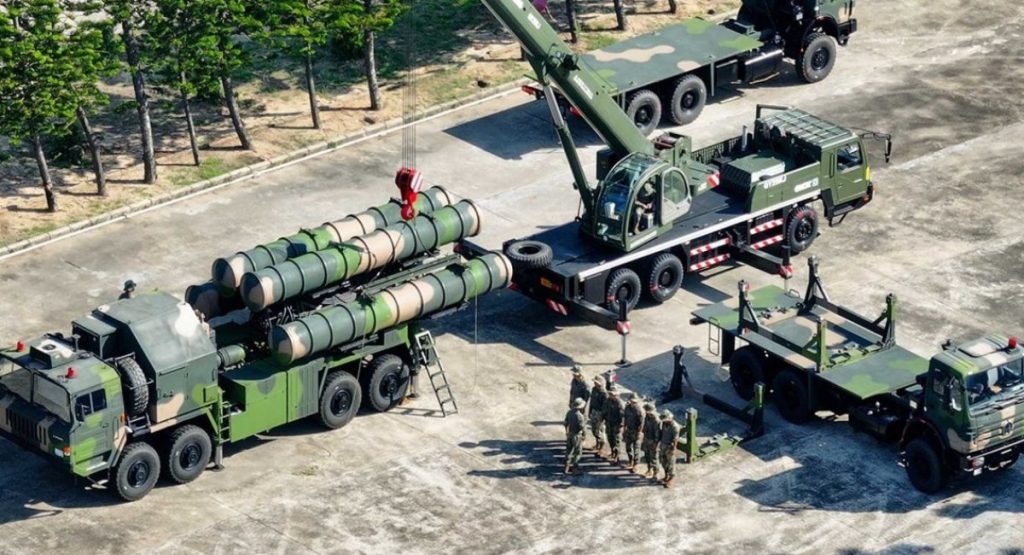
Only Seconds to Make the Decision
The story began with an exercise involving the “Shenwei” missile battalion of the People’s Liberation Army Central Theater Command Air Force. Its crews were tasked with simultaneously intercepting two high-speed targets approaching from different directions.
According to Chinese state media, one of the missiles unexpectedly changed its trajectory and entered a steep descent. The crew had only seconds to respond: a delay of even one or two seconds could have allowed the target to leave the available engagement window.
The entire operation—from receiving a warning from a higher command post to intercepting the target—reportedly took as little as two minutes. Chinese commentators particularly emphasized the role of an integrated information network. Target data came not only from the battery’s own radar but also from external sensors, after which the command system selected the nearest available unit and transmitted the targeting information.
The state-run Global Times identified the system as the HQ-9B and reported that ballistic missiles were among the targets. The original CCTV report, however, did not disclose either the interceptor’s designation or the characteristics of the targets. Their speed, range, altitude, trajectory, and the method used to confirm their destruction remain unknown.
The exercise therefore demonstrates that a Chinese missile battery can engage complex, high-speed targets, but it does not reveal the limits of that capability.
What Does “Intercepting a Ballistic Missile” Actually Mean?
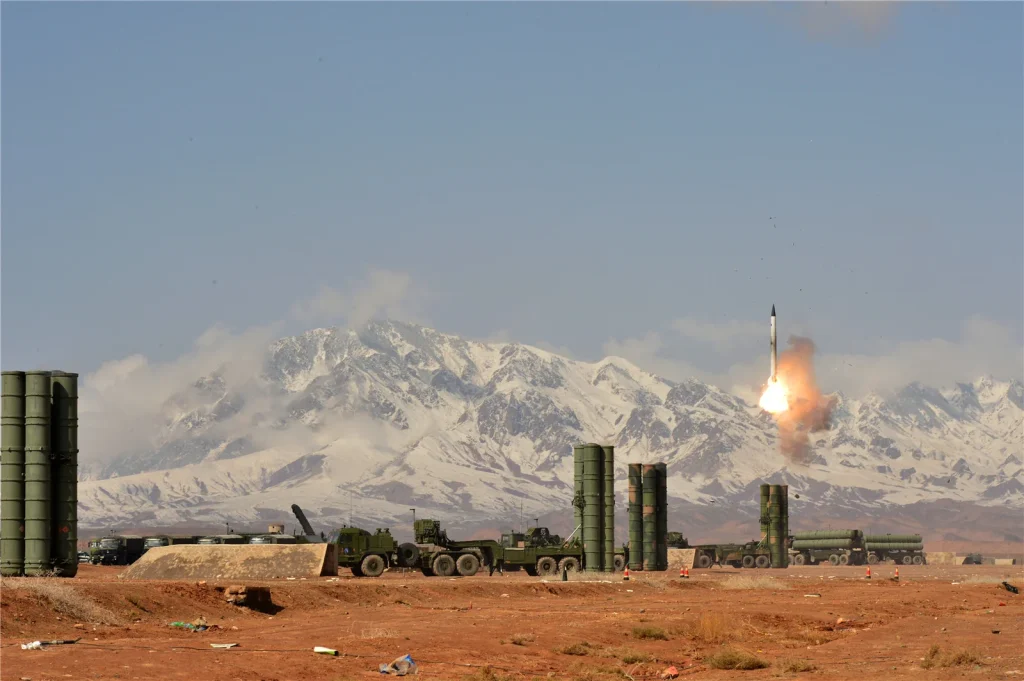
The phrase “capable of shooting down ballistic missiles” sounds considerably more impressive than it often appears in technical documentation. Ballistic threats range from relatively slow tactical missiles with ranges of only several dozen kilometers to the reentry vehicles of medium-range and intercontinental ballistic missiles.
A system such as the HQ-9B can possess a limited anti-ballistic capability without becoming an equivalent of specialized systems such as THAAD, the Chinese HQ-19, or the American Ground-Based Interceptor. It is most likely intended to destroy tactical ballistic missiles during the terminal, descending portion of their flight.
The export-oriented HQ-9BE has a claimed engagement range of up to 260 kilometers against aircraft. Its reported interception range against tactical ballistic missiles, however, is only about 25 kilometers, with a maximum engagement altitude of approximately 20 kilometers. The impressive 260-kilometer figure therefore has little direct relevance to ballistic missile defense.
This remains a useful capability. The HQ-9BE could protect a city, airbase, headquarters, or industrial area by attempting to intercept an incoming missile during the final stage of its trajectory. Its anti-ballistic coverage area, however, would be considerably smaller than the territory it could defend against aircraft.
A maneuvering target makes the problem even more difficult. A conventional ballistic trajectory is relatively predictable: radar data allows the system to calculate an interception point and guide a missile toward it. If the target changes direction or begins a sudden descent, the solution must be recalculated continuously, while the interceptor has to correct its own trajectory rapidly.
According to Chinese military commentator Song Zhongping, the HQ-9B combines inertial navigation, command updates, and an onboard seeker for terminal guidance. Thrust-vector control is supposed to provide the interceptor with the maneuverability required to pursue a changing target. Without information about the target missile, however, it is impossible to determine how demanding the test actually was.
Claims about intercepting hypersonic weapons should be treated with particular caution. High speed alone does not make a target a hypersonic glide vehicle. Defeating such a weapon requires long-range detection, stable tracking, prediction of a changing trajectory, and an exceptionally fast interceptor. The reported exercise does not demonstrate that China has completed this entire engagement chain.
The HQ-9 Is No Longer Just a Copy of the S-300
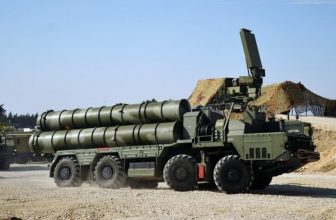
The first HQ-9 variants were developed under strong influence from the Soviet and Russian air-defense school, which is why the system is often described as a Chinese copy of the S-300. The resemblance is indeed apparent: a wheeled launcher carrying four canisters, vertical missile launch, separate radar and command vehicles, and a battery-based organizational structure.
The word “copy,” however, has become increasingly inadequate. Over the following decades, China repeatedly changed the missiles, radars, communications equipment, software, and command architecture. The HQ-9B is an evolution of the original system, while the HQ-9BE is its export variant.
In 2022, China also displayed a launcher carrying eight thinner missiles instead of four large interceptors. The larger missiles are expected to engage the most dangerous targets at longer ranges, while the smaller weapons would help counter denser attacks closer to the battery.
The modern HQ-9B is therefore better understood as a Chinese branch of long-range mobile air-defense development—one that originated under the influence of the S-300 but has since acquired its own missiles and electronic architecture.
Why the Chinese System Is Becoming an Export Competitor
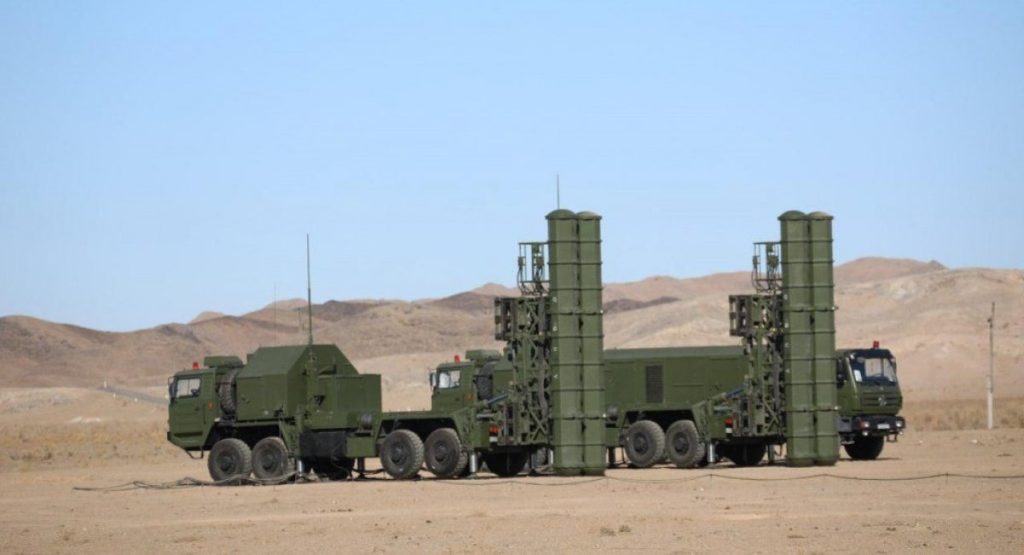
The test’s most important consequence may not be a transformation of China’s missile defenses, but an improvement in the HQ-9’s position on the international arms market. Most potential customers do not require a separate system dedicated exclusively to ballistic missile defense. They want a universal platform capable of protecting a large area from aircraft while providing at least limited protection against cruise and tactical ballistic missiles.
China offers exactly such a package: long-range interceptors, mobile radars, a command post, and the ability to integrate the system with other Chinese air-defense platforms. Chinese arms sales also tend to involve fewer political restrictions than purchases from Western suppliers.
The claim that Serbia, Azerbaijan, and Uzbekistan have all chosen the HQ-9 specifically instead of the Russian S-400 is nevertheless too categorical. The situation is different in each country.
Serbia has operated the Chinese FK-3 since 2022. This is the export version of the HQ-22, with a stated engagement range of up to 100 kilometers. It is not an HQ-9, although the two systems are frequently confused. Serbian President Aleksandar Vučić announced the intention to acquire the long-range HQ-9 only in June 2026. The number of batteries, system variant, delivery schedule, and contract value have not been disclosed.
Azerbaijan has progressed further. A newly accepted HQ-9 system was officially displayed at a military parade in Baku in November 2025. The HQ-9BE export version was subsequently presented at the ADEX exhibition in 2026. It supplements Azerbaijan’s existing S-300PMU-2 and other air-defense systems rather than necessarily replacing them immediately.
Uzbekistan became one of the earlier operators of the previous FD-2000 export variant. Tests were conducted as early as 2019, using drones that simulated hostile aircraft. There is currently no public confirmation that Uzbekistan has received the latest HQ-9BE.
This is therefore not a simultaneous decision by three countries to reject the S-400. It is part of a broader trend in which states that traditionally used Soviet and Russian air-defense equipment are gradually adding Chinese systems to their inventories.
Can the HQ-9B Really Replace the S-400?
According to its claimed specifications, the HQ-9BE already occupies the same export category as long-range Russian air-defense systems. It can engage aircraft at considerable distances and is advertised as capable of intercepting cruise and tactical ballistic missiles. Comparing the two systems solely by maximum range, however, would be misleading.
Actual effectiveness depends on the target’s altitude and radar signature, the radars connected to the battery, the number of targets that can be engaged simultaneously, resistance to electronic warfare, and the organization of the wider early-warning network. The characteristics of the individual missiles are also important because one battery may employ several interceptor types with different ranges and missions.
The contents of the export package matter just as much. A customer is not purchasing an abstract “260-kilometer range,” but a particular number of radars, command vehicles, launchers, missiles, spare parts, and support equipment. Without these details, it is impossible to compare the cost and capabilities of the Chinese offer fairly with the S-400.
The choice is also shaped by politics and logistics. China can provide financing, training, maintenance, and additional short- and medium-range systems capable of forming an integrated network. For a country that already operates Chinese radars or systems such as the FK-3 and HQ-17AE, expanding the same architecture may be easier than introducing equipment from another supplier.
The Greatest Threat to the S-400 Is Not a Single Chinese Missile
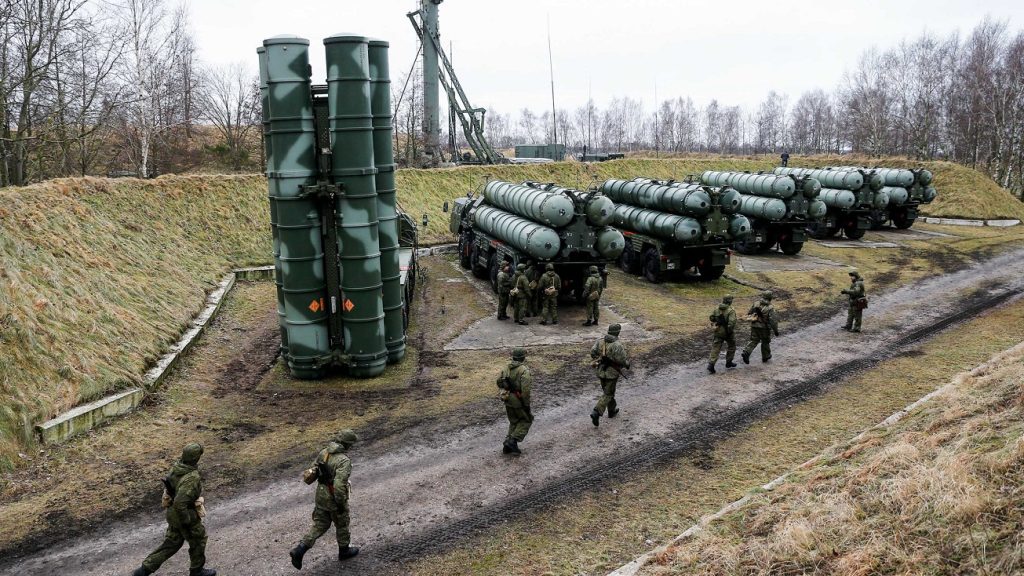
The reported ballistic-target interception does not prove that the HQ-9B is superior to the S-400 or capable of defeating hypersonic glide vehicles. China has not disclosed the target’s characteristics, the interception distance, or the engagement altitude. The test’s promotional impact is therefore considerably greater than the amount of available technical evidence.
For the export market, however, that may be enough. Potential buyers are being offered not simply an individual surface-to-air missile but an evolving family of systems—from comparatively affordable medium-range platforms to the long-range HQ-9BE with a limited anti-ballistic capability.
This is the real challenge to Russia’s position in the air-defense market. The Chinese system does not have to demonstrate complete superiority over the S-400. It only needs to offer a comparable set of capabilities, remain available for export, and integrate smoothly with other Chinese air-defense systems already purchased by the customer.
The HQ-9 began as China’s answer to the S-300. It is now becoming a system that Russian air-defense manufacturers must compete against in markets they once dominated.