Once Again on the "Trump"/"Defiant"-class guided-missile battleships

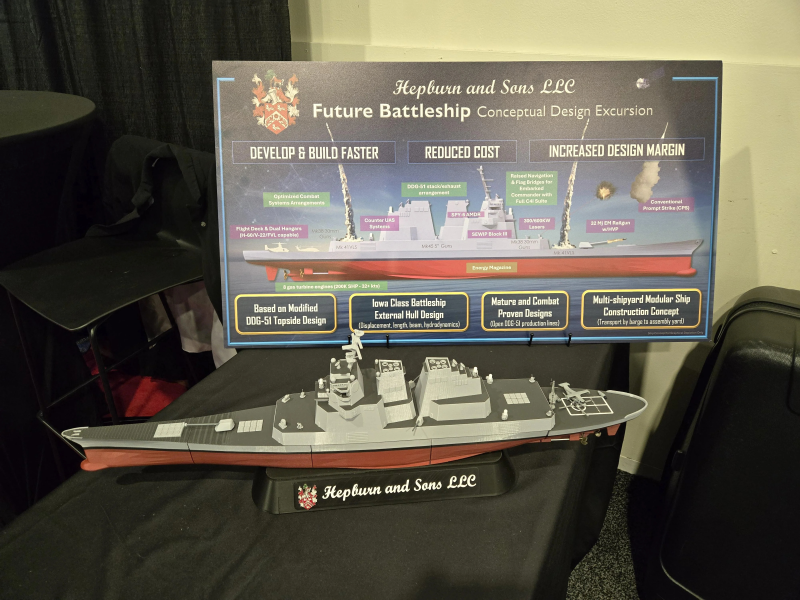
The U.S. Navy appears to be quite serious about the future BBG(X) missile battleships. The 2027 budget proposal requests $1 billion for engineering and design work on ships of this class. The first guided-missile battleship is expected to be ordered in the 2028 budget, with the next two to follow in 2030 and 2031.
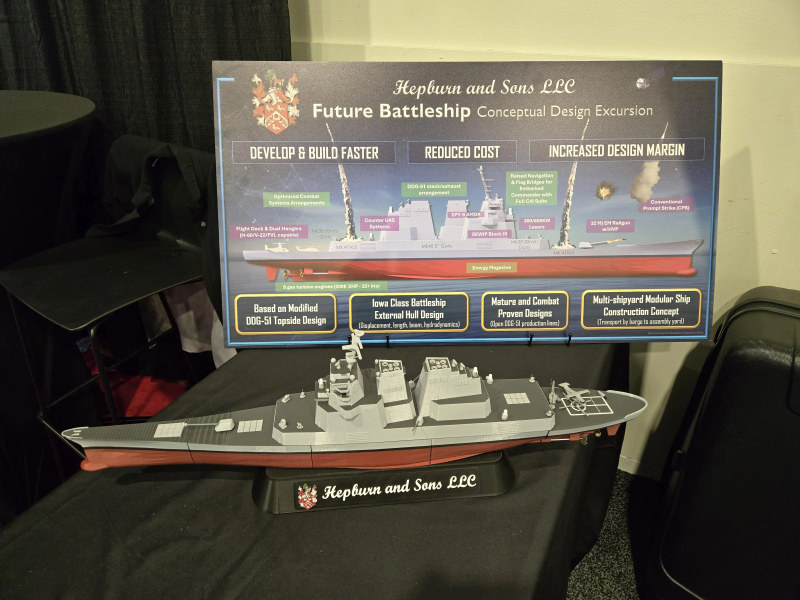
A conceptual design for a “Trump”-class battleship, developed by the engineering and consulting firm “Hapburn & Sons” and presented at the annual symposium of the U.S. Naval League. This design combines an adapted “Iowa”-class battleship hull with superstructure elements borrowed from “Arleigh Burke”-class destroyers.
The cost of the first “Trump”-class battleship—BBG-01 USS “Defiant”—is estimated at $17 billion (!), which exceeds the cost of a “Gerald R. Ford”-class nuclear supercarrier (!!!). However, the high price of the lead ship appears to be due to the fact that it includes the cost of design and engineering work for the entire class. Subsequent battleships should be less expensive.
Most importantly, the reasoning behind the American admirals’ sudden decision to abandon the DDG(X) next-generation destroyer project and switch to the BBG(X) battleships—which are three times larger—has become clear:
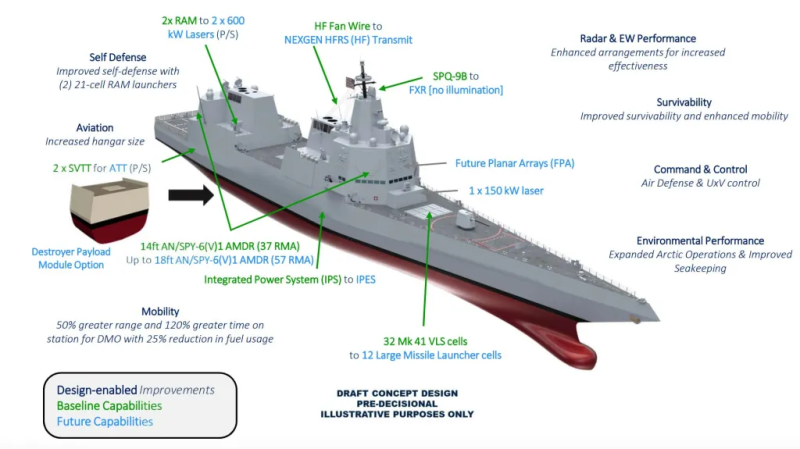
According to the admirals, the DDG(X) destroyer under design simply… didn’t work. The chosen hull size turned out to have insufficient space to accommodate all the systems that the U.S. Navy considered necessary for a new-generation ship. No matter how hard the engineers tried, something just wouldn’t fit: they either had to give up the 127-mm multi-purpose gun, or a third of the Mk-41 vertical launch systems, or the heavy Conventional Prompt Strike (CPS) launch tubes for hypersonic missiles.
In an effort to resolve the issue, the admirals even considered for a time the possibility of launching two versions of the DDG(X) destroyer into production simultaneously:
* the first (multi-purpose) — without heavy CPS launch silos, but with a full complement of 96 Mk-41 vertical launch systems;
* the second (strike) variant—with twelve heavy CPS launch tubes, but with the number of Mk-41 vertical launch systems reduced to 48;
However, this solution proved to be unreasonably expensive and complicated. A simple calculation showed that a pair of destroyers would cost more than a single large ship in both construction and operation—since two ships would require two sets of radars, computers, and power plants, as well as two crews (which is particularly expensive). A single large ship, requiring only one crew, seemed like the cheaper solution. And so the admirals decided to halt work on the DDG(X)—not a single dollar was requested for the project in 2027—and switch to a hull of sufficient size.
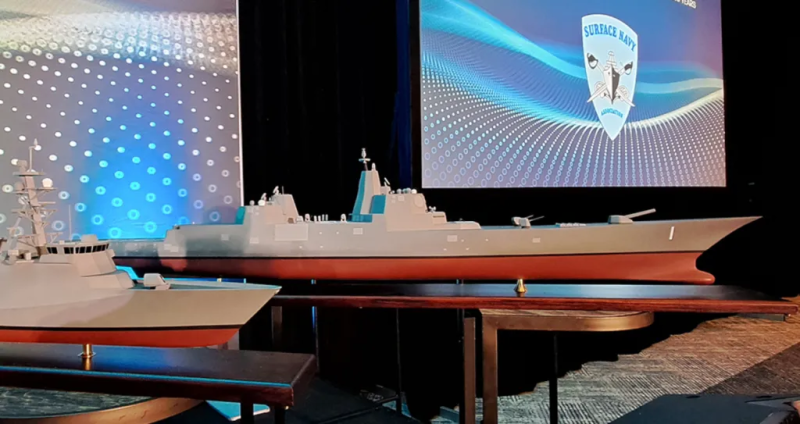
And it seems that this time, the U.S. Navy has learned the lessons from the costly failures of past decades (such as the “Constellation” missile frigate program). Admiral Daryl Codle, Chief of Naval Operations, stated that the U.S. Navy will order the first BBG(X)-class battleship only after the ship’s design has been fully completed and the final design has been officially approved.
This approach—a de facto return to the classical principles of naval ship design—represents a radical departure from the previously dominant doctrine of “concurrency” (English: “concurrency”), under which design refinement proceeded in parallel with the start of construction. At the time, “concurrency” was presented to the navy as an innovative way to save time and money on the design and construction of new ships; the practical results, however, turned out to be literally the opposite of what was expected.
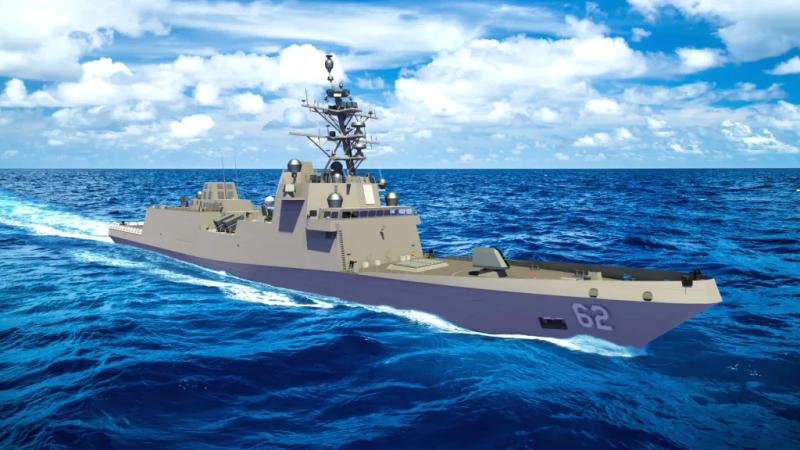
It is precisely this “parallel” approach that is considered the main reason for the failure of the FFG(X) missile frigate construction program, also known as the “Constellation” class. Designed to save time, this approach (combined with the Navy’s overly ambitious requirements for what was, in essence, an adaptation of a ready-made imported design) led to the keel-laying of the first frigate being delayed by three years—and the design still had not been finalized. By the time the program was canceled in late 2025, the first frigate was only 10–12% complete—and the design was still not finalized.
It seems that the U.S. Navy has at least learned this lesson. The “Trump”-class battleships are being designed according to a classic layout, and the first ship in the series will not be ordered until the Navy approves the final design.
P.S. It should be noted, however, that the program’s main proponent—Secretary of the Navy John Felan—has literally just been removed from office. One of the main reasons cited is precisely the conflict with Defense Secretary Pete Hegset over the “Trump”-class battleship program; Hegset is critical of the project, advocating for a fleet of small (primarily unmanned) vessels.
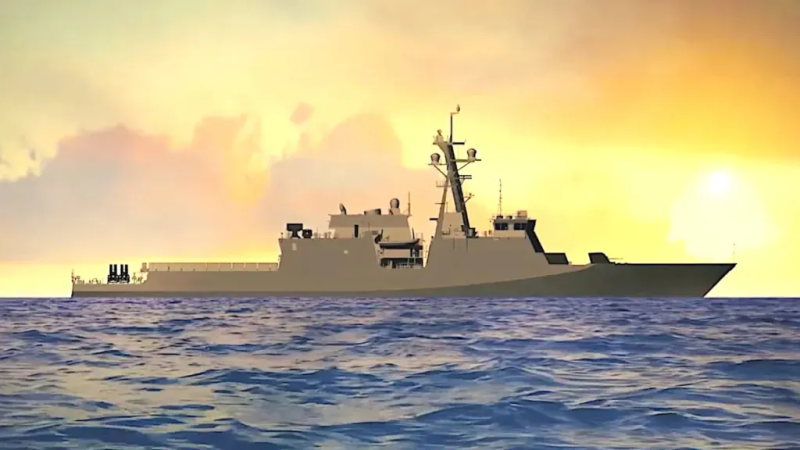
The FF(X)-class frigate is the kind of ship Hegset would like to build. The U.S. Navy, however, is not particularly enthusiastic about the design, considering it too vulnerable and underarmed.
However, it seems unlikely that the BBG(X) project will be completely canceled. The reason is simple: the U.S. Navy simply has no alternative. Following the cancellation of the DDG(X) and FFG(X) programs, there are currently no new major-class ship projects in development. The Arleigh Burke-class destroyers currently under construction are already considered an outdated design (remember that the first ship was laid down back in 1988). Furthermore, the BBG(X) project enjoys the support of both President Trump and Chief of Naval Operations Daryl Codle—one of the most influential American admirals at the moment.
I personally believe (as I have noted on numerous occasions) that the BBG(X) program was most likely designed to be “over-engineered” from the outset so that it could be scaled down into something more compact and efficient—most likely, a 15,000–20,000-metric-ton missile cruiser (possibly even nuclear-powered), the CG(X). Such ships will be large enough to accommodate all the admirals’ “wish list” items, and at the same time inexpensive enough for mass production.
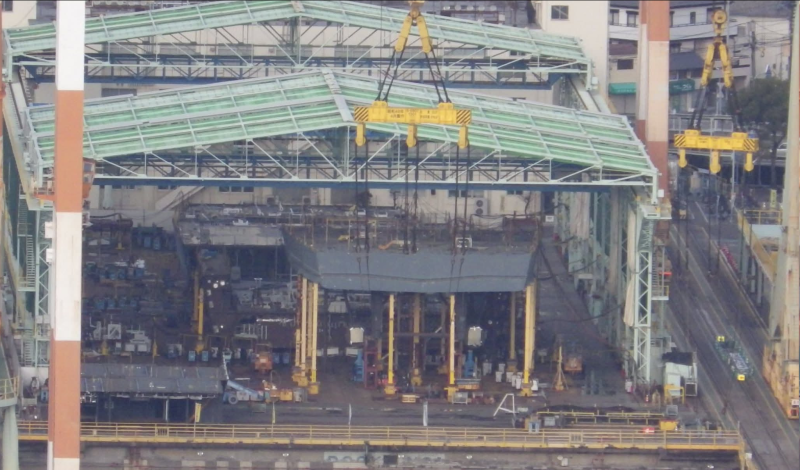
A 15,000-metric-ton missile cruiser of the Japan Self-Defense Forces currently under construction at the shipyard
And if that is the case, it seems quite likely that, in the long term, the U.S. Navy will abandon the concept of the destroyer—as a medium-sized, multi-purpose ship—in favor of a combination of relatively large missile cruisers (carrying long-range strike weapons, area defense systems, powerful radars, energy weapons, etc.) and small, mass-produced frigates (carrying primarily self-defense systems and anti-submarine weapons).