French Range: The Dassault Falcon 7X and 8X as the Engineering Benchmark in Business Aviation

In the world of private aviation, there is an unspoken distinction: some people buy aircraft for status, while others do so for range and efficiency. Dassault Aviation has traditionally focused on the latter category. The Falcon 7X and Falcon 8X business jets are not a display of luxury, but rather the result of an engineering approach rooted in commercial and military aviation.
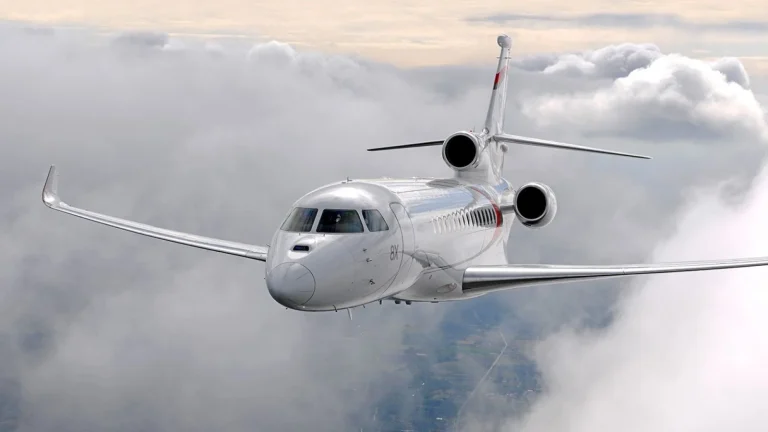
These aircraft were designed for those who care not just about flying in comfort, but about flying long distances, independently, and without unnecessary compromises.
Contents:
Where Did the Falcon 7X Come From?
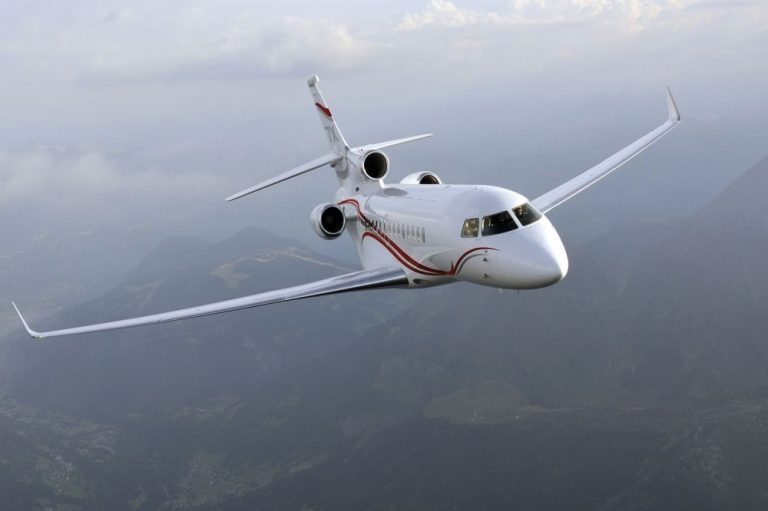
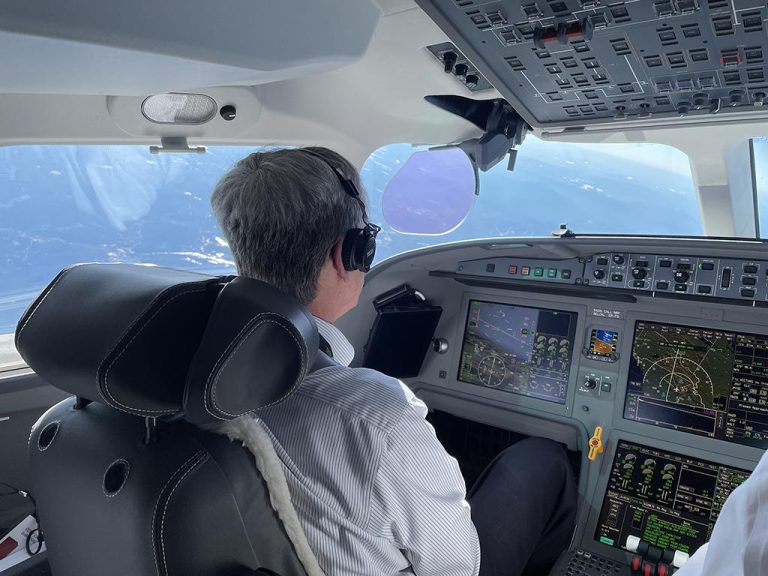
The Dassault Falcon 7X took to the skies for the first time in 2005 and marked a turning point for the entire Falcon lineup. It was one of the first business jets to be designed from the ground up using digital modeling and to feature a full fly-by-wire system—a technology previously found mainly in fighter jets and wide-body airliners.
For Dassault, this was a logical step: the company had been building military aircraft for decades and simply applied military standards for reliability, redundancy, and control to the civilian sector.
The Falcon 7X immediately stood out from the competition:
- intercontinental range;
- stable performance at high altitudes;
- the ability to work with short and complex VPPs.
Why does a business jet need three engines?
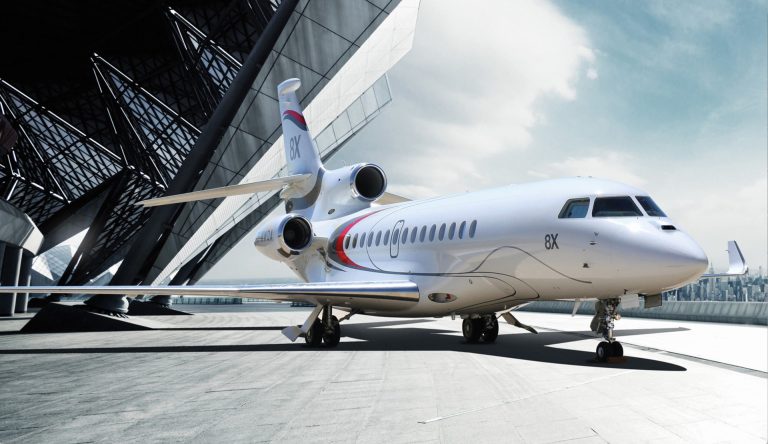
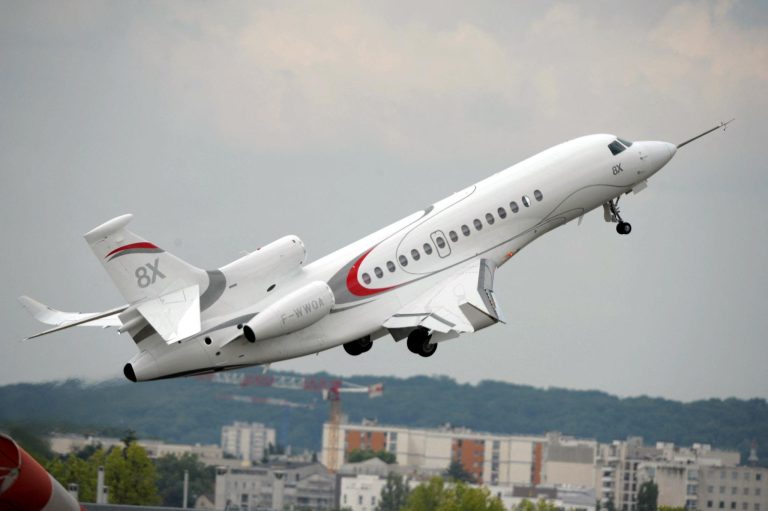
One of the key features of the Falcon 7X and 8X remains their three-engine configuration, which has all but disappeared from modern civil aviation.
For Dassault, this isn’t an archaic concept, but rather an engineering calculation:
- An auxiliary engine improves reliability on long-haul routes;
- thrust balance is improved during takeoff from short runways;
- Certification requirements for flights over oceans and sparsely populated areas are being simplified.
With three engines, the Falcon remains a versatile aircraft, rather than being tied to major airports.
The Falcon 8X: An Evolution of the Concept
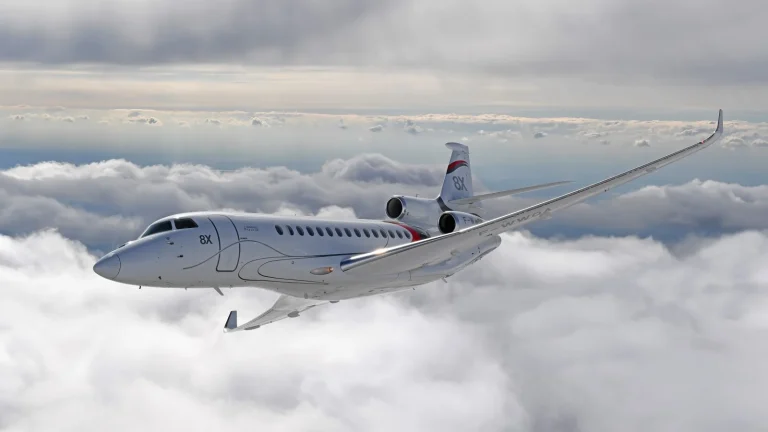
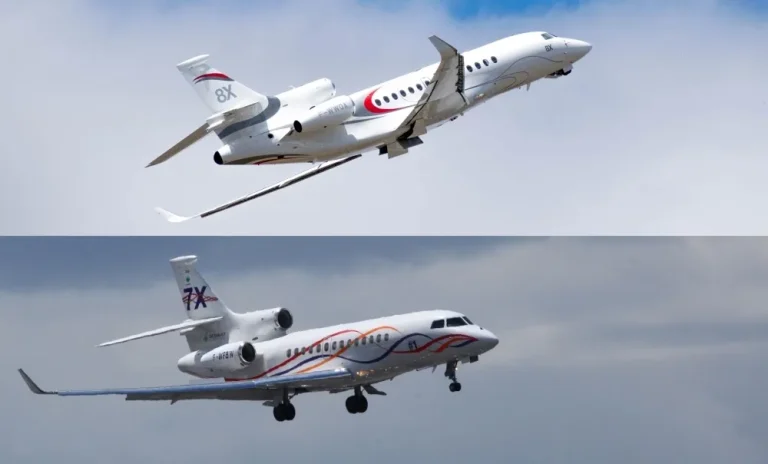
If the 7X was a breakthrough, then the Dassault Falcon 8X is its logical and very refined evolution. Dassault did not design a new aircraft from scratch, but rather redesigned a successful platform.
The Falcon 8X features:
- an elongated fuselage and a more spacious cabin;
- an extended range of nearly 12,000 km;
- a redesigned wing with improved aerodynamics;
- upgraded engines with lower fuel consumption.
The result was an aircraft capable of flying routes such as Paris–Singapore or New York–Middle East without any stopovers.
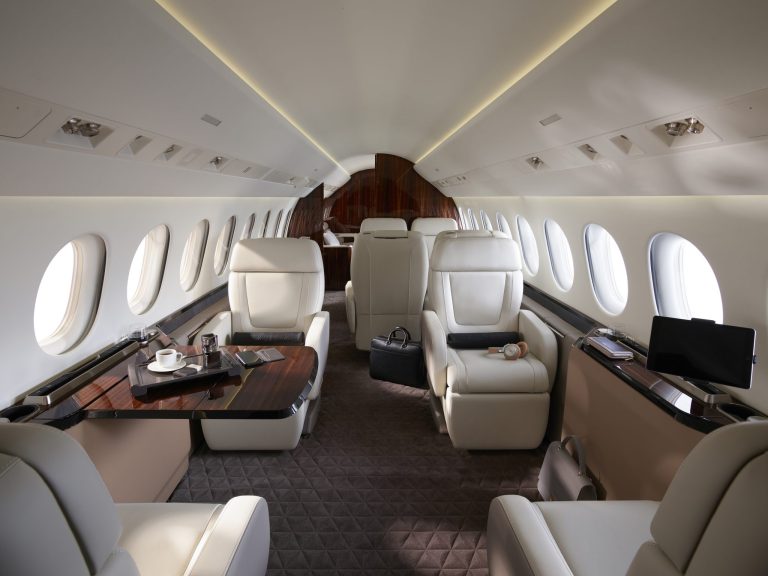
The cab as a workspace, not a passenger compartment
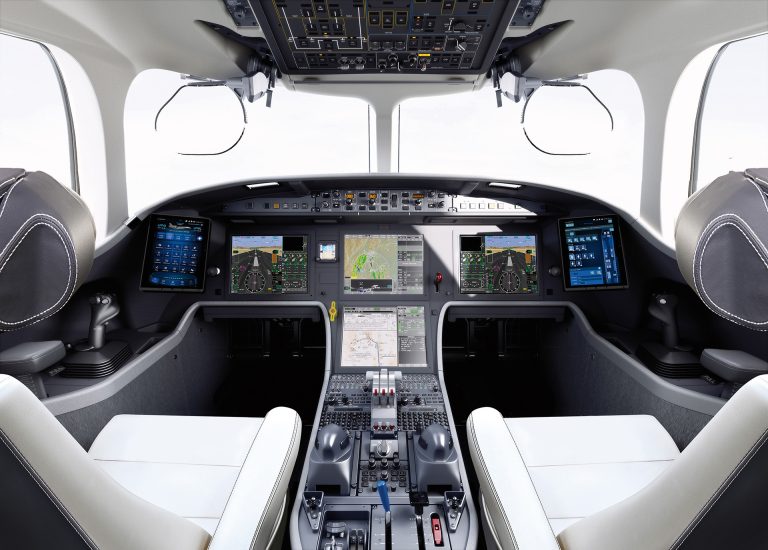
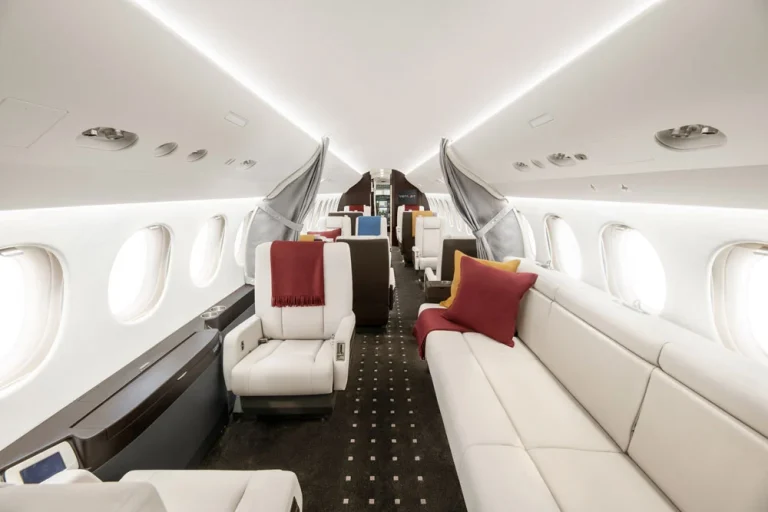
The Falcon 7X and 8X were designed not as “flying living rooms,” but as long-term living spaces. This is evident in the details:
- low noise level;
- more stable cabin pressure at high altitudes;
- Logical zoning: work, relaxation, sleep;
- the ability to flexibly configure the system to meet the owner’s needs.
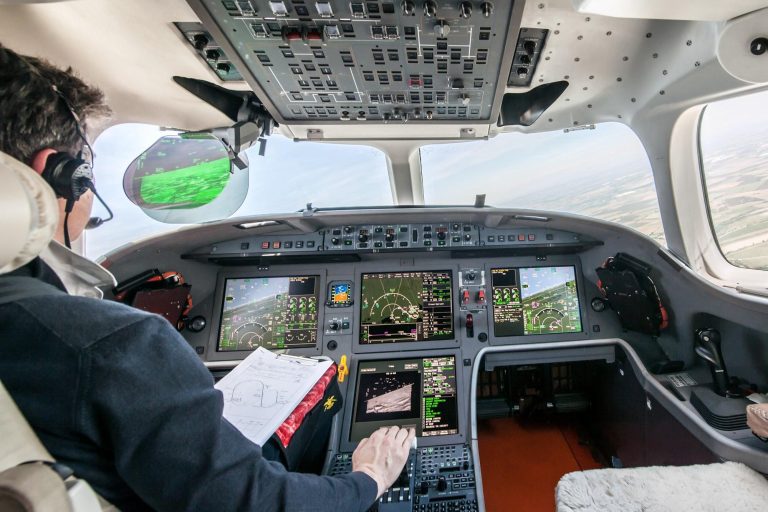
In the 8X, this approach has been taken to the extreme. Its cabin is often compared not to an airplane, but to a mobile office or apartment, where a flight is not wasted time, but a continuation of the work process.
Military Heritage in a Civilian Guise
Dassault has never made a secret of the fact that the Falcon is a civilian aircraft with military DNA.
Its control systems, redundancy, and philosophy of fault tolerance all stem from the Mirage and Rafale fighter programs.
That is exactly why Falcon:
- rarely reach record speeds;
- hardly compete in the race for “the most luxurious interior”;
- However, they are consistently regarded as some of the most reliable and long-range business jets in the world.
Why Are These Airplanes Still Relevant Today?
Amid growing competition and the emergence of ultra-long-range twin-engine business jets, the Falcon 7X and 8X continue to hold their own in their niche. The reason is simple: they were designed not for marketing purposes, but for real-world operating scenarios.
These are the airplanes:
- for executives who frequently travel between continents;
- for government and diplomatic missions;
- for operators working in challenging regions.
Conclusion
The Falcon 7X has become a symbol of a technological breakthrough in business aviation.
The Falcon 8X is its mature successor.
They aren’t designed to make a splash at air shows. Their purpose is to fly long distances, reliably, and without any surprises. And that is precisely why, even years later, these aircraft remain the benchmark for those who prioritize efficiency over luxury.