Hypersonic Flight in Passenger Aviation. China’s Space Transportation Yunxing airliner will set the trends in passenger aviation for the next 50 years

I don’t think I need to tell anyone that the Chinese have come much further than Russia in terms of import substitution for their aircraft. While Russia is still trying to get its first entirely domestically produced aircraft into the air, in China they have been flying for a long time now—there are hundreds of them—and they have not only captured the Chinese market but are also rapidly entering the international arena. To be fair, though, it must be said that they do not need to replace imports with their own aircraft as radically as Russia does. But those are details; as we all know, the score is on the scoreboard.
However, all of this is, so to speak, today’s technology, but the Chinese have also set their sights on the technology of the future and are working on developing a passenger aircraft capable of near-hypersonic speeds. Admittedly, it falls just a little short of true hypersonic speeds. But those are just minor details. In any case, this publication will focus on this development.

Beijing-based Space Transportation has unveiled the Yunxing hypersonic aircraft project, which can travel from London to New York in just two hours. This innovative aircraft will be capable of reaching speeds of 4,900 km/h, which is three times faster than its closest competitor—NASA’s Son of Concorde.
Contents:
Key features of the Chinese airliner:
- First and foremost, it’s the supersonic cruising speed. The aircraft will be able to reach speeds significantly faster than the speed of sound, which will significantly reduce travel time for passengers.
- Vertical takeoff and landing: The Yunxing will be capable of taking off and landing vertically, making it more versatile and suitable for a variety of airports.
- Flight altitude: The Yunxing will be able to climb to an altitude of up to 20,000 meters, which reduces air resistance and improves flight efficiency.
- New Materials: The aircraft’s fuselage will be made of special materials capable of withstanding extreme temperature fluctuations, which is critical for hypersonic flight.
- Test Schedule: The first test flights are scheduled for 2027, and commercial flights could begin as early as 2030 if the project is successful.
It’s clear that, with its stated specifications, the Yunxing aircraft looks—without exaggeration—like something out of a science fiction story. And even if only some of those specifications are realized, this aircraft will leave all its competitors in the dust—for decades to come.

About Technologies
The Yunxing supersonic passenger airliner program, developed by the Chinese company Space Transportation, incorporates a number of innovative technologies that ensure its exceptional performance and capabilities. The main ones are as follows:
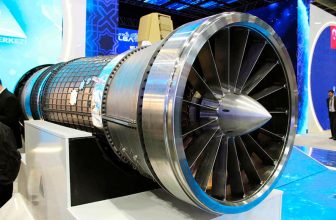
The new powerplants are capable of accelerating the aircraft to 4,900 km/h, which is four times the speed of sound (hypersonic speeds begin at 5,000 km/h). This significantly reduces flight time—for example, a flight from New York to London would take only two hours. It should be noted that such engines do not yet exist. And even the development of just one such engine would be a huge step forward—or a fiasco, if development were to end at this stage.
Technology for vertical takeoff and landing. Reports today indicate that electric motors will be used for this purpose, so that the aircraft will function similarly to a drone. The use of jet engines has proven to be a dead-end path of development due to their enormous fuel consumption. That is why there are no passenger VTOL aircraft. It will be impossible to make them cost-effective.

Here, just as in the first case, if the Chinese manage to solve even just this one problem, they deserve a monument.
Flying at such high speeds requires reliable thermal protection. There have been some developments in this area worldwide, and these technologies have been used in reusable spacecraft and hypersonic weapons. However, these technologies are prohibitively expensive; reducing their cost is key to their adoption in the civilian sector.
A vehicle with such extraordinary performance capabilities will require the most advanced control systems, far surpassing those in use today. However, compared to previous challenges, this one seems like a piece of cake.

Conclusion
To summarize all of the above, it’s fair to say that the Chinese are aiming for a major breakthrough in the field of aviation. Will they succeed? Who knows? But so far, they haven’t managed anything like this. Although they did fly to the Moon. And that’s no easier than developing a hypersonic passenger aircraft. But whatever the case may be, the very fact that they’re working on such a technology-intensive project will significantly advance China’s technological capabilities in a wide variety of fields.
Will the Chinese be able to complete this project as announced? I think it’s clear to everyone that there’s a 90% chance they won’t. Even if the aircraft manages to take off and meets at least one of the stated specifications, it won’t be used for commercial flights. At best, it will serve as a test bed and technology demonstrator. But it sets the direction for the future of passenger aviation, and someday—perhaps in 30 to 50 years—aircraft like this will enter commercial service.