If the Soviet Union Had Survived: What Soviet Main Battle Tanks of the 1990s Could Have Looked Like

The history of Soviet tank development ended at perhaps its most interesting moment. By the late 1980s, the USSR simultaneously possessed several powerful schools of main battle tank design. The T-72B and T-80U were entering service, while work continued on advanced vehicles, new powerplants, protection systems, weapons, and entirely new layouts. In reality, the collapse of the Soviet Union disrupted many of these programs, shattered industrial cooperation, and forced the Russian defense industry to concentrate primarily on improving equipment that already existed.
In our alternative timeline, this never happens. The political crisis of 1990–1991 ends with the signing of a new Union Treaty. The USSR becomes a much more decentralized state, begins economic reforms, and cuts military spending, but retains a unified armed forces and military-industrial complex. There is less money available for new tanks than there had been during the 1980s, but instead of an industrial collapse, resources are concentrated on the most promising projects.
As a result, Soviet tank forces of the 1990s receive very different vehicles.
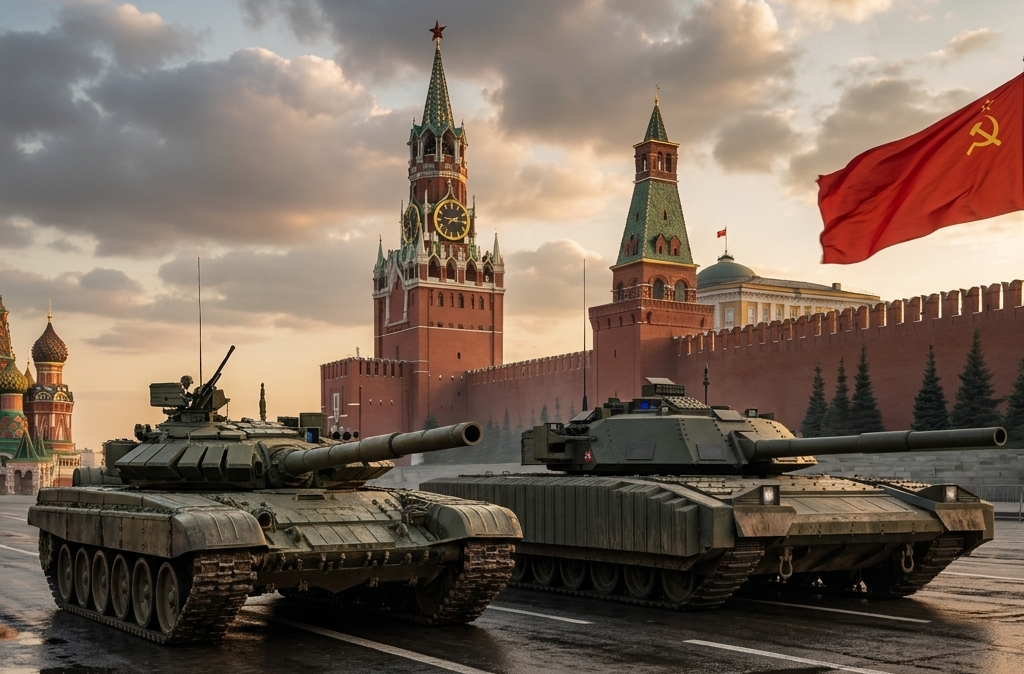
1992: Instead of Another T-72, the T-73 Appears
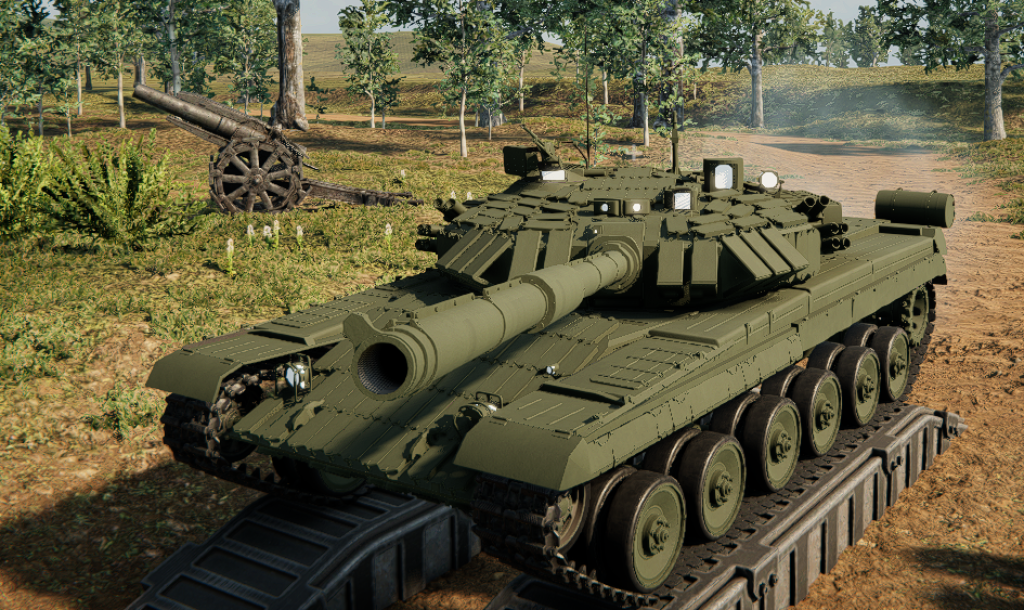
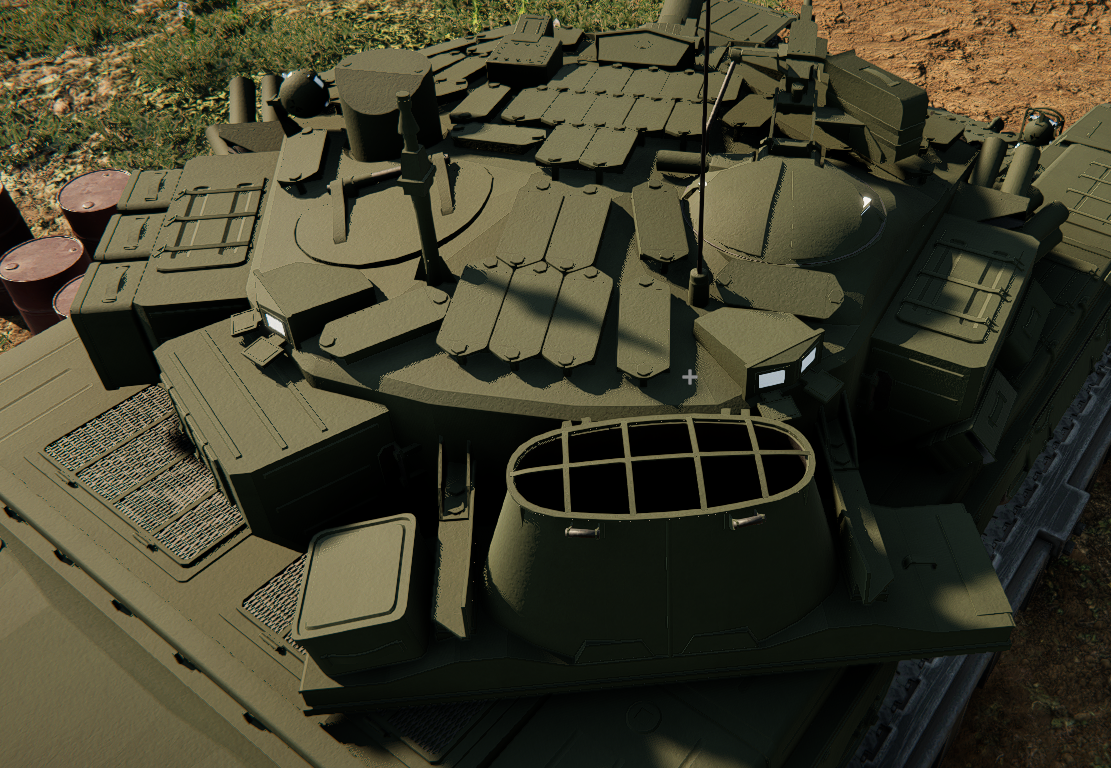
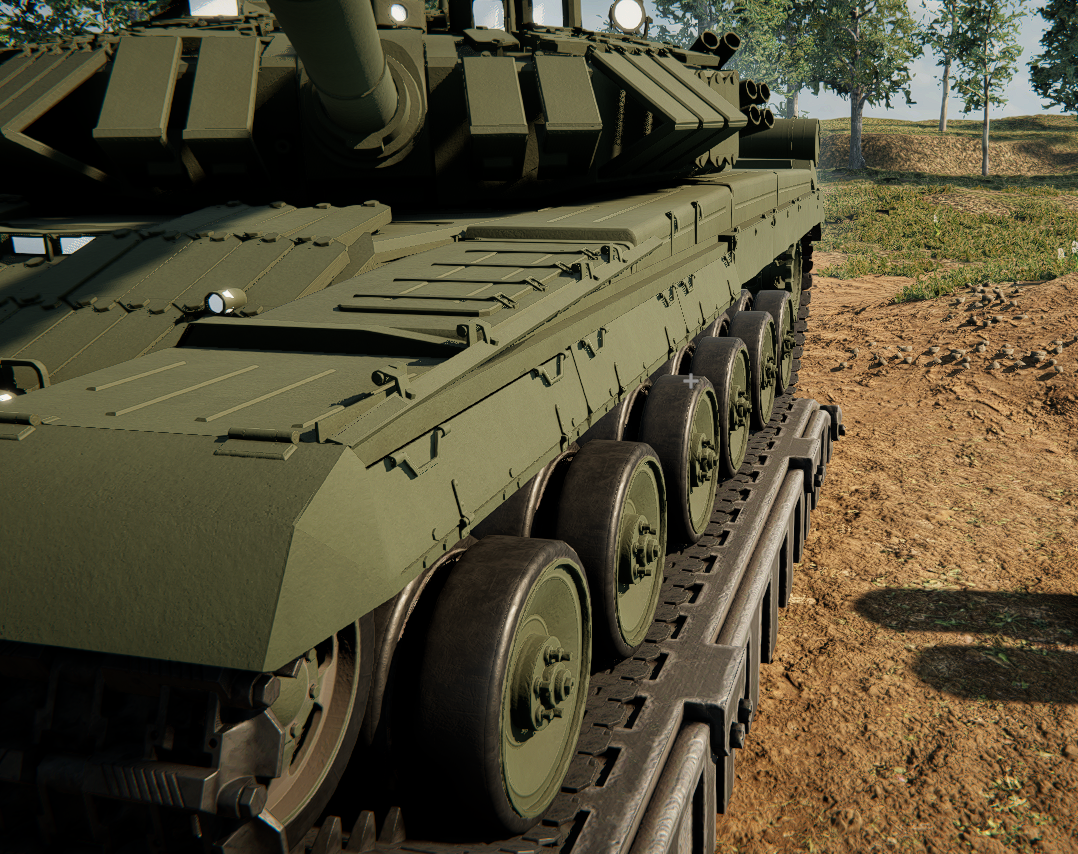
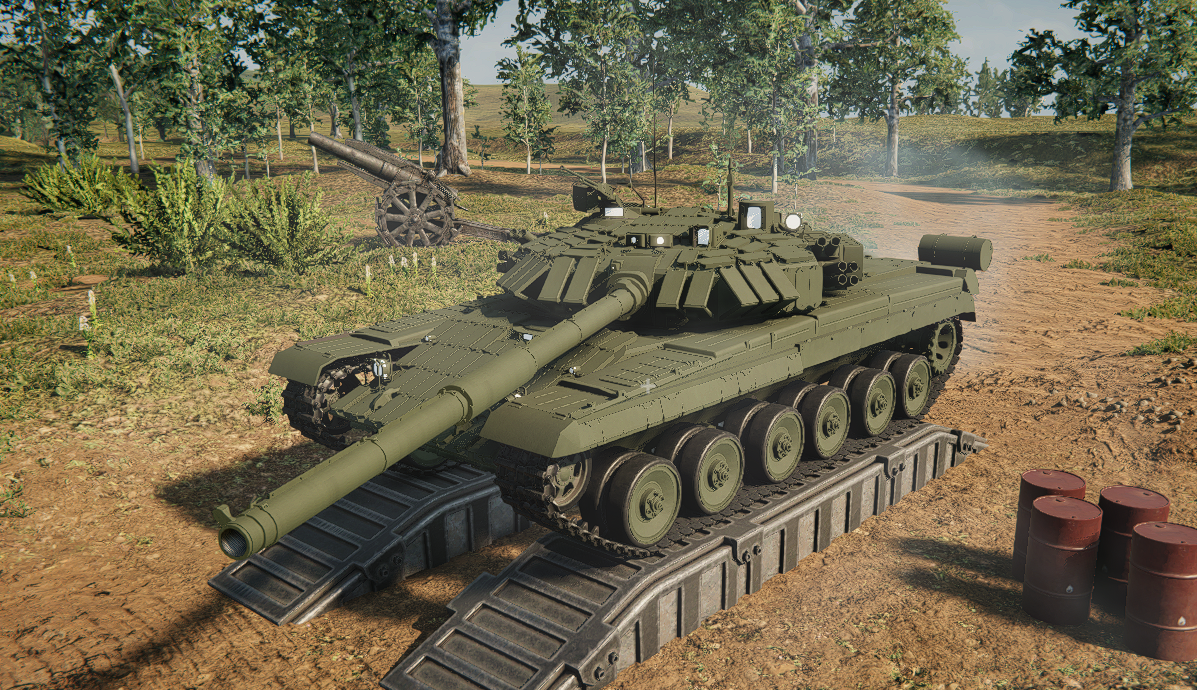
The first new tank of the post-Cold War era is the T-73, entering service in 1992–1993. It cannot be considered an entirely new design. Rather, it is the last and most advanced representative of the traditional T-72 line, a vehicle in which Soviet designers attempt to eliminate virtually all of its predecessor’s major shortcomings.
The most important change is weight. Soviet military planners finally abandon the determination to keep the main battle tank within the 40–45-ton range at almost any cost. The development of Western 120 mm guns, new armor-piercing fin-stabilized discarding sabot ammunition, and advanced anti-tank guided missiles demonstrates that protection can no longer be substantially increased without accepting greater weight. The T-73 therefore weighs approximately 48.5 tonnes.
The tank receives new composite armor, integrated explosive reactive armor, substantially improved side protection, a new fire-control system, and an improved 125 mm gun. At the same time, it retains the traditional Soviet layout: the crew consists of three men, with the driver in the hull, the commander and gunner in the turret, and the autoloader beneath them.
The most important change, however, is hidden inside the engine compartment.
1,200 Horsepower
A nearly 50-tonne T-73 can no longer make do with an 840–1,000 hp engine. The USSR therefore accelerates development of a new generation of X-layout diesel engines.
This assumption does not require any fantastic technology. In reality, the Soviet Object 187 tested the X-layout A-85-2 diesel developing approximately 1,200 hp. The technological foundation for such a leap therefore already existed in the early 1990s.
The production T-73 receives an engine producing approximately 1,170–1,200 hp.
At a combat weight of 48.5 tonnes, this gives it a power-to-weight ratio of roughly 24 hp per tonne and a maximum road speed of approximately 65–67 km/h. Despite being considerably heavier than its predecessors, the T-73 remains a highly mobile vehicle.
And the mass production of this new engine becomes one of the most important developments in the subsequent history of Soviet tank design.
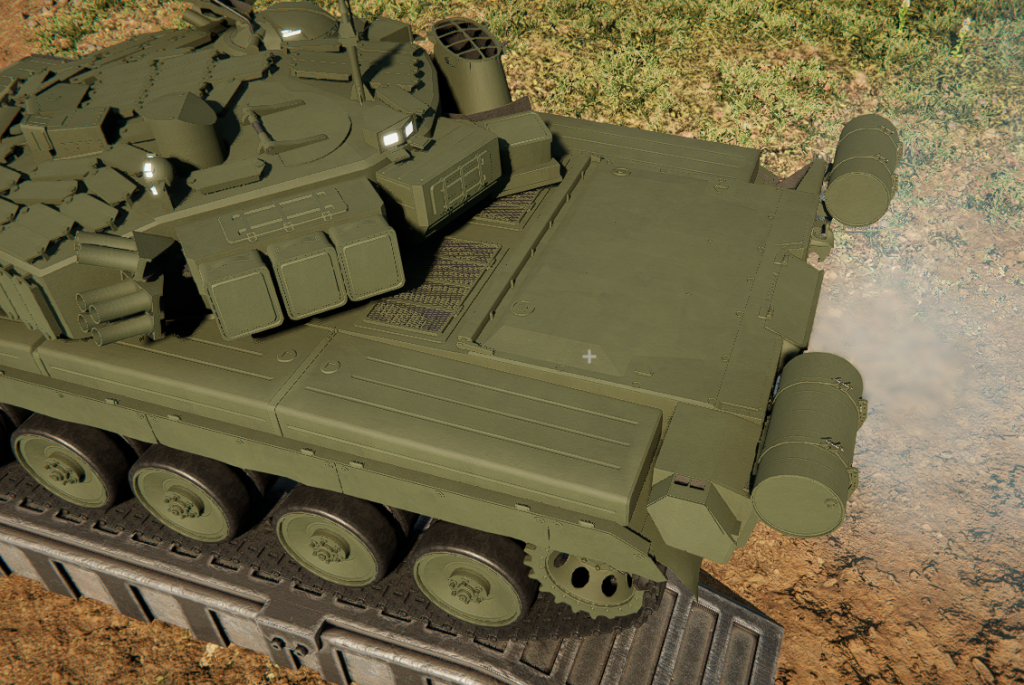
T-73 engine compartment
What Happens to the T-80?
The T-73 does not immediately send the T-80U into retirement. During the first half of the 1990s, the two vehicles serve alongside one another. The T-80U remains the more expensive tank assigned to first-line formations, while the T-73 gradually becomes the new standard MBT of the Soviet Army.
However, the new diesel tank gradually deprives the T-80 of its principal advantage — its outstanding power-to-weight ratio. The T-73 now has approximately 1,200 hp while retaining much better fuel economy and offering considerably greater potential for further development.
By 1995–1996, the General Staff concludes that maintaining several parallel MBT families no longer makes sense. Production of the T-80 is gradually reduced, while the new diesel line becomes the principal direction of development.
Yet it soon becomes clear that even the T-73 is only an interim solution.
The Final Limit of the Old School
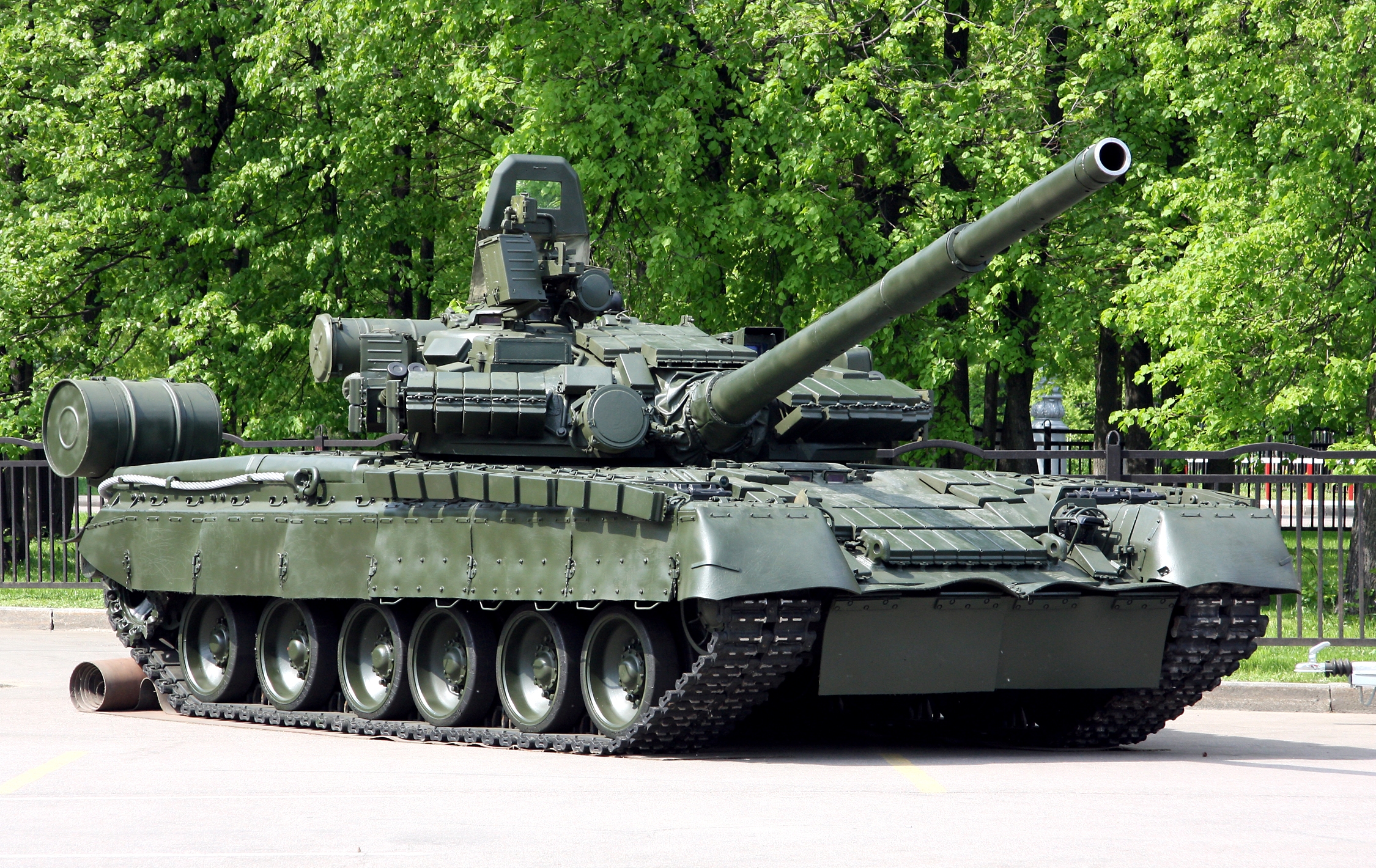
The main problem with the T-73 lies in its origins. No matter how extensive the modernization, its architecture is still based on a tank whose fundamental design solutions date back to the late 1960s and early 1970s.
Internal volume is limited. Weight is approaching 50 tonnes. Accommodating increasingly sophisticated electronics becomes difficult. The old autoloader limits the length of future armor-piercing fin-stabilized discarding sabot projectiles. Greater engine power requires increasingly effective cooling systems.
The capabilities of the T-73 can still be increased.
But the USSR chooses another path.
In 1993–1994, development begins on a new-generation main battle tank.
This vehicle will eventually receive the designation T-92.
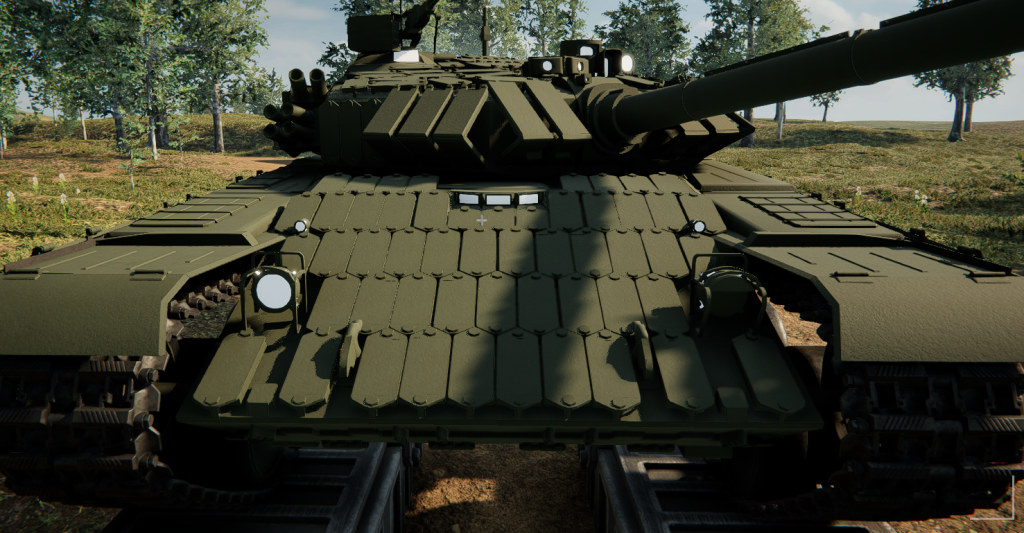
The T-90 Never Exists in This World
This is one of the fundamental differences between our alternative history and reality.
In our world, the Russian Army adopted the T-90 in 1992. Developed from Object 188, it represented a further evolution of the T-72B. But the need for such a vehicle was heavily influenced by an entirely different economic and political environment.
In a surviving Soviet Union, that niche has already been filled by the T-73.
Therefore, the T-90 never appears in this timeline.
The T-91 designation remains associated with experimental programs and research vehicles, while the first genuinely new production Soviet MBT after the T-73 receives the designation T-92.
And this is no longer a modernized T-72.
It is a new tank.
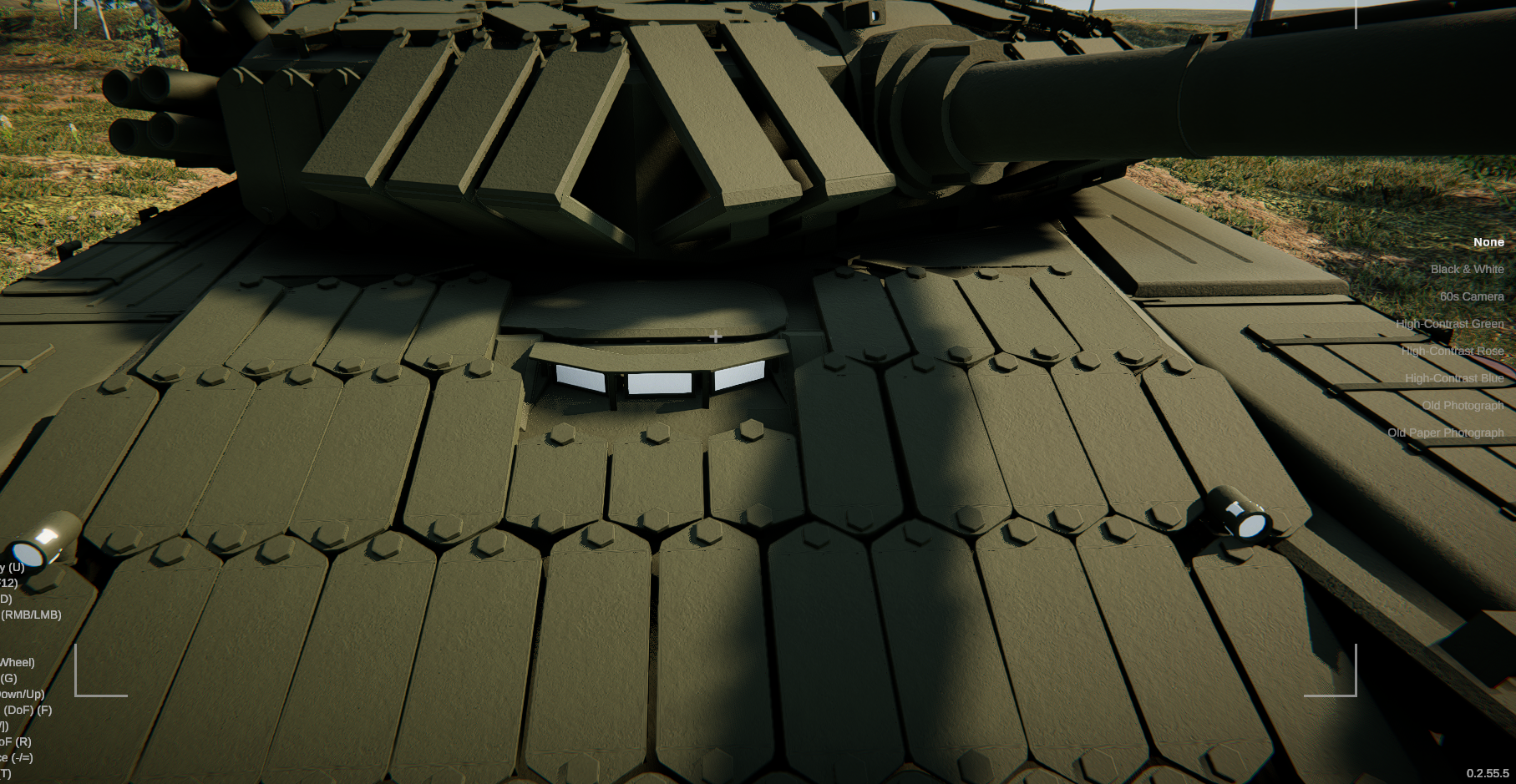
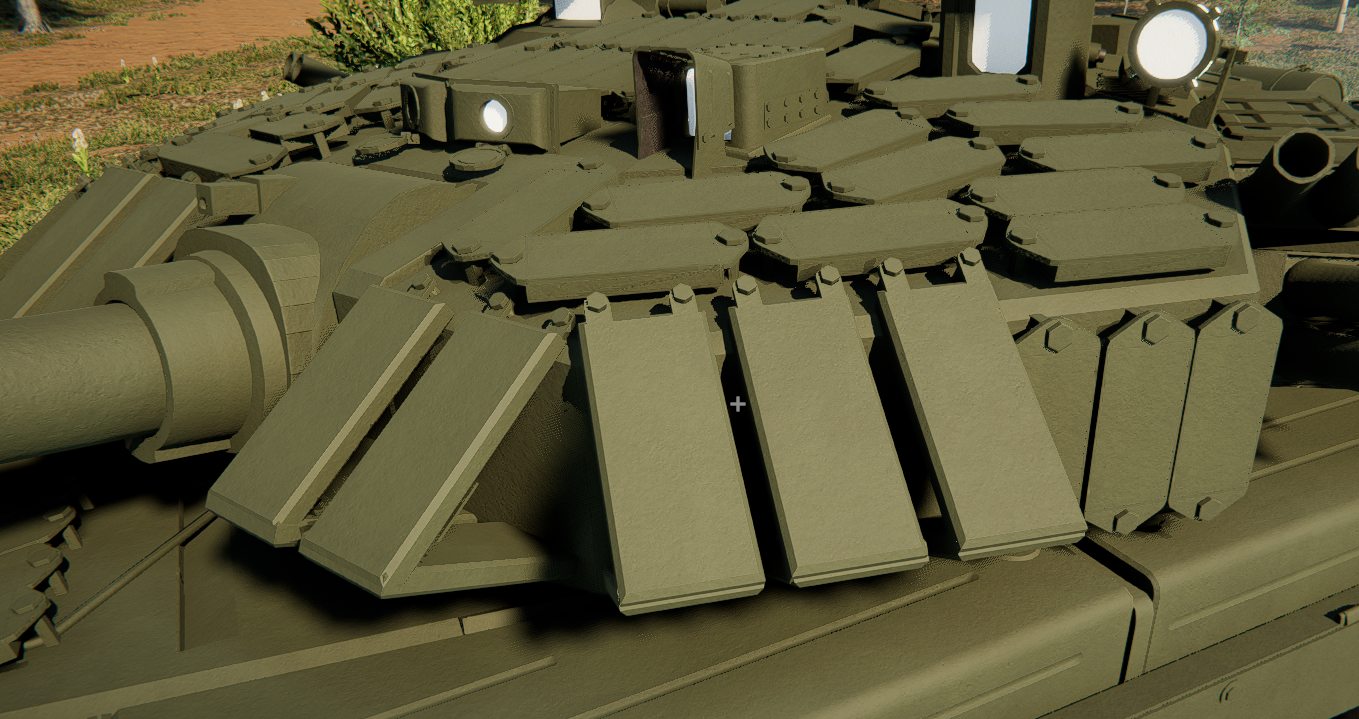
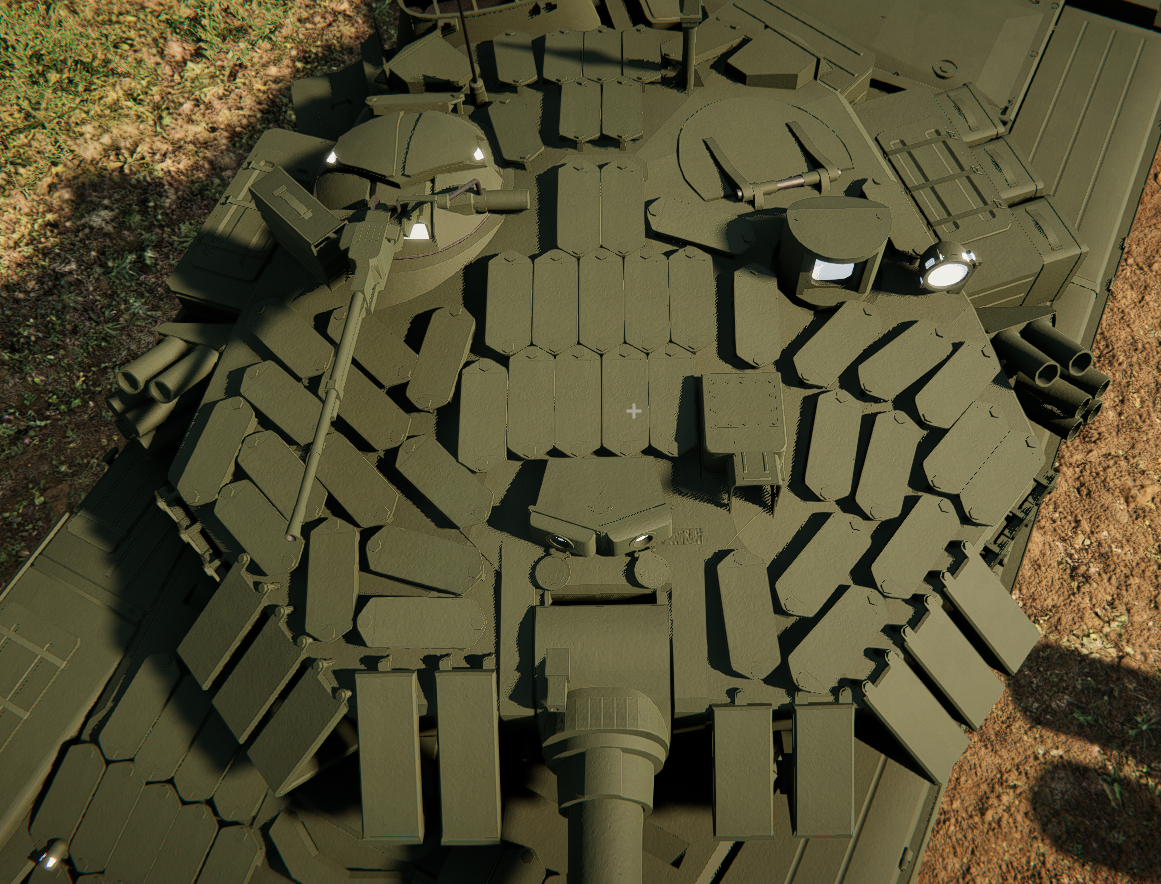
T-92 — A New Generation of Soviet Tank
The primary requirement for the T-92 is an enormous modernization reserve. The Soviet military no longer wants another compact tank whose chassis will be pushed to its absolute limits after only a decade of upgrades.
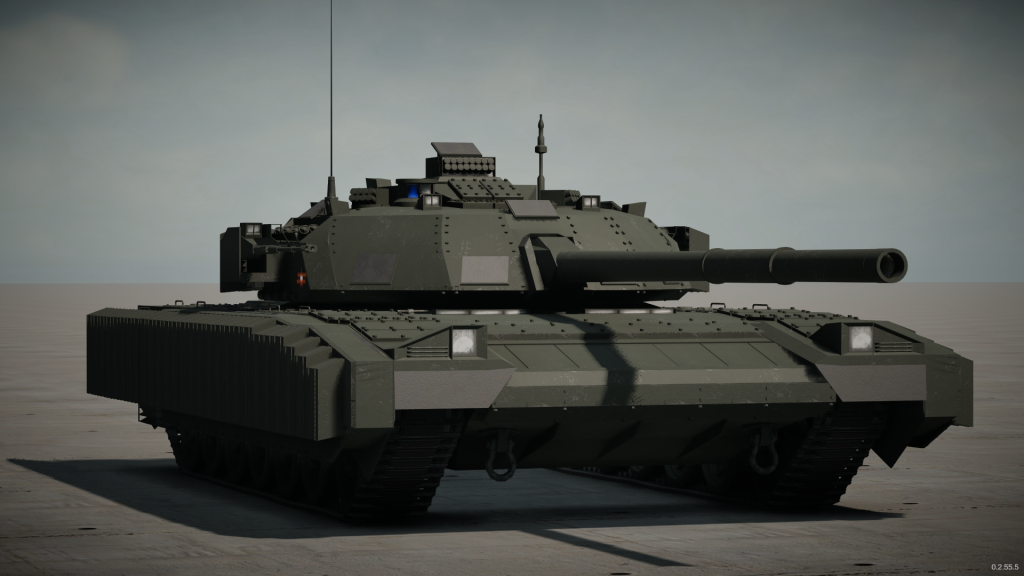
The T-92 is therefore considerably larger than its predecessor.
Combat weight increases to approximately 55 tonnes. The hull becomes longer and wider, while the running gear receives seven road wheels per side. This provides additional internal volume, allows substantially heavier armor protection, and reduces the load imposed on individual suspension components.
For the first time, a Soviet main battle tank is designed from the outset with the understanding that later modernization could push its combat weight beyond 60 tonnes.
This represents a fundamentally new approach.
The Unusual Low-Profile Turret
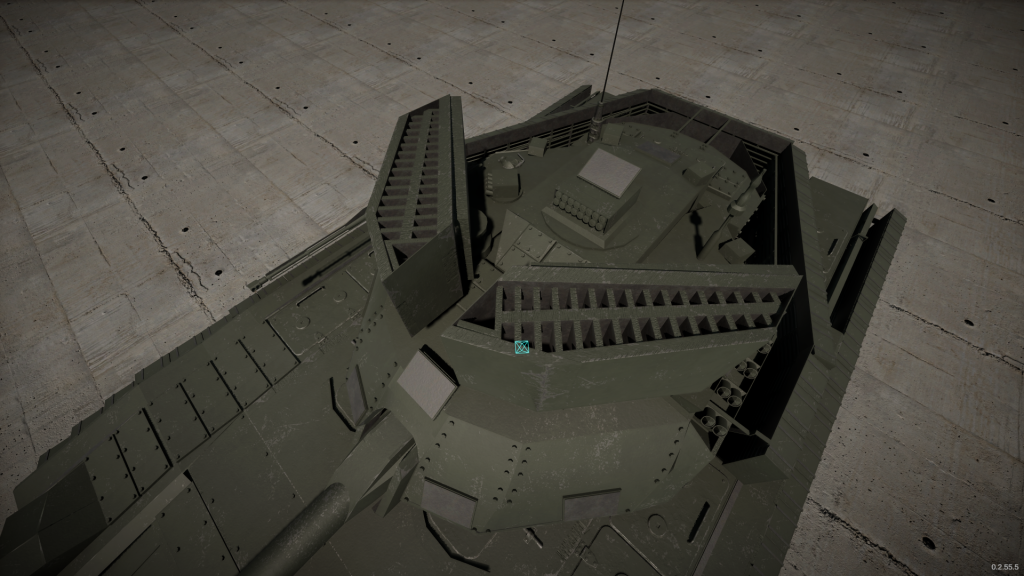
The most distinctive feature of the T-92 is its extremely low turret.
But it is not yet completely unmanned.
Soviet industry of the late 1990s is theoretically capable of developing a tank with remotely operated armament, but the military considers abandoning direct optical observation channels altogether to be premature.
A transitional solution is therefore chosen.
The commander and gunner sit as low as possible. Their workstations are partially lowered beneath the turret-ring level, while the relatively small armored structure above the hull contains the gun, sighting systems, and elements of the autoloader.
As a result, the T-92 acquires an extremely unusual silhouette. Even compared with traditionally low-profile Soviet tanks, its turret appears almost flattened against the hull.
This solution simultaneously reduces the exposed area of the most visible part of the vehicle and makes it possible to dramatically strengthen its protection.
Armor Becomes Heavier
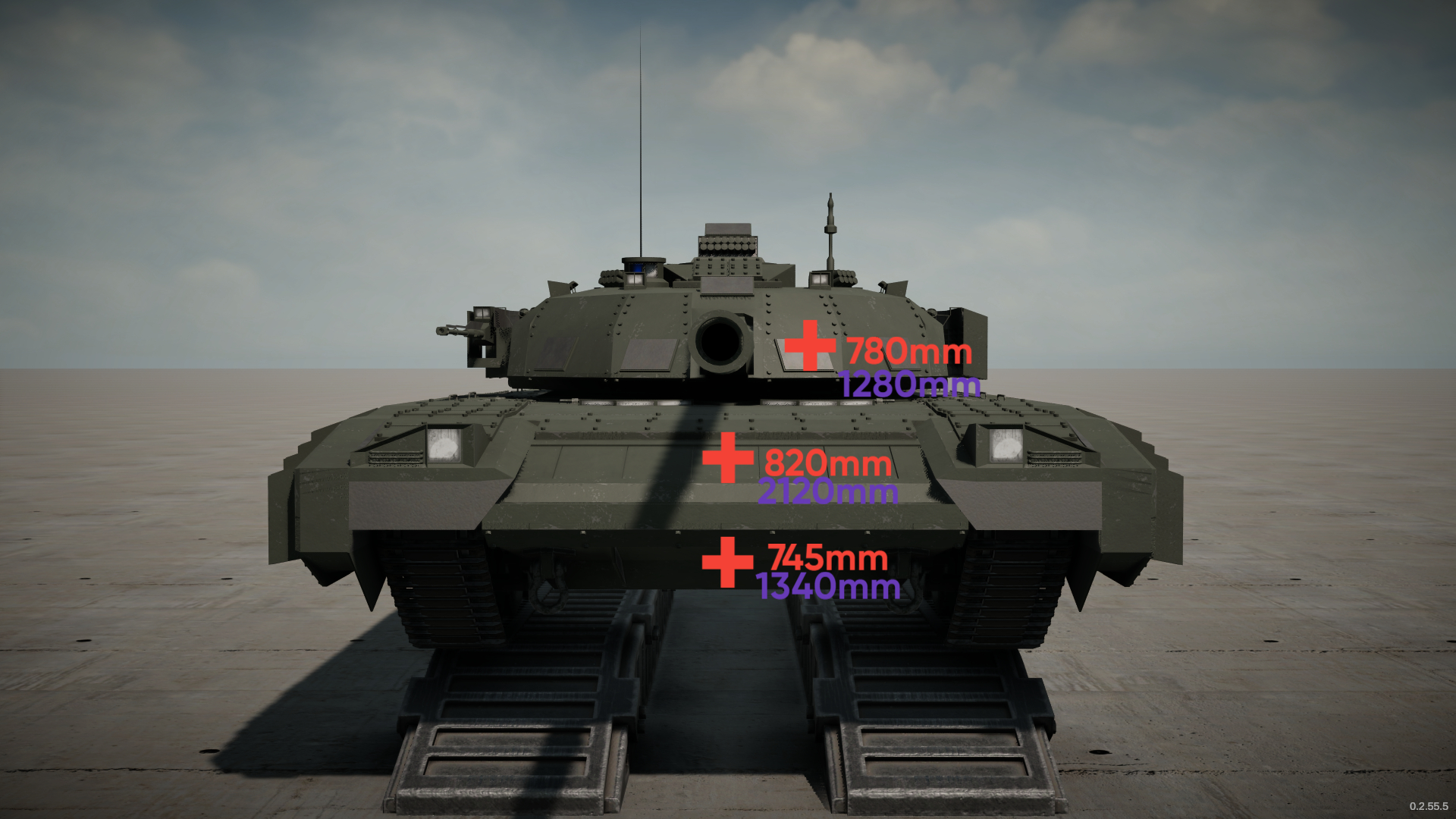
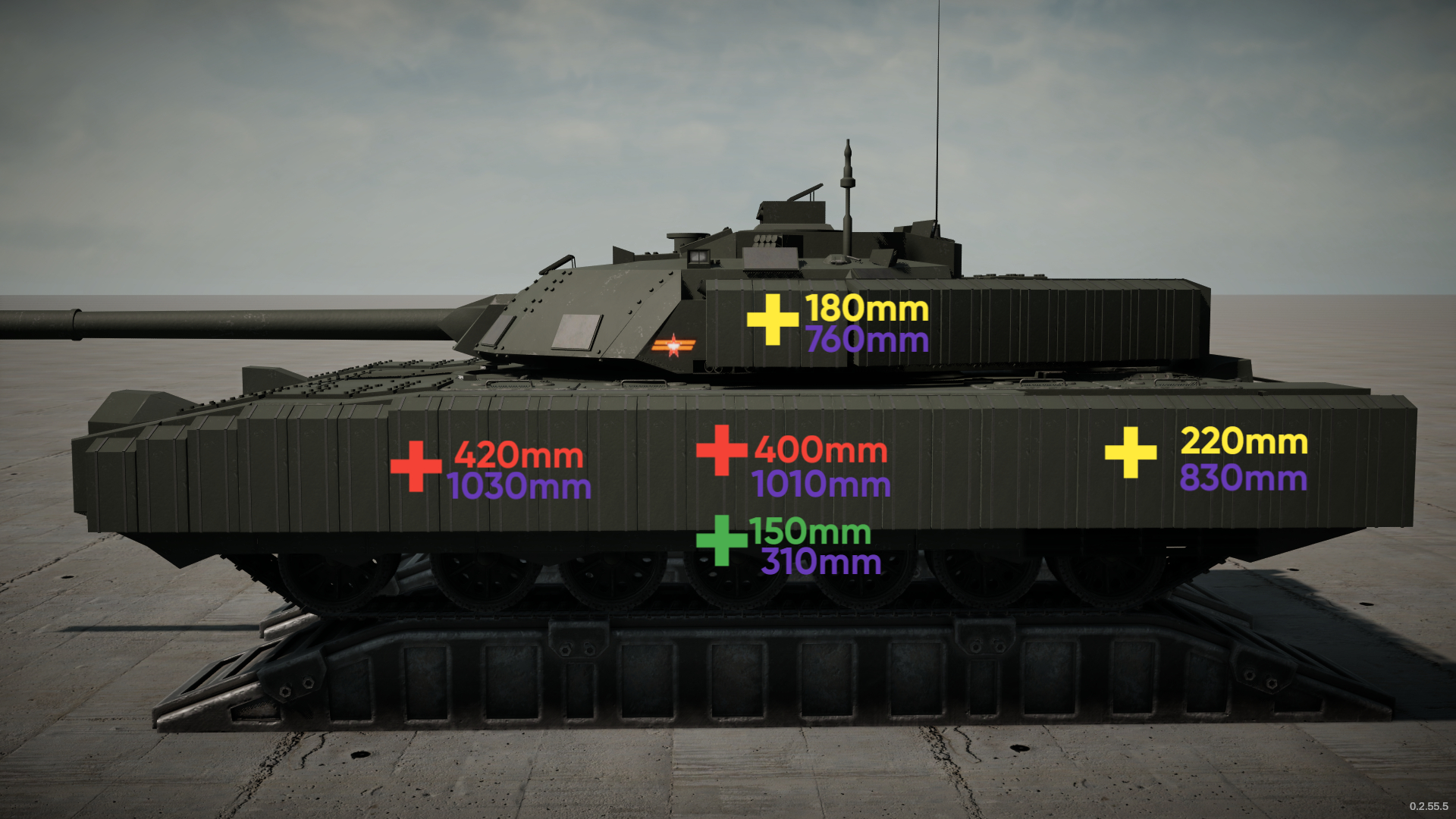
Protection accounts for a considerable proportion of the T-92’s 55-tonne combat weight.
The glacis consists of a new generation of multilayer composite armor. Integrated explosive reactive armor is fitted over the main protection. Particular attention is paid to the turret and hull roofs, as experience from local conflicts demonstrates the rapidly growing threat posed by top-attack munitions.
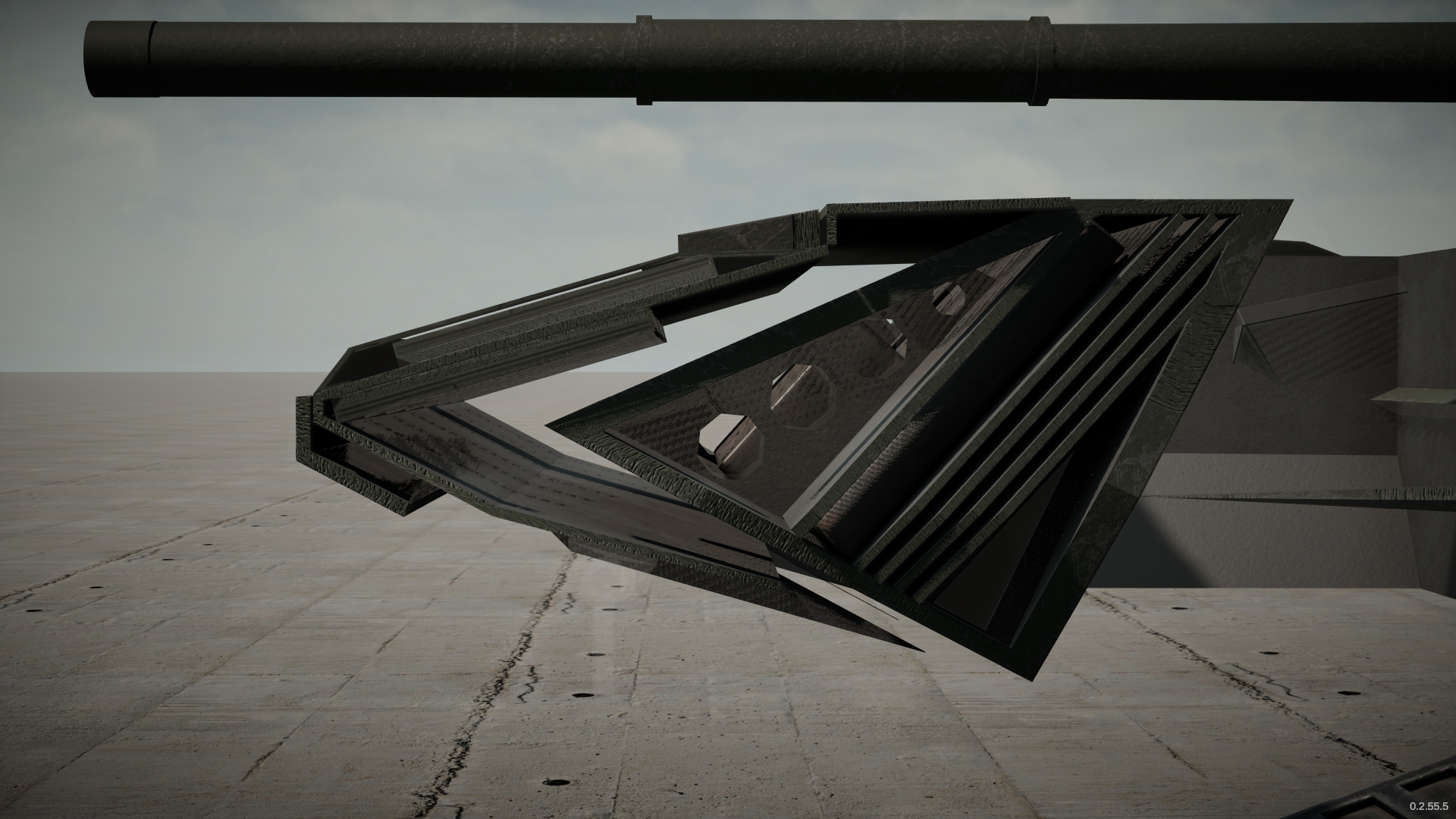
The sides receive heavy composite skirts. At the same time, the tank is designed so that damaged external protection modules can be replaced relatively quickly under field conditions.
The T-92 therefore becomes the first Soviet MBT whose designers deliberately accept a substantial increase in weight in exchange for improved crew protection.
Yet passive armor alone is no longer considered sufficient.
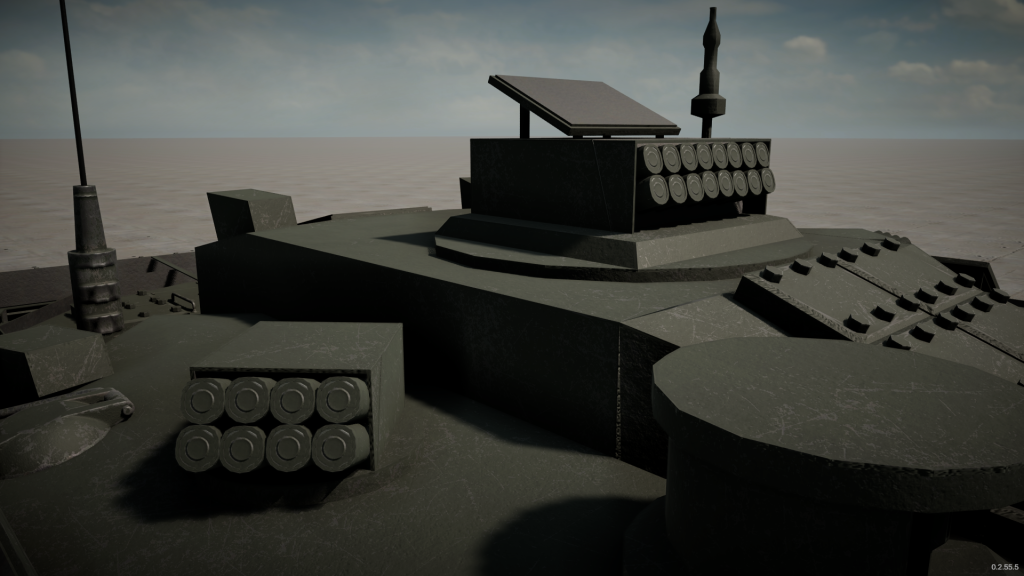
Thirty-Two Active Protection Interceptors
One of the defining features of the T-92 is its exceptionally sophisticated active protection system.
Launchers are positioned around the turret and carry a total of 32 defensive interceptors. The tank also carries sixteen smoke grenade launchers.
Thirty-two APS interceptors may appear excessive, but Soviet designers are responding to a changing battlefield. Previously, the tank’s protection was expected primarily to survive a hit. The new philosophy is to prevent the most dangerous projectile from reaching the main armor at all.
The T-92 can therefore defeat multiple attacks arriving from different directions. At the same time, the active protection system does not replace armor or explosive reactive protection; instead, all three form an integrated multilayer defensive system.
For the late 1990s, this is an exceptionally expensive solution.
But the T-92 is not intended to be a cheap mobilization tank. From the outset, it is designed as the principal Soviet Army combat vehicle of the 21st century.
1,500 Horsepower
This is where experience with the T-73 becomes particularly important.
By the mid-1990s, the X-layout diesel is no longer an entirely new design. Its 1,200 hp version has been in series production for the T-73 for several years. Reliability data has been accumulated, cooling systems have been refined, maintenance personnel have been trained, and a repair infrastructure has been established.
The T-92 therefore receives a new generation of this engine producing 1,400–1,500 hp.
At a combat weight of approximately 55 tonnes, a 1,500 hp powerplant provides roughly 27 hp per tonne.
This means that the substantially heavier T-92 is actually more mobile than the T-73.
Maximum speed reaches approximately 70 km/h, although acceleration and the ability to maintain high speeds over rough terrain are considerably more important than the headline top-speed figure.
A new transmission is introduced alongside the engine. By the end of the 1990s, the USSR therefore possesses a production powerpack designed for an entirely different weight class of armored vehicles.
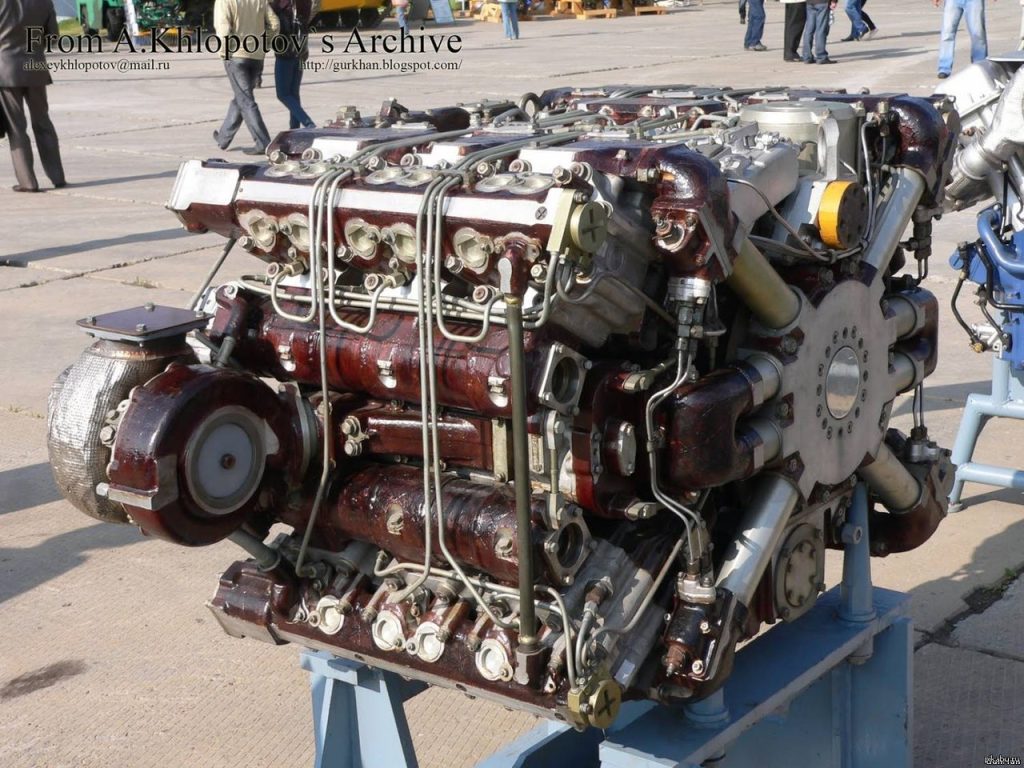
X-configuration diesel engine
125 mm Instead of Chasing Caliber
The military decides against increasing the main armament to 152 mm on the initial T-92.
Logistics is the primary reason. The Soviet Army possesses enormous stocks of 125 mm tank ammunition, while industry already has a mature manufacturing infrastructure for the caliber.
The T-92 therefore receives a new high-performance 125 mm smoothbore gun.
The autoloader, however, changes fundamentally.
The old T-72-family carousel is abandoned. The new loading system is designed from the outset to accommodate substantially longer APFSDS rounds. Soviet engineers can therefore dramatically improve armor penetration without immediately adopting a larger gun caliber.
At the same time, the hull and turret possess enough growth potential to permit consideration of a 152 mm weapon in a future version without requiring an entirely new chassis.
Secondary Armament — A Separate Gun for Light Targets
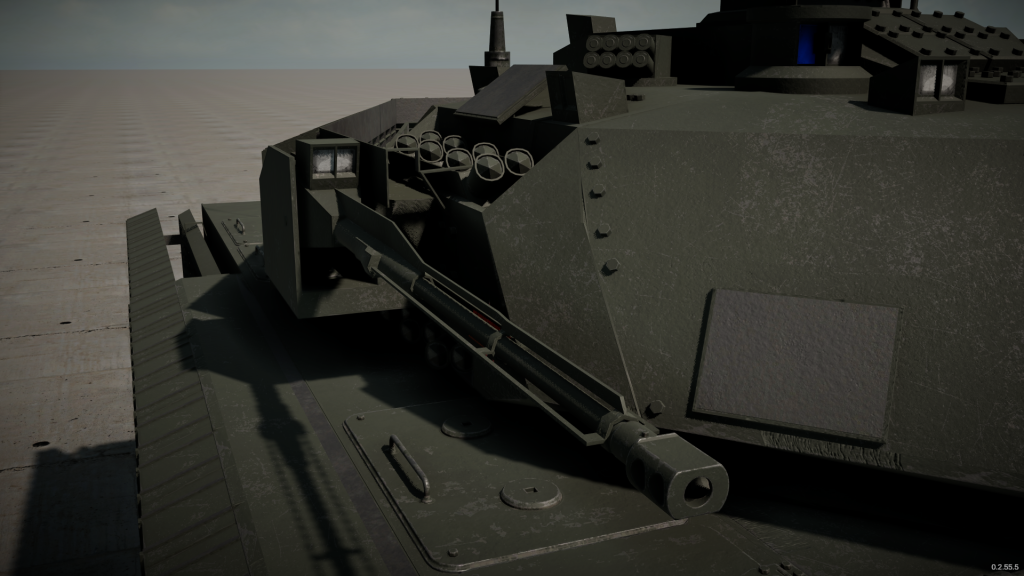
One of the T-92’s most unusual features was its secondary armament. In addition to the 7.62 mm machine gun mounted coaxially with the main weapon, the tank carried a remotely operated 30 mm automatic cannon on the turret roof. At first glance, this might seem excessive: why would a main battle tank need a second cannon when it already carried a 125 mm gun? Soviet designers, however, reasoned that many targets on the modern battlefield simply did not justify expending main-gun ammunition. Light armored vehicles, IFVs, APCs, anti-tank missile teams, firing positions inside buildings, and even certain low-flying aerial targets could instead be engaged with the 30 mm cannon.
Such a weapon became particularly useful in urban combat. Rather than traversing the entire turret and firing a 125 mm round at a machine-gun position or an anti-tank team on the upper floor of a building, the crew could engage it with the rapid-firing automatic cannon, which offered a considerably greater elevation angle. The weapon was remotely controlled, meaning that no crew member had to leave the protected interior of the tank. Combined with the commander’s panoramic sight, the 30 mm mount could operate almost independently of the main gun.
The T-92 therefore effectively possessed a two-tier cannon armament. The 125 mm smoothbore gun was reserved for tanks, heavy fortifications, and the most dangerous targets, while the 30 mm automatic cannon dealt with light armored vehicles, infantry positions, and targets on the upper floors of buildings. The conventional 7.62 mm machine gun remained available whenever even 30 mm ammunition would have been excessive. This arrangement made the T-92 particularly well suited to local conflicts and urban warfare, whose changing nature Soviet military planners were studying with increasing attention throughout the 1990s.
Electronics for the 21st Century
The fire-control system represents another revolution.
The gunner receives a multichannel sight incorporating optical, television, and thermal-imaging channels. The commander has an independent panoramic sight and can search for targets independently.
The T-92 becomes a genuine hunter-killer tank: while the gunner engages one target, the commander is already searching for the next.
Later production batches receive a new generation of thermal-imaging equipment.
Particular attention is paid to electronics integration. The sights, active protection system, fire-control system, navigation equipment, and communications are gradually incorporated into a unified information architecture.
The tank begins not merely to receive information from its own crew but to exchange battlefield data with other vehicles within its unit.
For the late 1990s, this becomes one of the most expensive and technically demanding features of the T-92.
1998 — The First Production Vehicles
The first pre-production T-92s appear around 1997.
Testing continues for almost two years. Vehicles are sent to Central Asia, Belarus, the Arctic, and proving grounds in the Urals.
The greatest difficulties come not from the armament but from the powerplant. The X-layout diesel boosted to 1,500 hp places exceptionally high demands on the cooling system and maintenance standards.
But this time the designers are not starting from scratch. Five years of experience operating the 1,200 hp engines of the T-73 make it possible to solve the major problems considerably faster.
In 1999, the tank is officially adopted by the Soviet Army.
The age of the T-92 begins.
Estimated Specifications of the T-73
- Year entered service: 1992–1993
- Combat weight: approximately 48.5 tonnes
- Crew: 3
- Main armament: 125 mm smoothbore gun
- Engine: X-layout diesel
- Power: 1,170–1,200 hp
- Power-to-weight ratio: approximately 24 hp/t
- Maximum speed: approximately 65–67 km/h
- Protection: composite armor and integrated explosive reactive armor
Estimated Specifications of the T-92
- Year entered service: 1999
- Combat weight: approximately 55 tonnes
- Crew: 3
- Main armament: high-performance 125 mm smoothbore gun
- Autoloader: new-generation system designed for longer APFSDS ammunition
- Engine: X-layout multi-fuel diesel
- Power: up to 1,500 hp
- Power-to-weight ratio: approximately 27 hp/t
- Maximum speed: approximately 70 km/h
- Running gear: seven road wheels per side
- Turret: low-profile, partially manned
- Sighting system: multichannel, with thermal-imaging sights
- Active protection system: up to 32 defensive interceptors
- Smoke grenade launchers: 16
- Protection: multilayer composite armor, integrated explosive reactive armor, and active protection
What Happens to the Future Armata?
This is where it becomes particularly clear how profoundly the appearance of the T-73 and T-92 would alter the subsequent history of Soviet tank development.
By the beginning of the 21st century, the USSR already possesses a heavy seven-road-wheel chassis. A 1,500 hp X-layout engine is in series production. A new transmission exists. An autoloader capable of handling long ammunition has been developed. Active protection is standard equipment. Electronic systems are being integrated into a unified information architecture.
The next generation therefore does not need to introduce a dozen technological revolutions simultaneously.
Only one major step remains.
Remove the crew from the turret.
Around the middle of the 2000s, work begins on the next generation of the T-92. The commander and gunner are moved down into the hull alongside the driver. All three crewmen are placed inside a common isolated armored capsule.
The turret becomes completely unmanned.
Only now does a vehicle emerge that conceptually corresponds to what the T-14 became in our reality.
But in this timeline, the transition is considerably smoother. The new tank inherits the T-92’s proven engine, transmission, heavy running gear, active protection system, and much of its electronic architecture.
A Completely Different Evolution of Soviet Main Battle Tanks
As a result, the history of Soviet main battle tanks in the 1990s could have followed an entirely different path:
T-72B → T-73 → T-92 → a tank with an unmanned turret.
The T-72B becomes the last mass-produced Soviet MBT of the Cold War era.
The T-73 of 1992–1993 becomes the transitional tank in which the old Soviet design philosophy reaches its technological limit.
The T-92 of 1999, however, begins a new era: 55 tonnes, seven road wheels per side, 1,500 hp, a low-profile turret, a new 125 mm gun, advanced electronics, and a powerful active protection system.
The T-90 never appears in this timeline.
And this is perhaps the most important distinction of our alternative development path. Instead of being forced to create another deep modernization of the T-72B, a surviving Soviet Union has the opportunity to do what its design bureaus had already been gradually approaching by the late 1980s: first create a transitional vehicle, and then move decisively toward an entirely new generation of main battle tanks.
The T-73 becomes the bridge between two eras.
And the T-92 becomes the first tank on the other side of that bridge.
Sources:
https://www.reddit.com/r/SprocketTankDesign/comments/1wxkq19/t73/
https://www.reddit.com/r/SprocketTankDesign/comments/1wvq4mf/crazy_russian_tank/