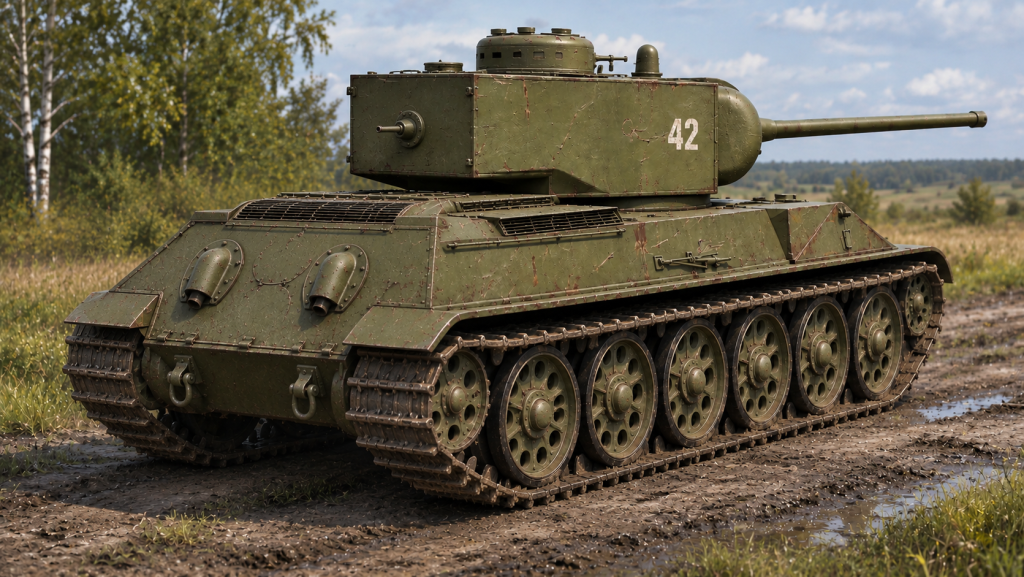
A Panther, Russian-Style. What Could the Soviet T-42 Medium Tank Have Been Like?

The idea for this tank came from our colleague Alexander Travnikov, who shared it in the comments under a post dedicated to the alternative BT-34 tank. He also posted a drawing of the vehicle there. Everything else was developed by yours truly in collaboration with AI.
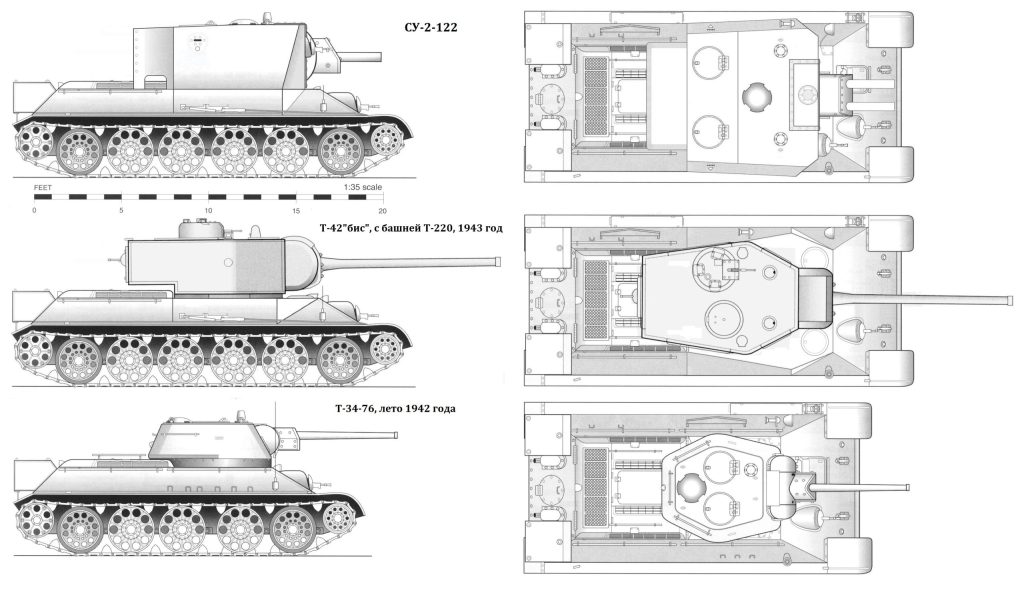
During the Great Patriotic War, Soviet designers developed an enormous number of armored vehicle projects. Some remained on paper, others were built as single prototypes, while still others, after undergoing extensive testing, became true legends. But what if some of the unrealized designs had actually been built? And what if their technical solutions had been combined in an entirely new tank?
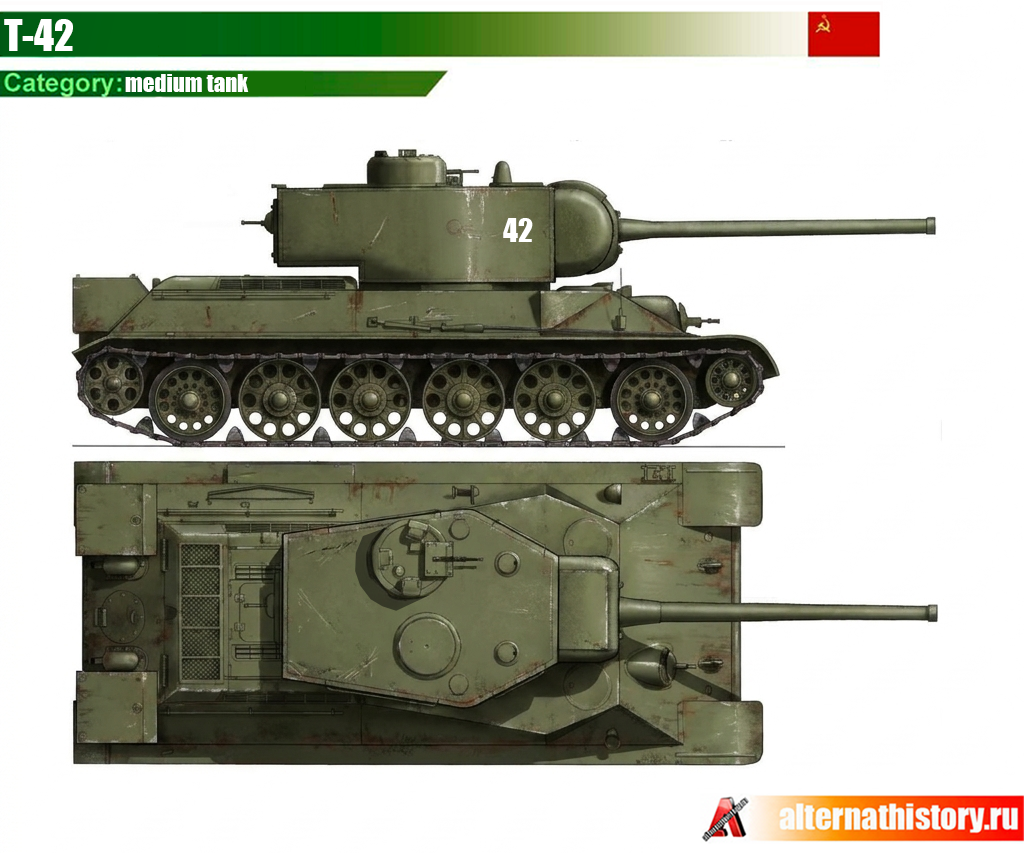
Two historical divergences were needed for this vehicle to appear. The first was that, in 1943, the USSR managed to establish serial production of the unusual SU-2-122 self-propelled gun, armed with two 122-mm howitzers. An elongated T-34 chassis with six road wheels on each side was developed for it. Since production of this chassis had already been established, the entirely logical idea arose to use it for a new medium tank as well.
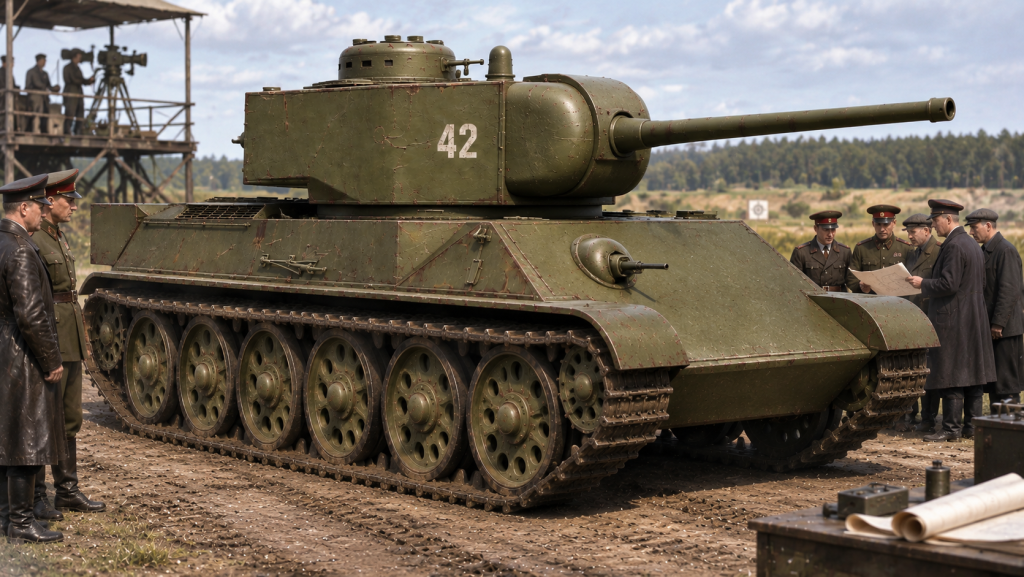
The second divergence involved the experimental KV-220 heavy tank, armed with an 85-mm F-30 gun. The designers recalled its spacious turret and decided to adapt it for the new vehicle, reducing its armor thickness to 60 mm. At the same time, they managed to correct one of the T-34’s best-known shortcomings: the driver’s hatch was removed from the upper frontal armor plate and relocated to the roof of the elongated hull. The result was a 37-ton tank that retained the main components of the famous T-34 but had an entirely different appearance. It was designated the T-42.
The Self-Propelled Gun That Gave Birth to a New Tank
In our alternative reality, the fate of the SU-2-122 project was entirely different from what happened in actual history.
Instead of cancelling the program in May 1943, the military leadership decided to bring the unusual self-propelled gun into serial production. By autumn, following the necessary modifications, assembly of the first vehicles had begun at one of the tank-building plants.
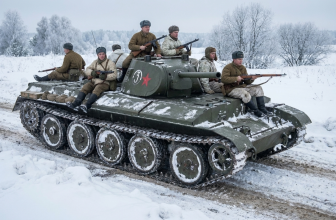
The SU-2-122’s main distinguishing feature was its elongated T-34 chassis. The additional pair of road wheels allowed the weight of the massive armored casemate and two M-30 howitzers to be distributed more evenly.
However, developing an entirely new running gear required substantial production expenditures. Special tools, fixtures, and production lines had to be introduced for manufacturing the elongated hulls.
It was at this point that the leadership of the People’s Commissariat of the Tank Industry came up with an idea: if the new chassis had already been mastered in production, why not use it for a promising new tank?
After all, increasing the hull’s length opened up possibilities that the ordinary T-34 did not offer.
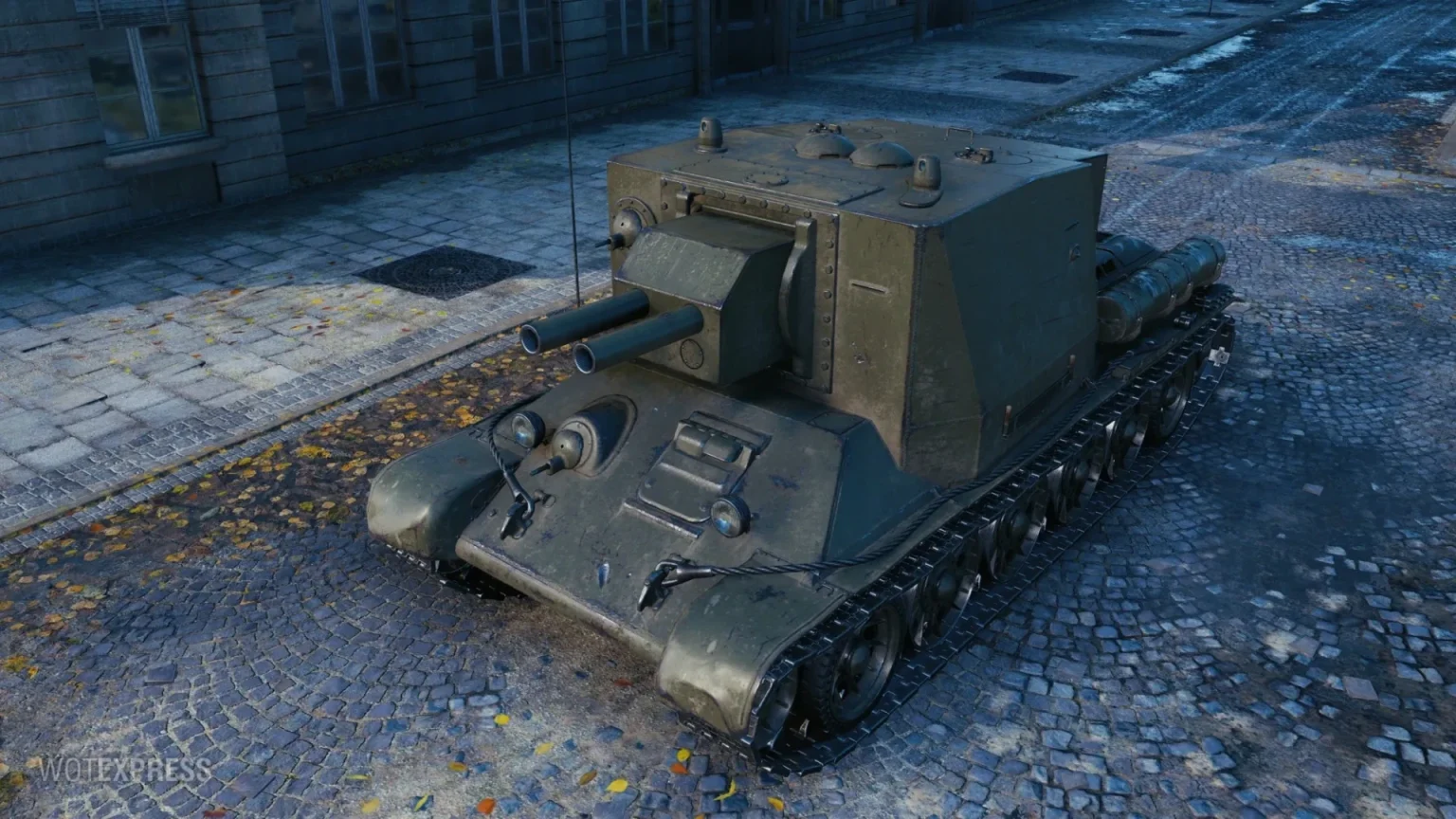
Su-2-122
A Turret from the KV-220. The Return of a Forgotten Project
The choice of armament was rather unexpected.
Back in 1940, Soviet designers had created the experimental KV-220 heavy tank, armed with a long-barreled 85-mm F-30 gun designed by Vasily Grabin. Its distinguishing feature was a large turret designed to accommodate more powerful armament than the standard 76-mm gun of the KV-1.
By 1943, the KV-220 concept itself was already considered obsolete. Nevertheless, its turret was still of some interest.
In our alternative history, the designers decided not to develop a fighting compartment from scratch but instead to use a modified turret from the heavy tank.
First, however, its excessive armor protection had to be reduced. The original turret was too heavy for a medium tank, so the thickness of its main armor components was reduced to 60 mm.
This considerably lightened the structure and made it possible to keep the load on the running gear within acceptable limits.
At the same time, the tank received a proper three-man fighting compartment. The commander could concentrate entirely on observation and directing the battle without being distracted by the duties of a gunner or loader.
Compared with the early T-34s, which had two-man turrets, this was a very significant advantage.
However, installing the new turret required strengthening the turret ring and redesigning the hull roof. Consequently, the T-42 could no longer be described as a simple modernization of the T-34.
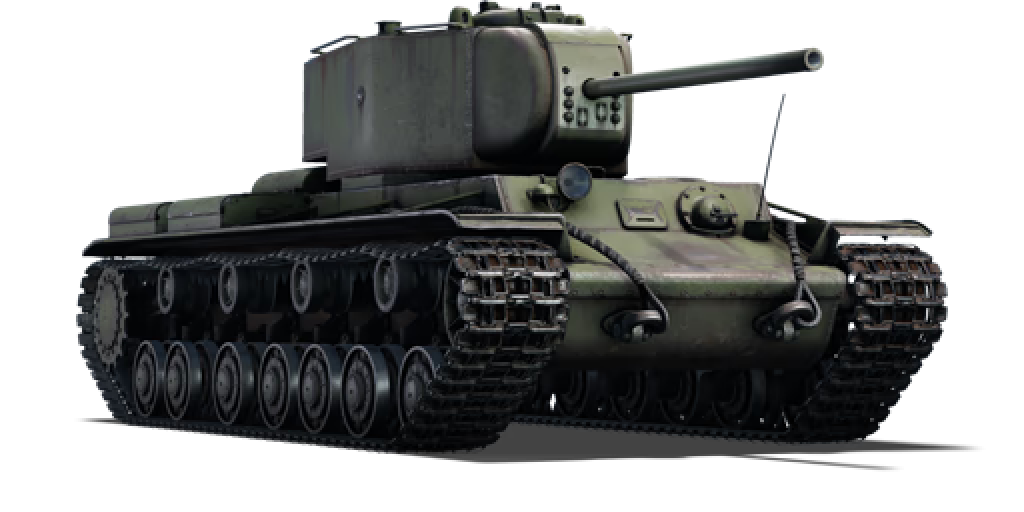
KV-220
Six Road Wheels and a Weight of 37 Tons
The vehicle was based on the elongated SU-2-122 chassis. Each side had six large road wheels with individual Christie-type spring suspension.
This solution made it possible to retain a substantial proportion of components already mastered in production.
A standard 500 hp V-2-34 diesel engine was installed in the rear. The transmission also remained largely inherited from the T-34.
However, the new tank weighed 37 tons, compared with approximately 30 tons for production T-34s of the corresponding period.
Naturally, this affected mobility. The power-to-weight ratio fell to approximately 13.5 hp per ton, while the maximum road speed, according to the alternative design calculations, was around 45 km/h.
Nevertheless, the vehicle remained sufficiently mobile to accompany advancing tank formations.
This inevitably invited comparison with the German Panther. Like the German tank, the T-42 was larger and heavier than the typical medium tanks of its generation, while also possessing a powerful long-barreled gun.
However, the Soviet vehicle was still far from being a complete counterpart to the Panther.
Frontal Armor Without the T-34’s Main Shortcoming
One of the new design’s most important advantages was the redesign of the front of the hull.
On the production T-34, a large driver’s hatch was located in the upper frontal armor plate. Although its design was continually improved, the presence of such a large opening inevitably made it more difficult to provide uniform protection.
The designers decided to abandon this arrangement on the T-42.
Thanks to the elongated hull, they were able to modify the layout of the driver’s compartment and provide roof hatches for both the driver and the radio operator/machine gunner.
As a result, the upper frontal plate became almost completely solid, without the rectangular hatch characteristic of the T-34.
The main frontal armor thickness remained at 45 mm, while its considerable slope provided relatively high effective protection.
This did not turn the T-42 into a heavy tank. However, eliminating the large opening in the frontal armor improved the structural integrity of the front of the hull.
In the future, this layout would also have made it possible to consider installing additional armor screens.
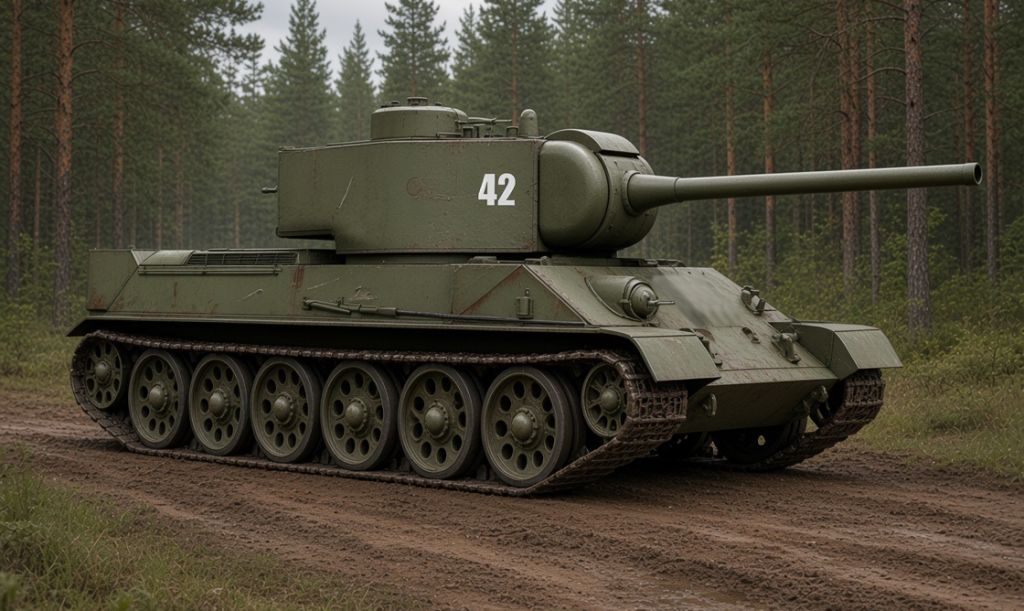
Why Did the 85-mm Gun Prove Insufficient?
In early 1944, the first experimental T-42 arrived at the proving ground.
Trials showed that the 37-ton vehicle generally retained acceptable mobility, while the new turret provided better working conditions for the crew compared with the early versions of the T-34.
However, a serious problem soon became apparent.
The 85-mm F-30 gun, sufficiently powerful by the standards of 1940–1941, no longer offered a decisive advantage against the latest German tanks.
Of course, it posed a serious threat to the Pz. IV and other vehicles of the previous generation. But fighting heavy Tigers and well-protected Panthers, especially at long ranges and when striking the thickest sections of their armor, remained a difficult task.
Furthermore, by this time the T-34-85, armed with an 85-mm gun of the S-53 family, had entered serial production.
This meant that the considerably more complex and heavier T-42 offered virtually no decisive advantage in firepower over the ordinary T-34.
The military therefore demanded that the promising tank be equipped with a fundamentally more powerful weapon.
The choice fell on a 100-mm gun.
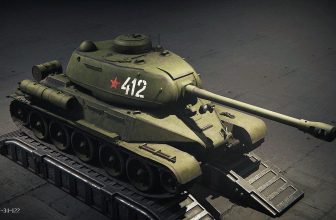
T-42-100. The Soviet Panther Gets New Teeth
In the second half of 1944, the designers began developing the modernized T-42-100.
For its new armament, they selected a tank version of the 100-mm D-10 gun, related to the weapon intended for the SU-100 self-propelled gun.
However, replacing the 85-mm gun with a 100-mm weapon proved much more difficult than initially expected.
The gun was larger, the load on the front of the turret increased considerably, and the long fixed ammunition rounds required additional space for the loader to work.
The KV-220 turret therefore had to be extensively redesigned. The designers enlarged its rear bustle, changed the internal layout, and reinforced the gun mounting.
In effect, only the turret’s general shape and certain design features remained from the original project.
In return, the tank’s firepower increased considerably.
The 100-mm gun made it possible to engage German armored vehicles with much greater confidence, while its powerful high-explosive shell made the vehicle a dangerous opponent for fortified positions and anti-tank artillery.
However, the increase in armament came at the cost of additional weight. The tank now weighed approximately 39 tons, placing even greater limitations on the standard 500 hp diesel engine.
Nevertheless, as an experimental vehicle, the T-42-100 was undoubtedly of interest.
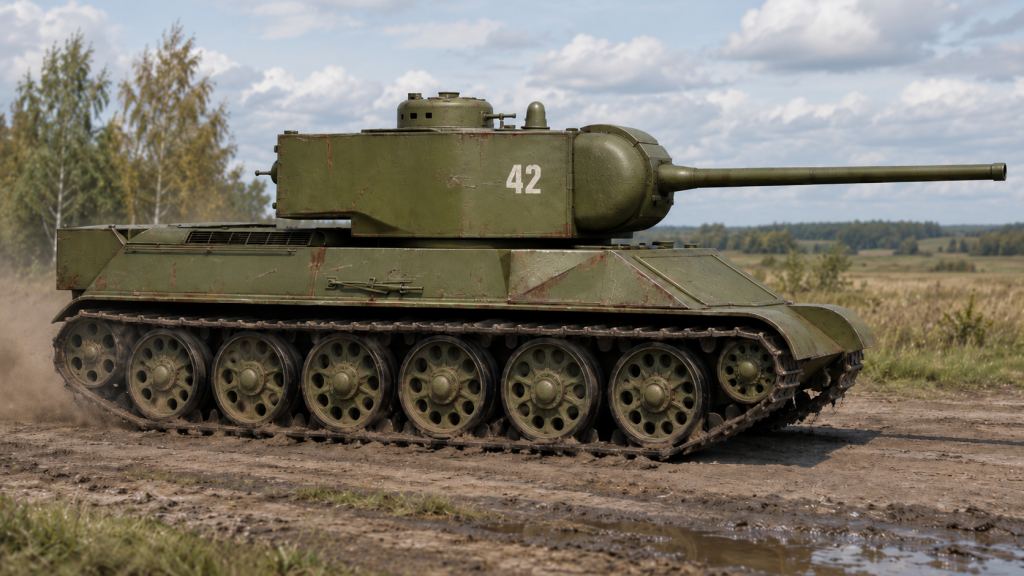
Main Specifications of the Alternative T-42 and T-42-100
T-42 Model 1944
- Type: Medium tank.
- Combat weight: 37 tons.
- Crew: 5.
- Base chassis: Elongated T-34/SU-2-122 chassis.
- Running gear: 6 road wheels per side.
- Engine: V-2-34 diesel, 500 hp.
- Power-to-weight ratio: 13.5 hp/t.
- Maximum speed: Projected, approximately 45 km/h.
- Frontal hull armor: 45 mm, sloped.
- Turret armor: Up to 60 mm.
- Main armament: 85-mm F-30 gun.
- Secondary armament: Two 7.62-mm DT machine guns.
- Development status: Alternative-history prototype.
T-42-100 Model Late 1944
- Type: Experimental medium tank with enhanced armament.
- Combat weight: Approximately 39 tons.
- Crew: 5.
- Engine: V-2-34 diesel, 500 hp.
- Power-to-weight ratio: Approximately 12.8 hp/t.
- Main armament: 100-mm gun of the D-10 family.
- Turret: Redesigned, with an enlarged rear bustle.
- Maximum speed: Projected, approximately 40 km/h.
- Development status: Alternative-history prototype.
All the specifications listed above belong to the author’s alternative-history reconstruction. Vehicles with these designations and characteristics were never built in reality.
Why Couldn’t Even a 100-mm Gun Save the T-42?
By the end of 1944, the vehicle’s fate was practically sealed.
Soviet factories were already preparing to produce the completely new T-44 medium tank, which was considerably more advanced in design than further developments of the T-34.
Unlike the T-42, which retained an elongated chassis with Christie suspension and the old arrangement of its major components, the T-44 featured a fundamentally new layout.
Its engine was mounted transversely in the hull, making it possible to substantially shorten the engine and transmission compartment. The use of torsion-bar suspension freed up internal space, while reducing the hull’s height made it possible to strengthen the armor without excessively increasing the weight.
The T-44’s superiority in protection was particularly striking. Its upper frontal armor plate was 90 mm thick, twice that of our T-42.
At the same time, the T-44 remained relatively compact and mobile.
Admittedly, the production version was initially armed with an 85-mm gun. However, the possibility of installing a 100-mm weapon was already being considered, and further development of this concept led to the creation of a new generation of Soviet medium tanks.
Thus, the T-42-100 turned out to be a vehicle without a future.
It was heavier than the ordinary T-34, more complicated to manufacture, and required new hulls and turrets, yet it retained too many of the design limitations of a tank developed back in the late 1930s.
That was why the military leadership decided not to launch its serial production.
With the war still underway, switching to two new types of medium tank at once seemed unreasonable, especially given the need to maintain mass production of the proven T-34-85.
An Afterword. Could the T-42 Have Become a Soviet Panther?
In my opinion, the resulting vehicle is of considerable interest precisely from the perspective of alternative tank development.
If serial production of the SU-2-122 had actually taken place, the creation of a tank based on its elongated chassis would have been a fairly logical decision.
Using the KV-220 turret would have reduced some of the initial design work, while the installation of an 85-mm gun would have provided the vehicle with acceptable firepower at the time development began.
But perhaps the most valuable innovation would have been the elimination of the driver’s hatch from the frontal armor plate.
Combined with a more spacious fighting compartment, this would have made the T-42 considerably more interesting than the original T-34.
However, the project’s main drawback was that it appeared too late.
In 1941, such a tank might have been considered very promising. In 1943, it was still of interest as an attempt to improve the medium tank without creating an entirely new design. But by the end of 1944, its advantages no longer justified the cost of mass production.
Even installing a 100-mm gun did not fundamentally change the situation. The T-42-100 would have received more powerful armament, but it remained a heavy modernization of an increasingly outdated chassis.
Thus, the T-42 would probably have become a Soviet Panther only in appearance: a long hull, six road wheels, a large turret, and a powerful gun. In terms of its actual design, however, it remained a further development of the legendary T-34.
That is why, in our alternative history, the T-42 never entered serial production. It became an intermediate link between the T-34 and the T-44 — an interesting vehicle, technically feasible under certain conditions, but completely unnecessary to Soviet industry at a time when the next generation of tanks was already on the horizon.