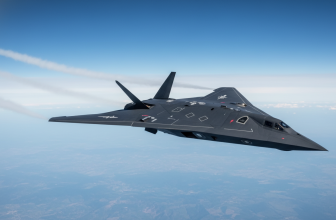
It was almost forgotten after the Cold War, but it's back: a strange spy plane at U.S. military exercises

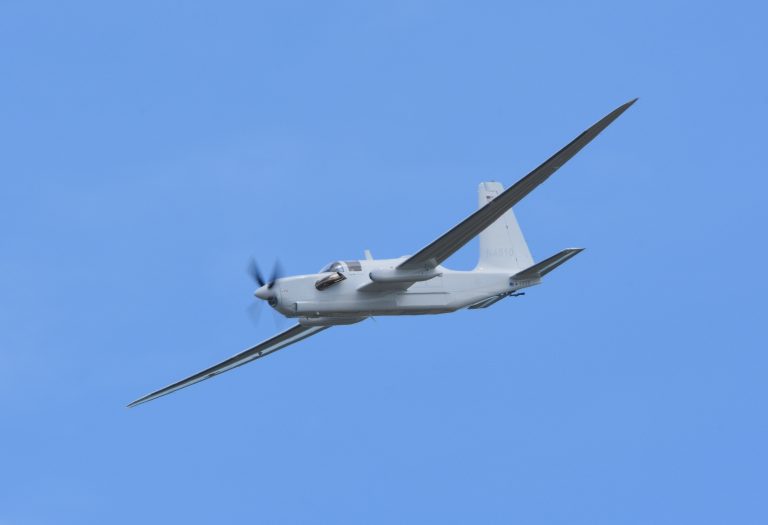
During one of the most recent special training exercises by U.S. ground forces and the Air Force, unusual aircraft were spotted, among which a high-altitude reconnaissance aircraft—distinct in design from the usual transport planes and helicopters—caught the eye. It was photographed at North Vernon Airfield in Indiana alongside a C-130 Hercules, an MH-47 Chinook, a CV-22 Osprey, and other aircraft participating in Total Force Exercise (TFX) 17-3. The reason for this aircraft’s participation is its potential use in reconnaissance, situational awareness, and special operations support at high altitudes.
What kind of plane is this?
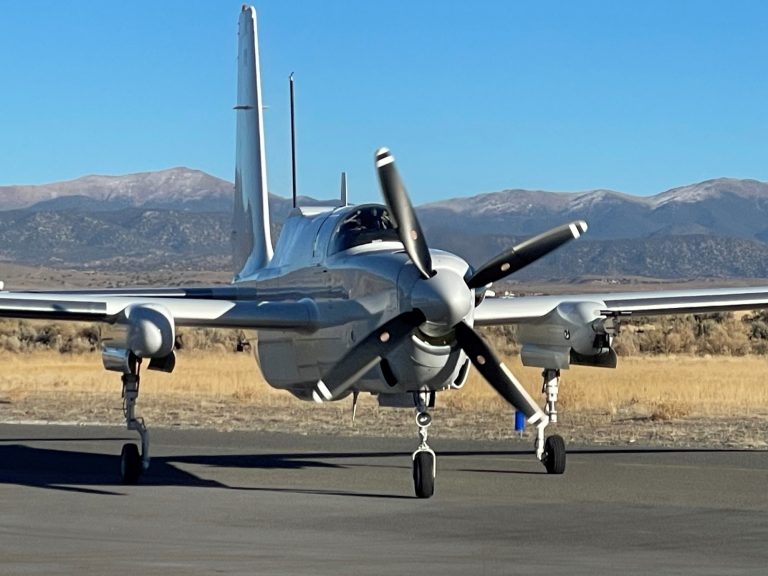
The photographs captured a very rare aircraft, which, according to experts, is most likely a Grob G 520 EGRETT II—a specialized platform for high-altitude reconnaissance and surveillance.
This model is currently owned by the American company Bear Defense (West Coast, Florida), which refers to it as the NYX ISR (Intelligence, Surveillance, and Reconnaissance) in its materials. The aircraft flew under the registration number N520DM, and its distinctive paint scheme and stylized “shark’s mouth” on the nose help distinguish it from other aircraft.
Design and Purpose
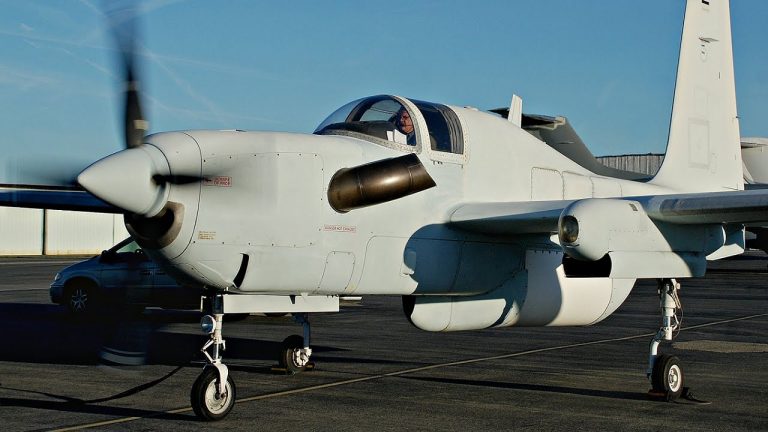
The Grob G 520 is a high-altitude aircraft originally designed to carry out long-duration observation and reconnaissance missions. It features a narrow, long-span wing and a lightweight composite fuselage, allowing it to climb into the stratosphere—up to approximately 50,000 ft (≈15,240 m) and higher—and remain at a given position for an extended period of time.
The design features modified payload compartments capable of carrying up to several thousand pounds of equipment, including:
- rotating sensor towers equipped with video and thermal imaging systems (FLIR);
- side-mounted units for radar scanners (SAR/GMTI);
- satellite communication modules for real-time data exchange with ground units.
Some photos show a satellite communications antenna on the upper part of the fuselage, confirming that the aircraft is used to transmit real-time intelligence data.
History of the Grob G 520 Models

The G 520 concept emerged during the late Cold War as a joint German-U.S. development effort to create a cheaper alternative to heavy reconnaissance aircraft such as the Lockheed U-2 Dragon Lady (Legend-Lady), which were used for high-altitude reconnaissance and data collection both day and night.
The project was codenamed “Senior Guardian,” and as part of the collaboration, Grob Aircraft teamed up with American partners to build a prototype. Only a few examples of the aircraft were built in various versions, after which the program was shut down when the Cold War ended and demand for such aircraft declined.
After the program was discontinued, the G 520 aircraft were transferred to the civil registry—one of them is currently registered to Bear Defense and is used for training and demonstration purposes, including participation in military exercises.
Platform Metrics and Capabilities

The Grob G 520 combines characteristics similar to those of modern strategic reconnaissance aircraft in the following respects:
- Flight altitude: up to ~50,000 ft (≈15,240 m), which allows it to operate above operational air threats;
- Wingspan: high aspect ratio, ensuring fuel efficiency and stability;
- Payload: several separate compartments for sensor and communication systems;
- Patrol duration: With an appropriate payload, the aircraft is capable of remaining airborne for many hours thanks to its efficient aerodynamics and optimized powerplant.
Although the G 520 does not have the speed or service ceiling of drones such as the Northrop Grumman RQ-4 Global Hawk or the legendary U-2, its operating costs are lower, and its ability to adapt its payload for different missions makes it attractive for testing and support missions.
Models and Version of the G 520NG
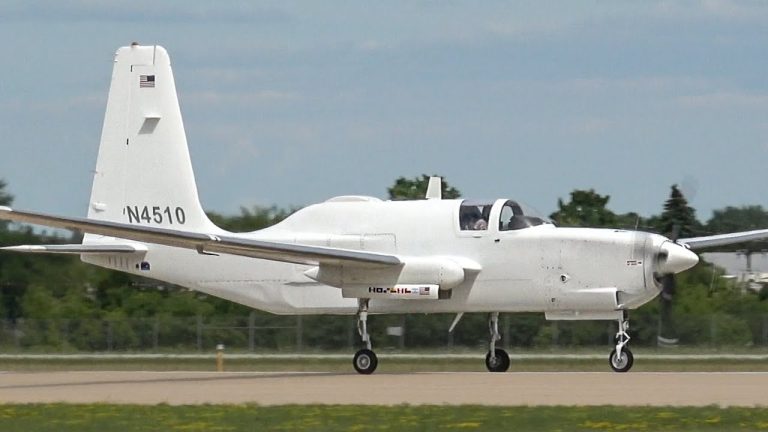
Grob continued to expand the lineup by introducing updated versions called the G 520NG (Next Generation), which feature a reduced aerodynamic and radar signature—partly due to their composite construction—as well as improved sensor placement.
Based on the descriptions, the G 520NG retains its capability for reliable high-altitude flight and provides space for the installation of modern sensor suites, which may include:
- high-resolution, multifunctional cameras;
- side-looking synthetic aperture radar systems;
- equipment for radio signal reconnaissance.
Where and why is it used?
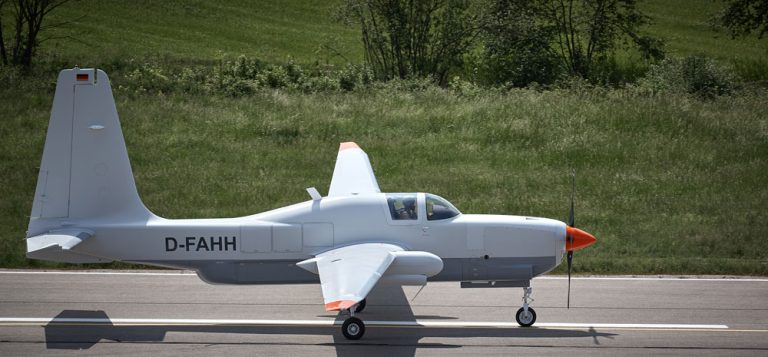
Although there is no official confirmation that the G 520 is in regular service with the armed forces, the aircraft appears to be an alternative to expensive reconnaissance platforms for training, sensor testing, and auxiliary surveillance missions.
During the TFX 17-3 exercises, its presence may have been related to testing new sensor suites, exchanging data between ground units and aviation, and assessing the potential for integrating such platforms into the overall reconnaissance architecture.
Conclusion
The appearance of the Grob G 520 EGRETT II at special forces exercises is a rare but telling event that showcases the world of modern aerial reconnaissance platforms. The aircraft combines high-altitude surveillance capabilities, payload flexibility, and relative ease of operation compared to traditional covert reconnaissance aircraft, making it an interesting example of alternative ISR systems.
based on https://www.twz.com/12569/unusual-high-altitude-spy-plane-appears-at-special-operations-exercise