Its Own “M113” for a War of Attrition: Why Ukraine Needed the New “Skif” Armored Personnel Carrier

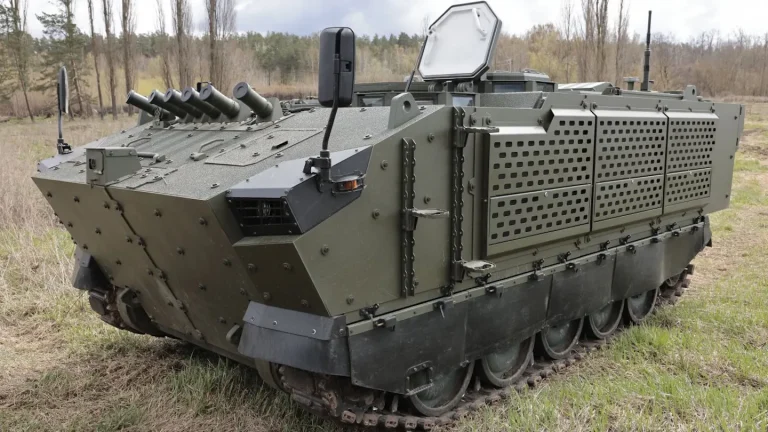
The current war in Ukraine is increasingly turning into a contest not only of technology but also of resources. Equipment is being lost faster than it can be replenished through deliveries. And it is precisely within this logic—not of the perfect weapon, but of having enough of it—that a new project emerges: the Ukrainian tracked armored personnel carrier “Skif.” At first glance, the vehicle looks like just another variation of the old M113, but in reality, it reflects far more profound changes in the approach to warfare.
A Car Born Out of Shortages
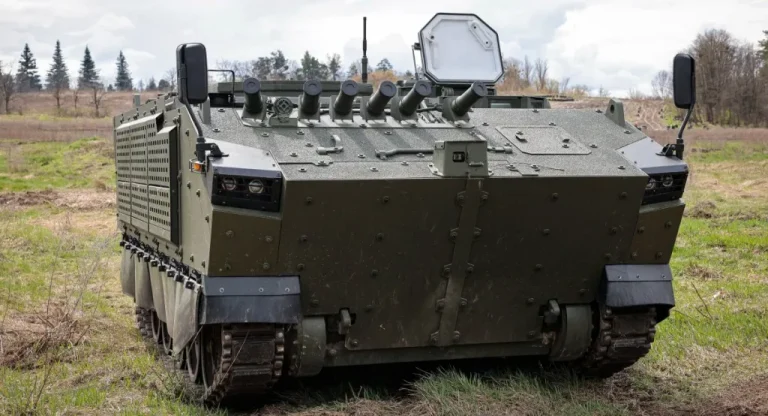
After 2022, the Ukrainian army received hundreds of Western-made armored personnel carriers, including the M113—a proven but aging platform. Nevertheless, even these deliveries have failed to address the main problem: equipment is being depleted faster than it is being replaced.
That is precisely why Ukraine is relying on domestic production. The new “Skif” armored personnel carrier, developed by UkrArmoTech, is already undergoing factory testing and is being designed based on experience gained in actual combat operations in recent years.
This isn’t an experiment for the sake of technology—it’s an attempt to fill a critical gap.
Why Caterpillars Again?
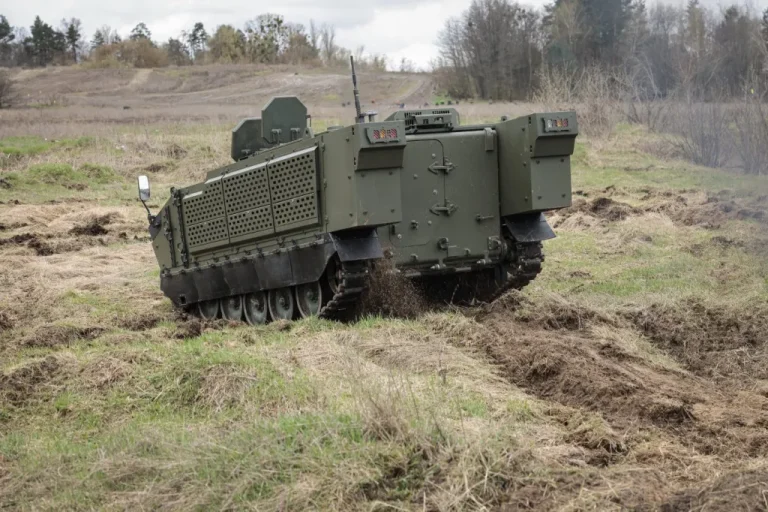
At first glance, it may seem strange that in the 21st century, the focus is once again on tracked vehicles. Wheeled armored vehicles are faster, cheaper, and easier to maintain.
But war dictates its own terms.
Spring and fall muddy conditions, ruined roads, and fields riddled with potholes—all of this brings tracked vehicles back into the spotlight. That is precisely why the “Skif” is following in the footsteps of the M113: cross-country capability, not speed, is the key factor.
Tracks here are not an anachronism, but an adaptation to reality.
Lessons from the Front Lines, Not the Training Ground
The key difference between the “Skif” and many prewar designs is its origins. It is a vehicle created not in the seclusion of design bureaus, but based on practical wartime experience.
The developers are explicitly focusing on the operation of foreign models, primarily the M113, which has received positive feedback from the Ukrainian military.
This means that the design takes into account specific problems rather than abstract requirements:
— survivability under artillery fire—
ease of boarding and disembarking
— field repairs—
adaptability to various missions
In fact, we’re talking about the “field evolution” of armored vehicles.
Simplicity as a Strategy
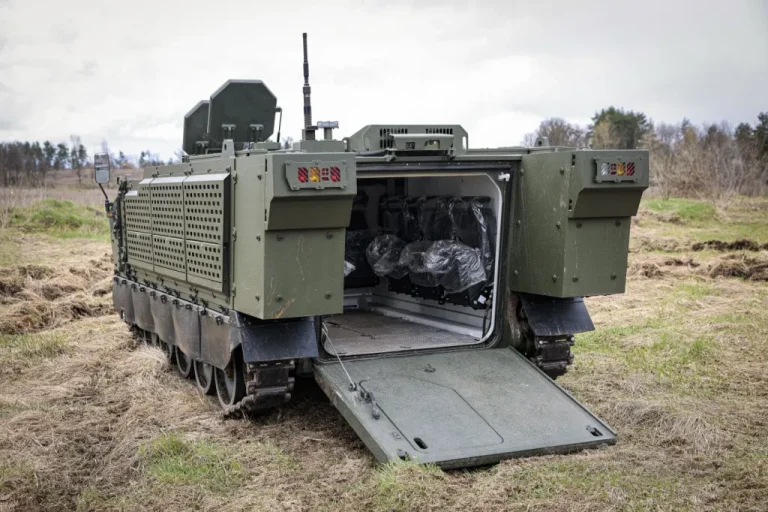
The most important thing about this vehicle isn’t its armor or its weapons. The most important thing is its philosophy.
The “Skif” does not attempt to compete with heavy infantry fighting vehicles or modern Western platforms. It serves a different purpose: to provide a mass-produced, serviceable, and sufficiently protected means of transport for infantry.
This marks a return to the concept of the M113—a vehicle that can be produced in the thousands, rapidly deployed, and used in a wide variety of roles.
And in the context of a protracted war, it is precisely this approach that proves to be the most viable.
Your own equipment means control
There is another important factor that is rarely discussed directly: dependence on supplies.
Any foreign technology brings not only benefits but also limitations—political, logistical, and technological. Domestic production provides what matters most: control.
Control over how many vehicles can be built.
Control over upgrades.
Control over usage.
And “Skif” is becoming part of this strategy—a gradual transition from dependence to autonomy.
Between the Past and the Future
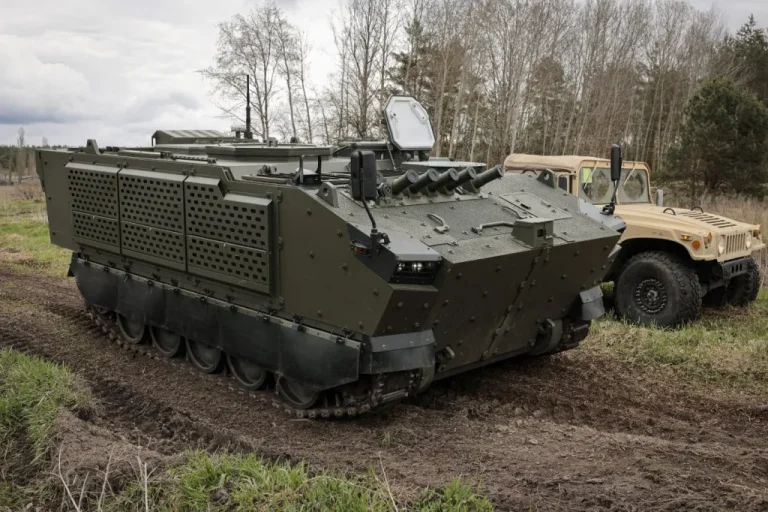
At first glance, the new Ukrainian APC seems like a step backward. It is a simple tracked vehicle inspired by designs from the 1960s.
But in reality, this is a step backward.
Toward a different logic of war, where what matters is not individual “super-machines” but the resilience of the system. Where technology need not be perfect, but rather accessible, understandable, and reproducible.
Conclusion
“Skif” is not a revolution in armored vehicles. It is a symptom.
A sign that modern warfare once again calls for simple, reliable, and mass-produced solutions—equipment that can be manufactured quickly, deployed to the front lines quickly, and returned to service just as quickly after being damaged.
It doesn’t have to be the best in the world.
It just has to be where it’s needed—and when it’s needed.
P.S. As always, please remember to practice information hygiene. We are still not discussing the conflict in Ukraine. In the comments, please limit discussions to the technical aspects of the project.
источник https://www.twz.com/land/ukraines-m113-inspired-armored-personnel-carrier-in-testing