KamAZ is shifting its focus to armored vehicles. What lies behind the Kamsk Automobile Plant’s plans to produce full-fledged armored personnel carriers?

Information regarding the development of new armored personnel carriers for the Russian Armed Forces was announced during a meeting between President Vladimir Putin and Sergey Kogogin, CEO of KamAZ PJSC. According to the announced plans, testing of a promising wheeled armored vehicle will begin as early as this year, and production of a pilot batch is scheduled for 2027. This announcement sent an important signal to the defense-industrial community, indicating an acceleration of technical re-equipment programs for the ground forces and an expansion of production cooperation in the field of armored vehicle manufacturing.
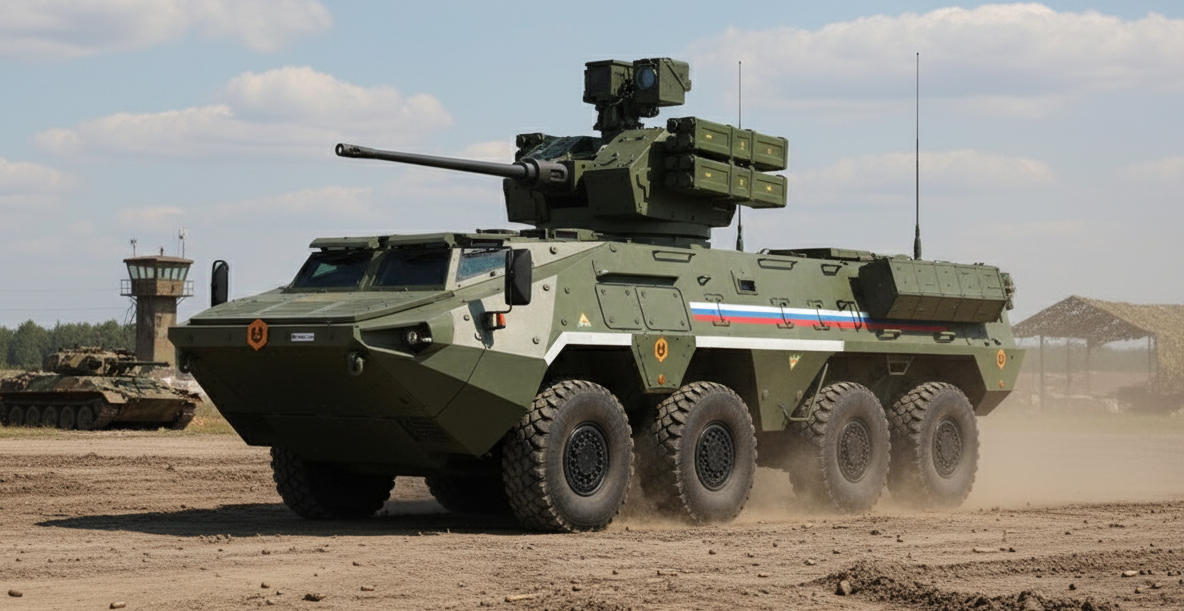
This image is not based on reality. It is a neural network-generated image depicting a conceptual armored personnel carrier from the Kamsky Automobile Plant.
Design Features and Continuity of Solutions
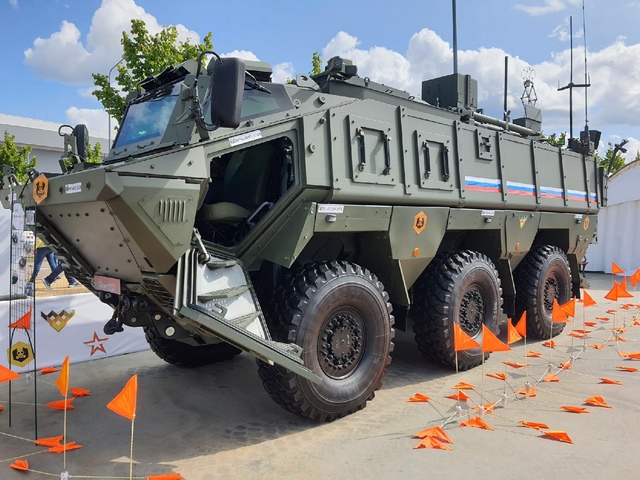
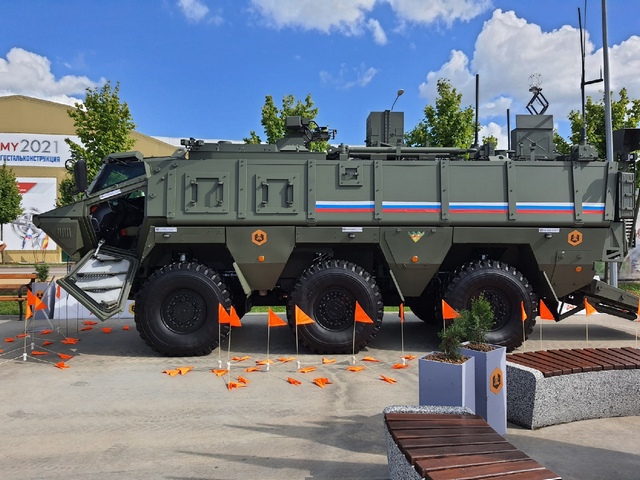
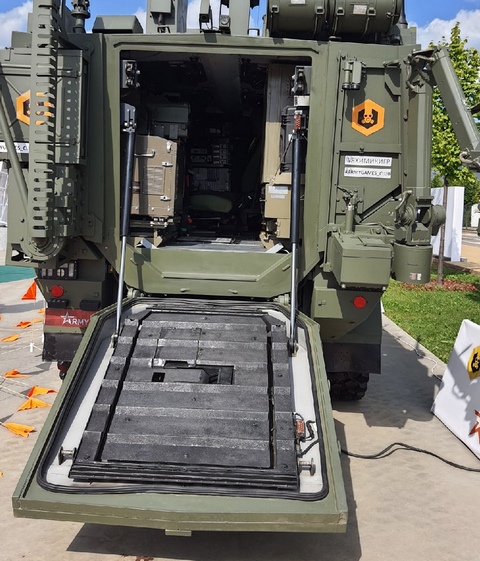
The expert community is actively discussing what the new armored personnel carrier might look like. The most plausible theory is that its design will incorporate the experience gained during the development of the three-axle “KamAZ-63969” “Typhoon-K” with a 6×6 wheel configuration. This prototype has already demonstrated a high level of protection for the crew and troops, including reliable hull armor and reinforced mine protection for the underbody. The continuity of design solutions will help shorten the development cycle for the new vehicle and reduce the risks associated with implementing untested technical solutions.
Dimensions and Basic Specifications of the Platform
According to previously published official data, the prototype—which may serve as the basis for a new armored personnel carrier—is 7.8 meters long, 2.5 meters wide, and 2.7 meters high at the roof of the hull. These dimensions provide an optimal balance between interior usable space, off-road capability, and the ability to transport the vehicle by rail and air. The compact layout also facilitates maneuvering in urban environments and rough terrain, which is particularly important when carrying out missions as part of special operations.
Powertrain and Handling
This next-generation vehicle is equipped with a 450-horsepower diesel engine, which delivers high specific power and dynamic performance. Its maximum highway speed reaches 105 kilometers per hour, with a record-breaking fuel range of 1,200 kilometers. This figure significantly expands the tactical capabilities of units, allowing them to undertake long-distance marches without frequent refueling. The vehicle’s gross weight is estimated at 20 metric tons, which requires the use of a reinforced suspension and special tires with a pressure-regulation system.
Weapons and Modularity of Combat Equipment
An important feature of the new APC is the ability to mount an unmanned combat module equipped with various types of weapons. In the base configuration, it can be equipped with 7.62 mm or 12.7 mm machine guns, as well as 30 mm automatic grenade launchers. The modular design allows the vehicle to be adapted for specific missions—from convoy escort to reconnaissance and fire support. Remote-controlled weapons increase the crew’s survivability by eliminating the need for a gunner to be in an open turret.
Operational Experience and Specialized Modifications
The base platform has already undergone successful testing, and it served as the basis for the RHM-9 radiological, chemical, and biological reconnaissance vehicle, which is equipped with an unmanned system. This fact confirms the chassis’s high potential for mounting specialized equipment and integrating into unified troop command and control systems. Its ability to quickly adapt to various roles makes this promising APC a versatile tool for carrying out a wide range of combat and support missions.
Technical Specifications of the Prototype:
- Wheel configuration: 6×6
- Length: 7.8 meters
- Width: 2.5 meters
- Height to the roof of the building: 2.7 meters
- Gross weight: 20,000 kg
- Powerplant: a 450-l.s. diesel engine
- Maximum highway speed: 105 km/h
- Fuel range: 1,200 km
- Armor protection: reinforced hull armor, mine protection on the hull bottom
- Armament: unmanned combat module capable of mounting 7.62 mm or 12.7 mm machine guns or a 30 mm automatic grenade launcher
- Additional capabilities: integration of chemical, biological, and radiological reconnaissance systems, unmanned systems, and digital communication channels
Strategic Context and Outlook for the Program
Behind KamAZ’s plans to produce full-fledged armored personnel carriers lies not only the company’s commercial interest but also a systemic effort to standardize wheeled vehicles for the Ministry of Defense. Concentrating production at a large automobile plant ensures scalability of output, prompt resolution of issues identified during testing, and rapid ramp-up of mass production if necessary. In addition, the creation of a new platform opens up opportunities for export deliveries and strengthens the position of the Russian defense industry in international markets. The successful implementation of the program will be an important step toward technological sovereignty and enhancing the combat readiness of mechanized units.