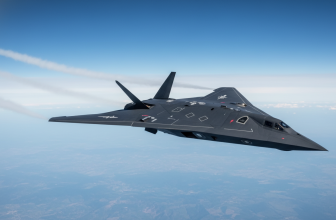
The United States Army has officially approved the designation MV-75 for a new tactical tiltrotor aircraft designed for assault and transport missions. This aircraft will be a central element of the U.S. Army’s future aviation architecture and is intended to replace outdated platforms by combining the best features of helicopters and fixed-wing aircraft.

Where did the idea for the MV-75 come from?
The development of the MV-75 is a logical continuation of the army’s long-standing efforts to create a platform with high tactical potential, capable of:
- take off and land vertically without airport infrastructure;
- to achieve a cruising speed and range comparable to those of conventional aircraft;
- ensure a high degree of mobility and flexibility when deploying units in challenging conditions.
With the introduction of the MV-75, Army aviation units will receive a state-of-the-art aircraft capable of operating in areas where helicopters are no longer able to provide the necessary speed or range.
Design Features and Tactics for Use
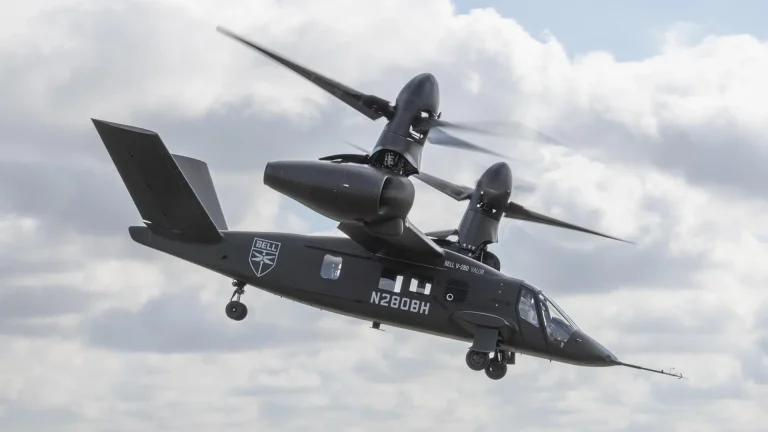
The MV-75 tiltrotor is designed according to a classic configuration with two rotary propellers mounted at the wing tips. This configuration allows the aircraft to remain in a vertical flight mode during takeoff and landing, and then transitions to a horizontal flight mode, where the tiltrotor behaves like a conventional aircraft and can reach high speeds.
The advantages of this approach:
- vertical takeoff and landing (VTOL) without the need for airfields;
- high cruising speed and range, surpassing those of comparable helicopters;
- the ability to rapidly deploy personnel, cargo, and equipment;
- flexibility in tactical deployment in urban and mountainous areas, as well as in confined spaces.
The MV-75 is equipped with state-of-the-art sensor systems, digital control interfaces, and the ability to be quickly reconfigured for various missions: from transport and evacuation to support for ground units.
Technical and Tactical Specifications
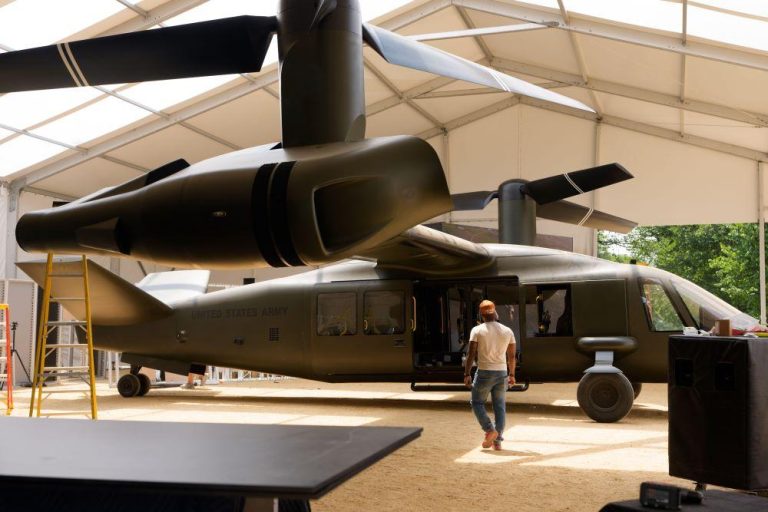
While the final specifications are still being finalized, the tiltrotor is tentatively expected to have the following specifications:
Dimensions and Weight
- Wingspan — approximately 25–30 m
- The fuselage is about 20 m long
- Takeoff weight — several dozen metric tons
Power Plant
- Two powerful turbo-shaft engines;
- Rotating propellers for VTOL and horizontal flight.
Flight Data
- Expected cruising speed: over 500 km/h;
- Practical ceiling—above 8,000 m;
- Its range is significantly greater than that of helicopters in the same class.
Load Capacity
- The ability to transport up to several metric tons of cargo;
- Crew + troops numbering up to several dozen people;
- Options for suspending loads and equipment.
Tactical Role in the Future Army
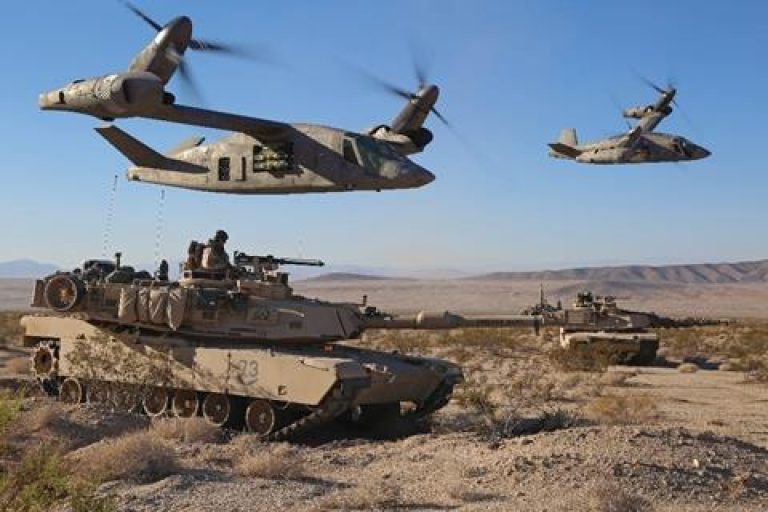
The MV-75 is regarded as a versatile airborne transport and assault system capable of operating as part of joint task forces. Its key functions are:
- deployment of rapid-response forces;
- delivery of heavy equipment to remote areas;
- conducting evacuation operations;
- support in combat conditions, made possible by the ability to quickly enter and exit the combat zone;
- Interaction with unmanned systems and reconnaissance platforms.
The transition from traditional helicopters to such tiltrotors is part of the army’s broader strategy to increase the mobility and resilience of its air forces in high-tech conflicts.
Development and Testing Plans
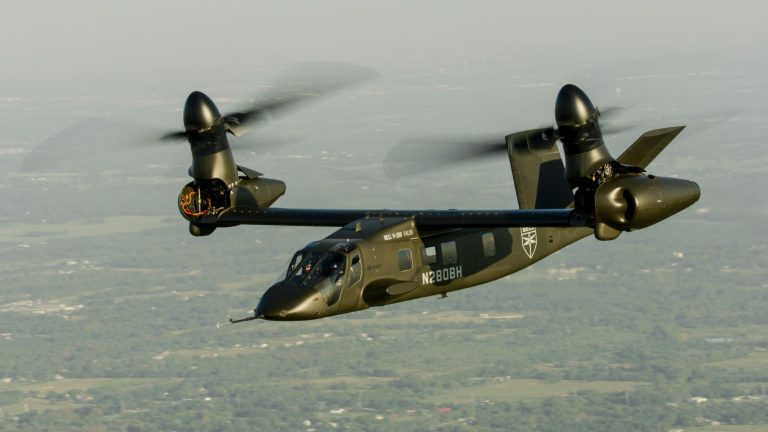
The MV-75 is currently in active development, including prototype construction, test programs, and flight tests. Leading U.S. aerospace companies, as well as research and development centers, are participating in the process, working to optimize the aircraft’s aerodynamics, power plant, and avionics.
The goal is to bring the vehicle to mass production and put it into service in the coming years, replacing outdated platforms and providing the Army Aviation with a completely new tool for carrying out missions under challenging operational conditions.
Why Is This Important?
The MV-75 is not just another model of an airplane or helicopter. It is a comprehensive solution capable of combining:
- vertical takeoff maneuverability;
- the aircraft’s speed and range;
- flexibility in use across a wide variety of missions.
The introduction of this aircraft into the armed forces will mark an important step in the evolution of army aviation and in strengthening the army’s ability to respond rapidly to crises and conflicts anywhere in the world.
Conclusion

The approval of the MV-75 designation is more than just an administrative step. It confirms the U.S. Army’s strategic choice in favor of modern tiltrotors as key assets for the tactical aviation of the future. With this capability, Army aviation will be able to operate faster, farther, and more effectively than ever before.