Sand vs. Shells: Unexpected Results from Tests of a New Tank Armor System—What Did the Tests on the T-72B3 Tank Reveal?

Western media outlets have previously reported on multiple occasions that, due to a shortage of dynamic protection components, Russia fills the dynamic protection modules of its tanks with sand and cement during production.
However, a number of biased Western media outlets recently reported that these recommendations were obtained directly from the “Steel Research Institute,” which, in turn, is engaged in research and development in the field of armored vehicle protection in Russia.
It is emphasized that, amid the crisis and ongoing hostilities, the Russian defense industry has begun to use this type of protection in its armored forces by filling the KDZ compartments of Russian tanks with sand or cement.
I’d like to get a clearer understanding of this issue…
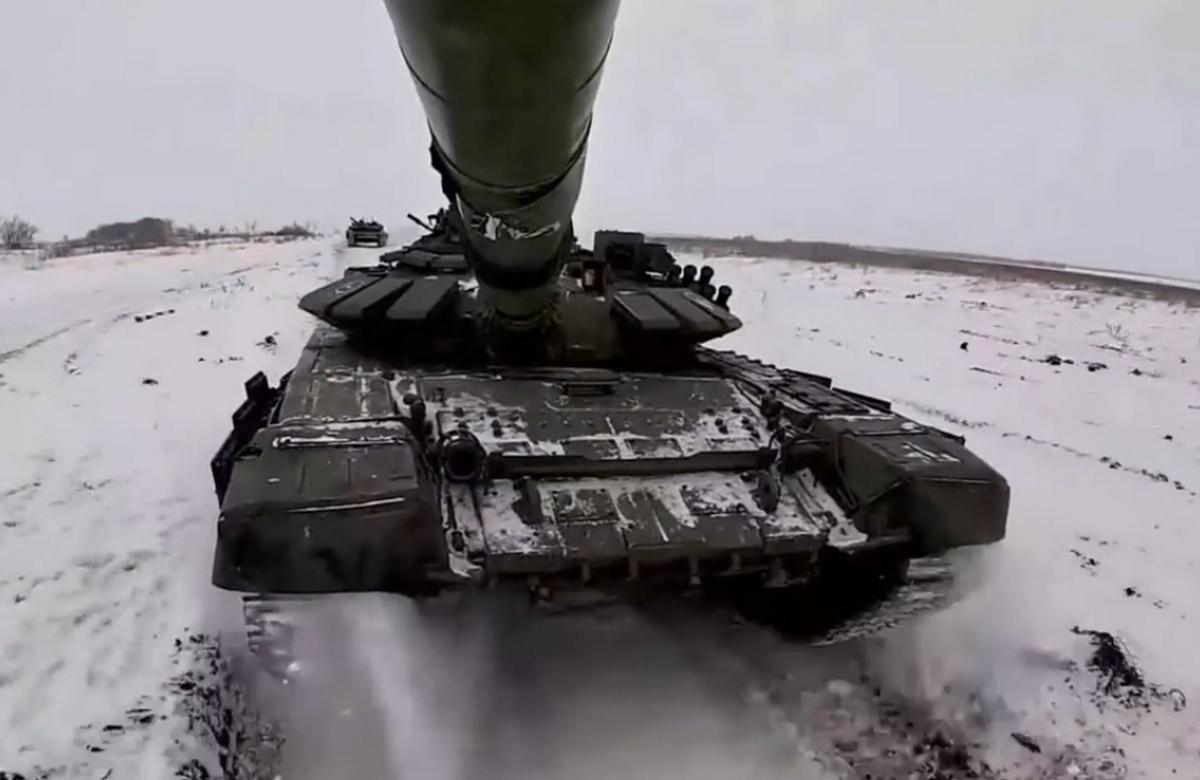
So, we were indeed able to find the results of similar studies by the “Steel Research Institute” online, using the T-72B3 tank as an example. The tests were conducted as part of the development of a new type of non-explosive reactive armor (NER) that would be more effective and less expensive against anti-tank weapons than standard dynamic protection (DP) elements.
It is not known for certain exactly when research and testing were conducted on non-explosive reactive armor to ensure the protection of Russian tanks in the event of a shortage of dynamic protection components.
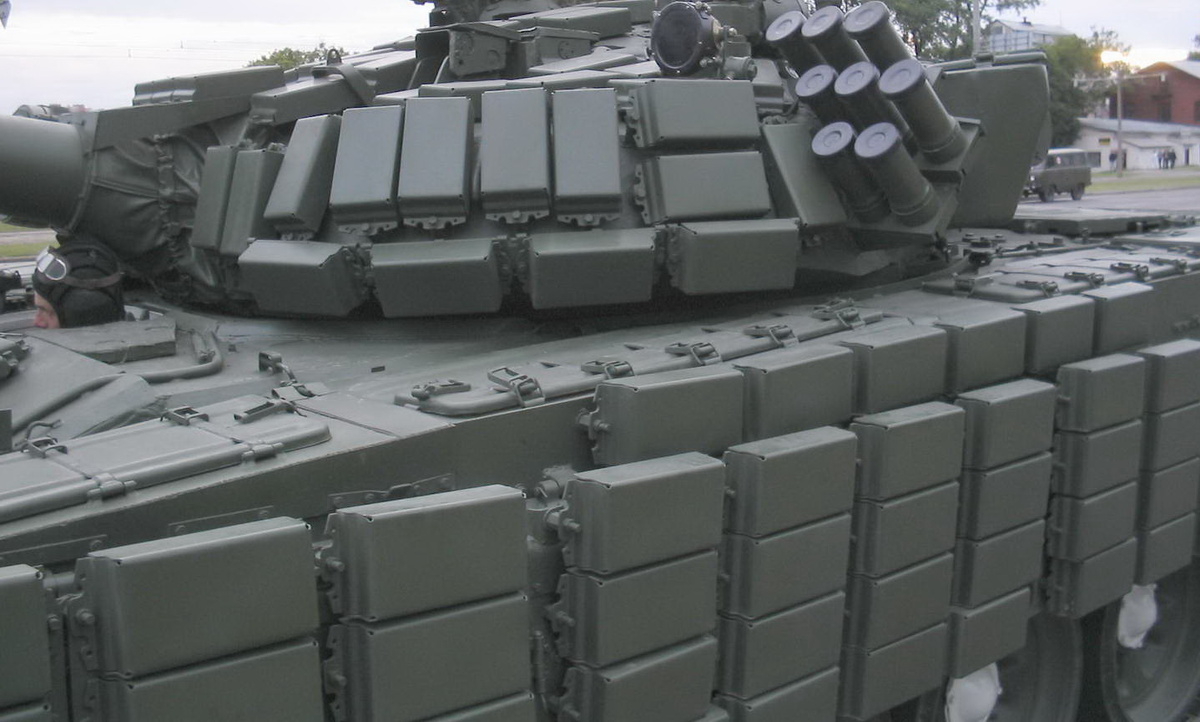
DZ “Contact-1”
Nevertheless, according to published materials, it is noted that if there is a shortage of the necessary number of dynamic protection elements for a tank, the “Steel Research Institute” does indeed recommend using so-called non-explosive reactive armor. However, it is pointed out that, instead of standard dynamic protection elements, a similar plate containing fine organic glass can serve as the filler for the non-explosive reactive protection containers.
To create an NRZ shield, it is recommended install 2-mm structural steel plates—identical to those in the standard KDZ block—into the standard “Kontakt-1”-type tank BDZ metal container, replacing the standard EDZ 4S20 and 4S22. Between them, instead of the EDZ, place plates filled with tightly packed fine organic glass wrapped in tape. The dimensions of these plates correspond to the standard DZ element and are 250 × 130 mm with a thickness of 6 mm.
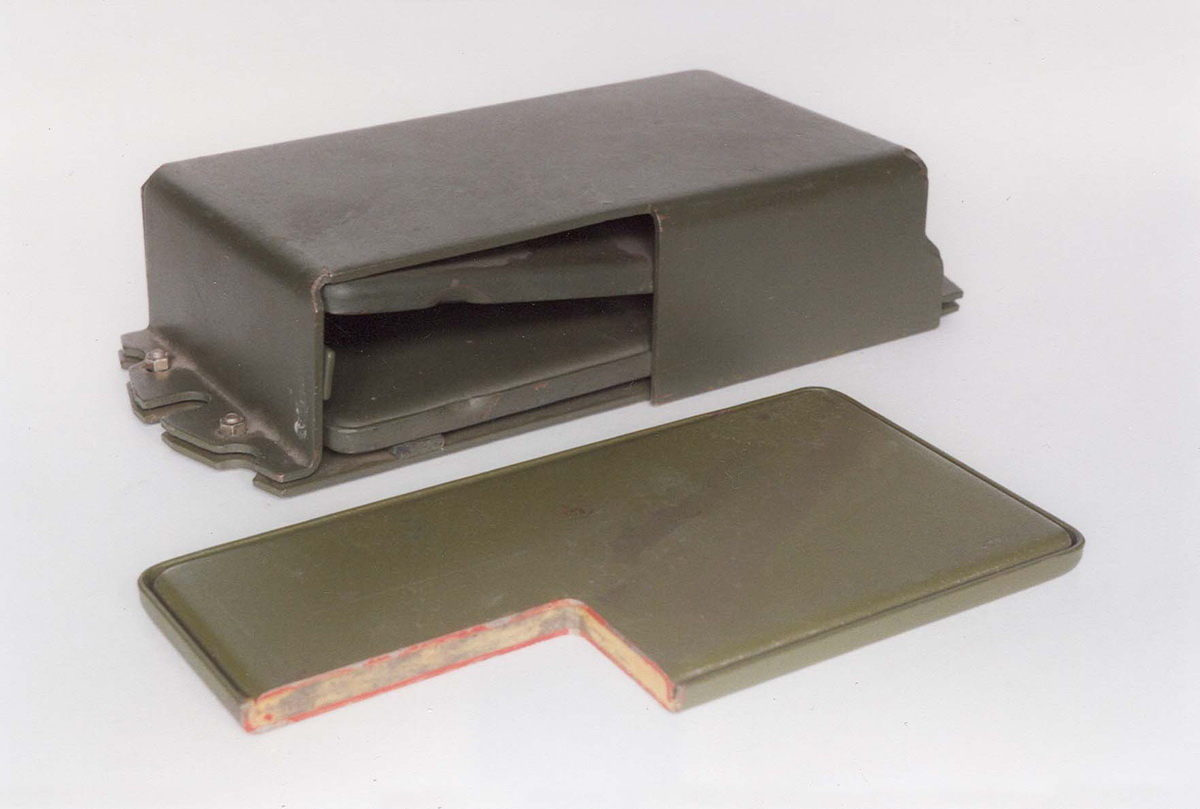
“Contact-1” DZ Unit
Container with EDZ
The published research results also indicate that, during the first phase, tests were conducted with the tank fully equipped with standard containers containing active protection system components, then with the EDZ fully replaced by NRZ, and finally with a partial replacement of the EDZ with NRZ, in a 50/50 ratio.
The tests, in turn, were conducted against the PG-7L and PG-9S anti-tank cumulative rounds for the RPG-7 grenade launcher, as these are currently used by both sides as the primary warhead for UAVs.
According to the published results, unlike the standard “Kontak-1” dynamic protection units, which were based on a benchmark of 100% effectiveness, the NRZ units with thin plexiglass—when fully replaced on the tower and sides—achieved an overall effectiveness of 71%.
It is noted that the blocks of this type of non-explosive reactive armor in the turret modules demonstrated 69% effectiveness, whereas in the more massive side-mounted units, their effectiveness was 92%, which is ultimately quite impressive.
At the same time, it is emphasized that the most effective way to equip a tank with an add-on protection kit is to fit it with standard armor components. It is also noted that equipping a tank with a combination of the EDZ and NRZ systems, along with organic glass, is an acceptable solution in certain cases. 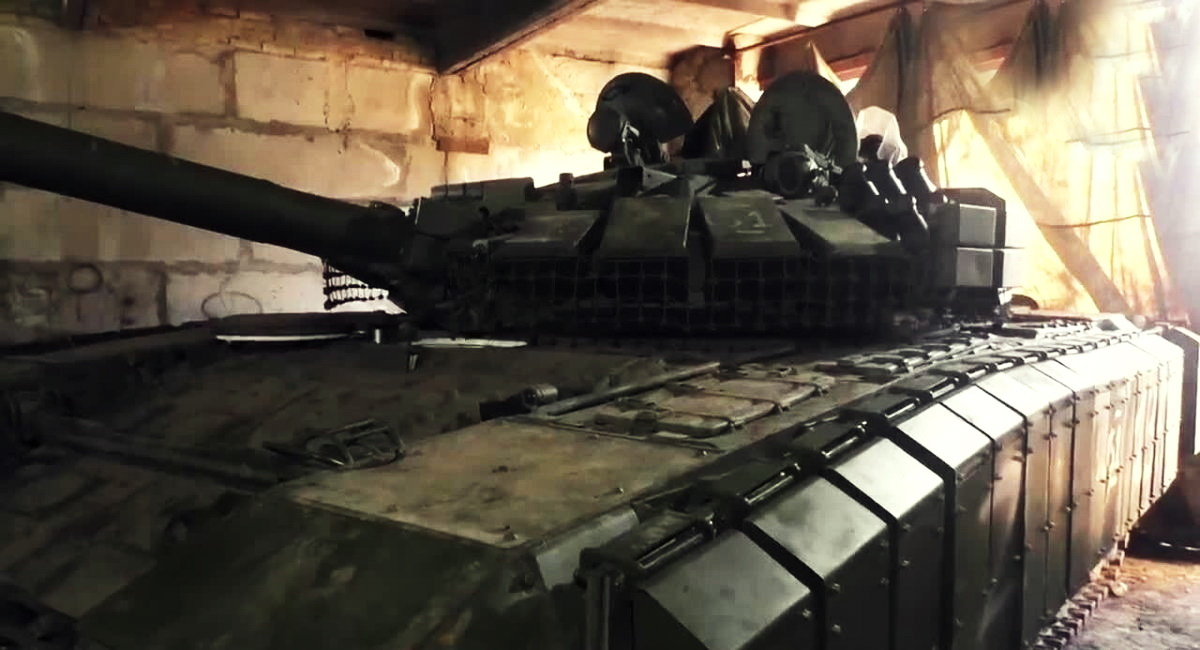
The published results of research conducted by the “Steel Research Institute” also indicate that similar tests were indeed carried out, including filling the NRC blocks with sand and concrete. However, these test results proved to be significantly lower, reaching up to 40% of the reference strength.
However, as a complete replacement for EDZ with NRZ—given the shortage of standard dynamic protection components—the Steel Research Institute recommends using non-explosive reactive armor modules only as part of the tank’s side armor. Nevertheless, within the “Kontakt-1” active protection system for the turret, the use of such non-explosive reactive armor is permitted, but only when used exclusively in conjunction with explosive reactive armor.
It was also noted that if the tank’s protective structures lack or are completely devoid of “Kontakt-1” explosive-reactive armor, sand or concrete could also serve as an alternative for filling the explosive-reactive armor blocks. However, it is emphasized that in such a case, the effectiveness of this solution ranges from 10 to 40 percent of the standard level, while the weight is greater.
Furthermore, the study’s findings noted that installing NRZ components in built-in dynamic protection systems such as “Kontakt-5” or “Relikt” is not advisable. These recommendations apply only to “Kontakt-1” dynamic protection units.
Furthermore, the Steel Research Institute emphasizes that the use of this solution with ammunition compartments filled with sand and concrete is recommended only as a last resort, including during repair work on combat tanks in combat conditions and when rear-area supplies are insufficient. In other words, this solution is not a recommendation for the production of new armored vehicles.
It is worth noting that, to the best of my knowledge, there have not yet been any instances in which problems with the production of active protection systems for Russian tanks have been officially acknowledged.
Nevertheless, in the context of a military conflict, the search for ways to solve such problems, as well as the availability of such expert assessments to the public, represents a positive trend in the accessibility and usefulness of this information—not only for maintenance and technical personnel and field repair shops, but also for the crews themselves.
You can find actual screenshots of the “Steel Research Institute” study results on non-explosive reactive armor (NERA) at this link: https://dzen.ru/a/Z_fN5hqu7gri5O2v