SOCOM Is Looking for a Replacement for the C-146 Wolfhound: The U.S. Special Forces' "Ghost Plane" Is Becoming a Thing of the Past

The U.S. Special Operations Command (SOCOM) has officially begun the search for a replacement for one of the U.S. Air Force’s strangest and least-known aircraft—the C-146A Wolfhound. At first glance, the news seems fairly routine: just another program to modernize the aircraft fleet. But in reality, the Wolfhound’s story is far more interesting than it seems.
Because the C-146 isn’t just a transport aircraft.
This is the aircraft that, for nearly fifteen years, quietly shuttled U.S. special operations forces to the most hostile corners of the globe, landed on dirt runways in Africa, transported SOF teams to areas where, officially, “no one was there,” evacuated the wounded, served as covert VIP transport, and was, in short, the ideal aircraft for the “gray war” of the post-9/11 era.
And now this plane is gradually taking off.
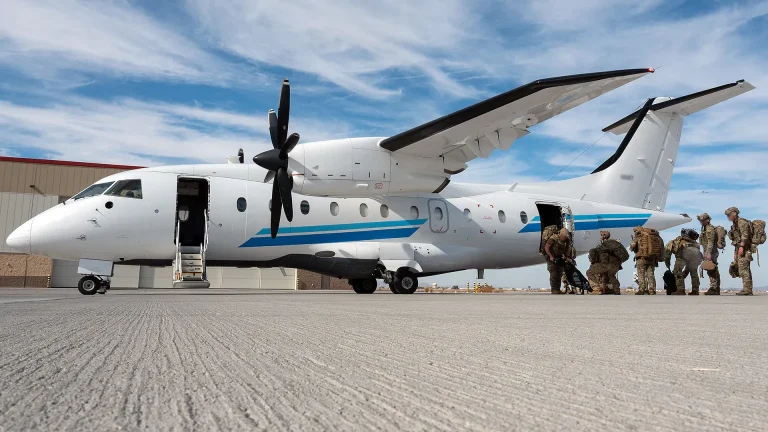
An airplane that looked like a commercial airliner
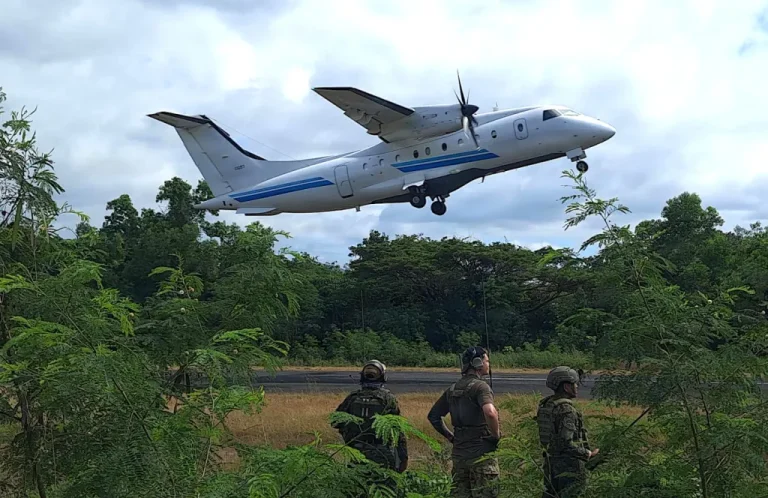
The story of Wolfhound begins in a rather unusual way.
Unlike most U.S. special operations aircraft, the C-146 was not designed as a military aircraft. It is based on the German Dornier 328—a small regional turboprop airliner developed in the late 1980s.
The airplane actually made its debut at a strange moment in the history of aviation.
At that time, many manufacturers believed that the future lay with small regional airlines and compact turboprop aircraft. The Dornier 328 was conceived as a fast and comfortable regional aircraft for short routes. Its high-mounted wing, good takeoff and landing performance, and decent speed made it a very attractive option for local routes.
But it wasn’t a commercial success.
A total of just over two hundred aircraft were built, after which the program effectively came to an end. It would seem to be just another little-known European regional jet that would gradually disappear from the market.
But then he caught the attention of U.S. special operations forces.
SOCOM Has Found the Perfect Aircraft for “Tough Terrain”
After September 11, the American war changed dramatically.
Instead of large-scale conflicts, the U.S. found itself facing dozens of small-scale conflicts scattered across Africa, the Middle East, and Asia. Special forces began operating on a regular basis in areas lacking proper airfields, robust logistics, or any infrastructure at all.
And that’s when it became clear that the massive C-130s aren’t always the most convenient.
For small SOF teams, an aircraft was needed that was:
— inexpensive,
— inconspicuous,
— capable of landing on short runways,
— unobtrusive,
— and sufficiently “civilian-looking” on the outside.
The Dornier 328 was the perfect choice.
That is how the C-146A Wolfhound came to be—a militarized version of the civilian aircraft, adapted for special operations. The aircraft was equipped with the ability to quickly reconfigure the cabin, medical evacuation equipment, improved communication systems, and the capability to operate from unprepared airfields.
But the most interesting thing is its appearance.
Unlike most U.S. military aircraft, the Wolfhound was deliberately painted in a nearly civilian-style scheme. A white fuselage, minimal identification markings, and the absence of an aggressive military silhouette—all of this made the aircraft ideal for “covert” missions.
That is precisely why, for years, the C-146 could be found in the most unexpected places around the world.
A small airplane with very “non-aviation” capabilities
On paper, the C-146 Wolfhound looks almost unassuming. No stealth design, no supersonic speed, and no heavy armament. But that is precisely its philosophy.
The aircraft is equipped with two Pratt & Whitney PW119C turboprop engines, each rated at 2,282 horsepower. For a relatively compact aircraft, this proved sufficient to reach speeds of up to 620 km/h—a very impressive figure for a turboprop special operations transport.
The Wolfhound is capable of carrying:
— up to 27 passengers,
— about 2.7 metric tons of cargo,
— or several stretcher-bound casualties in its medical configuration.
The flight range is approximately 2,800–3,300 kilometers, depending on the payload, which allows it to operate throughout virtually the entire Middle East or Africa without a stopover.
But the real magic of the C-146 lies elsewhere.
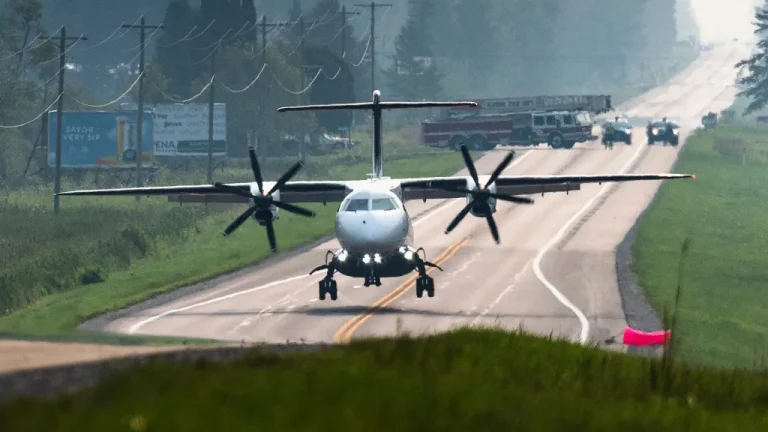
Its high-mounted wing, powerful engines, and sturdy landing gear allow the aircraft to operate from short and makeshift runways, unpaved airfields, and even ordinary roads. It is no coincidence that the Wolfhound repeatedly landed directly on highways during the U.S. Northern Strike exercises.
The aircraft has a minimal crew—two pilots and a loadmaster. At the same time, SOCOM has significantly upgraded the aircraft’s internal equipment:
— secure communication channels,
— satellite communications,
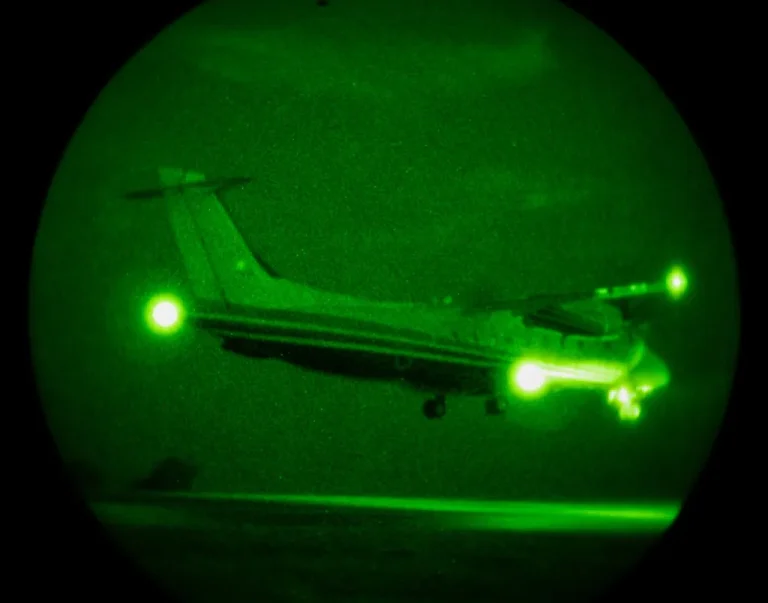
— compatibility with night-vision devices,
— enhanced navigation,
— and the ability to quickly reconfigure the cabin for various missions.
In fact, the Americans have turned a small regional airliner into a versatile tool of “gray warfare” — an aircraft capable of transporting a special operations team overnight, evacuating the wounded, delivering equipment to a dirt runway in Africa, and disappearing just as quietly as it arrived.
An Airplane for a War That Officially Didn’t Exist
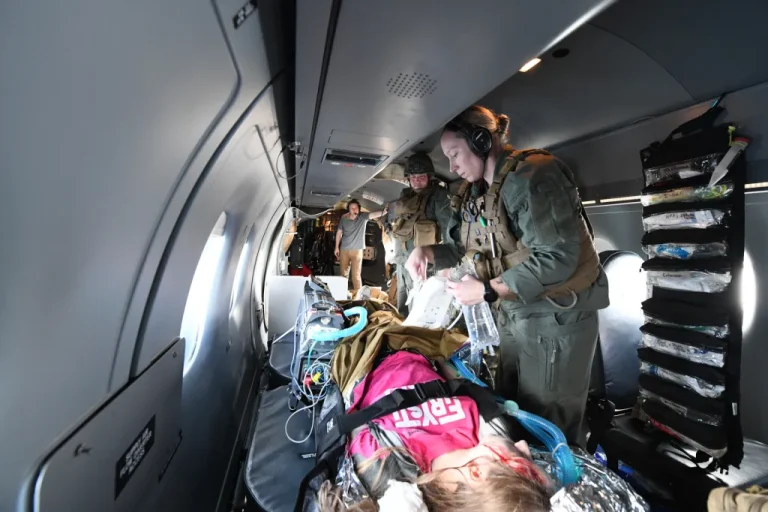
Over the years it has been in service, the Wolfhound has become something of a cult vehicle within the American intelligence community.
The aircraft was deployed in Africa, Latin America, the Middle East, and Southeast Asia. It was the C-146s that were actively used during the French operation in Mali in 2013. They transported small SOF teams, cargo, equipment, and the wounded to areas where conventional transport aircraft would have been too conspicuous.
Sometimes the Wolfhound actually looked almost like a Cold War-era CIA plane.
The aircraft regularly appeared at civilian airfields, flew to regions with extremely volatile political situations, and operated in areas where the United States preferred not to officially display a significant military presence.
At the same time, the C-146 proved to be extremely successful, particularly from a technical standpoint.
The aircraft was capable of using short and makeshift runways, roads, and remote airfields. Later, SOCOM even upgraded the aircraft, dramatically expanding the number of available landing sites.
In essence, the Wolfhound became the ideal vehicle for the era of “small, dirty wars.”
But now it’s becoming too difficult for the plane to stay afloat
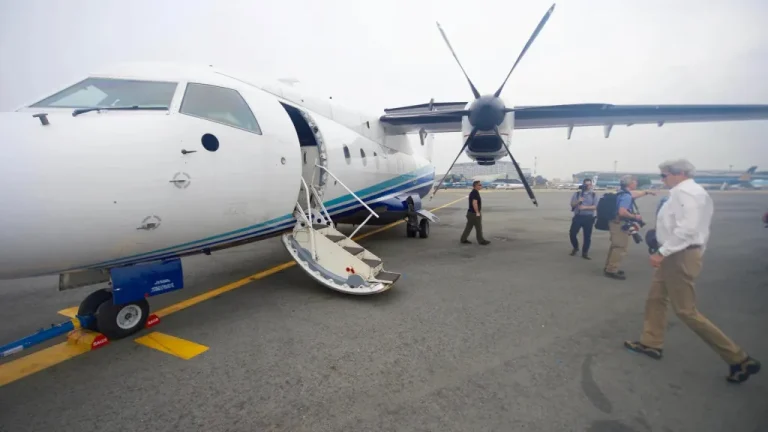
The main problem with the C-146 today is not its age at all.
The problem is that the Dornier 328 was never a mass-produced aircraft. Production ceased long ago, the global maintenance infrastructure is extremely limited, and it is becoming increasingly expensive to maintain this unique fleet.
That is exactly why SOCOM is now looking for a replacement.
In fact, the Americans are already saying outright what they want:
— greater range,
— better fuel efficiency,
— more comprehensive commercial support,
— while still maintaining the ability to operate from “unpaved” airfields.
This is an extremely difficult task.
That’s because the Wolfhound’s strength lay precisely in its balance. It remained fairly small and “innocent”-looking on the outside, yet it had a very respectable payload capacity and excellent STOL performance.
Who could replace Wolfhound?
And this is where things get really interesting.
Many consider modern versions of the Dash-8 or ATR-42/72—widely used regional turboprop aircraft with a vast commercial maintenance network—to be the most logical candidates. They are fuel-efficient, widely used around the world, and capable of operating from relatively short runways.
But there’s a problem: they’re already too “ordinary” and aren’t always suitable for truly extreme locations.
Another option is the Airbus C-295 or the Leonardo C-27J Spartan. These aircraft are much more “military” in nature, have excellent capabilities for operating from unpaved runways, and are already widely used by special forces in various countries.
But here, another distinctive feature of the Wolfhound is lost—its inconspicuousness in civilian life.
There are also some more exotic candidates. For example, the new version of the D328eco, which Deutsche Aircraft is currently trying to revive. The irony would be almost perfect: SOCOM could replace the old Dornier… with a new Dornier.
The End of the “War on Terror” Era
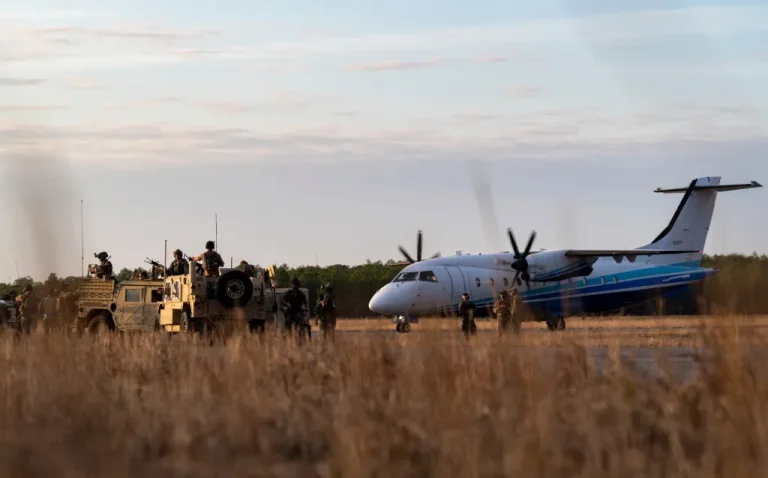
There is something else in this whole story that is particularly symbolic.
The C-146 Wolfhound is nearly the perfect aircraft for the era of America’s “gray war” following 2001. An aircraft for conflicts without a front line. For operations without an official declaration of war. For countries where the U.S. is supposedly “not at war,” but where special forces are constantly present.
Today, this era is gradually coming to an end.
The U.S. military is increasingly preparing for a conflict against China and Russia—a war characterized by vast distances, satellite surveillance, and a full-fledged air defense system. In such an environment, a small “stealth aircraft” no longer seems like such a versatile solution.
But that is precisely why the Wolfhound remains such an interesting vehicle.
He was not a symbol of America’s great military might, but a symbol of a different America—one that preferred to act quietly, discreetly, and far from the headlines.
This material is based on publications by The War Zone, Aviation Week, the U.S. Air Force, and other open sources.