Special Forces' "Flying Fuel Tanker": The Night Stalkers Want to Turn the MH-47 Chinook into an Air Tanker

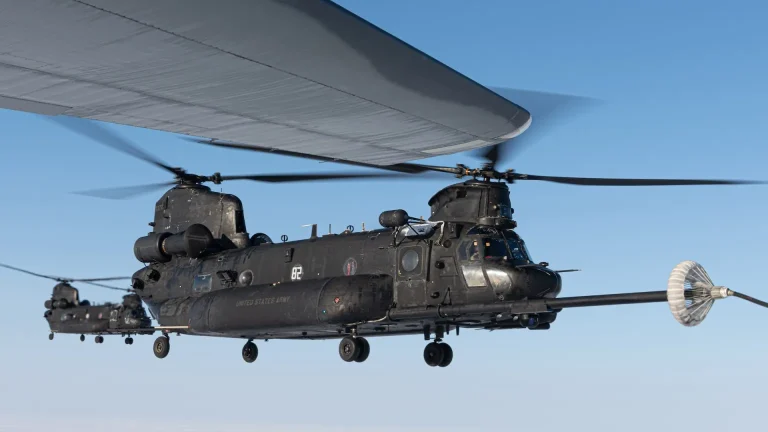
The American “Night Stalkers” of the 160th Special Operations Aviation Regiment have always had special helicopters. While conventional Army aviation was busy transporting troops and cargo, the unit’s MH-47G Chinooks had long since evolved into something between a heavy transport, a deep-penetration aircraft, and a platform for covert special operations deep behind enemy lines.
But now the Americans are considering an even more unusual idea.
The U.S. Special Operations Command is considering the possibility of converting future MH-47 Block III helicopters into true aerial refueling helicopters—helicopters capable of refueling other aircraft directly in the air. And if the project does go ahead, the Night Stalkers will have their own organic in-flight refueling system, independent of the U.S. Air Force.
At first glance, the idea seems almost crazy. A heavy, twin-rotor tanker helicopter—it sounds more like a Cold War-era concept or an alternate history scenario. But if you look more closely, it becomes clear that behind this strange concept lies a very serious problem in modern warfare.
A helicopter that has long since ceased to be just a helicopter
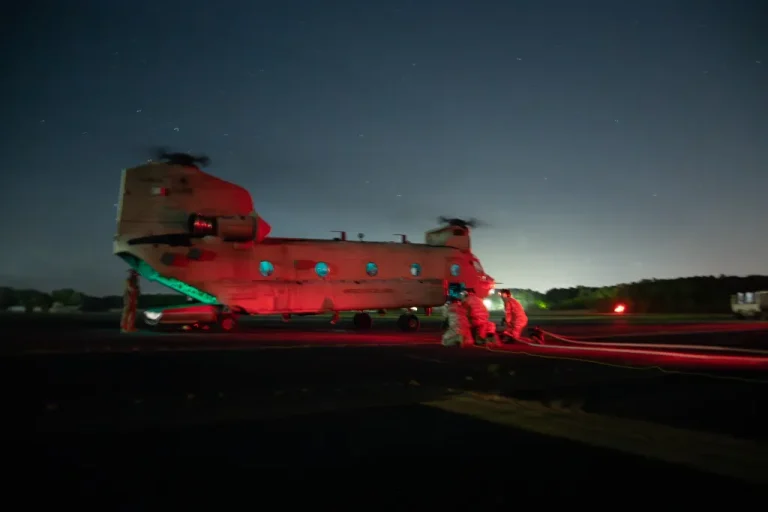
The history of the MH-47 is actually a very good example of how U.S. special operations aviation has evolved since the Vietnam War.
When Operation Eagle Claw to rescue hostages in Iran failed in 1980, the U.S. military came to an extremely unpleasant conclusion: the U.S. simply does not know how to conduct long-range covert special operations. A lack of coordination, a shortage of specialized aircraft, and problems with in-flight refueling literally buried the entire mission in the Iranian desert.
It was right after that that the famous Night Stalkers began to take shape.
The 160th SOAR quickly realized a simple truth: for special operations forces, range is almost synonymous with survival. The farther a helicopter can penetrate without landing, the less it relies on forward operating bases, temporary landing sites, and vulnerable refueling points.
And so the MH-47 gradually began to evolve into a unique aircraft.
The standard CH-47 Chinook was designed as a heavy-lift transport helicopter for the U.S. Army—a massive twin-rotor “truck” with colossal payload capacity. But the Night Stalkers have transformed it into almost a separate class of aircraft. The helicopter was equipped with new avionics and electronic warfare systems, a terrain-following flight system, infrared countermeasures, massive auxiliary fuel tanks, and a retractable in-flight refueling boom.
This is precisely what became one of the MH-47G’s key features.
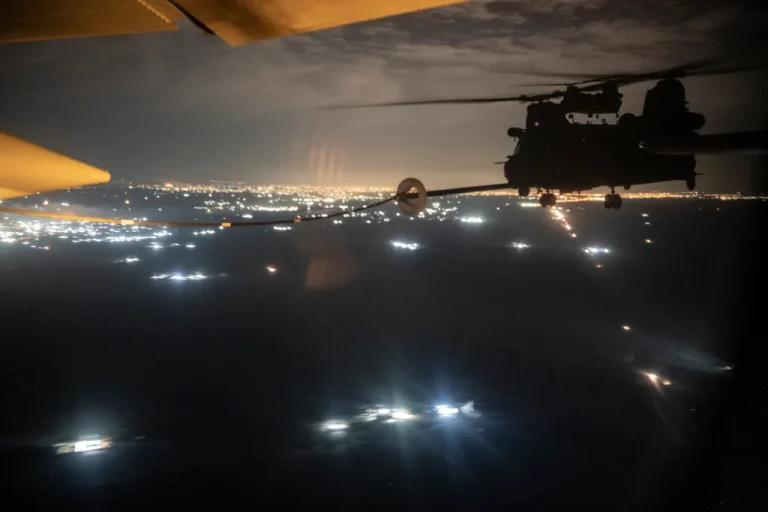
Today, the “Night Stalkers” can refuel their helicopters from MC-130 aircraft right in midair—a sight that still seems almost surreal. At night, a massive helicopter flies at low altitude and connects to a fuel hose just like a strategic bomber.
But now the Americans want to go even further.
The war against China is disrupting the old logistics system
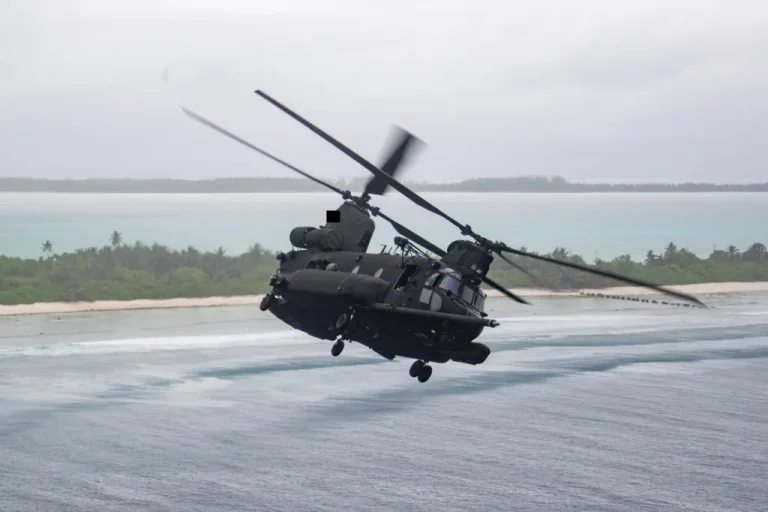
The main reason behind this whole story is the Pacific Ocean.
Over the past twenty years, U.S. special operations have been conducted within a relatively comfortable operational framework. In Afghanistan, Iraq, and Syria—everywhere—the U.S. was able to establish forward operating bases, use allied airfields, and smoothly organize supply chains.
But a war against China would look completely different.
The vast expanses of the Pacific Ocean, the threat of long-range Chinese missiles, and the vulnerability of major air bases make the traditional refueling system extremely dangerous. This is especially true for special forces helicopters, which will have to operate deep inside the so-called “contested zone”—an area under constant threat from enemy air defense systems and aircraft.
That is precisely why SOCOM is beginning to explore new ways to operate independently.
During SOF Week, representatives of the command explicitly stated that the future MH-47 Block III could become a sort of “flying FARP”—an airborne equivalent of a forward refueling point. In certain scenarios, the helicopter will carry a maximum fuel load and be used to refuel other aircraft either in flight or after landing in hard-to-reach areas.
Essentially, the Night Stalkers want to create their own mobile mini-logistics system that can operate without large KC-135 or KC-46 tanker aircraft.
The problem with modern warfare is that everything is too visible
There is something else that is particularly important in this whole story.
Americans are beginning to realize that the era of massive, secure air bases is gradually coming to an end.
The war in Ukraine has shown just how vulnerable modern aviation infrastructure has become. Drones, cruise missiles, ballistic strikes, and satellite reconnaissance make any large facility extremely dangerous for housing aircraft.
But this is especially critical for special operations.
The Night Stalkers have always built their philosophy around stealth, low-altitude flights, and autonomy. That is precisely why MH-47G helicopters have long been equipped with auxiliary fuel systems and equipment for so-called “Fat Cow” missions—operations in which the helicopter is used as a temporary mobile refueling station on the ground.
Now they want to take this concept to new heights.
And this raises a very interesting point: if the enemy is capable of destroying large tankers and airfields, then the refueling system itself must become decentralized, mobile, and less conspicuous.
Essentially, the Americans are trying to do with air logistics what is currently happening with drones and air defense—to move away from a small number of extremely valuable platforms toward a more flexible and distributed architecture.
Chinook is unexpectedly enjoying a second wind
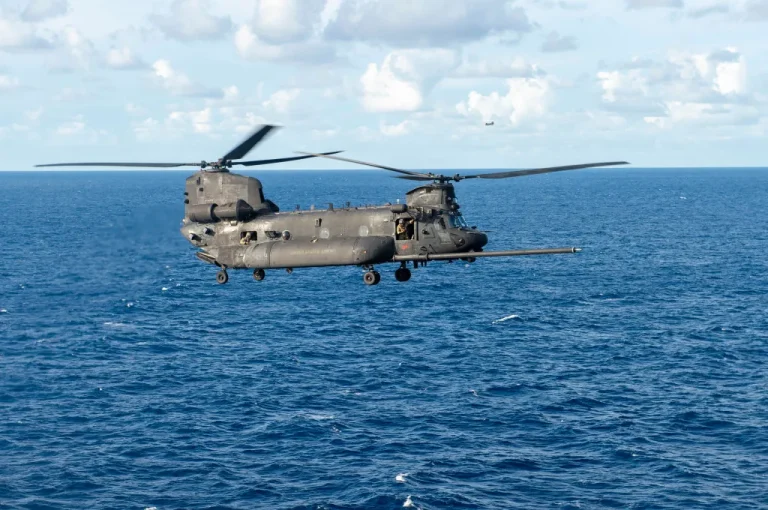
The most surprising thing about this story is the age of the platform itself.
The CH-47 made its maiden flight back in 1961. In other words, the Chinook is older than many of the pilots who fly it today. It would seem that this helicopter from the Vietnam War era should have long since become a thing of the past.
But instead, he unexpectedly finds himself experiencing a new lease on life.
Americans are discussing Block III, new engines, its use as a launch platform for drones, its integration into the network of future warfare, and now even its conversion into an aerial refueling tanker.
And there is a certain irony in that.
While the world is discussing sixth-generation fighter jets, artificial intelligence, and hypersonic technology, one of the most important machines used by U.S. special forces remains an old twin-rotor helicopter with roots in the Vietnam War.
It’s just that this helicopter is now gradually evolving not into a transport aircraft, but into a full-fledged air warfare platform—one that is mobile, autonomous, and capable of supporting operations in areas where traditional aviation infrastructure can no longer function.
источник https://www.twz.com/air/night-stalker-mh-47-chinooks-may-get-aerial-refueling-tanker-role