The history of the twentieth century could have taken a very different course if the German Empire had survived the First World War. Imagine that in 1918 the Kaiser’s regime did not collapse, the monarchy survived, and the German Army finally managed to achieve what it had come close to doing several times during four years of war — enter Paris and secure either outright victory or, at the very least, a peace settlement favorable to Germany. In that case, the following decades might have transformed Germany not into Adolf Hitler’s Third Reich, but into a modernized Second Reich — a conservative, militarized, and enormously industrialized empire.
Of course, there are countless scenarios in which Imperial Germany could have survived the First World War. Some envision a German victory on the Western Front, others a negotiated peace, while still others leave the outcome of the war largely unchanged but prevent the November Revolution and the fall of the monarchy. You may already have encountered many such alternative-history scenarios on the pages of our website.
But today we are not going to discuss exactly how the Second Reich managed to survive 1918. Let us simply assume that it did, and that by the outbreak of another global conflict the German Empire still exists. What interests us is a very different question: what tanks might Imperial Germany have taken into World War II, and what new fighting vehicles might it have developed as the war progressed?
And this is where a particularly interesting family of armored vehicles enters the story — the PanzerProjekt-50.
Germany Without the Third Reich
In our alternative timeline, the crisis of autumn 1918 ended not with the November Revolution, but with a compromise between the army, the Reichstag, and the Crown. Wilhelm II nevertheless abdicated, but the monarchy itself survived. Germany evolved into a constitutional empire in which the Kaiser gradually lost much of his direct political power while retaining his position as head of state and the supreme symbol of the armed forces.
This was no longer the same empire that had entered the war in 1914. Yet the old name — Deutsches Kaiserreich, the German Empire — remained.
There was no Nazi Party in the form known to us, and consequently no Third Reich. By the end of the 1930s, Europe was therefore divided not between Hitler’s Germany and the Western democracies, but between the old Great Powers entering yet another round of struggle over influence, territory, resources, and the balance of power.
The military establishment, meanwhile, carefully studied the lessons of the First World War. By the 1920s, the Reichsheer had concluded that the next major conflict must not once again turn into four years of armies grinding each other down in trenches. Germany therefore placed increasing emphasis on mechanization and close cooperation between tanks, motorized infantry, artillery, and aviation.
When the Second World War began, German armored formations entered it with the first generation of modern Imperial tanks. Yet the opening campaigns quickly revealed an unpleasant trend: armor was becoming thicker, anti-tank guns were becoming more powerful, and the weight of armored vehicles was steadily increasing.
The army needed a new generation of tanks.
The Birth of PanzerProjekt
By 1941, the Army Ordnance Office was confronted with a problem that would have been very familiar to the engineers of our own timeline: the number of different armored vehicle types was becoming excessive.
Several generations of tanks were being produced simultaneously, self-propelled guns were being designed for almost every new requirement, and different engines, transmissions, road wheels, and suspension components were in service at the same time. All of this required separate stocks of spare parts and made field maintenance increasingly complicated.
This was how the PanzerProjekt program was born.
Its basic idea was quite simple: instead of designing an entirely new tank for every particular task, Germany would develop several standardized chassis belonging to different weight categories. These could then serve as the basis for conventional tanks, self-propelled guns, tank destroyers, engineering vehicles, and self-propelled anti-aircraft guns.
In this respect, the program resembled the real German E-Serie, which likewise envisioned the standardization of future armored vehicles across several weight classes. In our timeline, the E-series ranged from light vehicles to the E-50, E-75, and the super-heavy E-100.
In the Second Reich, however, such work began considerably earlier.
One of its first major results was the PanzerProjekt-50.
PPJ-50 — Not Yet a Panther, but No Longer a Panzer IV
The creator of the original concept describes the PPJ-50 as a medium-heavy tank occupying the niche between the Panzer IV, Panther, and early Tiger prototypes.
In our alternative history, such an origin seems entirely plausible.
Development began around 1941, when it became clear that the existing medium tanks would soon require replacement. At the same time, the army was not yet prepared to make a wholesale transition to exceptionally heavy, expensive, and mechanically complicated vehicles.
The PPJ-50 therefore emerged as something of a transitional design.
Its layout remained conventionally German: the driver and transmission compartment were located at the front, the fighting compartment occupied the center of the hull, and the engine compartment was placed at the rear. At the same time, the designers increasingly relied on sloped armor plates to improve protection without excessive increases in weight.
The original plan called for a short-barreled 75 mm gun, broadly comparable in purpose to the weapons fitted to early Panzer IVs. This is also the configuration described by the creator of the original project. Later, however, the short-barreled weapon was replaced by a much more powerful long-barreled 75 mm gun comparable to the main armament of the Panther.
Thus, the PPJ-50 gradually evolved from an infantry-support tank into a genuine all-purpose combat vehicle.
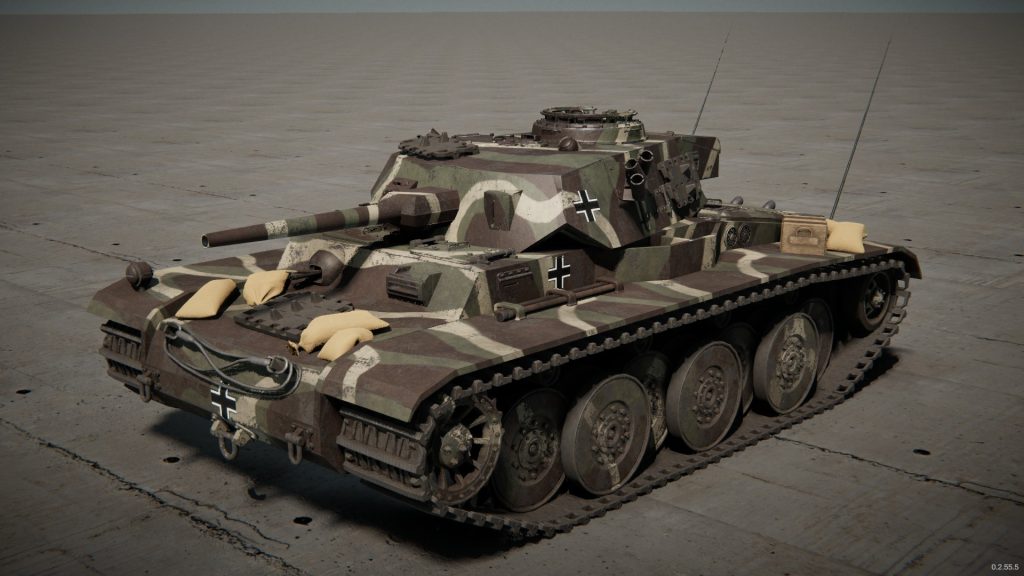
PanzerProjekt-50 Ausf.A
The first production PPJ-50 Ausf.A tanks began reaching frontline units while the war was already underway.
These early vehicles retained the short-barreled 75 mm gun. Its capabilities were perfectly adequate against fortifications, infantry positions, and light field defenses, but encounters with the latest enemy tanks quickly demonstrated the limitations of such armament.
As a result, the Ausf.A remained in production for a relatively short period.
The chassis itself, however, was well received by the army. The vehicle offered significantly better protection than the previous generation of medium tanks while remaining considerably simpler and cheaper than the new heavy designs.
It was at this point that the decision was made which would ultimately determine the future of the entire project: rather than replace the PPJ-50 with a completely new vehicle, the army would modernize it.
PanzerProjekt-50 Ausf.B
The principal difference of the Ausf.B was its long-barreled 75 mm gun.
In practical terms, this modification finally transformed the PPJ-50 into the tank the military had wanted from the beginning. It could now engage most enemy medium tanks at normal combat ranges while retaining an effective high-explosive shell for use against infantry and field fortifications.
Frontal protection was also strengthened.
At the same time, the German High Command deliberately resisted the temptation to increase armor thickness indefinitely. Experience with heavy vehicles had already demonstrated that every additional layer of protection came at a price: greater weight, increased fuel consumption, reduced transmission life, greater mechanical stress, and lower strategic mobility.
The PPJ-50 was supposed to remain, above all else, a mass-produced tank for a mass war, rather than an invulnerable mobile fortress.
Estimated Specifications of the PanzerProjekt-50 Ausf.B
- Combat weight: approximately 38–42 tonnes
- Crew: 5
- Main armament: long-barreled 75 mm tank gun
- Secondary armament: 2 × 7.92 mm machine guns
- Frontal hull armor: approximately 80 mm
- Side armor: 40–50 mm
- Engine: gasoline, approximately 600–700 hp
- Maximum speed: approximately 45–50 km/h
- Operational range: approximately 200–250 km
These figures are a reconstruction created for this alternative-history scenario. The original post establishes the armament and intended roles of the variants but does not provide a complete set of production specifications.
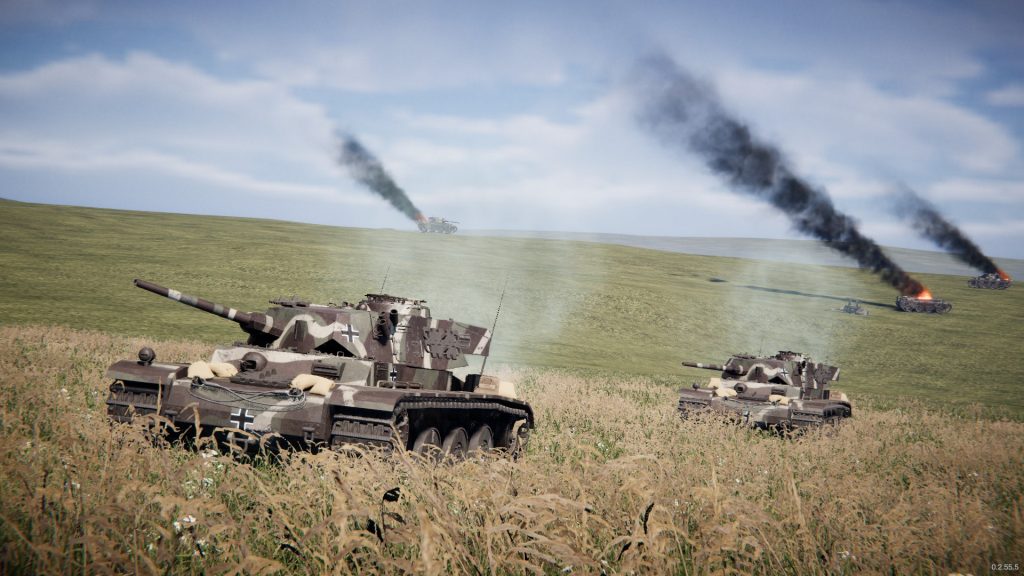
One Tank — Four Fighting Vehicles
This was where the greatest advantage of the PanzerProjekt-50 became apparent.
What the military needed was not simply a good tank. It needed a good chassis.
If the engine, transmission, suspension, running gear, and much of the hull remained identical, a single factory could manufacture several types of fighting vehicle without completely reorganizing its production lines.
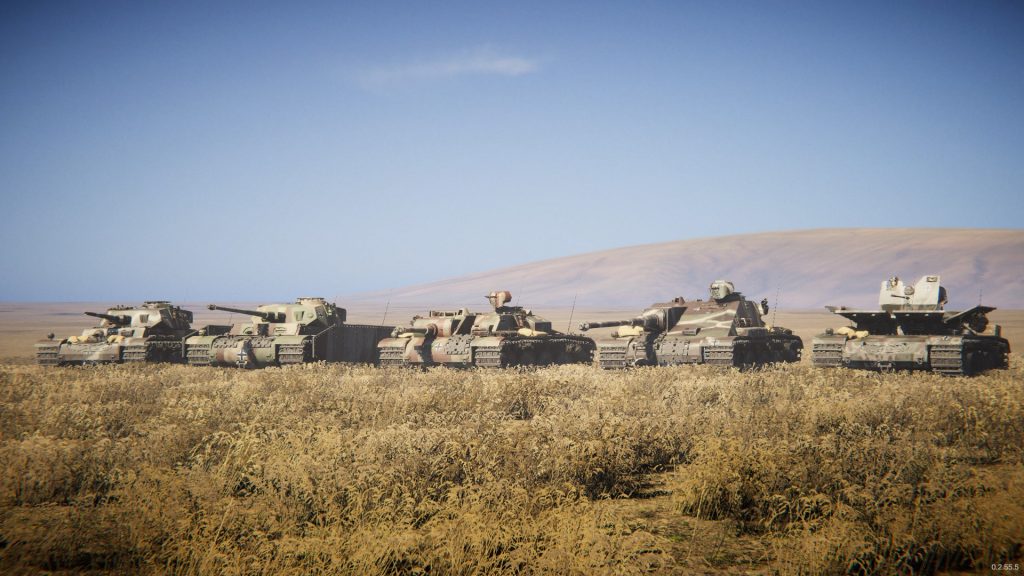
This concept is perfectly demonstrated by the original Excellent_Fix_7956 project. In addition to the basic tank, its creator designed a Jagdpanzer, a Sturmpanzer, and a Flakpanzer using the same basic chassis.
In the alternative world of the surviving Second Reich, this could have become the PPJ-50’s greatest advantage.
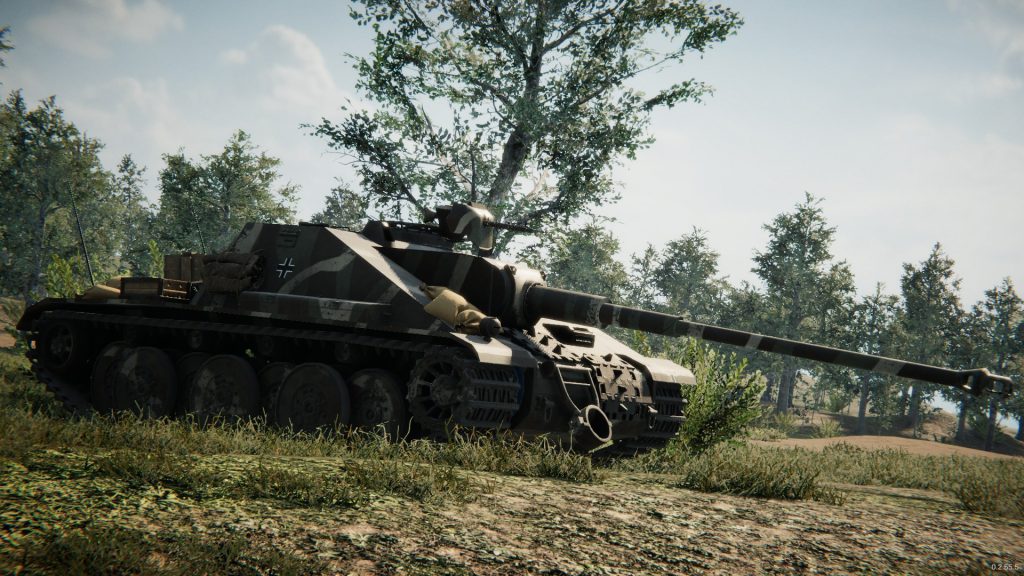
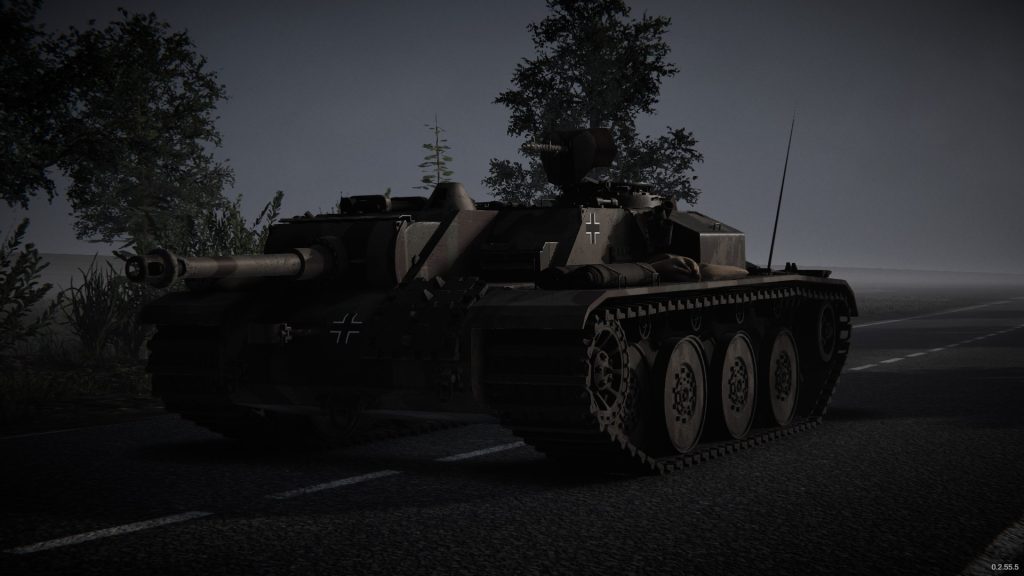
Jagdpanzer PPJ-50
The most dangerous member of the family would probably have been the Jagdpanzer PPJ-50.
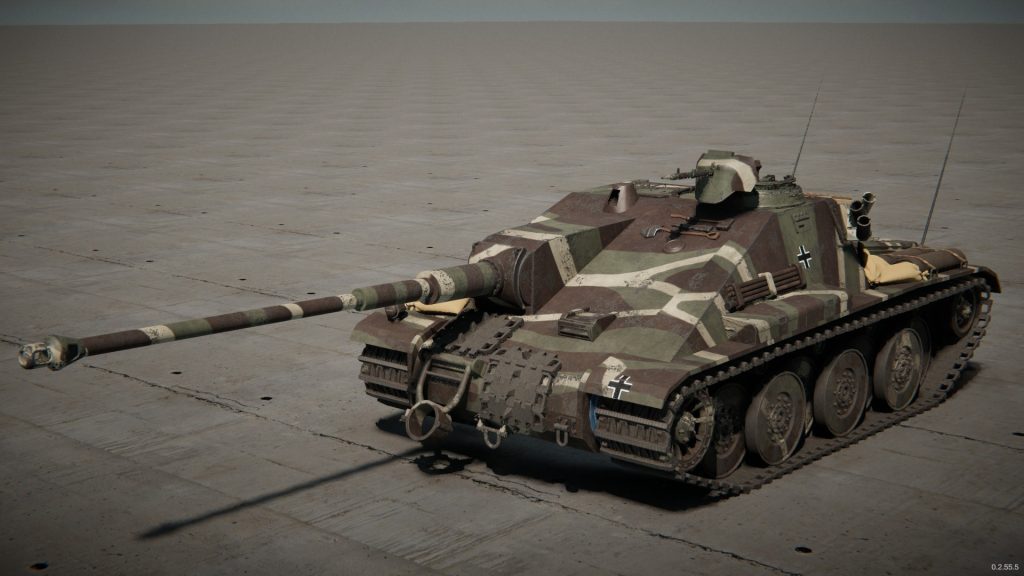
The turret was removed. In its place appeared a low, heavily sloped armored superstructure, simultaneously reducing the vehicle’s silhouette and allowing much stronger frontal protection.
But the most important change was inside.
Instead of the 75 mm tank gun, the Jagdpanzer received a long-barreled 88 mm gun. This is exactly the change envisioned in the original concept, whose creator also specifically mentions the vehicle’s improved armor and sloped superstructure.
The result was essentially a German heavy-tank hunter.
Removing the turret made it possible to install a substantially heavier gun without increasing the size and weight of the vehicle to the level of a true heavy tank. It also made the Jagdpanzer cheaper to manufacture.
There was, of course, a serious disadvantage: engaging targets outside the gun’s limited horizontal traverse required turning the entire vehicle.
In defensive combat, however, the Jagdpanzer PPJ-50 could have been an extremely dangerous opponent.
Estimated Specifications of the Jagdpanzer PPJ-50
- Combat weight: approximately 42–45 tonnes
- Crew: 5
- Main armament: long-barreled 88 mm gun
- Secondary armament: 7.92 mm machine gun
- Frontal armor: up to approximately 100–120 mm, heavily sloped
- Engine: 600–700 hp
- Maximum speed: approximately 40–45 km/h
Sturmpanzer PPJ-50
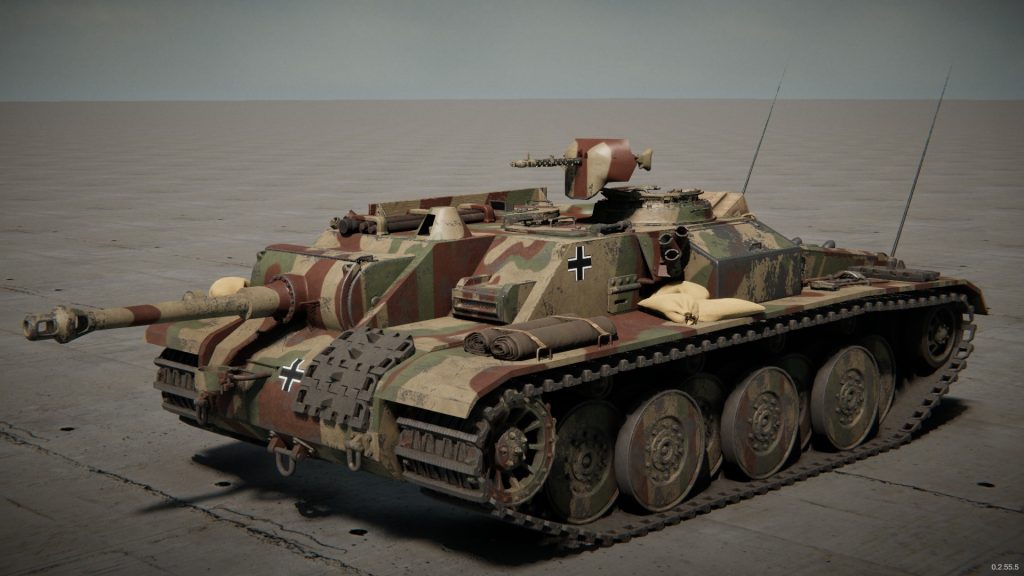
The Sturmpanzer PPJ-50 was intended for an entirely different kind of warfare.
Experience from urban combat demonstrated that even a powerful anti-tank gun was not always the best weapon for every situation. Sometimes a tank did not need to penetrate enemy armor. Instead, it needed to destroy a machine-gun nest with a single shell, blast through the wall of a building, or suppress a fortified strongpoint.
For such tasks, a large high-explosive shell was far more useful.
The PPJ-50 chassis was therefore fitted with a short-barreled 105 mm howitzer, broadly similar in purpose to the weapon carried by the real StuH 42. A short 105 mm weapon intended for infantry support and the destruction of urban fortifications is precisely what the original project proposes for this variant.
Thus the Sturmpanzer was born.
It was not primarily intended for tank duels. Its natural environment was the city, the fortified defensive line, and the battlefield immediately ahead of assault infantry.
Where the Jagdpanzer was supposed to hunt enemy armor, the Sturmpanzer effectively became a mobile artillery battery capable of accompanying troops directly into battle.
Estimated Specifications of the Sturmpanzer PPJ-50
- Combat weight: approximately 40–43 tonnes
- Crew: 5
- Main armament: short-barreled 105 mm gun
- Secondary armament: 7.92 mm machine gun
- Ammunition: approximately 40–50 rounds
- Maximum speed: approximately 40 km/h
- Primary role: infantry support and destruction of field fortifications
Flakpanzer PPJ-50
By the middle of the war, German armored divisions required yet another specialized vehicle.
A self-propelled anti-aircraft gun.
Conventional towed anti-aircraft guns struggled to keep pace with rapidly advancing armored columns. Their crews also needed at least some protection against shell fragments and small-arms fire.
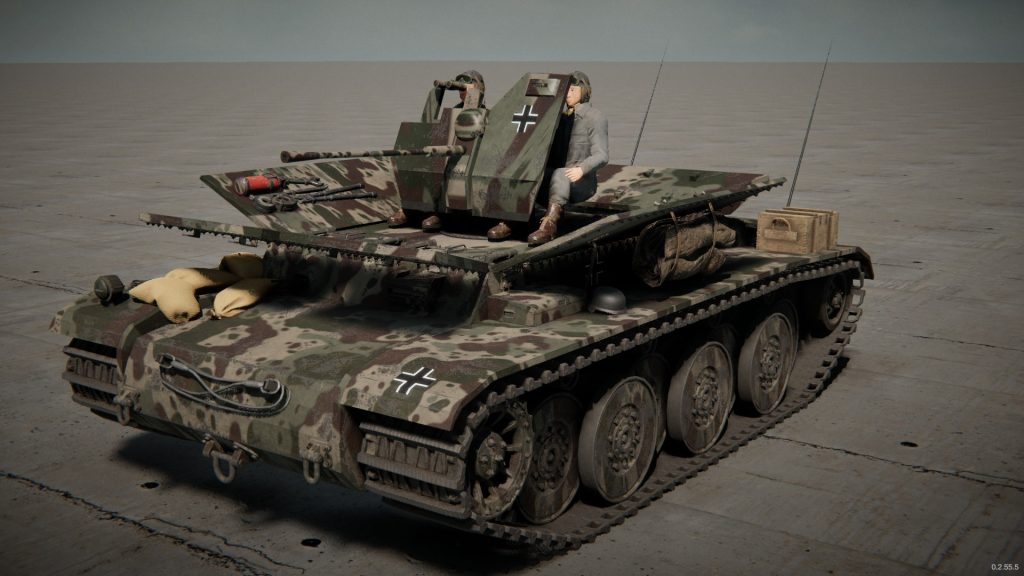
This led to the appearance of the Flakpanzer PPJ-50.
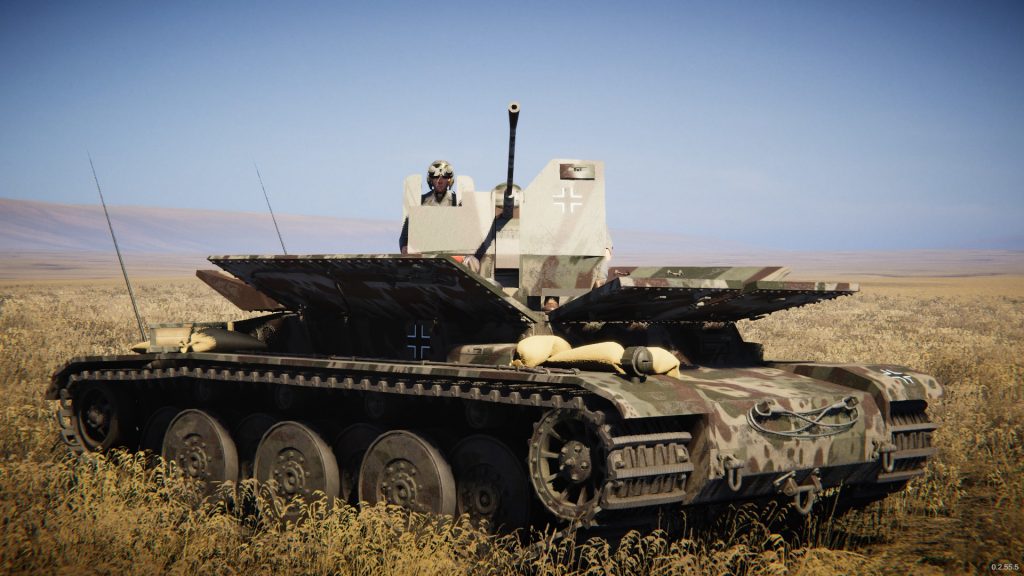
Its construction was deliberately straightforward. The turret of the standard tank was removed and replaced with an open fighting compartment carrying a 3.7 cm Flak 36 anti-aircraft gun. While moving, the crew was protected by four folding armored shields; before opening fire, these were lowered outward to provide the gun with an unrestricted field of fire.
The creator of the original design explicitly compares this arrangement to the Möbelwagen.
The resulting vehicle was relatively tall and offered only limited protection for its gun crew. On the other hand, it was mobile, used the same chassis as the tanks it was supposed to accompany, and could open fire almost immediately after coming to a halt.
Estimated Specifications of the Flakpanzer PPJ-50
- Combat weight: approximately 35–38 tonnes
- Crew: 5–6
- Armament: 37 mm 3.7 cm Flak 36 anti-aircraft gun
- Fighting compartment protection: four folding armored shields
- Engine: standard PPJ-50 family powerplant
- Maximum speed: approximately 45 km/h
- Primary role: close air defense of armored and motorized formations
Why the PPJ-50 Could Have Become the Second Reich’s Main Tank
Perhaps the most interesting aspect of this alternative project is not the performance of any individual vehicle.
The PPJ-50 represents an entirely different philosophy of German armored vehicle development.
In the real Second World War, German tank production gradually expanded into a huge number of different types and modifications. There were Panzer IIIs and IVs, Panthers, Tigers, Tiger IIs, and an entire assortment of self-propelled guns and tank destroyers built on different chassis.
PanzerProjekt offered another path.
The same basic hull could become a medium tank, tank destroyer, assault gun, or self-propelled anti-aircraft vehicle. For industry, this meant greater standardization of components. For maintenance units, it meant fewer different spare parts. For drivers and mechanics, it meant working with familiar machinery regardless of the exact variant.
This is why the PPJ-50 might not have been the most powerful German tank of the Second World War, but it could easily have become one of the most important.
Not a Wonder Weapon, but a Workhorse
Naturally, no universal chassis could solve every problem facing the German Army.
Installing increasingly powerful weapons would inevitably increase weight. The 88 mm Jagdpanzer would require a reinforced suspension. The Sturmpanzer had to carry heavy and bulky 105 mm ammunition. The Flakpanzer left its crew almost completely exposed from above.
But in this case, such compromises were an inherent part of the concept.
The PanzerProjekt-50 was never supposed to become another Wunderwaffe. Its purpose was almost the exact opposite — to provide the army with the most practical possible chassis, one that could be manufactured in the thousands and adapted to a wide variety of battlefield roles.
This is precisely why the PPJ-50 appears unusually plausible among fictional German tank designs.
There are no 150 mm tank guns here, no two-hundred-tonne hulls, and no engines possessing fantastical amounts of power. Instead, we see an alternative attempt to create a vehicle roughly belonging to the class toward which German engineers were gradually moving even in our own timeline.
Only in a world where the Second Reich survived, they might have done so somewhat earlier.
Instead of an Afterword
By the end of the Second World War, the name PanzerProjekt-50 might no longer have referred to a single tank, but to an entire family of fighting vehicles.
Tank crews might simply have called the PPJ-50 “the Fifty.” Anti-tank battalions would have operated long-barreled 88 mm Jagdpanzers. Assault formations would have relied on 105 mm vehicles. And above the marching columns, the barrels of Flakpanzers would have constantly searched the sky for enemy aircraft.
Late-production PPJ-50s would almost certainly have received more powerful engines, improved sights, reinforced armor, and redesigned turrets. Perhaps the further development of the family after the war would eventually have led the Second Reich to its first true Standardpanzer — a universal main battle tank replacing the traditional division between medium and heavy vehicles.
That is why the PanzerProjekt-50 created in Sprocket is interesting not as yet another fictional German “super-tank.” Quite the opposite: it allows us to imagine a more rational branch of German armored vehicle development.
And perhaps that is exactly why it looks so convincing.
Conclusion
By the end of World War II, the name *PanzerProjekt-50* might well have referred not to a specific tank, but to an entire family of vehicles.
Tank crews would likely have simply called the PPJ-50 “the Fifty.” Anti-tank battalions would have received long-barreled 88mm *Jagdpanzer* variants. Assault units would have utilized 105mm-armed vehicles. And the barrels of anti-aircraft *Flakpanzer* variants would have constantly swept the skies above the columns.
Later iterations of the PPJ-50 would almost certainly have featured more powerful engines, improved sights, up-armored hulls, and new turrets. Perhaps the postwar evolution of this family would have led the Second Reich to create the first true *Standardpanzer*—a unified main battle tank replacing the old distinction between medium and heavy vehicles.
Thus, the *PanzerProjekt-50* created in *Sprocket* is interesting not merely as yet another fictional German “super-tank.” On the contrary, it allows us to envision a more rational path for the evolution of German tank design.
And that is precisely why it looks so convincing.
Afterword
Please note that this is an alternate history scenario. The *PanzerProjekt-50* family was created by user Excellent_Fix_7956 in *Sprocket* and published on r/SprocketTankDesign. The original concept envisioned the PPJ-50 as an intermediate vehicle bridging the gap between the Panzer IV, the Panther, and early Tiger designs; the platform included a standard battle tank, a tank destroyer, an assault gun, and an anti-aircraft vehicle. It was originally intended for the Third Reich. It was yours truly who assigned these vehicles to the Second Reich instead; I felt that explaining why Germany suddenly possessed such radically different tanks would be more difficult than simply placing them in the era of the Second Reich.
Source – https://www.reddit.com/r/SprocketTankDesign/comments/1wqhty3/panzerprojekt50_variants/