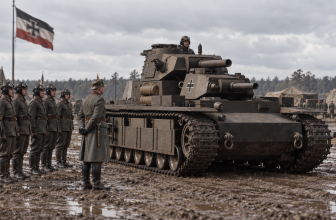
The absolute pinnacle of the BT series tank evolution: what the BT-25 light tank could have become

The Soviet BT series of fast tanks became one of the most recognizable symbols of the Red Army of the 1930s. Based on the ideas of American designer J. Walter Christie, they underwent a remarkably rapid evolution from the relatively primitive BT-2 to the much more advanced BT-7M. The tanks became heavier, received more powerful armament, while their transmissions, armor protection, and powerplants were steadily improved. By the end of the decade, however, it had become clear that the original design had nearly exhausted its potential.
In our timeline, the A-20 and A-32 effectively brought the development of the BT family to an end. These were not merely paper projects: in the summer of 1939, both prototypes underwent trials, with the A-20 retaining a convertible wheel-and-track system while the A-32 was a purely tracked vehicle. It was the further development of the latter that eventually led to the A-34 and then to the famous T-34.
But what if history had taken a slightly different path? What if the Red Army had not completely abandoned the idea of the fast BT tank and instead attempted to combine the experience accumulated during its development with solutions already tested on the A-20, A-32, and early T-34?
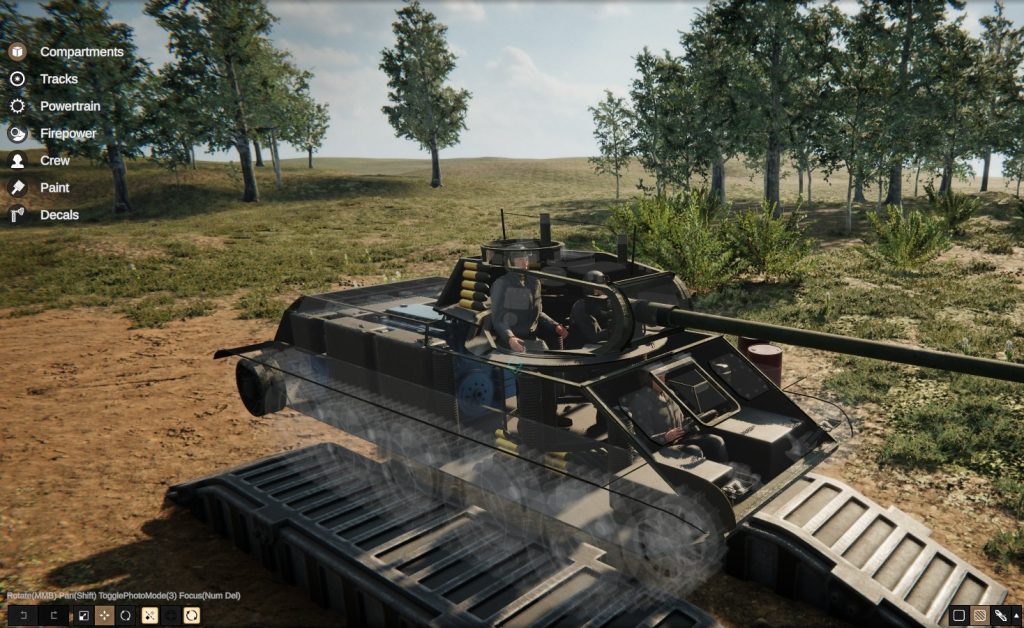
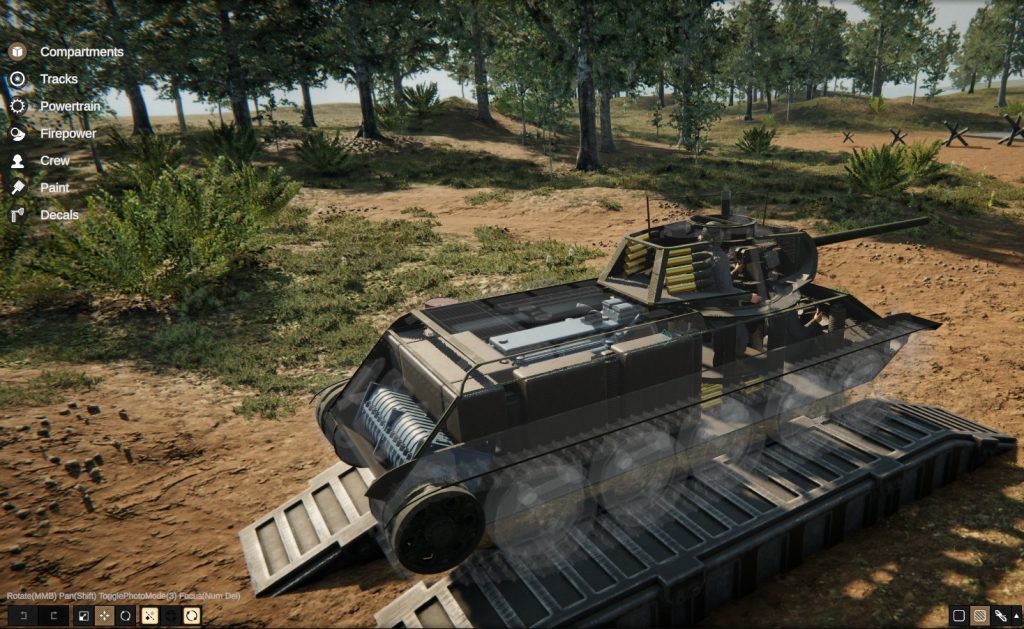
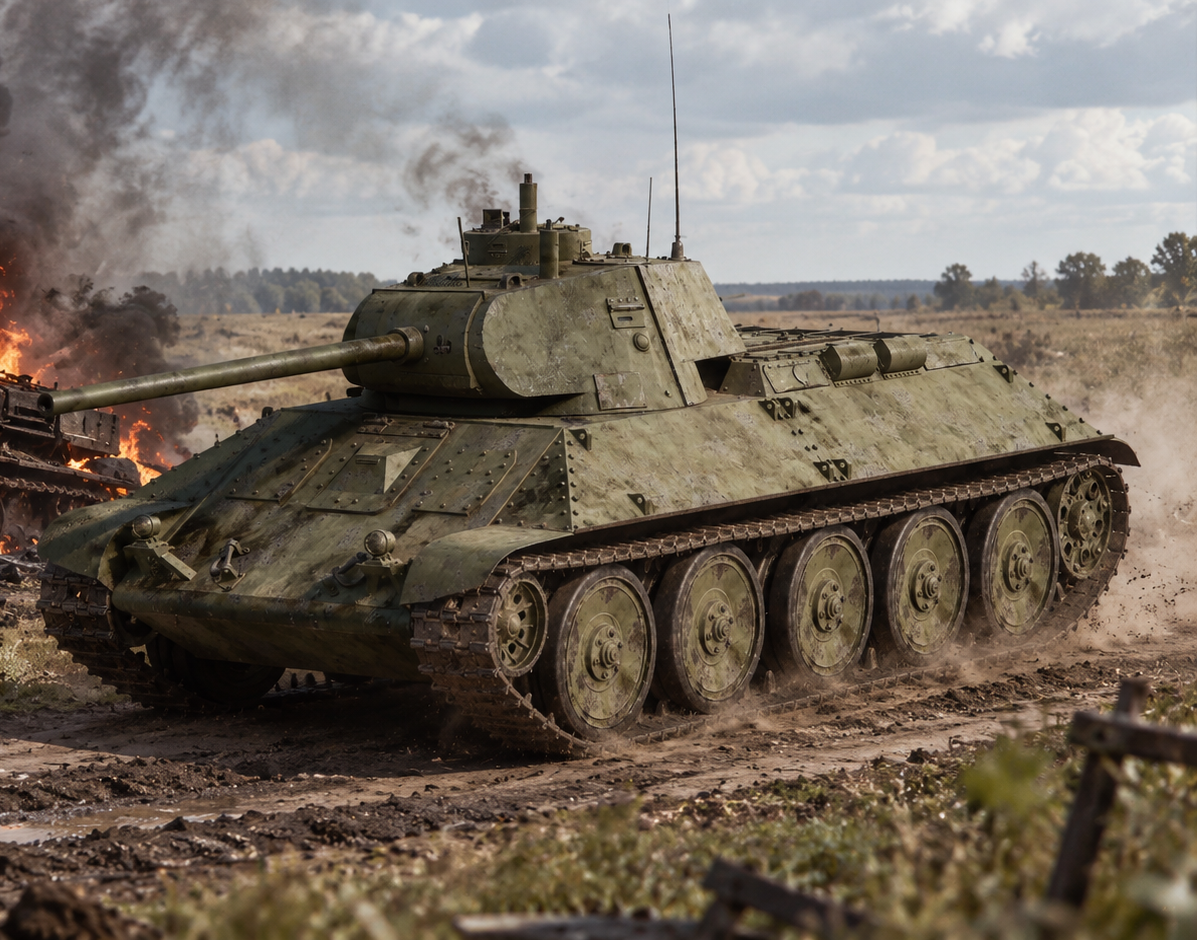
This is essentially the machine presented by Reddit user Outside-Major1449. His LTB-25, or BT-25, is a kind of “ultimate evolution” of the BT concept, a tank combining features of several different Soviet vehicles. The author rather aptly calls it “the skinny T-34.” And indeed, it looks as though Soviet engineers had taken an early T-34, radically reduced its width and weight, given it lighter armor, and then tried to restore the astonishing mobility of the old BT tanks.
Naturally, this is alternative history. A real BT-25 with these characteristics never existed. But that only makes it more interesting to consider whether such a vehicle could theoretically have appeared in the Soviet Union.
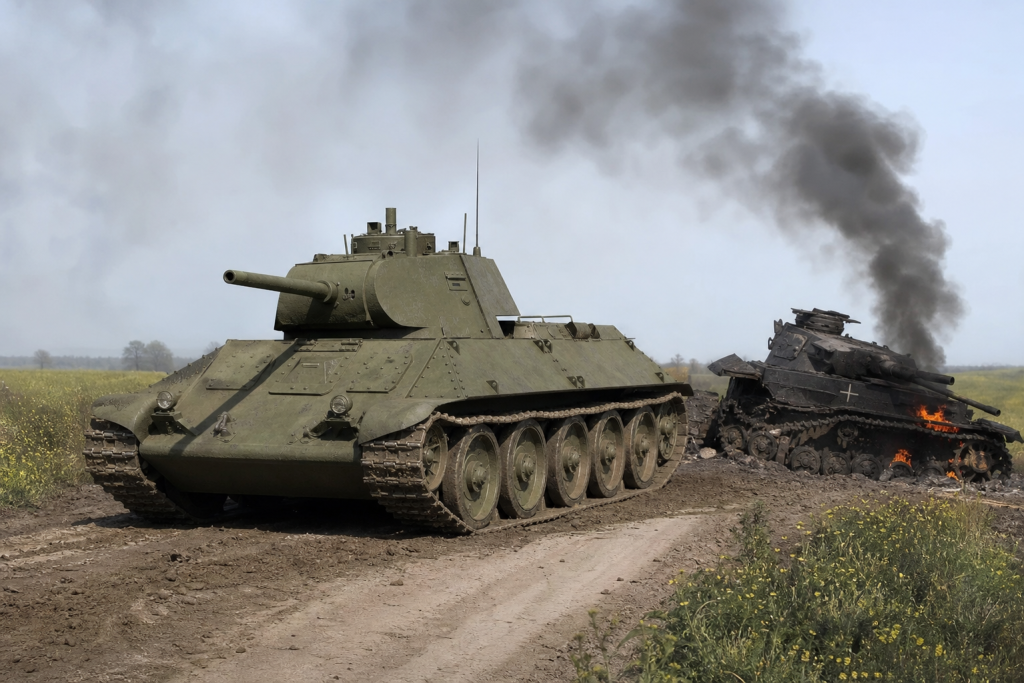
The Last of the BT Line
Let us imagine that after testing the A-20 and A-32, the Soviet leadership reaches a somewhat different conclusion. The A-32 medium tank is approved for further development and gradually evolves into the T-34, but at the same time the military decides to retain a second, lighter class of fast tank. The convertible wheel-and-track running gear, however, is finally abandoned.
This would actually have been a fairly logical decision. The main advantage of the convertible system was the ability to remove the tracks and travel quickly along roads on wheels, but this came at the cost of considerably greater mechanical complexity. By the end of the 1930s, advances in tracks, engines, and suspension systems already made it possible to achieve high speeds without turning a tank into a kind of armored car.
In our alternative timeline, at the end of 1940 Plant No. 183 is ordered to develop a new fast tank intended to occupy the niche between the light T-50 and the full-sized T-34. Initially, the project receives a conventional factory designation, but among the military a much more understandable name quickly becomes established — BT-25.
The number “25” would nicely emphasize that this was a new generation of vehicle, although the tank presented by the original author actually weighs somewhat less — approximately 22.5 tonnes.
The basic idea behind the project is simple: take the best features of the BT and A-20, abandon their main anachronism — the convertible wheel drive — and make maximum use of technical solutions already mastered during the production of the T-34.
The result would have been an unusual hybrid. Formally, a light or fast tank. In terms of weight and armament, however, it was already approaching the medium tank category.
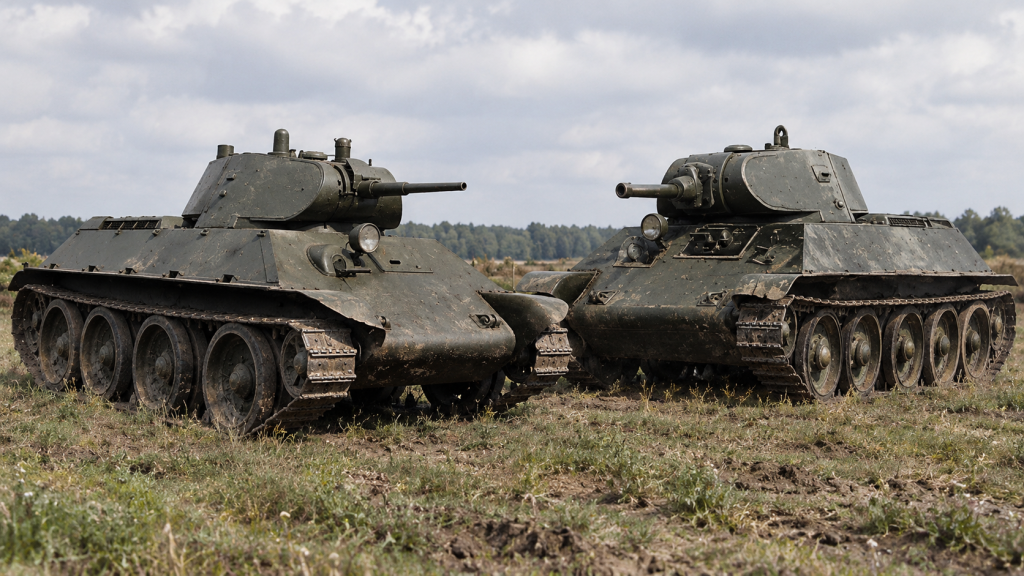
A-20 and A-32 tanks
The “Skinny T-34”
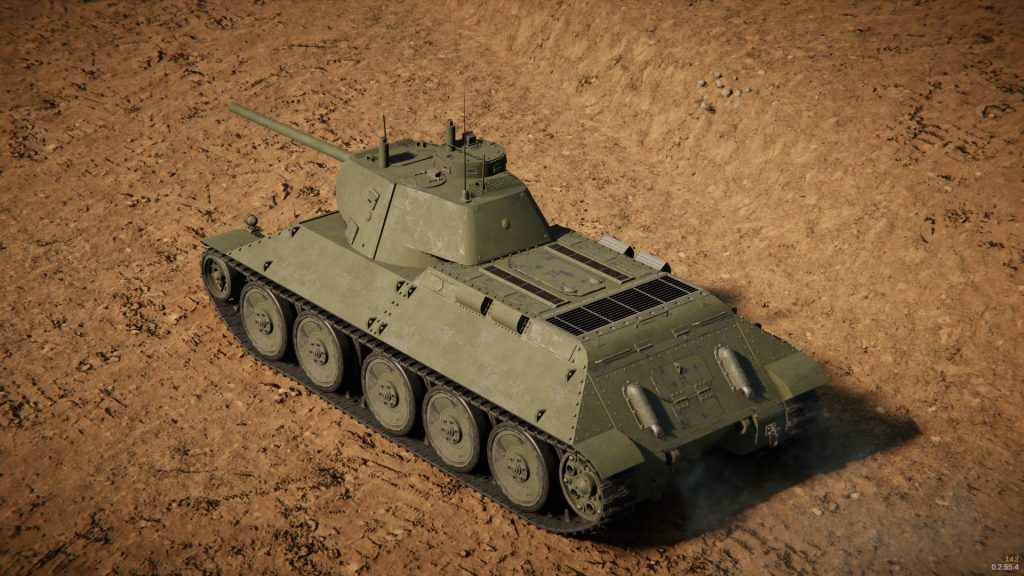
The external resemblance between the BT-25 and the early T-34 is immediately obvious. Upon closer examination, however, it becomes clear that this is far more than merely a scaled-down copy of the famous “thirty-four.”
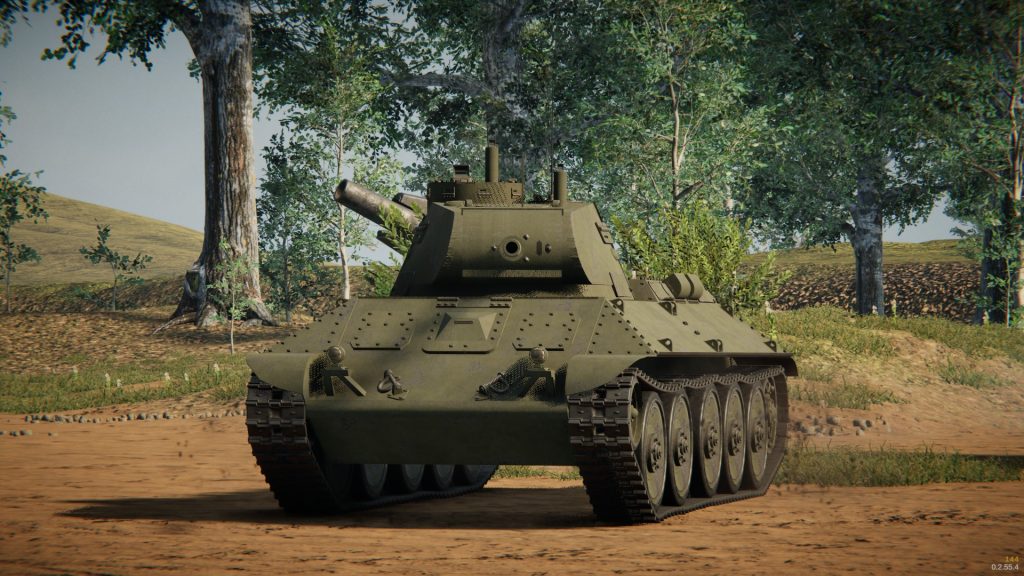
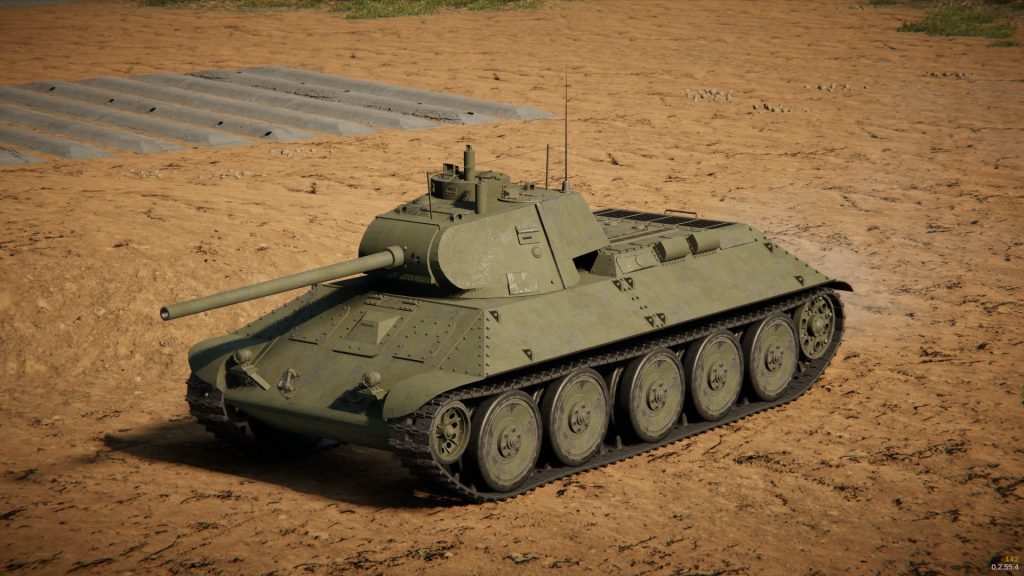
The basis of the vehicle is an extremely narrow armored hull with a distinctive wedge-shaped front reminiscent of a further development of the A-20. The author completely eliminated the traditional track sponsons. This allowed the main armored volume to be made considerably narrower, reducing the vehicle’s overall weight.
But this creates another problem: the running gear is located almost entirely outside the main hull.
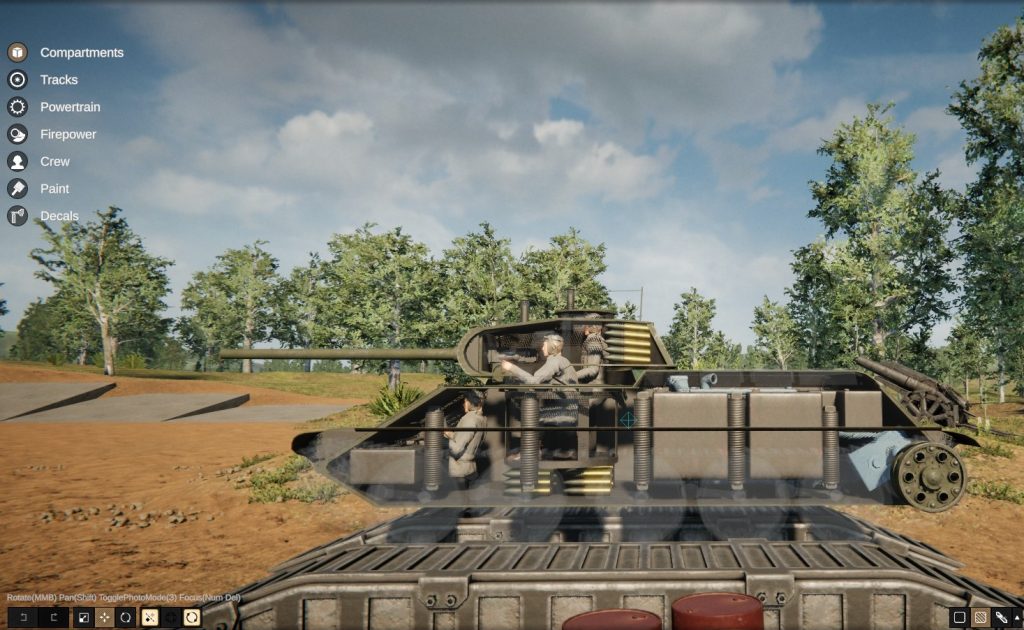
The solution is rather ingenious. The suspension is protected by sloped 20 mm armor screens. A substantial empty space remains between these screens and the main side armor, meaning that they also function as spaced armor. It is precisely these distinctive side plates that visually transform the BT-25 into something resembling a miniature T-34. The author also specifically showed the vehicle without these screens, and in this configuration its relationship to the earlier Soviet fast tanks becomes much more obvious.
The upper glacis is 40 mm thick and sloped at 57 degrees. The lower glacis is 35 mm thick and set at an even steeper angle. The sides of the main armored hull reach 45 mm in their upper section and 30–35 mm in the lower section. For a vehicle weighing only 22.5 tonnes, this represents quite substantial protection.
Of course, the “effective armor thickness” values provided by the author should be treated cautiously: actual resistance of sloped armor depends not merely on geometry but also on projectile type, caliber, construction, and armor quality. Nevertheless, the general concept of a heavily sloped glacis is entirely natural for Soviet tank design of this period.
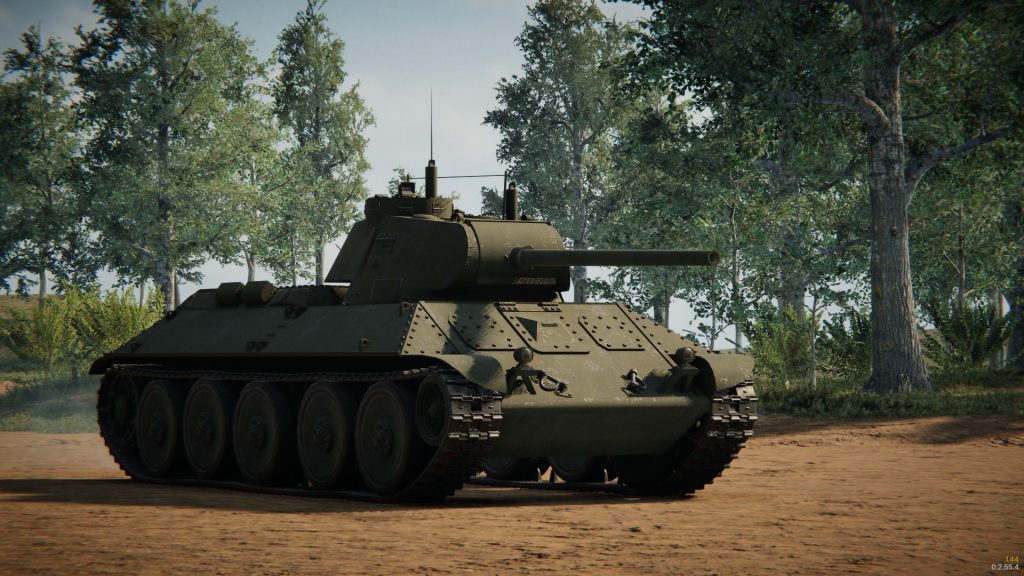
Five Enormous Road Wheels
This is where the origins of the machine become particularly obvious.
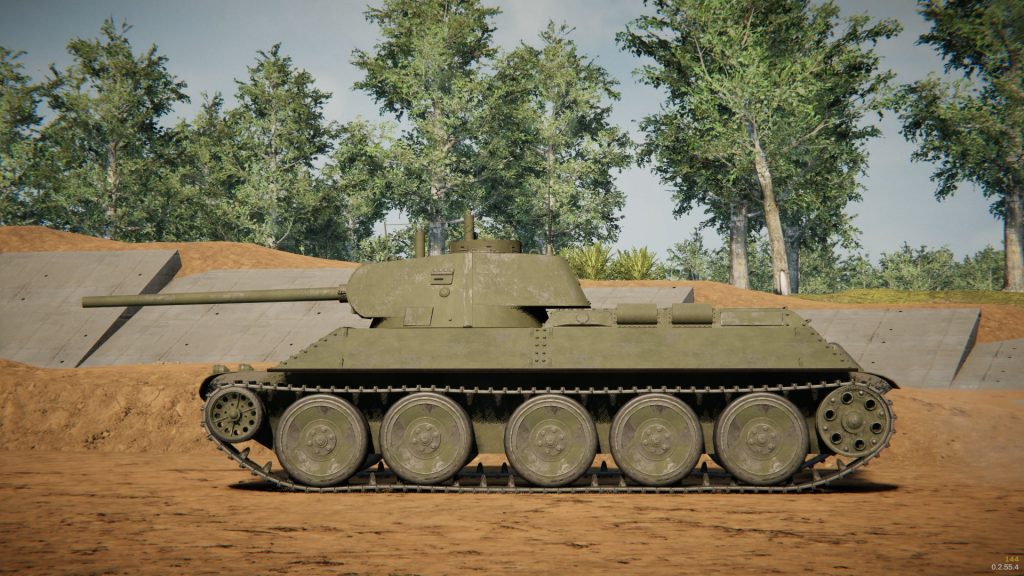
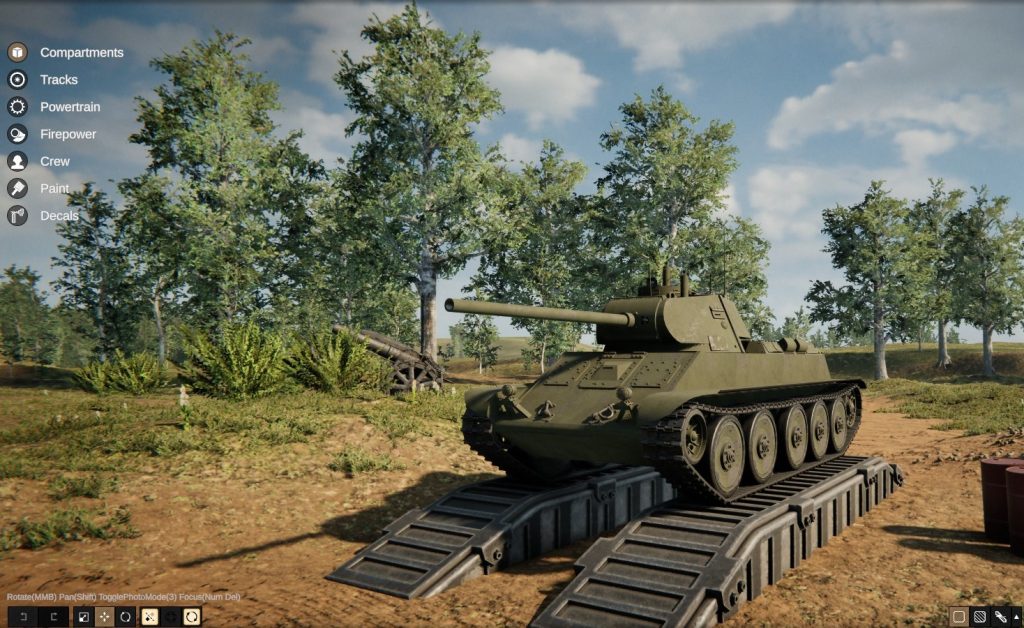
The BT-25 receives a characteristic Christie-type suspension with five enormous road wheels approximately 830 mm in diameter on each side. Visually, the running gear appears almost like an evolutionary link between the BT and the T-34.
The wheeled mode, however, is gone.
For the earlier BT tanks, the ability to remove the tracks and continue driving on wheels was one of their defining features. The BT-25 finally abandons it. All of the designers’ efforts are now concentrated on improving the tracked running gear alone.
Track width is 400 mm. Combined with the relatively modest weight, this should have provided acceptable ground pressure, while the enormous suspension travel associated with the Christie system would have allowed the tank to maintain high speeds across rough terrain.
And this brings us to perhaps the most fantastic characteristic of the project.
95 km/h Across Rough Terrain?
The author gives his tank a maximum speed of approximately 85–95 km/h, apparently even across rough terrain.
Within a more realistic alternative-history scenario, this figure should be treated with caution.
Even the BT-7, one of the fastest production tanks of its time, managed approximately 50 km/h off-road, while considerably higher speeds were primarily associated with driving on good roads. The production BT-7 Model 1937 weighed approximately 13.9 tonnes and used an engine producing around 450 hp.
The BT-25 is much heavier.
Its engine, however, is also completely different. The author proposes a supercharged version of the V-2 diesel family designated V-2-URS, developing 600 hp at 2,000 rpm. Such output is not inherently fantastic: variants of the V-2 intended for the heavy KV tank were indeed boosted to approximately 600 hp.
At a combat weight of 22.5 tonnes, the BT-25 would therefore have a power-to-weight ratio of approximately 26.6 hp per tonne. That would be an excellent figure even by the standards of considerably later tanks.
A road speed in the region of 70–80 km/h could therefore at least theoretically have been achievable for such a vehicle. Sustaining 85–95 km/h across genuine rough terrain, however, belongs more to the realm of the original author’s maximum-performance specification. The suspension might survive occasional high-speed runs, but the crew, transmission, and vehicle itself would hardly tolerate such treatment for long.
In our alternative timeline, we might imagine that 95 km/h was achieved during trials under ideal conditions and subsequently became an impressive figure quoted in factory reports. In frontline service, actual speeds would have been considerably lower.
An Unusual Turret
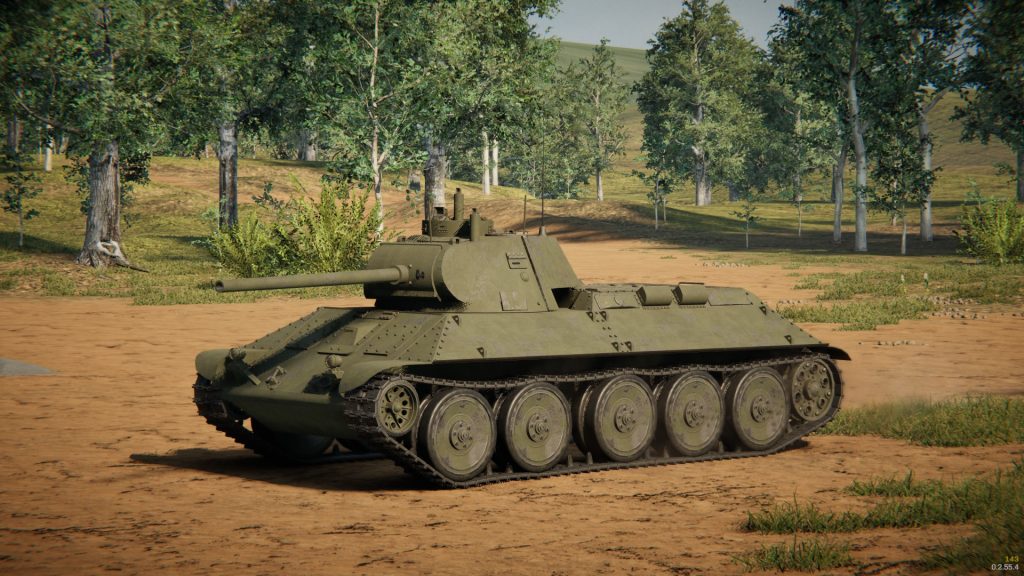
The BT-25’s turret is even more interesting. The author clearly takes inspiration from the characteristic cast turret of the early Model 1940 T-34, but radically reduces it to fit a turret ring only about 1,350 mm in diameter.
The result is an extremely compact fighting compartment.
The crew consists of only three men: a driver and two crewmen in the turret. The commander receives his own observation cupola on the right, while the second turret hatch is positioned on the left. For an early-war light tank, this appears quite advanced, primarily because of the attempt to provide the commander with proper all-round observation.
But cramped conditions would inevitably have become one of the vehicle’s principal disadvantages. With a 1,350 mm turret ring, fitting a relatively large gun, two crewmen, sights, a radio, and part of the ammunition load into the turret would have been extremely difficult. The commander would almost inevitably have been forced to perform several duties simultaneously.
This is one of those cases where the desire to keep the hull as narrow as possible begins to work against the design.
57 Millimeters Instead of 45
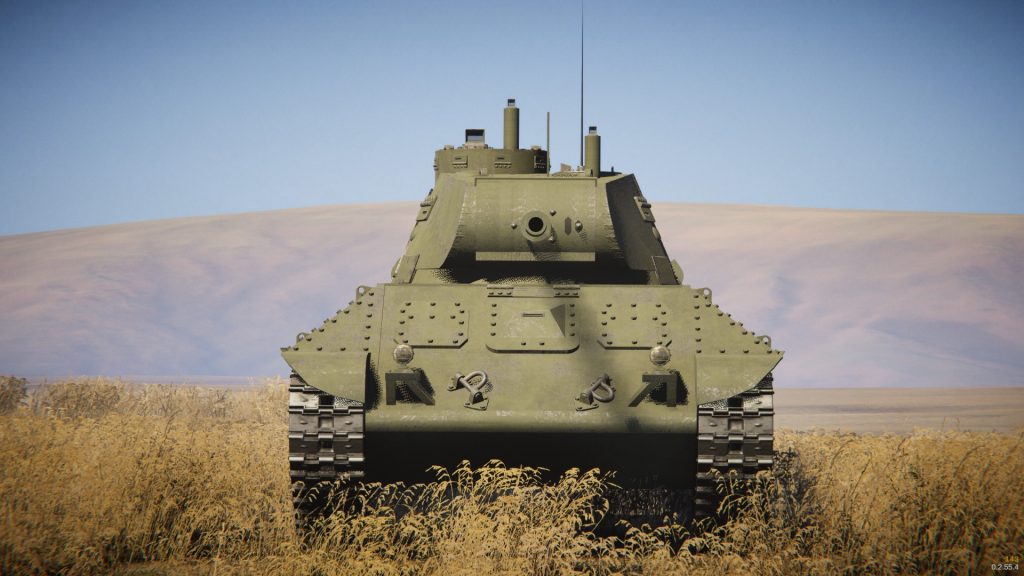
Initially, the creator of the alternative BT-25 intended to install a long-barreled 45 mm VT-43 gun. The concept was later revised in favor of a far more serious weapon — a special 57 mm F-38 tank gun. According to the concept, it would have been developed by the Central Artillery Design Bureau using mechanisms derived from the ZiS-4 but fitted with a shortened 50-caliber barrel.
And here the alternative history comes surprisingly close to reality.
Development of the 57 mm ZiS-4 tank gun really did begin at the design bureau of Plant No. 92 in 1940. An experimental gun appeared by the end of that year, and in the spring of 1941 the ZiS-4 was tested on the T-34. A small number of these guns were subsequently manufactured for the T-34-57.
One of the major problems of the original ZiS-4 was its extremely long barrel and the manufacturing cost associated with it. Furthermore, while its high-velocity armor-piercing projectile provided excellent penetration, the explosive effect of the 57 mm high-explosive shell was relatively limited.
For a light fast tank, a shortened version therefore represents an intriguing compromise.
The fictional F-38 has a barrel length of 50 calibers, or approximately 2,850 mm. Muzzle velocity with armor-piercing ammunition is stated to be approximately 820 m/s, while penetration is estimated at around 85–88 mm at a range of 500 meters.
If these figures are accepted, the BT-25 becomes an extremely dangerous tank killer. In 1941–1942, such penetration would have been sufficient against practically any mass-produced German tank encountered on the Eastern Front.
Furthermore, the shorter barrel compared with the ZiS-4 suits the intended role of the vehicle. The BT-25 was supposed to remain constantly on the move, exploit folds in the terrain, and perform rapid maneuvers. An exceptionally long gun barrel could actually have become more of a hindrance than an advantage.
A Light Tank That Was No Longer Light
And this brings us to the central question: what exactly is this vehicle?
Calling a 22.5-tonne machine a light tank is rather difficult. It is only somewhat lighter than an early T-34, yet it possesses 40–45 mm main armor, a 600 hp diesel engine, and a powerful 57 mm gun.
In practice, the BT-25 would have represented a separate class of fast tank.
From the BT it inherited its philosophy: speed above all else. From the A-20 came the basic idea of a compact fast tank with rationally sloped armor. From the A-32 and T-34 came the purely tracked layout, powerful diesel engine, sloped armor, and general design philosophy. The 57 mm gun additionally transforms it into something resembling a high-speed tank destroyer.
For this reason, the designation LTB-25 — “Light Fast Tank” — would have been quite appropriate within our alternative history.
This is no longer the old BT.
It is an attempt to preserve the BT philosophy in the age of the T-34.
Why Would the Red Army Need Such a Tank?
The principal argument against the BT-25 would inevitably have been simple: why produce such a vehicle when the T-34 already exists?
The answer might have appeared in the summer of 1941.
Let us imagine that several prototype BT-25s manage to complete trials immediately before the outbreak of war. The results are contradictory. The military praises the astonishing mobility, powerful armament, and low silhouette but criticizes the cramped fighting compartment, heavily stressed transmission, and manufacturing complexity.
The beginning of the Great Patriotic War changes attitudes toward the project.
The Red Army suddenly needs a vehicle for reconnaissance units, deep raids, pursuit of retreating enemy forces, and combat against German tanks. The old BT series is too lightly protected. The T-50 is complicated and expensive for the combat capability it offers. The T-70 has yet to appear, while the full-sized T-34 is needed first and foremost for regular tank formations.
Against this background, the BT-25 receives a second chance.
Even so, it probably never becomes a true mass-production vehicle.
The reason is simple: its design is too sophisticated for a cheap light tank. A V-2-family diesel, thick armor, complex suspension, powerful 57 mm gun, and advanced transmission make the machine too expensive. Production of every BT-25 would inevitably compete with the T-34 for engines, armor plate, machine-tool capacity, and skilled workers.
And the Soviet wartime industry would almost certainly choose the T-34.
Where the BT-25 Could Really Have Excelled
A limited production run, however, could have been extremely interesting.
Such vehicles might have been assigned to independent reconnaissance battalions of tank corps. Their task would not have been frontal attacks against fortified positions, but rapid raids into the enemy rear, seizure of bridges and crossings, destruction of enemy reconnaissance units, and pursuit of retreating formations.
The BT-25 could have been particularly dangerous as a “hunter.”
Its low silhouette, excellent mobility, and 57 mm gun would allow it to rapidly occupy advantageous positions, strike, and change the direction of attack before the enemy could organize effective return fire.
In 1941, such a vehicle would have been an extremely unpleasant opponent for German Pz.Kpfw. III and early Pz.Kpfw. IV tanks. By 1943, however, the situation would begin to change. The appearance of heavier German tanks, long-barreled 75 mm guns, and the widespread deployment of increasingly powerful anti-tank artillery would gradually erode the BT-25’s primary advantage.
Speed could no longer compensate for relatively light protection.
The Last BT
Most likely, the history of the BT-25 would have been brief.
Development in 1940–1941, the first prototypes in 1941, limited production in 1942, and gradual discontinuation by 1943.
Yet this is precisely why it could have become an extraordinarily interesting chapter in the history of Soviet tank design.
The BT-25 would represent the final attempt to perfect the fast-tank concept that had emerged back in the 1920s. Almost nothing would remain of the original Christie-derived vehicles: the wheeled drive had disappeared, the armor layout had been radically transformed, a powerful diesel engine had appeared, and protection had moved toward true shell-resistant armor.
Yet the philosophy remained unchanged.
A powerful engine. Enormous road wheels. An exceptionally high power-to-weight ratio. Maximum speed regarded as one of the vehicle’s most important means of survival.
This is why Outside-Major1449’s BT-25 is interesting not merely as another fictional tank. It provides a surprisingly convincing answer to the question: what could the BT series have become if Soviet designers had not allowed the T-34 to completely absorb this branch of development?
The result would have been a kind of “skinny T-34” — smaller, lighter, and considerably faster than its famous relative.
And perhaps it really would have represented the absolute pinnacle of Soviet fast-tank evolution.
BT-25 / LTB-25 Specifications
- Type: Fast light/medium tank
- Combat weight: 22.5 tonnes
- Crew: 3
- Length: 6,150 mm
- Width: 2,800 mm
- Height: 2,360 mm
- Upper glacis: 40 mm at 57°
- Lower glacis: 35 mm at 63°
- Driver’s hatch: 35 mm
- Hull sides: 45 mm upper section, 30–35 mm lower section
- Side armor screens: 20 mm, sloped and spaced
- Rear armor: 25 mm
- Engine-deck roof: 15 mm
- Turret front: Combined mantlet area up to 70 mm
- Turret sides: 40 mm at approximately 30°
- Turret rear: 35 mm
- Turret roof: 15–25 mm
- Commander’s cupola: up to 40 mm
- Armament: 57 mm F-38 tank gun
- Barrel length: 50 calibers, approximately 2,850 mm
- Armor-piercing projectile muzzle velocity: approximately 820 m/s
- Estimated armor penetration: approximately 85–88 mm at 500 m
- Gun elevation: −5° to +25°
- Engine: V-2-URS V12 diesel
- Power: 600 hp at 2,000 rpm
- Power-to-weight ratio: approximately 26.6 hp/t
- Transmission: Manual, 6 forward and 2 reverse gears
- Suspension: Christie type
- Road wheels: 5 per side, approximately 830 mm in diameter
- Track width: 400 mm
- Maximum speed claimed by the project’s author: 85–95 km/h
Note: These specifications belong to Outside-Major1449’s fictional alternative design and are not the characteristics of a real Soviet tank.