Home » The tank that changed history. Germany’s first Durchbruchswagen.
Editor choice
The tank that changed history. Germany’s first Durchbruchswagen.

SaveSavedRemoved 0
World War I gave birth to the tank, but Germany was among those powers that understood the significance of the new machine too late. While the British and French were building armored vehicles by the hundreds, the German army received only a small number of cumbersome A7Vs and was forced to actively use captured machines. In real history, this could no longer be corrected by the spring of 1918: Germany launched its last grand offensive virtually without its own massed tank force.
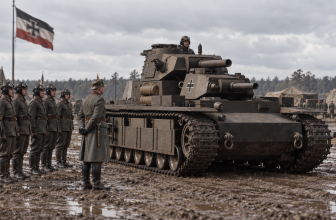
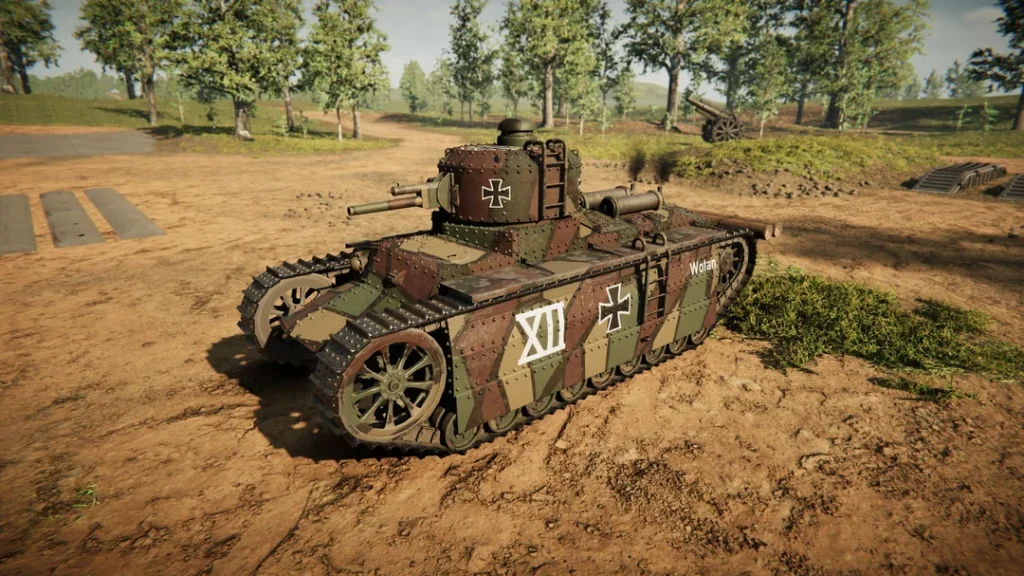
But imagine that the Germans drew different conclusions much earlier. Instead of twenty production A7Vs, they create a comparatively simple, compact, and far more suitable design for mass production — the Durchbruchswagen, the “breakthrough machine.” It was precisely such an alternative combat vehicle that the user DasMicha created in the Sprocket designer and published in the SprocketTankDesign community. The author defines it as a medium assault tank weighing 12.72 tons with a crew of five.
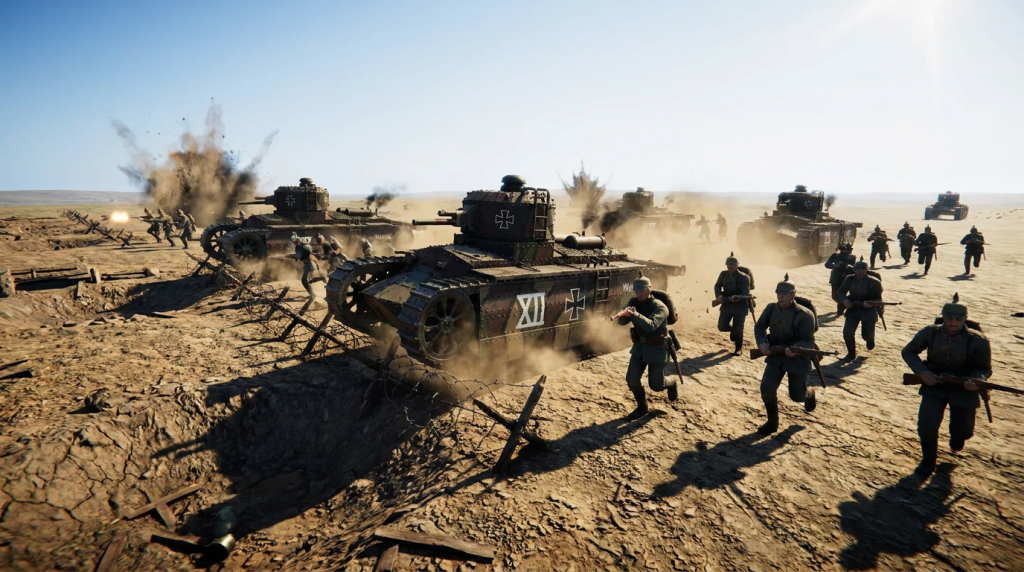
In our alternate history, the German command does not limit itself to an experimental batch. By March 1918, the army receives about 200 Durchbruchswagens. And when the last great offensive of the Kaiser’s army begins, British and French soldiers discover before their trenches something they did not expect at all: German assault units are now advancing under the cover of their own mass of tanks.
The German Empire’s Last Chance
By the beginning of 1918, Germany found itself in a very strange position. In the East, the war had effectively been won, and freed-up divisions could be transferred to France. But time was working against Berlin. American troops were arriving in Europe, the British naval blockade continued to strangle the German economy, the population suffered from food shortages, and the army was exhausted by nearly four years of war.
Therefore, Erich Ludendorff decided to stake everything on one card. On March 21, 1918, Operation Michael began — the first and largest of a series of German spring offensives. The goal was to defeat the British forces before the American presence in France became truly massive. In reality, the offensive brought enormous territorial gains, but a strategic turning point could not be achieved.
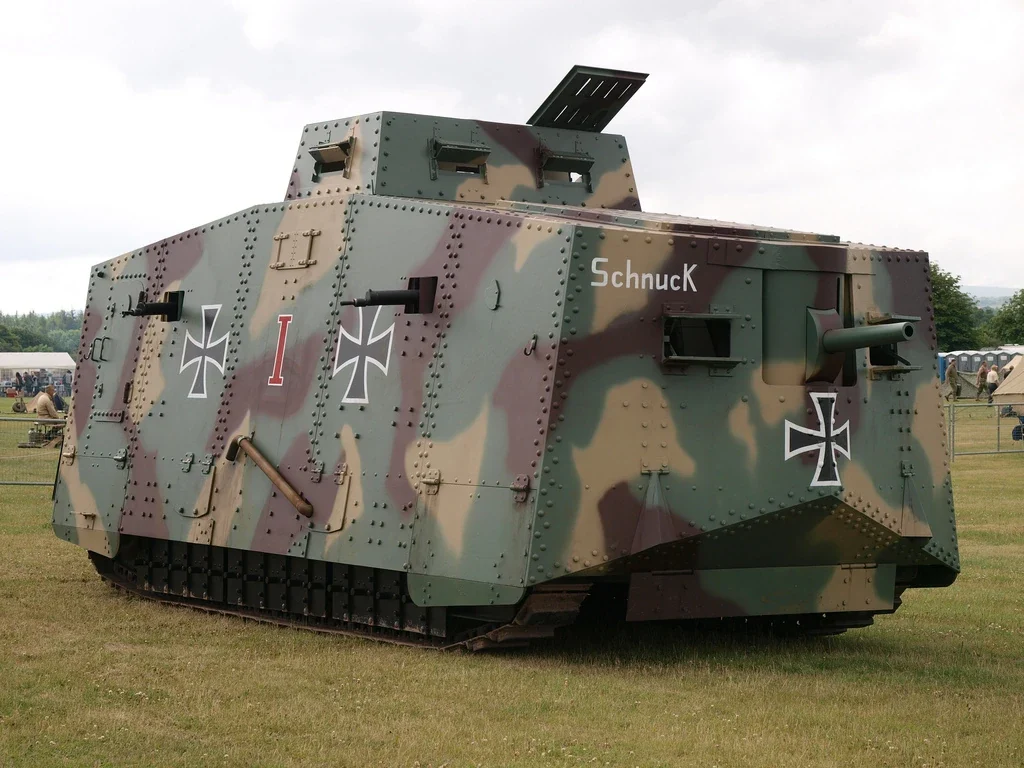
Something else is especially curious. It was on March 21 that the German A7V received its baptism of fire. In the offensive in the Saint-Quentin area, only five of these machines initially took part, and three broke down before fully engaging in combat. The scale was incomparable with what the Allies could already field.
The A7V Tank
And now let us change just one decision of the German leadership.
In our version of history, as early as 1917 in Berlin, the conclusion is reached that the army needs not an ideal and enormous “landship,” but a machine that German industry is capable of producing by the dozens and then by the hundreds.
Thus the Durchbruchswagen appears.
Not a land battleship, but a real tank
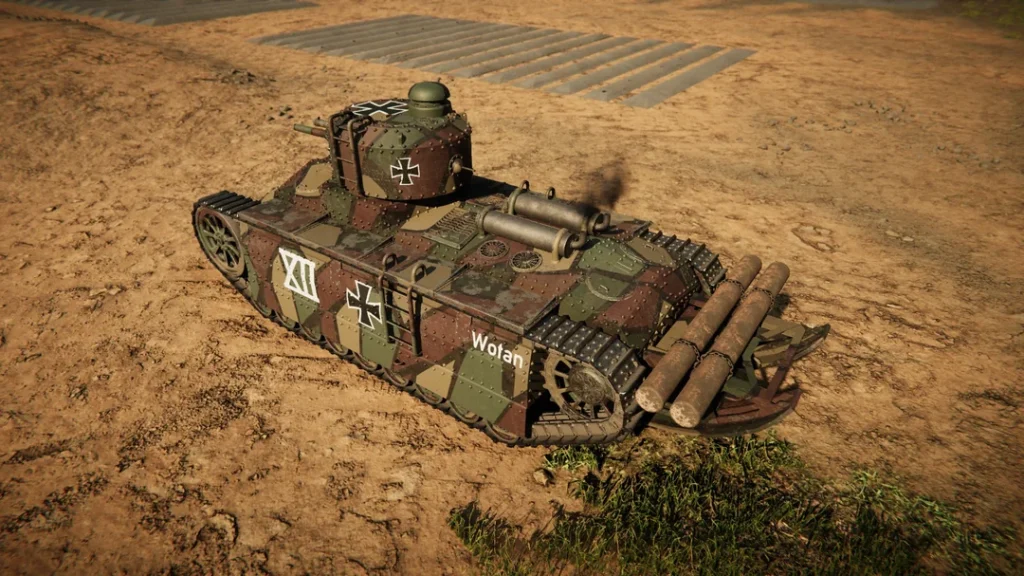
The first thing that strikes the eye when looking at the Durchbruchswagen is how different it is from the real A7V. The latter looked almost like a mobile armored barn. A huge boxy hull, a large crew, a large number of machine guns and a cannon in the frontal section made it more of a self-propelled fortification than the tank we are used to imagining today.
The Durchbruchswagen is significantly more modern in its very layout concept.
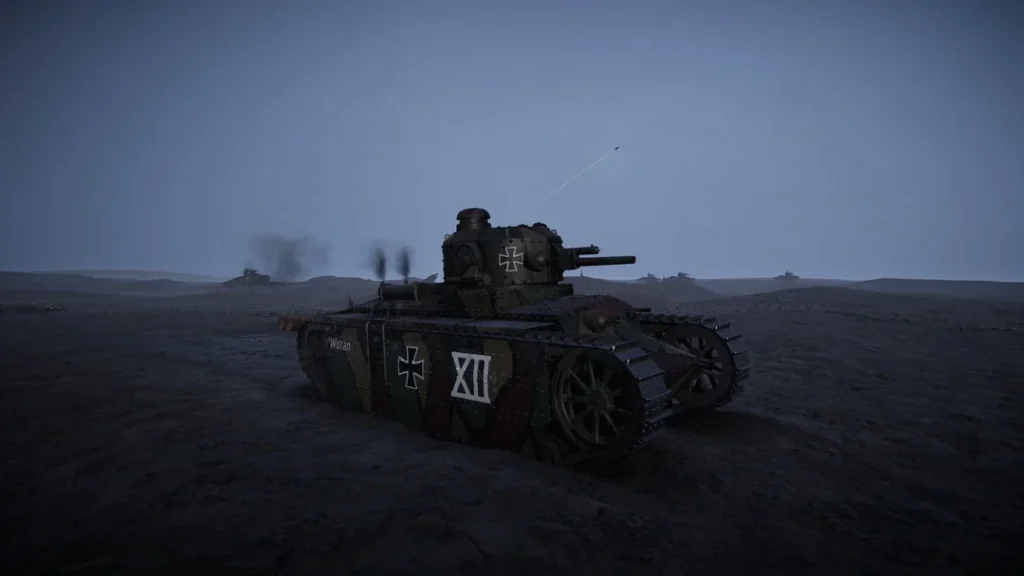
The machine weighs only 12.72 tons and has a crew of five: a commander, a gunner, a loader, a driver-mechanic, and a machine gunner. These are precisely the parameters indicated by the author of the original project. Moreover, the creator specifically noted that normal space was provided inside for each crew member — by the standards of World War I armored vehicles, almost a luxury.
But the main difference is the turret.
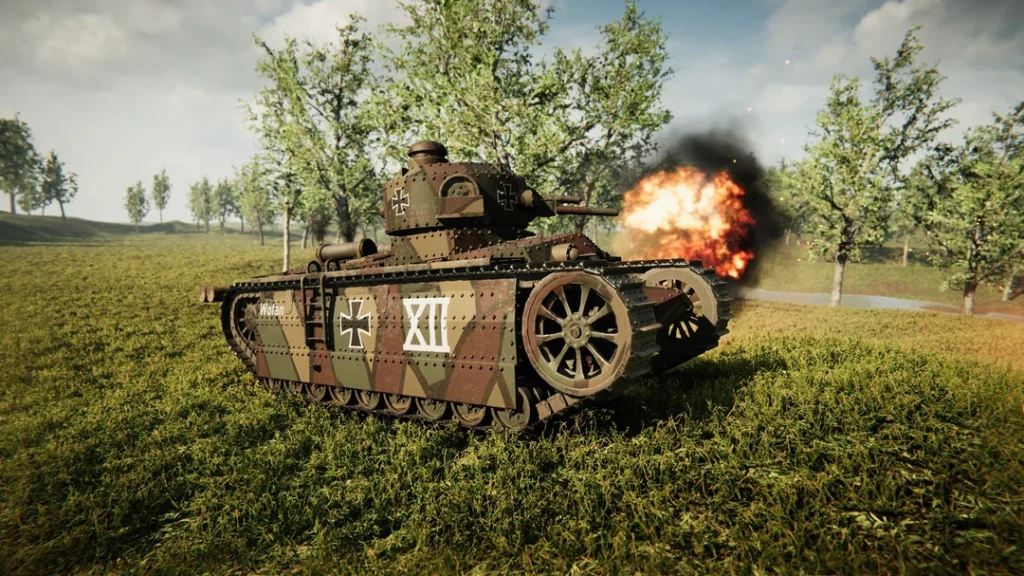
The main gun is located not in a sponson or a fixed frontal mount, but in a rotating turret. Therefore, the crew can shift fire from one target to another without turning the entire tank. For the battlefield of 1918, this is an enormous advantage.
In fact, we are looking at a German attempt to arrive at the same concept that the French implemented on the Renault FT: armament in a rotating turret, a relatively compact hull, and a division of crew duties. Only the German machine is significantly larger and heavier than the French light tank and is created primarily as a means of directly breaking through fortified positions.
A Cannon Instead of a Scatter of Machine Guns
For a breakthrough machine, artillery becomes the most important weapon. The tank faces not so much enemy tanks — in 1918 such encounters are still rare — as machine gun nests, field fortifications, artillery positions, and buildings.
Therefore, the Durchbruchswagen receives a cannon in a rotating turret. Based on the external concept of the machine and the logic of German armored vehicles of the era, the most natural option for our alternative production tank becomes a 57 mm gun, similar in purpose to the cannon used on the A7V.
This makes the Durchbruchswagen an extremely unpleasant opponent for infantry. Having spotted a machine gun nest, the tank can stop, swing the turret, and destroy the position with several shells. The next target can be attacked from a different direction, without performing a complex maneuver with the entire hull.
A machine gun complements the cannon. A separate machine gunner among the five-man crew frees the commander and the turret crew from the need to constantly be distracted by enemy infantry.
And here the main advantage of the machine becomes apparent: the Durchbruchswagen does not try to replace an entire infantry unit. It simply performs the task of a tank — clearing the way for infantry through the most dangerous sections of the defense.
Faster Than It Seems
The mobility of the alternative machine is even more interesting. The original project uses the largest available engine for World War I technology in a “6 × 4 liter” configuration and a 4–2–1 gearbox. The author himself confirmed that the project was created using in-game World War I technologies.
The calculated speed turned out to be about 16 km/h. Even discussion participants separately noted the unusually high speed for such a machine, although the creator honestly noted that Sprocket’s physics allow for somewhat optimistic results. Therefore, 16 km/h certainly cannot be taken as the guaranteed speed of a real 1918 tank.
However, within the framework of alternate history, let us assume that German engineers managed to approach this figure at least on a good road.
Then the Durchbruchswagen turns out to be a fairly mobile machine by the standards of the Great War. It does not need to race across the battlefield like World War II tanks. Infantry advances much more slowly. The main thing is to quickly cross the fire-swept area, cross the trench, suppress the firing point, and continue moving before enemy artillery has time to zero in.
Specifications of the Durchbruchswagen Type:
- Combat weight: 12.72 t
- Crew: 5 men
- Turret crew: commander, gunner, loader
- Hull crew: driver-mechanic, machine gunner
- Armament: cannon in a rotating turret, machine gun
- Assumed variant of main armament in our reconstruction: 57 mm cannon
- Maximum speed of the original
- Sprocket project: about 16 km/h
- Engine of the original project: 6 × 4 L
- Gearbox: 4–2–1
- Purpose: infantry support, destruction of machine gun positions, and breakthrough of field defenses
It should be emphasized: the mass, crew, engine parameters, and declared speed are taken from the author’s Sprocket project; the 57 mm armament and its characteristics in the article are part of our alternate-history reconstruction.
Where Did Germany Get 200 Tanks?
Here begins the most difficult part of the alternate history.
Building one good prototype tank is one thing. Producing two hundred machines in Germany in 1917–1918 is something completely different. The country experienced shortages of steel, copper, rubber, fuel, and skilled labor. Arms production was already at its limit even without tanks.
Therefore, the appearance of 200 Durchbruchswagens requires a change in German priorities as early as 1917.
After the first British tank attacks, the command had to recognize armored vehicles as a strategically important weapon. An especially strong impetus could have been the Battle of Cambrai in November 1917, where the British used tanks on a truly massive scale for the first time. In real history, after Cambrai German work on armored vehicles accelerated, but there was almost no time left.
In our history, things happen differently. A7V production is curtailed after a small initial batch. The freed-up resources are directed toward the Durchbruchswagen, whose design is maximally adapted to the capabilities of locomotive, automobile, and machine-building factories.
By March 1918, approximately 200 machines have been assembled.
This is still negligible compared to the overall potential of the Entente. But Germany intends to use them not across the entire front.
All the tanks are needed for a single strike.
March 21, 1918
At 4:40 a.m., German artillery opens fire.
Thousands of guns rain high-explosive and chemical shells on enemy positions. Under cover of fog, assault groups begin to move forward. But this time, along with them go dozens of low, angular machines with black crosses on their sides.
For the British, this becomes a real shock.
Individual German tanks are no longer a complete surprise, but no one expects to see them in such numbers. Intelligence knows about the A7V, but before the British positions are completely different machines.
The Durchbruchswagens approach the first line of trenches.
Machine guns open fire — and prove practically useless against the armor. Tank cannons begin methodically suppressing fortified positions. Where infantry previously had to lie down and wait for artillery, now an armored vehicle moves forward.
But the main thing happens next.
Behind the tanks come the German stormtroopers.
The Durchbruchswagens are not supposed to win the battle on their own. Their task is to disrupt the defense system for a few critical minutes. Suppress one machine gun. Force the crew of another to take cover. Crush the wire obstacle. Cross the trench.
That is enough.
The first line of British defense collapses.
The Breakthrough
The initial success turns into something far more serious than in real history.
In reality, Operation Michael, even without massed tank support, brought Germany the largest advance on the Western Front since the mobile warfare of 1914. But the Germans could not turn tactical success into a strategic rout of the Allies.
Now the situation changes.
In sectors where the Durchbruchswagens appear, British strongpoints are suppressed faster. Assault units suffer fewer casualties, and most importantly — the pace of the offensive in the first days proves to be higher.
Of course, losses among the tanks themselves are enormous.
Some machines are blown up by artillery shells, others get stuck in craters, and still others break down. World War I anti-tank defense is still primitive, but ordinary field artillery is perfectly capable of destroying a 13-ton machine with a direct hit.
Of the two hundred tanks, after a few days, perhaps only slightly more than half remain.
But they have already fulfilled their task.
The front has indeed been broken through.
The First Tank Battles
Sooner or later, the Durchbruchswagens also meet British tanks.
In real history, the first famous tank duel took place on April 24, 1918, near Villers-Bretonneux, when three German A7Vs encountered three British Mark IVs. One British “male,” armed with cannons, managed to hit a German machine, while the two machine-gun-armed Mark IVs were forced to withdraw.
In our history, such encounters begin earlier and happen more often.
Here the turret of the Durchbruchswagen proves especially useful. The German machine does not need to swing its hull toward the opponent. The gunner simply turns the gun.
However, it would be wrong to turn the Durchbruchswagen into an invincible tank. British gun-armed Mark IVs remain extremely dangerous opponents, and the French Renault FTs are much smaller and more maneuverable. Moreover, the Allies possess a colossal advantage in the total number of armored vehicles.
Therefore, the German tanks win individual engagements, but gradually dwindle.
The only question is whether they managed to change the campaign before they disappeared.
The Road to Paris
They did.
After breaking through several sectors of the British front, the position of the Allies becomes critical. The Germans advance further than in our history. A new series of attacks begins, and the word Durchbruchswagen appears in French and British staff documents almost daily.
However, an unpleasant truth for Germany soon emerges.
Even a tank cannot fix the economy.
Railways cannot keep up with the advance. Horses are exhausted. Trucks are lacking. Artillery falls behind. Soldiers, finding themselves in captured Allied depots, discover such quantities of food as many German units had long forgotten.
The further the army advances to the west, the harder supply becomes.
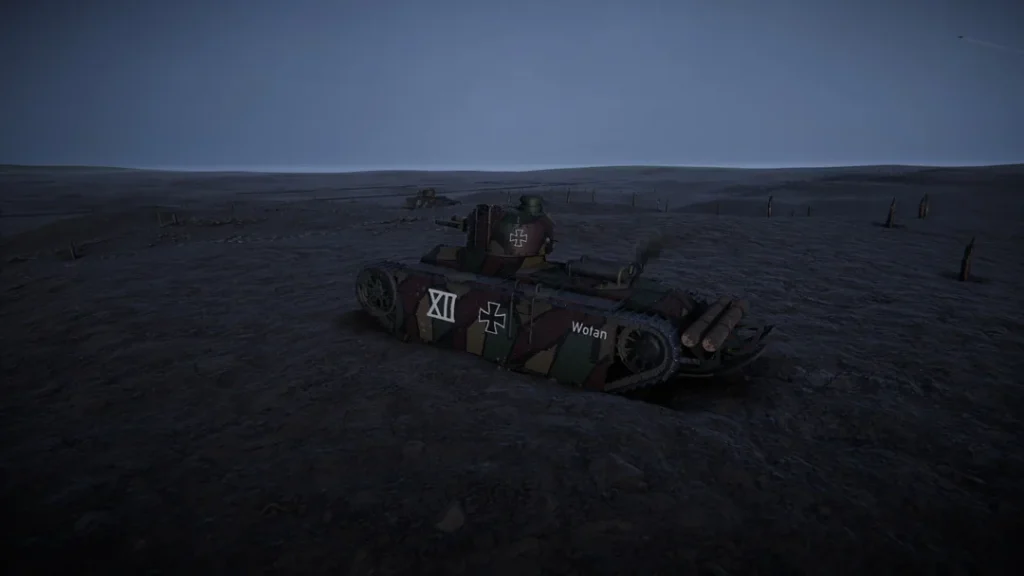
And the Durchbruchswagens themselves begin to stop not because of British guns, but because of the lack of gasoline, spare parts, and repair units.
The German army approaches Paris far more menacingly than in real history. In the French capital, fear of a repeat of August 1914 arises once again.
But the final push does not happen.
The offensive runs out of steam.
A Victory That Was Not Enough
However, the consequences are now completely different.
In real history, by the autumn of 1918, Germany found itself facing military defeat. The Allies went on the offensive, the army retreated, and a revolution began inside the country. After the surrender, the terms of peace were largely dictated by the victorious powers.
In our timeline, the situation looks different.
Germany still cannot win a protracted war against Britain, France, and the rapidly strengthening United States. The blockade has not disappeared. The economy is on the verge of collapse. Manpower reserves are exhausted.
But the Entente has also just endured its most severe crisis.
German troops are standing significantly further west than their historical positions, and Paris was only recently under direct threat. Continuing the war promises hundreds of thousands more dead.
Berlin proposes negotiations.
And now this is no longer the plea of a practically defeated power for a ceasefire.
It is a proposal from an exhausted power to its no less exhausted opponents.
A Very Different Versailles
Germany still has to give up a significant part of the war’s gains. Belgium is liberated. Captured French territories are returned. Alsace and Lorraine become one of the central issues of the negotiations.
But the terms of peace turn out to be significantly softer.
There is no such massive system of reparations, the German army is not reduced to symbolic size, and restrictions on the military industry turn out to be less harsh. Perhaps a significantly larger part of the fleet is also preserved.
Most importantly, the end of the war is perceived completely differently inside Germany.
The army does not return home after an obvious military collapse. In public consciousness remains the spring of 1918, when German soldiers broke through the front and nearly reached Paris.
And the symbol of that last success becomes a small, angular machine with a rotating turret.
The Durchbruchswagen.
The Tank That Changed History
Of course, two hundred tanks could not magically solve all the problems of the German Empire. Even thousands of machines would not have eliminated the naval blockade, food shortages, the exhaustion of manpower reserves, and the ever-growing American presence.
But a tank can change the situation where hours and kilometers decide the outcome.
In the spring of 1918, Germany was indeed surprisingly close to the last opportunity to change the character of how the war ended. It did not need to completely defeat the Entente. It was enough to create such a dangerous crisis that the opponent would agree to discuss a compromise peace.
And it is precisely here that 200 Durchbruchswagens could have been the additional tool that Ludendorff lacked.
The paradox is that the machine presented by the Sprocket author itself looks much more rational than many real German projects of the late First World War. A compact hull, five crew members, turret armament, and a mass of less than 13 tons make one see in it not a “landship,” but a precursor of a far more familiar tank. It is no coincidence that one of the discussion participants noted its external resemblance to the real late German project, the Sturmpanzerwagen Oberschlesien.
In reality, Germany built only twenty A7Vs. By the end of the war, the Allies had thousands of armored vehicles at their disposal, and a few dozen German tanks could not change the overall balance of power.
But the history of alternates does not ask what happened.
It asks what would have had to change for everything to end differently.
And in this case, the answer is unexpectedly small: to understand the significance of the tank in time, to choose a sufficiently simple design, and to build it not twenty, but two hundred times.