"Temporary Air Force One": The new VC-25B has already passed testing and is ready for service

Sometimes the most interesting story isn’t about a new aircraft, but rather a temporary solution that had to be developed on an urgent basis. In the U.S., the modernization and flight testing of the so-called “interim” presidential aircraft—the VC-25B Bridge—have been completed. It is scheduled to enter service this summer.
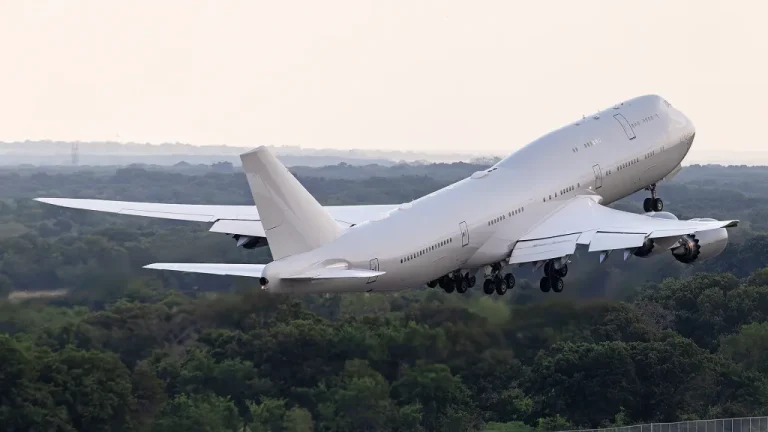
At first glance, it’s just another Boeing 747.
In reality, it’s an attempt to plug a critical gap in the Air Force One program.
Trigger: The plane is ready, but it’s “temporary”
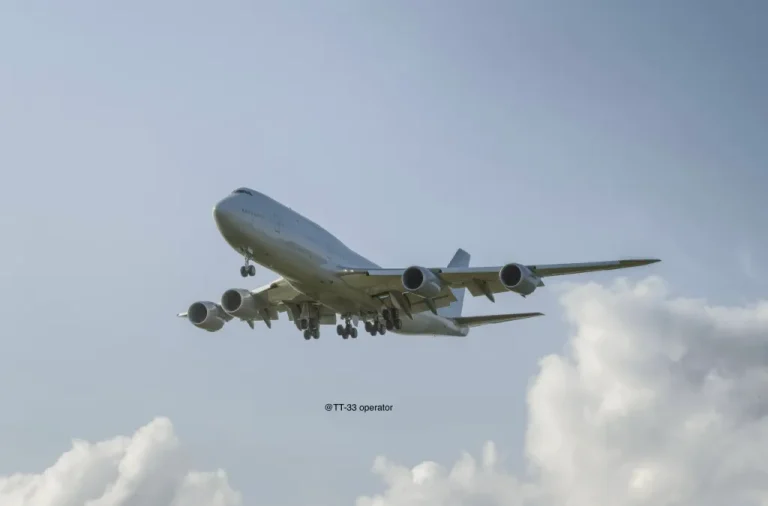
The U.S. Air Force has officially confirmed that the VC-25B Bridge has fully completed the modification and flight test phases and is preparing to be transferred to the Presidential Air Fleet.
The aircraft is currently in the final stages of the process—it is being repainted in its new livery, after which it is scheduled to enter service in the summer of 2026.
But the main point here is something else:
this isn’t the primary new Air Force One, but rather a temporary measure.
Why was “Bridge” needed in the first place?
The reason for the appearance of the VC-25B Bridge is a delay in the main program.
The new VC-25B presidential aircraft, which are intended to replace the older VC-25A models, are significantly behind schedule. They were originally expected by 2024, but the timeline has been pushed back to at least the end of the decade.
Against this backdrop, a problem arose:
— Old airframes are getting older
— the load on them is increasing
— there are no replacements
The Air Force explicitly calls the intermediate aircraft “absolutely essential.”
That is exactly why Bridge was created—literally a “bridge” between generations.
Where did they get the plane?
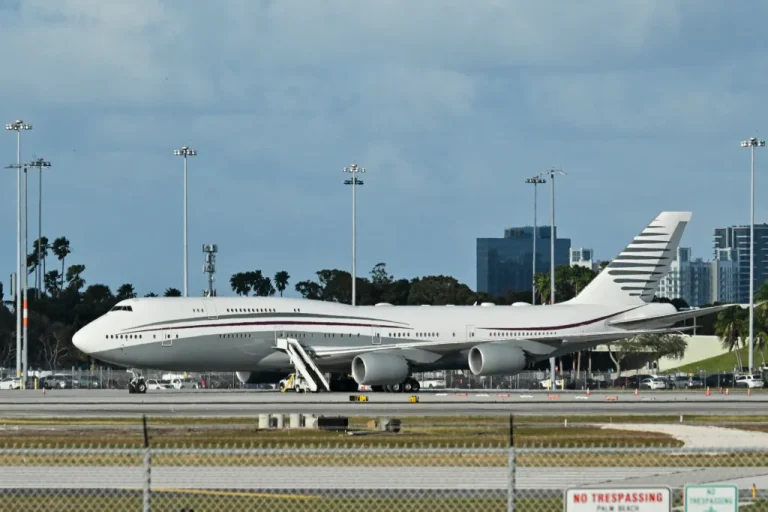
The project is based not on a new airframe, but on an existing aircraft.
We’re talking about a former government Boeing 747-8i that previously belonged to Qatar. It was transferred to the U.S., after which urgent modifications were made to adapt it for presidential use.
But it’s important to understand that
a VIP jet and Air Force One are on completely different levels.
To transport the president, the vehicle must be equipped with:
— secure
communication systems— measures to counter threats
— special security standards
And that is precisely what became the main goal of the modernization effort.
“Starting from scratch is faster than waiting”
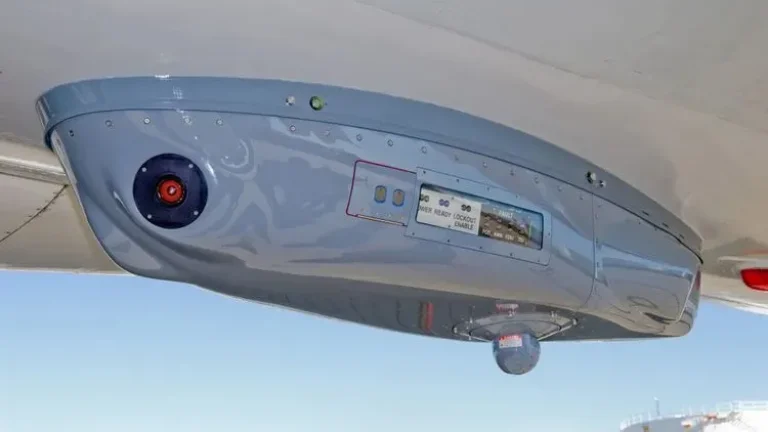
The modification was carried out by L3Harris, which integrated secure communications and other systems into the aircraft.
Work proceeded at a rapid pace—essentially in the style of a “military startup.”
In February 2025, a separate working group was formed, which launched what is known as a “full-court press”—a program designed to accelerate the aircraft’s final development as much as possible.
As a result:
— The modernization was completed in the shortest possible time
— Testing was carried out on a tight schedule
— The aircraft is now ready for delivery
Not just an airplane, but part of a system
Interestingly, Bridge isn’t a standalone project, but part of a broader initiative.
Several Boeing 747-8s were used to launch it at once:
— one — as the main aircraft —
others — for crew training —
some — as a source of spare parts
This made it possible to prepare the infrastructure, personnel, and logistics in advance for the future VC-25B aircraft.
In fact, it’s not just an airplane that’s being created, but an entire ecosystem.
What’s next?
The VC-25B Bridge does not completely replace the older aircraft.
The current VC-25A aircraft will remain in service until the fully operational new VC-25B aircraft are ready.
In other words, there will be a mixed fleet in the coming years:
— older aircraft —
temporary
bridge — future new VC-25Bs
Conclusion
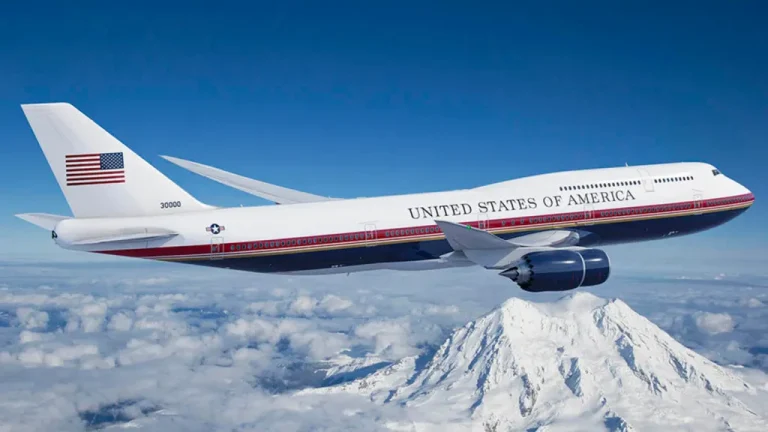
The story of the VC-25B Bridge isn’t about a new presidential aircraft.
This is about a situation where a complex program crashed,
and we had to find a solution right away.
The aircraft is ready.
It has passed its tests.
It will soon enter service.
However, it was originally intended to be temporary.
And that is precisely what makes it one of the most unusual aircraft in modern aviation—
Air Force One, which was originally designed as a compromise.