The MC-21 Already Had a Type Certificate. Why Is Russia’s Boeing and Airbus Replacement Undergoing Hundreds of Tests Again?

The MC-21 has wings, engines, a passenger cabin and years of flight testing behind it. It even received its initial type certificate back in December 2021. Yet on October 8, 2026, a new set of figures emerged: 115 of 301 planned flight tests had been completed. How can an aircraft already be certified and still be so far from completing a certification program?
The answer lies in the equipment changing beneath its familiar exterior. Approval of one configuration does not automatically cover every subsequent modification. The MC-21 is intended to fill the role of the Boeing 737 and Airbus A320 in Russian airlines, but building an aircraft of roughly the same size is not enough. The version actually delivered to operators must be shown to meet the applicable requirements.
There Is a Certificate. But Which Aircraft Does It Cover?
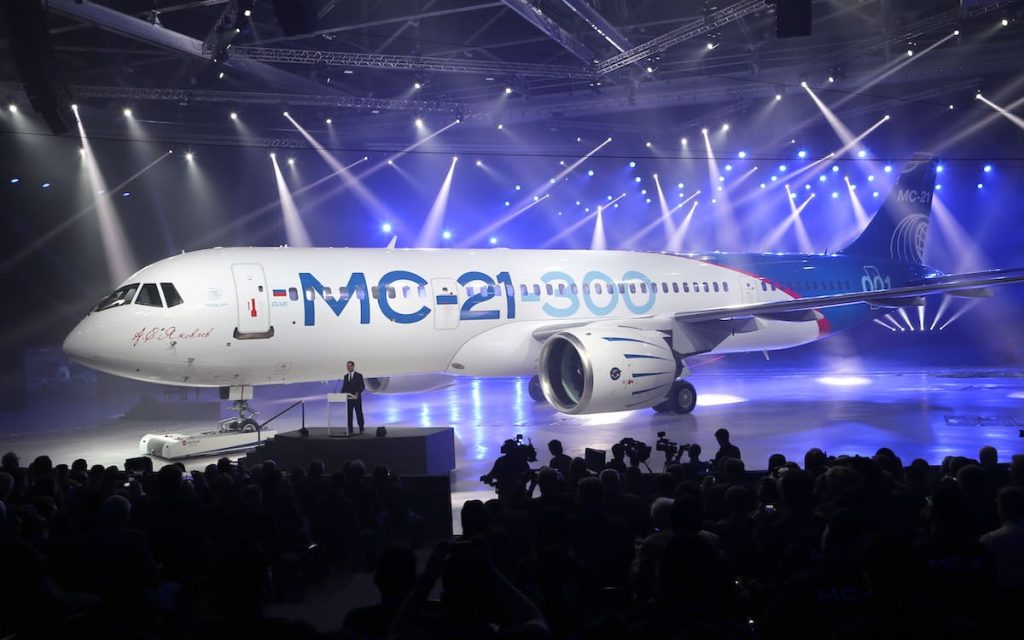
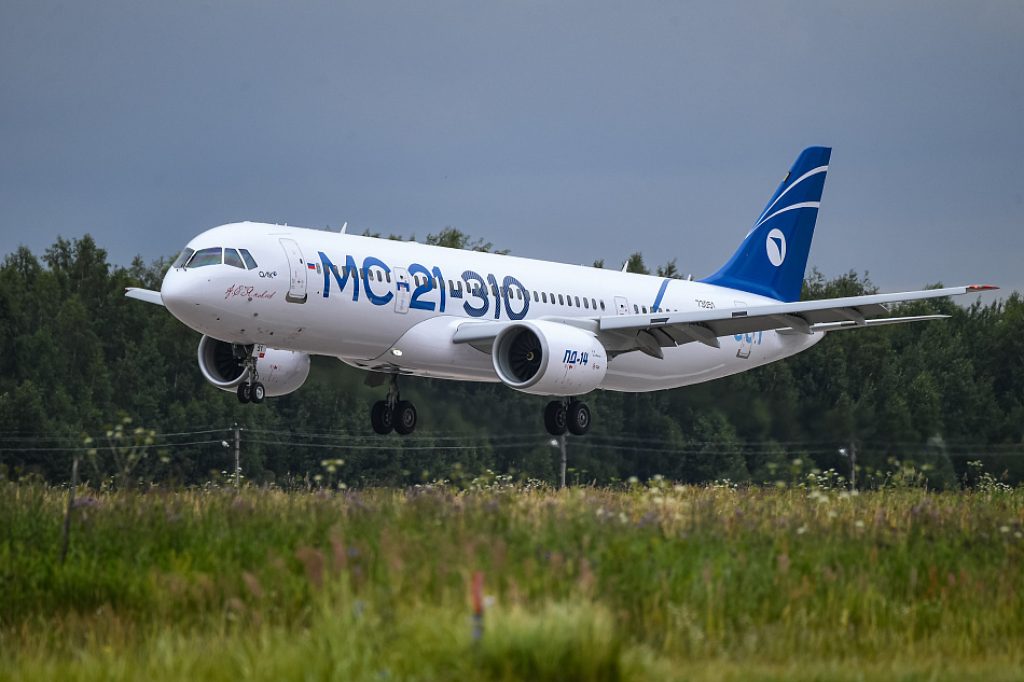
Russia’s Federal Air Transport Agency, Rosaviatsiya, issued the MC-21-300’s initial type certificate on December 28, 2021. At the end of 2022, it approved further major changes: the installation of Russian PD-14 engines and a wing made from domestically produced composite materials. The MC-21-310 model was added to the certificate. Today’s testing therefore continues the development of an existing aircraft; it does not mean that all previous results have been discarded.
The engines and wing, however, were only part of the equipment replacement effort. Subsequent announcements from United Aircraft Corporation, or UAC, listed Russian cockpit controls and flight-control actuators, avionics, air conditioning, the fuel system, brakes, an auxiliary power unit and other components. Passengers would barely notice many of these changes: the seats remain in familiar positions, and the aircraft looks much the same. For engineers, they involve numerous systems whose coordinated operation determines how the aircraft behaves.
Replacing a component in an airliner is more complicated than installing a new appliance at home. Its individual performance is only part of the equation. Its interaction with the rest of the aircraft also matters: electrical power, data exchange, responses to commands and behavior under failure conditions. Even a system that works properly on its own must perform correctly as part of the overall design. That is why changes require evidence of compliance, rather than simply an assurance that the new component does the same job as the old one.
What 115 Out of 301 Actually Means

According to an October 8 report by TASS citing Rosaviatsiya, 115 of 301 flight tests had been completed. That is roughly 38% of the stated total, leaving 186 tests. But describing the aircraft as “38% ready” would be misleading. The calculation measures progress through a particular list of tests, not the readiness of the design, production facilities and entire documentation package.
Nor do all tests require the same amount of work. Some can be conducted under relatively routine conditions; others require preparation, suitable weather or particular operating conditions. Results must be analyzed and documented. In some cases, a test may lead to modifications and further verification. The remaining 62% of the list therefore cannot simply be converted into months of waiting. Without knowing the program’s contents and the work already completed, that fraction cannot produce a delivery timetable.
The same report gave figures for the SJ-100: 233 tests out of 294, or around 79%. On paper, it is considerably closer to completing its list. But these are different aircraft with different programs. A percentage is useful for a short news report, yet it does not reveal which tasks remain or how long they will take. Comparing the figures as though they represented two competitors running the same race would be an oversimplification.
Why One Successful Flight Is Not Enough
A passenger aircraft must work in more than the favorable conditions of a demonstration flight. Before it can enter service, its performance and limitations must be established so that crews can operate it and maintenance teams can support it. Certification involves design verification, testing and documentation. A flight in which everything goes well matters, but it cannot answer the full set of questions.
This becomes particularly clear when many systems are replaced at once. Air conditioning maintains cabin conditions, the fuel system supplies the engines, and actuators carry out flight-control commands. Their performance must be assessed as part of the aircraft. The task is not to reinvent the MC-21, but to substantiate the new configuration wherever changes affect the evidence supporting earlier approvals.
Even after certification work is completed, an industrial challenge remains. An airline needs more than a single carefully prepared test aircraft. It needs a fleet built to consistent standards, with maintenance support and spare parts. A type certificate establishes that the design meets the applicable requirements; the ability to manufacture and support aircraft consistently must be secured separately.
The report of 115 completed tests shows that a substantial part of the stated flight-test program still lies ahead. It proves neither that the project has failed nor that completion is imminent. The MC-21’s central challenge today is to validate its revised configuration and then reproduce that result in series production. A great deal of work separates an aircraft that flies successfully on test from one that carries airline passengers every day.