An Airplane Without Borders: How the Gulfstream G800 Became the Business Jet with the Longest Range

In civil aviation, range is not just a specification.
That’s the freedom to choose your own route.
The farther an aircraft can fly without landing, the less it depends on geography, infrastructure, and politics. That is precisely why the battle for range in the business jet segment has long since become a race of its own—not for speed, but for range.
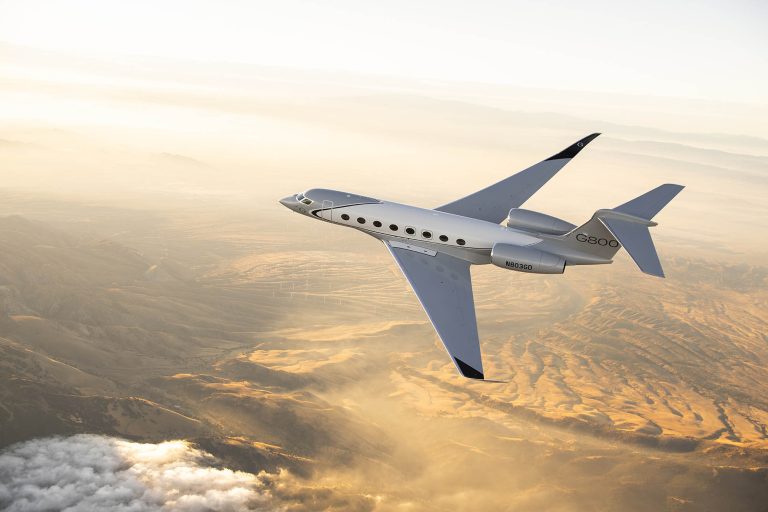
And today, the Gulfstream G800 is considered the pinnacle of this category—an aircraft capable of flying up to 16,668 kilometers nonstop.

A Flight That Changes the Map

This means direct flights:
New York–Dubai,
London–Singapore,
Los Angeles–Sydney (with minimal load restrictions).
This is critical for business aviation. The fewer stopovers, the lower:
travel time,
logistical risks,
dependence on third countries.
In effect, the airplane becomes a tool that transcends borders.
Design: Range as a Result of Compromises
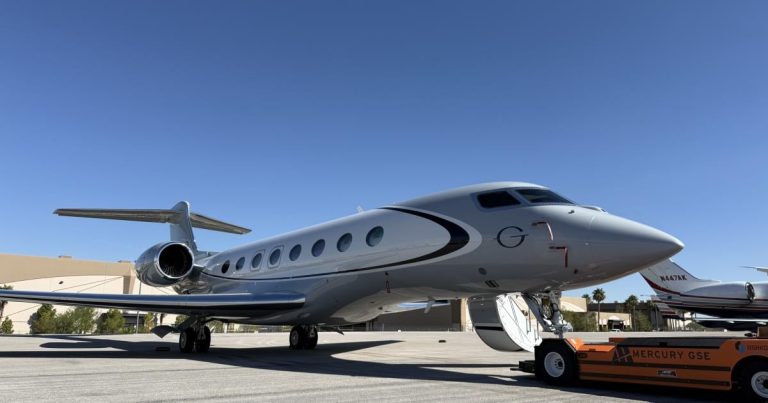
It is a combination of several engineering factors.
A wing with a high aspect ratio reduces drag and improves efficiency at cruising speed.
The Rolls-Royce Pearl 700 engines provide an optimal balance between thrust and fuel efficiency.

The fuselage’s aerodynamics have been refined to the point where every little detail contributes to fuel efficiency.
But the most important thing is balance.
To continue your flight, you need to:
reduce fuel consumption,
optimize weight,
and maintain comfort.
And all three tasks are contradictory.
Speed vs. Range
DSC07081;DSC07081
Interestingly, the G800 isn’t the fastest.
Its cruising speed is approximately Mach 0.85–0.90.
This is a conscious decision.

At maximum speed, the aircraft consumes significantly more fuel. Therefore, range is achieved not by “accelerating” but by maintaining an optimal flight mode.
In fact, the G800 doesn’t fly fast—it flies efficiently.
Cab: Long-Distance Driving Without Fatigue

A 16,000-km flight takes 14–15 hours in the air.
And this is where factors come into play that are rarely discussed in “mainstream” aviation:
Low cabin pressure,
high humidity,
large windows,
and rest areas.

The G800 is designed not merely for transportation, but for extended flights without compromising passenger comfort.
Practical Significance: Why Is This Necessary?

The primary customer for these aircraft is not a tourist.
These are businesses, government agencies, and private owners for whom time is a resource.
Every planting is:
delays,
risks,
limitations.

That is why range is no longer a luxury, but a tool.
Restrictions

But even an airplane like this has its limits.
Maximum range is achieved with an optimal load.
A full car and maximum fuel capacity are a trade-off.
In addition, long-distance routes are heavily dependent on winds and weather conditions.
In other words, “16,668 km” isn’t always the case—it’s under ideal conditions.
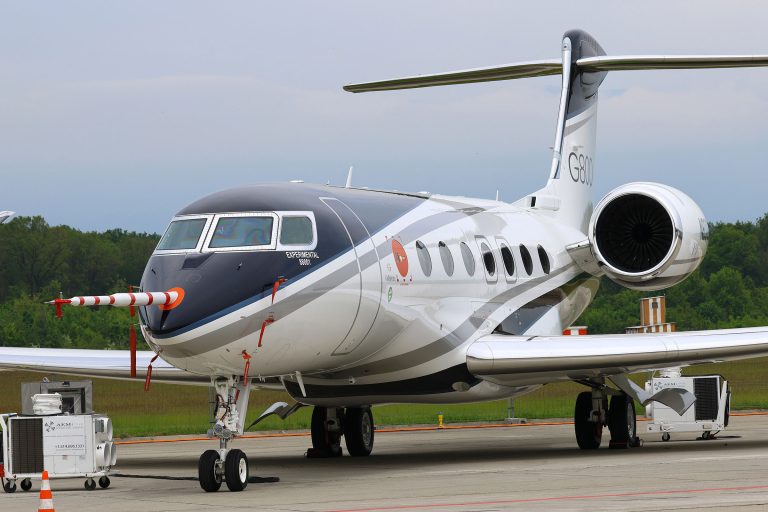
Gulfstream G800 Technical Specifications
| Type | Long-range business jet |
| Maximum range | ~16,668 km |
| Cruising speed | ~Mach 0.85–0.90 |
| Engines | 2 × Rolls-Royce Pearl 700 |
| Passengers | up to ~19 |
| Flight duration | until around 2:00–3:00 p.m. |
| Manufacturer | Gulfstream Aerospace |
Conclusion
DSC07081;DSC07081
The Gulfstream G800 is not just the business jet with the longest range.
This is the ultimate expression of the concept of “flying as far as possible without stopping.”
And in that sense, it illustrates a simple point:
In modern aviation, speed isn’t the only important factor.
Sometimes what matters most is the ability to keep going without stopping at all.