The Rebirth of a Soviet Giant. The Il-96-400M surprised everyone—its very first test flight set a world record!

As a follow-up to the article “The Il-62 Returns to the Skies,” I’d like to share a story about yet another “stopgap” aircraft intended to replace the retiring Boeings and Airbuses. Ironically, it is also a product of the Ilyushin Design Bureau.

Back in the Sky: A New Phase of Testing for the Il-96-400M
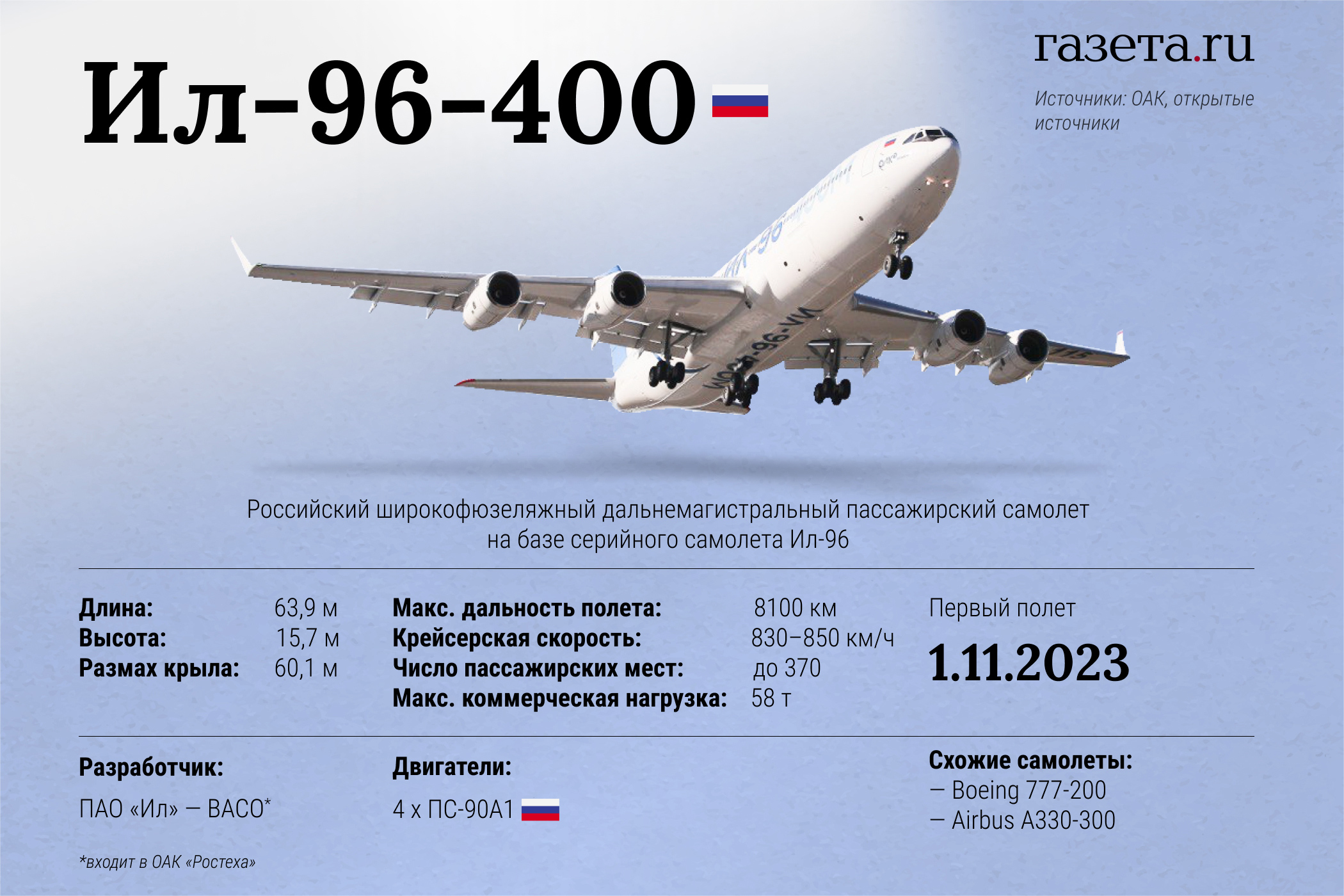
The Il-96-400M wide-body airliner, being developed as part of the program to modernize Russia’s domestic long-haul aviation fleet, has resumed active flight testing following a forced technical hiatus. The aircraft program has been revised several times due to changes in the component base, the adaptation of onboard systems to modern safety requirements, and the transition to new powerplants. By early 2026, UAC designers and engineers from the Voronezh Aircraft Manufacturing Complex had completed a series of ground tests, calibrated the digital avionics, and tested the control systems under simulated extreme temperature conditions. Following this, a decision was made to resume the flight test program, which is intended to be the final stage before certification and the start of serial production.
The first flight after the hiatus and a new record set
The first flight after the hiatus took place at the experimental production airfield. The test flight crew completed a series of tasks specified in the service life and certification test program, including checking stability and controllability at high altitudes, testing the operation of onboard equipment during extended flight, and evaluating takeoff and landing dynamics. A key feature of this phase was the testing of the power plant and fuel system under maximum commercial load conditions.
It was during this flight that the Il-96-400M set a national record in its class. The aircraft demonstrated the maximum duration of continuous flight under full operational load simulation, exceeding fifteen hours without any stopovers. The aircraft flew a route over various climatic zones, testing algorithms for adapting onboard systems to changing environmental conditions and confirming the calculated fuel consumption figures. The recorded parameters were submitted to the authorized aviation registration authorities and included in the official flight test report. This result served as a key indicator of the design’s readiness to move on to the phase of confirming its service life between overhauls.
Design Features and Technical Specifications
The modernization of the Il-96-400M affected virtually all of the aircraft’s key components. The wing features an improved aerodynamic configuration with optimized wingtips, which reduced inductive drag and improved fuel efficiency during cruise flight. The fuselage has been reinforced to meet modern fatigue strength standards, and the interior layout has been adapted to allow for rapid conversion between passenger and cargo configurations.
The cockpit is equipped with a fully digital cockpit display featuring multifunctional displays, an integrated collision warning system, and an automated flight control system that complies with current international standards. The onboard network has been upgraded to a highly fault-tolerant architecture, which ensures that critical systems remain operational even in the event of partial failures. In the field of materials science, designers have expanded the use of composite elements in the tail section and fairings, while retaining the traditional aluminum airframe structure to ensure maintainability and compliance with the requirements of domestic airlines.
Technical Specifications (TS)
- Length: 55.3 meters
- Wingspan: 52.5 meters
- Height: 15.7 meters
- Maximum takeoff weight: up to 250 metric tons
- Payload: up to 50 metric tons (cargo version)
- Flight range: up to 12,000 kilometers
- Cruising speed: 850–900 km/h
- Practical ceiling: 12,500 meters
- Power plant: 4 × turbofan engines (PS-90A2 / PD-35)
- Crew: 2 pilots + flight engineer (optional)
- Capacity: up to 370 passengers in a single-class configuration
Certification, Production, and Operational Prospects
The resumption of testing has brought the Il-96-400M program into its final phase. According to the developers’ estimates, certification procedures are expected to be completed by the end of 2026, after which the establishment of a mass production line will begin at the Voronezh Aircraft Manufacturing Complex. Even during the testing phase, preliminary orders have been received from government agencies, cargo operators, and major airlines interested in replacing their aging long-haul airliners with domestically produced aircraft.
The key factor in scaling up production will be the pace of certification for the new-generation engines. If the PD-35 tests are successfully completed, the aircraft will be able to further reduce operating costs and expand its route network to include transcontinental destinations. At the same time, preparations are underway to develop maintenance infrastructure, train flight and engineering crews, and develop software to automate diagnostic procedures.
Conclusion
The return of the Il-96-400M to test flights and the immediate setting of a record flight duration served as clear confirmation of the updated design’s operational capability. The aircraft demonstrated its ability to fly long-haul routes at full load while maintaining a high level of onboard system reliability and compliance with modern safety requirements. The successful completion of the test program will pave the way for serial production and Russia’s return to the wide-body long-haul aviation segment, ensuring technological sovereignty and the long-term competitiveness of the domestic aviation industry.