The world of aviation is on the cusp of change: conceptual aircraft designs are pushing the boundaries of what’s possible, and one of the most intriguing is the Aurora D8. It has captured the attention of engineers and enthusiasts around the world not only for its futuristic appearance but also for its claimed economic and environmental benefits. This aircraft offers a radically different vision of what a 21st-century airliner should be.

The concept isn’t just a new aircraft—it’s a new approach to aerodynamics
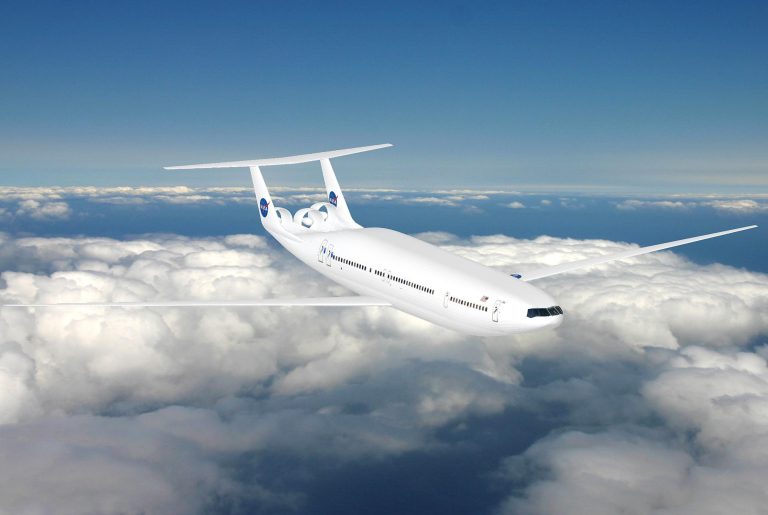
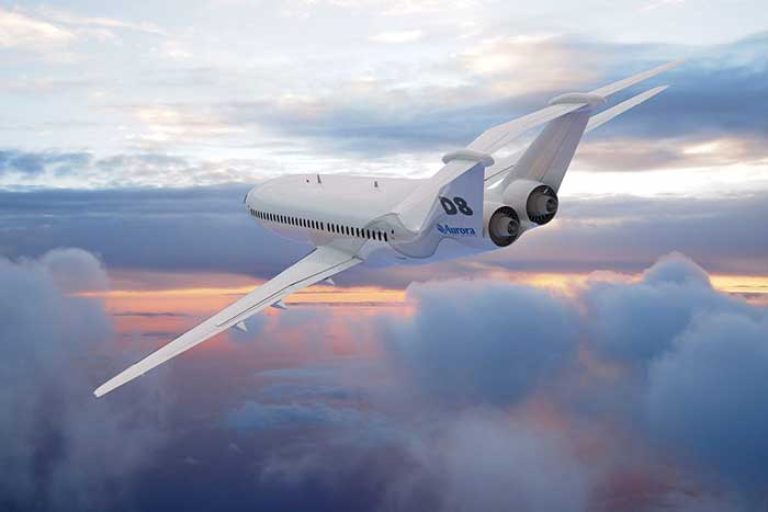
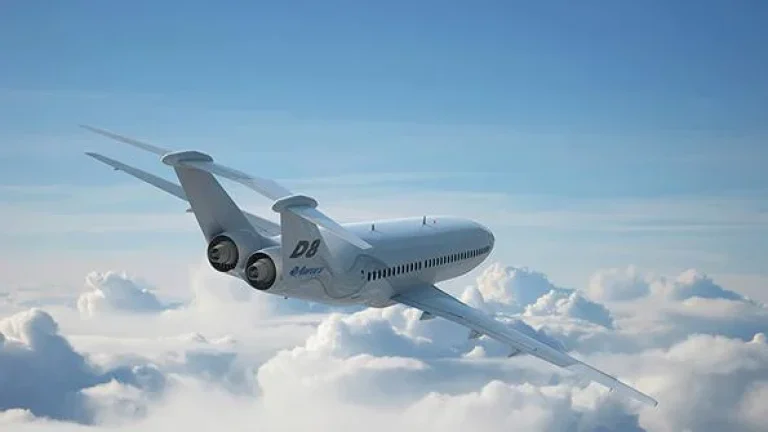
The Aurora D8 (short for “Double Bubble D8”) is a commercial airliner concept featuring an innovative aerodynamic design, developed by the American company Aurora Flight Sciences in collaboration with a number of partners in the aviation industry.
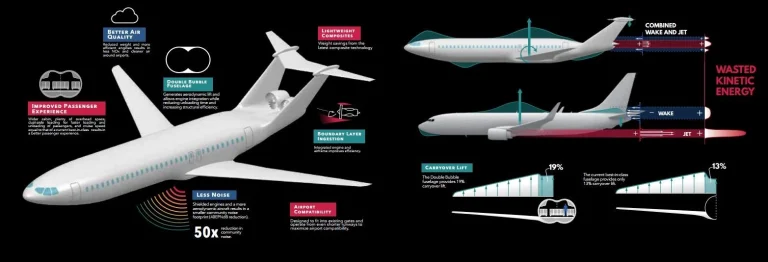
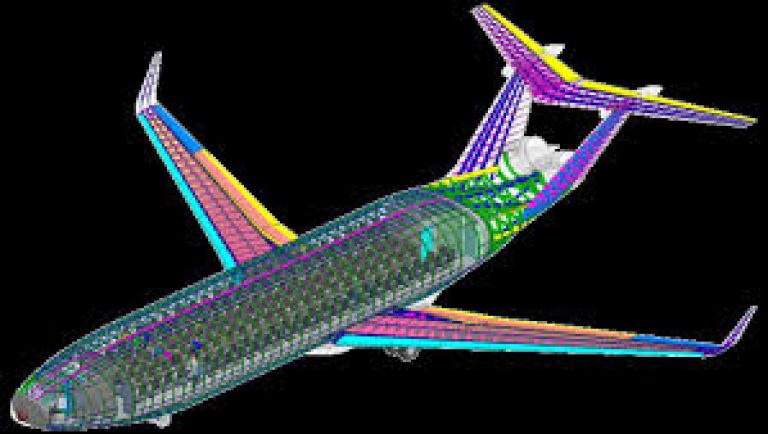
The main idea behind the project is to minimize aerodynamic drag and improve fuel efficiency through a new fuselage shape. The design is based on a so-called double “bubble” fuselage configuration, which integrates the fuselage with the center section of the wing. This configuration allows for:
- redirect airflows to reduce drag;
- use the housing as an additional lifting surface;
- reduce weight and fuel consumption;
- reduce noise and CO₂ emissions.
Key Design Features
1. Dual Airfoil
In traditional airliners, the wing generates most of the lift, while the fuselage serves merely as a “passenger carrier.” With the D8, the designers took it a step further: the fuselage is integrated into the lifting surface, which reduces energy loss and makes the aircraft more “seamless” with the air.
2. Engine Layout
The engines are located at the rear of the wing, which allows for:
- reduce cabin noise;
- reduce the negative effects of vortices on the wing;
- optimize the airflow under the wing.
3. Fuel Efficiency and Environmental Friendliness
One of the key requirements for the future of aviation is environmental sustainability. According to design calculations, the D8 promises to reduce fuel consumption by up to 30% compared to conventional aircraft, and consequently, to reduce greenhouse gas emissions.
Why Is This Important for Civil Aviation?
Globally, demands for efficiency and environmental sustainability in air travel are constantly increasing. Fuel costs are one of the most expensive operational expenses, and every fuel savings measure has a positive impact on both airlines’ bottom lines and the planet’s environment.
The Aurora D8 offers a solution that:
- significantly reduces operating costs;
- reduces the environmental impact;
- potentially reduces noise pollution near airports;
- could serve as a transitional step toward the widespread use of hybrid or electric aircraft.
Development and Prospects for Implementation
As of this writing, the D8 remains a conceptual project that has undergone design and aerodynamic testing on models in wind tunnels. Engineers have demonstrated its advantages over traditional designs, but the transition to a full-scale prototype requires significant investment and time.
Issues that still need to be resolved:
- certification of a new aerodynamic concept;
- adaptation to actual aviation standards;
- the development of efficient propulsion systems;
- Economic justification for mass production.
Nevertheless, many experts believe that such innovations represent the future of aviation, especially in the face of strict environmental regulations and intensifying competition.
Comparison with Traditional Passenger Airplanes
| Aerodynamic Efficiency | Standard | Elevated |
| Fuselage Lift | No | Yes |
| Fuel consumption | Basic | Up to −30% |
| Noise Level | Standard | Potentially lower |
| Environmental Friendliness | Average | Above |
Conclusion
The Aurora D8 is more than just a beautiful concept. It is a project aimed at addressing the critical challenges facing modern aviation: cost-effectiveness, safety, and environmental sustainability. Although it is not yet known when (or if) such an aircraft will be built in full scale, it has already become an important benchmark for engineers, airlines, and regulators.
Perhaps it is precisely these unconventional aerodynamic approaches that will lead aviation to its next stage of development—where an aircraft will be more than just a means of transportation, but rather the most efficient and sustainable component of global infrastructure.