The Balkan Crisis of 1912–14. Part 6. The Second Balkan War and Its Consequences for the Participating Nations and Russia

By the summer of 1913, Bulgaria found itself at the center of a web of Balkan conflicts (simply because it is located in the heart of the Balkans). It was embroiled in acute territorial conflicts with all of its neighbors: with the Serbian-Greek alliance over Macedonia, with the Romanians over Southern Dobruja, and with the Turks over Eastern Thrace. At the same time, the Great Powers had no interest in providing effective support to Bulgaria, leaving it completely isolated. For example, Russia refused to prevent the Romanians from attacking the Bulgarians if the Bulgarians attacked the Serbs. The Bulgarian leadership, headed by Tsar Ferdinand I, failed to grasp the danger this situation posed to their country and instead opted for a military solution to the conflicts. On June 29, 1913, the Bulgarian army’s attack on the Serbs sparked a war (known as the Second Balkan War), in which all of Bulgaria’s neighbors took up arms against it.
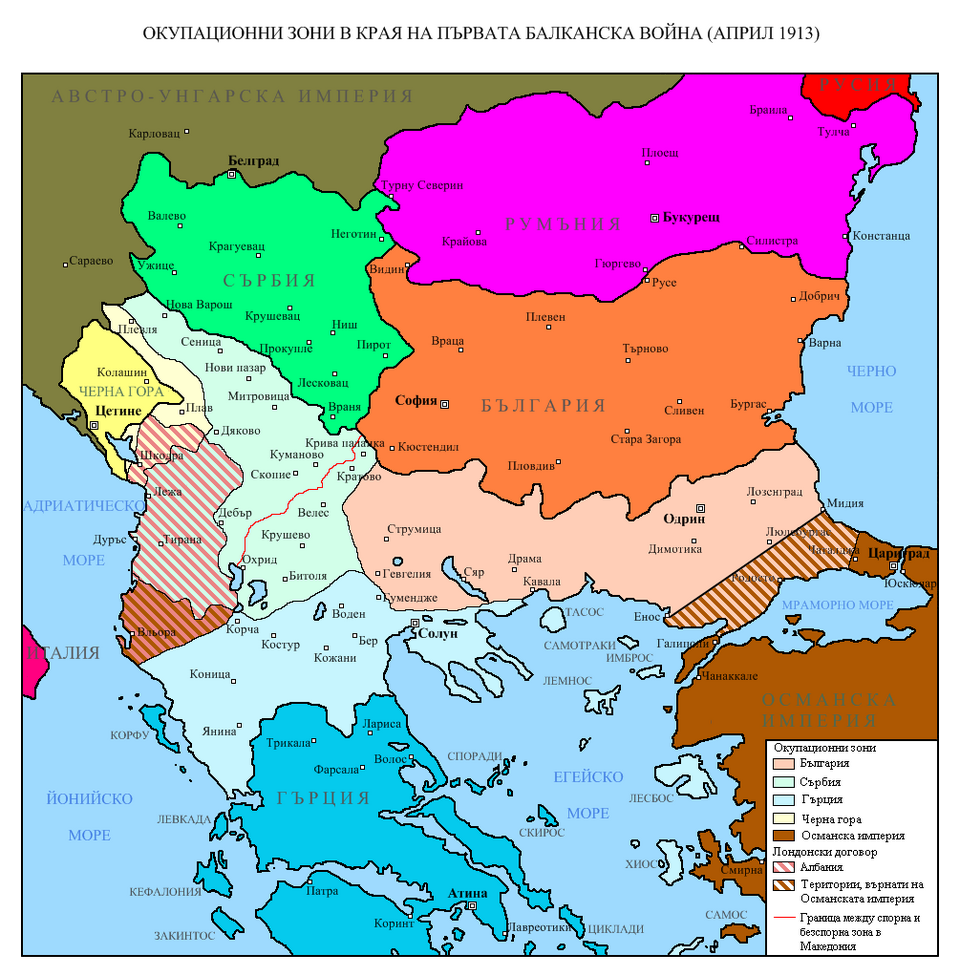
The Balkans Before the War
Romania’s Entry into the War, Russia’s Position, and the Consequences
The British diplomat Buchanan (ambassador to St. Petersburg), whom we have already mentioned in this series, believed (and advised St. Petersburg accordingly) that Russia should prevent Romania from intervening in the war that was brewing and subsequently broke out. Instead, however, St. Petersburg deemed Romanian intervention in the war against Bulgaria acceptable and even necessary. St. Petersburg had its own reasons for this decision. These have been described in detail in previous articles; we will now summarize them:
- A negative attitude toward Bulgaria, stemming from the fact that St. Petersburg regarded Bulgaria as the sole culprit behind the fragmentation of the Slavic and Orthodox unity in the Balkans—a unity that St. Petersburg had long dreamed of. The realities of the Balkans and the culpability of the warring parties at the outset were more complex than St. Petersburg had imagined, but the Russian leadership was unwilling to grapple with these complexities. Romania’s intervention in the war against Bulgaria was intended to contribute to Bulgaria’s defeat. And after its defeat, it was thought that Bulgaria would repent of its schism.
- Concerns about the risks of containing Romania, as well as plans to draw it closer and distance it from the Austro-German bloc. In St. Petersburg, there were fears that containing Romania could lead to complications with the powerful powers with which the Romanians had a military alliance—Austria-Hungary and Germany. Supporting the Romanians in their anti-Bulgarian intentions, however, promised, in St. Petersburg’s calculations, a rapprochement with Romania. The primary goal of this rapprochement was to ensure that Romania would not side with Austria-Hungary and Germany in the event of their looming war against Russia. The ultimate goal was to pull Romania, with its half-million-strong army, out of its alliance with the Austro-Germans and bring it into the Russian-French-British alliance.
- Fears of Serbia’s Defeat and Weakening. In St. Petersburg, there were fears that the Bulgarian army—which had proven itself to be a formidable force in the First Balkan War—would inflict a crushing defeat on the Serbs. This was completely unacceptable to Russia, since the Serbs were viewed as an ally in the looming war with Austria-Hungary. Officials in St. Petersburg decided that Romanian support for the Serbs in the war against Bulgaria would help them avoid a crushing defeat.
- Fears of Bulgaria becoming overly powerful. St. Petersburg did not want a Bulgarian victory, because as a result, Bulgaria would have annexed so much territory that it would have become a Balkan superpower. Such a Bulgaria could have wiped out Serbia entirely and also threatened to seize an area of vital Russian interest—the Black Sea straits. Romania’s entry into the war on Serbia’s side against Bulgaria was seen as a safeguard against such a development, which was dangerous for Russia.
Based on the reasons listed above, it was decided in St. Petersburg that it was in Russia’s interest to support the Romanians in their territorial claims against the Bulgarians and in their resulting willingness to attack the Bulgarians. Buchanan pointed out to Sazonov (the head of the Russian Foreign Ministry) that by doing so, St. Petersburg had chosen a path fraught with future complications. The policy being pursued was alienating Bulgaria—and this would subsequently contribute to its rapprochement with the Austro-Germans. The British diplomat advised the Russian government to pursue a more measured policy toward Bulgaria. But Sazonov and his colleagues did not heed these warnings. They did not consider it necessary to take into account the Bulgarians’ reaction to such actions.
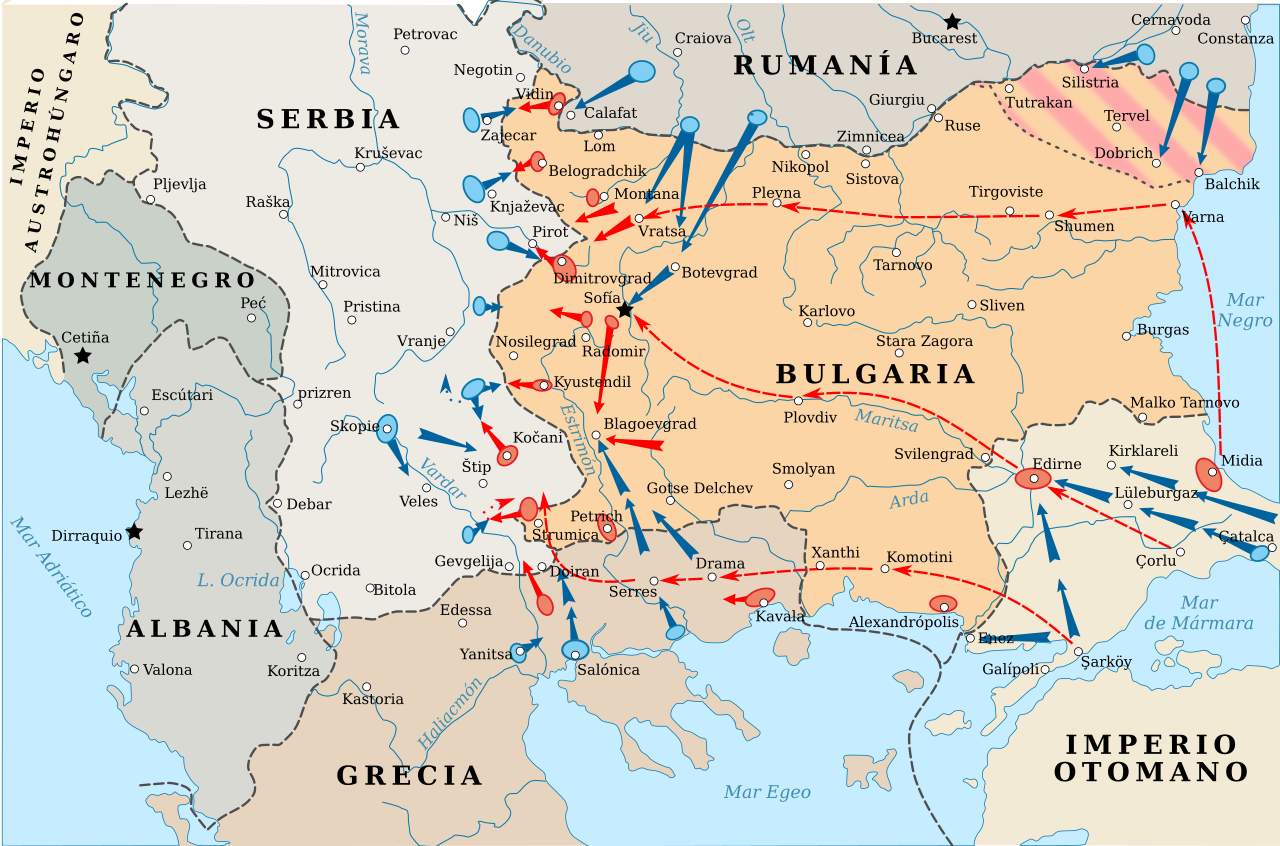
The Second Balkan War—Bulgaria Surrounded by Enemies
The Second Balkan War began as a conflict between Bulgaria and the Serbian-Greek alliance. Soon, after a week of fighting, the Bulgarian leadership came to realize the gravity of the situation, which they had failed to grasp earlier. The situation was initially unfavorable for Bulgaria and became catastrophic as a result of the war it had started. The Bulgarian offensive in Macedonia failed immediately; the superior Serbian-Greek forces successfully launched their own offensive; and Romania prepared to enter the war against Bulgaria, having decided that the war would allow it to seize the Bulgarian Dobruja.
Sofia appealed to St. Petersburg, requesting mediation to establish peace. St. Petersburg responded immediately, sending proposals to Belgrade and Athens to end the war. A demand was sent to Bucharest not to enter the war (since the reasons justifying such an entry had already ceased to exist for St. Petersburg).
But the Bulgarians were too late in making their appeal. The Russian peace proposals also came too late and had no effect on their recipients. Belgrade and Athens, realizing they were dealing with an enemy weaker than themselves, continued their offensive; Bucharest, which received the Russian appeal a day before its planned offensive against Bulgaria, did not abandon its plans.
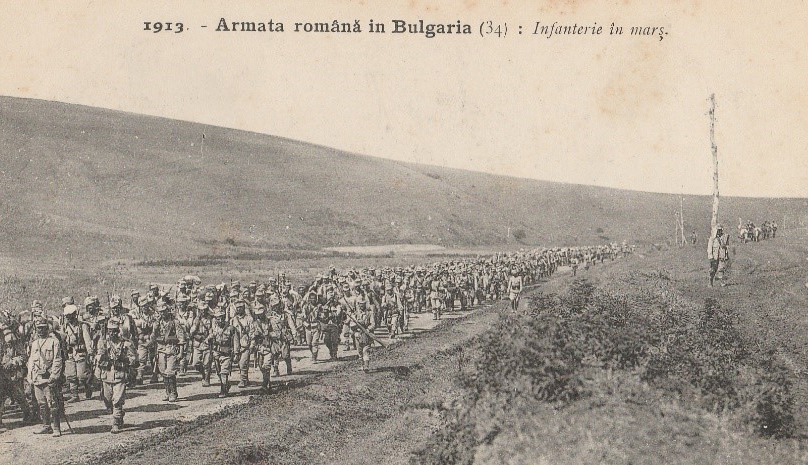
Romanian troops are marching through Bulgarian territory
On July 10, Romania declared war on Bulgaria. After Romania’s invasion, Bulgaria’s situation became hopeless. Its army, completely tied down on the Serbian-Greek front, lacked the strength to repel a Romanian invasion as well. Following the Romanians, Turkey also attacked Bulgaria; its troops, like the Romanian ones, advanced with virtually no resistance, since there were almost no Bulgarian troops in those areas.
The Turkish attack, although preceded by their bellicose rhetoric and the concentration of a large military force, came as a surprise to both Sofia and St. Petersburg. The Turkish attack was prepared independently of the Romanian one, but followed immediately after it—that is, it was provoked by it. Both the Romanian and Turkish attacks on Bulgaria were a consequence of the fact that its leadership had started the Second Balkan War. But in part, this attack was also a consequence of Russia’s position, which had allowed the Romanians to enter the war.
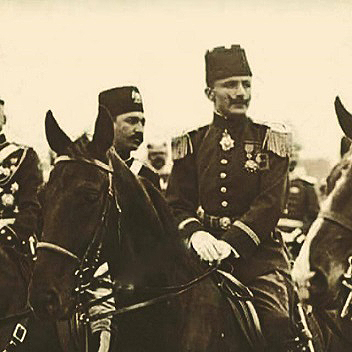
Enver Pasha, who commanded the Turkish army fighting against Bulgaria
The anti-Bulgarian coalition (Serbia, Greece, Romania, Turkey) held an overwhelming advantage. A month after the war began, the Bulgarians were forced to ask their enemies for peace; the war ended with Bulgaria’s de facto surrender. After Romania entered the war, Bulgaria had no chance of achieving a reasonably acceptable outcome. Its defeat was bitter and humiliating.
The Outcome of the War, as Set Forth in Bucharest
The victorious nations ignored Russia’s proposal to hold a peace conference in St. Petersburg. Instead, the victors gathered in Bucharest, Romania—a location convenient for them—where they dictated the terms of peace to the Bulgarians. Bulgaria lost a vast amount of territory. This was not what Russia had hoped for in St. Petersburg. However, its calculations—that Bulgaria’s losses could be minimized at the peace conference—did not pan out. The victors of the Second Balkan War disregarded the opinion of Russian diplomats whenever it conflicted with their interests. The Romanians took full advantage of the situation, seizing a large region of Bulgaria. They could not be confined to a small patch of land, as had been hoped in St. Petersburg, thereby opening the way for the Romanians to enter the war.
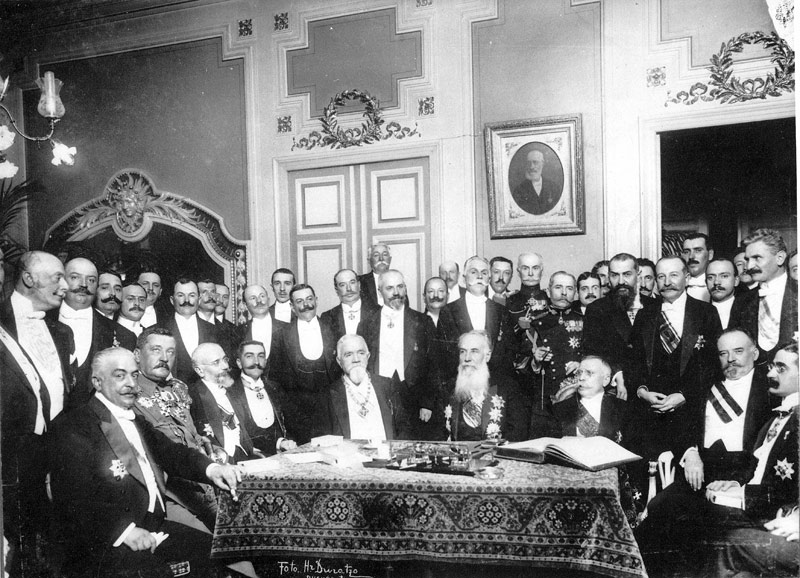
Participants in the Bucharest Conference
At first, there was some confusion in St. Petersburg. But then the outcome of the war began to look favorable for Russia. In St. Petersburg, it was believed that Russia had gained a stronger Serbia, the friendship of Romania, and the return of “wayward” Bulgaria to its sphere of influence. But, as events that soon followed demonstrated, this assessment of the postwar situation was incorrect.
Serbia secured Macedonia for itself, thereby significantly expanding its territory and population. But Serbia’s growing strength also intensified its antagonism with Austria-Hungary. The deterioration of Austro-Serbian relations was also fueled by the fact that, following victories in the Balkan Wars, the Greater Serbian movement gained particular momentum; this movement proclaimed its goal to be the separation of Austro-Hungary’s provinces with South Slavic populations and annexing them to Serbia.
In Vienna, the Serbian factor began to be viewed with increasing alarm as a threat. The determination to subdue Serbia grew ever stronger. Very soon, the escalating tensions between Austria and Serbia led the world into a major war that proved fatal for the Russian Empire.
Moreover, as a result of its victory over the Bulgarians, Serbia not only secured Macedonia for itself but also found itself with a hostile Bulgaria on its flank. This threat significantly weakened Serbia’s position in its confrontation with Austria-Hungary.
Greece gained significant territory at Bulgaria’s expense. And this was completely useless to Russia, since the Greek leadership maintained a pro-German orientation (championing a common anti-Slavic agenda). The once-numerous Slavic population of the territories occupied by Greece subsequently disappeared almost entirely. This, too, can be considered a consequence of Bulgaria’s defeat, which occurred as a result of Romania’s admission into the anti-Bulgarian coalition.
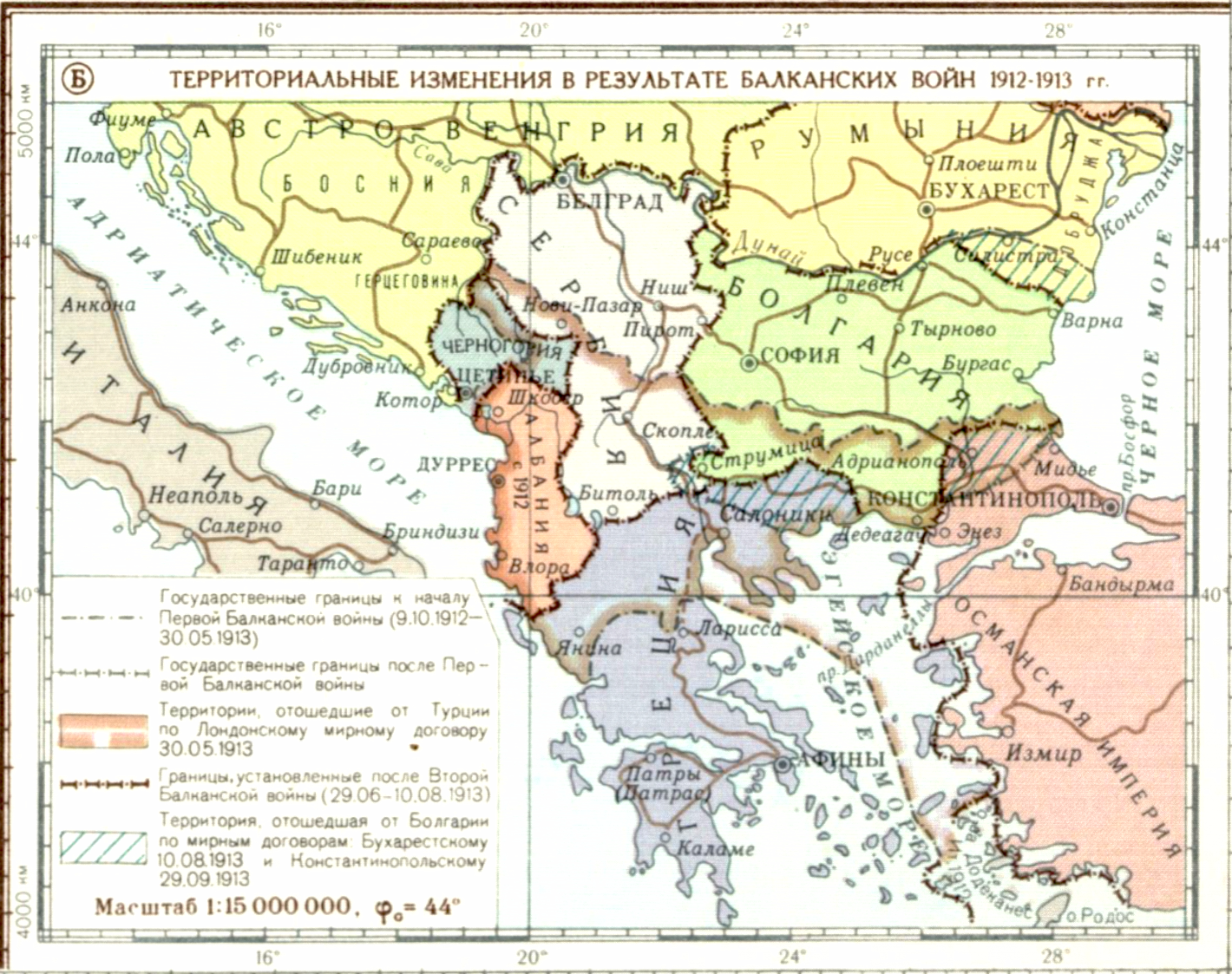
The territories lost by Bulgaria are shaded in
Bucharest remained an ally of the Austro-German bloc, while retaining its freedom of action. They were prepared, in the event of a Russian defeat in the war against the Austro-Germans, to side with them in order to seize Russian Bessarabia.
And St. Petersburg lost Bulgaria. Its defeat was viewed by the Russian leadership as a well-deserved punishment and a remedy intended to heal Sofia. It was believed that Bulgaria had no other choice but to repent for its excessive claims and the destruction of Slavic-Orthodox unity, and then to restore that unity, by coming to terms with its losses in favor of its victorious neighbors and joining them in a renewed Balkan alliance under Russia’s auspices. However, Bulgaria’s actual reaction turned out to be different. The defeat and the loss of vast territories—whose Bulgarian populations were subjected to repression by the victors—were perceived as a national catastrophe. And they by no means resigned themselves to it; on the contrary, the desire to reclaim the lost lands became a matter of Bulgarian national interest. This led Sofia to break with Russia and turn toward Germany.
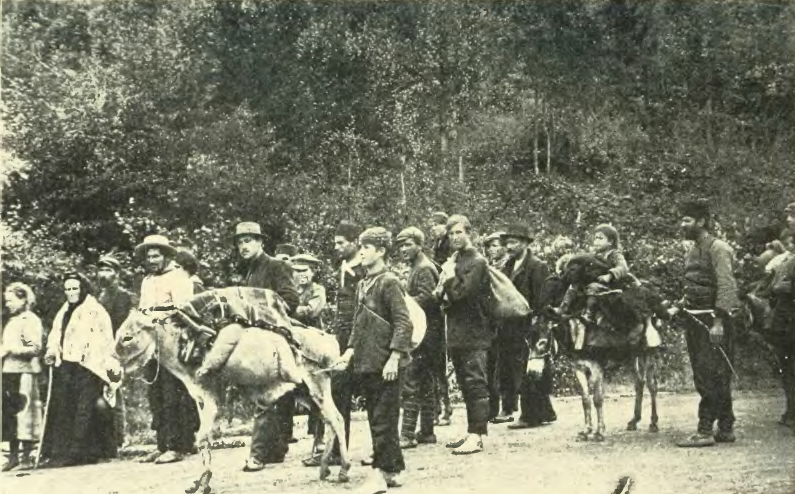
Bulgarian refugees from the lost territories
In Bulgaria, the view spread that Russia, by allowing the Romanian attack, was complicit in Bulgaria’s defeat and territorial losses. Propaganda of this sort suited the Bulgarian leadership, headed by Tsar Ferdinand, as it diverted attention from Ferdinand’s own culpability in the events. The rift with Russia was also fueled by the fact that St. Petersburg showed no interest in helping Bulgaria regain even a portion of its lost territories. Such an interest would have severely strained Russia’s relations with the victorious powers. Germany and Austria-Hungary, however, did develop such an interest.
This was the state of the Balkans following the Second Balkan War. Some might say, “What do we care about the Bulgarians and their troubles?” But their plight would soon affect Russia as well. The following year, World War I broke out—initially as a conflict between Austria-Hungary and Serbia, into which Russia was drawn (seeking to defend the Serbs), and later Bulgaria (which, with Austro-German support, sought to recapture Macedonia from the Serbs, a territory it had lost in a previous war against them). More on this in the next post