The Balkan Crisis, Which Drew Russia In. Part VII. The Parties Involved in the Crisis During World War I

In 1914, the conflict in the Balkans (Austria-Hungary versus Serbia), which drew other countries into the fray, marked the beginning of World War I. Two coalitions fought against each other: the Entente (Russia, France, Britain, Serbia, Belgium, and later others) and the Central Powers (Germany, Austria-Hungary, Turkey, and later Bulgaria).
Bulgaria—we really needed it as an ally, but it became an enemy
During the war, it became clear that Russia could not count on Bulgaria as an ally. But Russia desperately needed Bulgaria as an ally. Turkey’s entry into the war sharply exacerbated the problem of the Black Sea straits for Russia. The straits were blocked—yet they were the only convenient route between Russia and its Western allies. The blockade of the straits made it extremely difficult for the Allies to supply the Russian army with the military materials it desperately needed. This condemned Russia to harsher conditions of war, as well as greater casualties and losses.
The Russian leadership realized just how important Bulgaria was. Geographically, it was close to the straits, and its army was quite strong. If Bulgaria had joined our side, it would have provided substantial support to Russia. The Bulgarian army could have struck directly at the straits and Istanbul. Turkish troops were tied down on other fronts; they could not muster sufficient forces against the Bulgarians to repel them. The fall of Istanbul-Constantinople would have been inevitable in the event of a properly organized Bulgarian offensive. And that would have made the course of World War I considerably easier for Russia. It is quite possible that the war would have ended sooner—and victoriously for Russia. And the country would have avoided the upheavals of 1917 and the years that followed.
But history, as we know, took a different course. Slavic and Orthodox Bulgaria did not march on Istanbul; instead, in 1915, it sided with the German-Turkish alliance—against the Entente and Russia. Why did the Bulgarians choose to side with the enemy? The reasons lay in previous events, as a result of which this Bulgarian choice became inevitable.
The Second Balkan War
There’s no need to delve too far back into history to understand the background of Bulgaria’s shift toward the enemy coalition—all the way back to the times of the Pechenegs and so on. The key events took place in 1913. In the first half of the year, the Balkan Alliance—comprising Bulgaria and Serbia—defeated the Turks in the First Balkan War and occupied their Balkan territories. When these territories were divided, a Serbian-Bulgarian conflict arose over Macedonia, where the Serbs had occupied territory that, according to the alliance treaty, was supposed to go to the Bulgarians. The Bulgarians demanded that this territory be handed over, but the Serbs refused. But Bulgaria considered Macedonia its ancestral land. It had been Bulgarian since the very founding of Bulgaria in the 9th century; there were ancient Bulgarian centers there, and its population in 1913 was its own—Bulgarian. Therefore, Bulgaria decided to see its demands regarding Macedonia through to the very end.
At the same time, tensions were escalating between Bulgaria and Romania, which had laid claim to Bulgarian territory—Southern Dobruja.
Russia’s position and actions, including its diplomatic efforts, during the Serbian-Bulgarian crisis are well known. The position Russia took during the Romanian-Bulgarian crisis was the subject of previous articles in this series (IV, V, VI). As in the first case, St. Petersburg took an ambivalent stance: it supported the Romanian claim—but not in its entirety. The reasons for this decision were explained in previous articles; here we will summarize briefly: St. Petersburg’s support for the Romanian side was driven by its desire to improve relations with that country, as well as by its distrust of the ambitions of Bulgaria under Tsar Ferdinand. Romania was seen as a counterbalance to those ambitions.
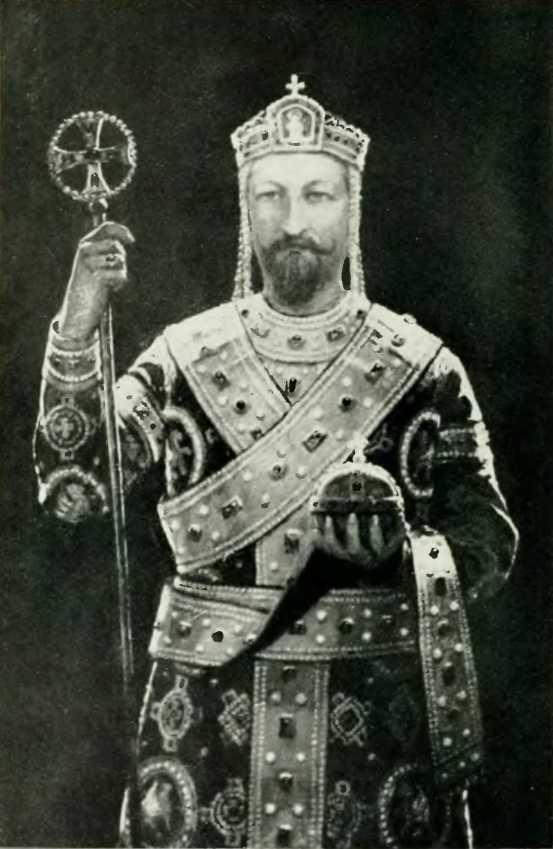
Tsar Ferdinand as the Heir to the Byzantine Emperors
The interest in forging closer ties with Romania stemmed from the fact that it could field an army of 600,000, occupied a strategic geographical position, and was a source of strategically important resources—food and oil. It was tempting to wrest all of this away from the Austro-German bloc.
But in its calculations and strategies aimed at containing Bulgaria, St. Petersburg underestimated the extent to which Bulgaria’s leadership was prone to emotional reactions rather than sound analysis of the situation when making decisions. In the summer of 1913, the crisis in the Balkans erupted into the Second Balkan War, which began with a Bulgarian attack on the positions of the Serbian-Greek alliance in Macedonia. The war quickly escalated with a Romanian attack on Bulgaria, followed by a Turkish attack. Bulgaria hoped that Russia would protect it from this. But in St. Petersburg (Foreign Minister Sazonov and Nicholas II) decided to allow Romanian intervention in the war on the anti-Bulgarian side. The Romanians specified that their price for intervention would be the cession of part of Bulgarian territory. In St. Petersburg, it was decided that it was acceptable to sacrifice a little of Bulgaria’s territory to the Romanians in exchange for certain benefits: to build closer ties with Romania and weaken its alliance with the Austro-Germans, as well as to prevent the Bulgarians from crushing Serbia—an important ally in the looming war with the Austro-Hungarians.
The coalition of Bulgaria’s adversaries, which included all of its neighbors (Serbia and Greece, and later Romania and Turkey as well), had overwhelming superiority and quickly forced the Bulgarians to surrender. The victors seized large territories and subjected the Bulgarian population there to severe repression.
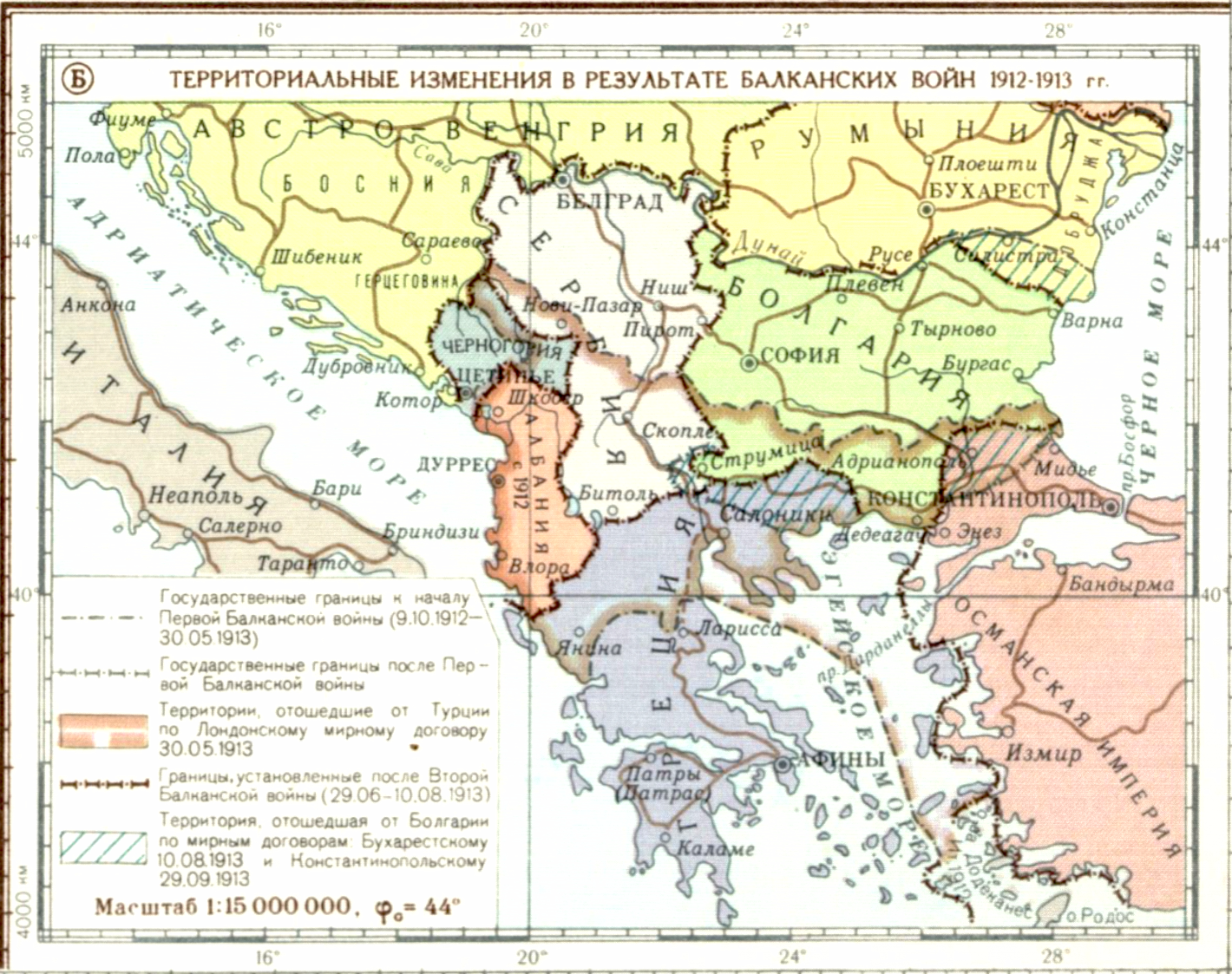
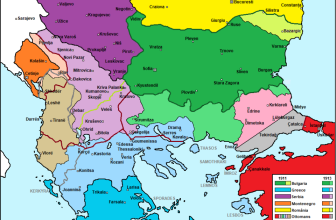
The territories lost by Bulgaria as a result of World War II are shaded. Macedonia should be added to this list.
The defeat was experienced throughout the country as a national catastrophe. Naturally, there was a desire to take revenge on the invaders and reclaim the territories lost in 1913—this became the central focus of Bulgarian policy.
Bulgaria in World War I
The outcome of the Second Balkan War was discussed in the previous post. In short, the result was a further escalation of tensions in the Balkans. And as early as August 1914, what is sometimes called the Third Balkan War began. It involved the same parties as the two previous wars, but in a new configuration. New participants also became involved, turning the conflict into a world war—of which the Third Balkan War was a part—that is, a war among the Balkan countries, each seeking its own resolution to local conflicts.
With the outbreak of World War I in 1914, Bulgaria decided that a major war offered a chance to regain its lost territories. That, at the very least. But it was necessary to choose the right side and the right moment. To avoid a repeat of the 1913 situation—one against all—Bulgaria needed allies.
Both the Central Powers and the Entente, along with Russia, wanted to bring Bulgaria into their alliance. However, in exchange for an alliance, Bulgaria demanded effective assistance in furthering its national interest—the return of territories seized by neighboring countries during the Second Balkan War. But those countries were unwilling to return even a single scrap of land—and Russia was powerless to influence the situation. Supporting Bulgaria’s interests conflicted with those of the victors of the Second Balkan War—Serbia, Romania, and Greece—and led to a rift with those countries, even though Russia had hoped to count them among its allies. Germany, however, had no prospect of an alliance with these countries—which is why the Germans were able to support Bulgaria’s interests. Germany immediately guaranteed the Bulgarians what was most valuable to them—Macedonia, which was occupied by the Serbs.
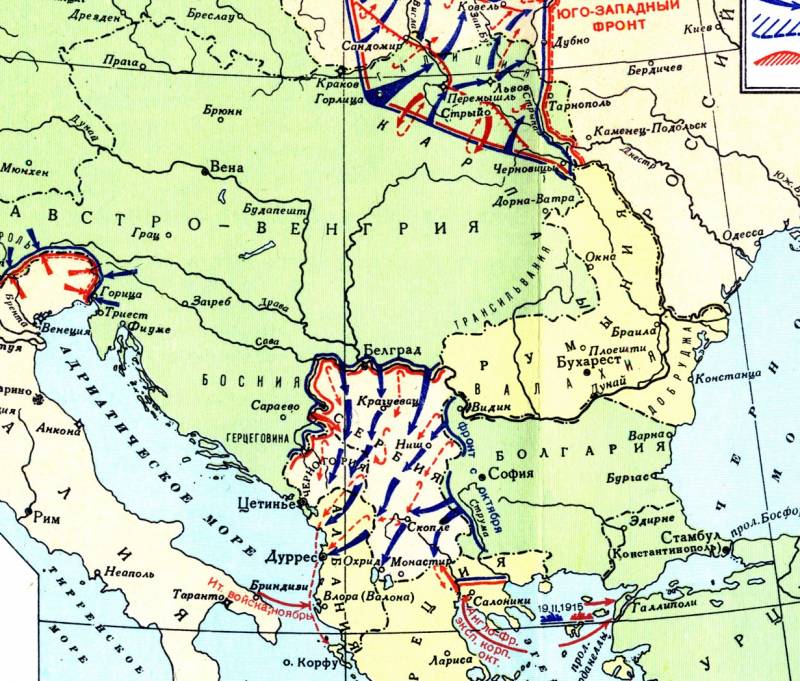
Instead of launching an attack on Istanbul, the Bulgarians took part in the Austro-German offensive against Serbia
Russia could only suggest that the Bulgarians endure the seizure of their lands in the name of Orthodoxy and Slavic identity. But the Bulgarians were not willing to tolerate this; their Orthodox-Slavic neighbors had seized Bulgarian lands (that is, lands inhabited by Bulgarians)—and, naturally, were perceived as invaders, as the worst of enemies. Germany undertook to provide effective assistance in advancing Bulgaria’s national interests. This determined which side the Bulgarian leadership chose. In Sofia, it was decided that an alliance with Germany best served Bulgaria’s interests in 1915. Thus, Germany gained an ally in Bulgaria, while Russia lost one.
In the fall of 1915, Bulgaria entered World War I on the German side. Sazonov described this as “an event that had extremely grave consequences for Germany’s enemies, especially for Russia.” Sazonov places the blame for this ill-fated turn of events solely on Bulgaria, using the terms “betrayal” and “treachery” in reference to it.
But in 1913, Sazonov himself contributed to the emergence of a situation that pushed the Bulgarian leadership toward Germany. His support for Romania’s claims against Bulgaria—and the resulting willingness to attack Bulgaria during the Second Balkan War—contributed to Bulgaria’s enormous territorial losses. After that, for him to speak of Bulgarian betrayal—let alone to grandiosely attribute everything to it—is something of a chutzpah.
In Russian historiography, it is common to assess events in the spirit of Sazonov. But this understanding of events oversimplifies them too much, reducing them to the formula: if Bulgaria did not obey Russia, then it must have obeyed Vienna and Berlin. Yet such a view of Bulgaria’s motives denies it agency and the right to its own interests. Yes, the Bulgarians and their tsar had certain issues with sovereignty, but despite all that, they had entirely legitimate national interests and sentiments—and it was precisely these that guided them first and foremost in 1915.
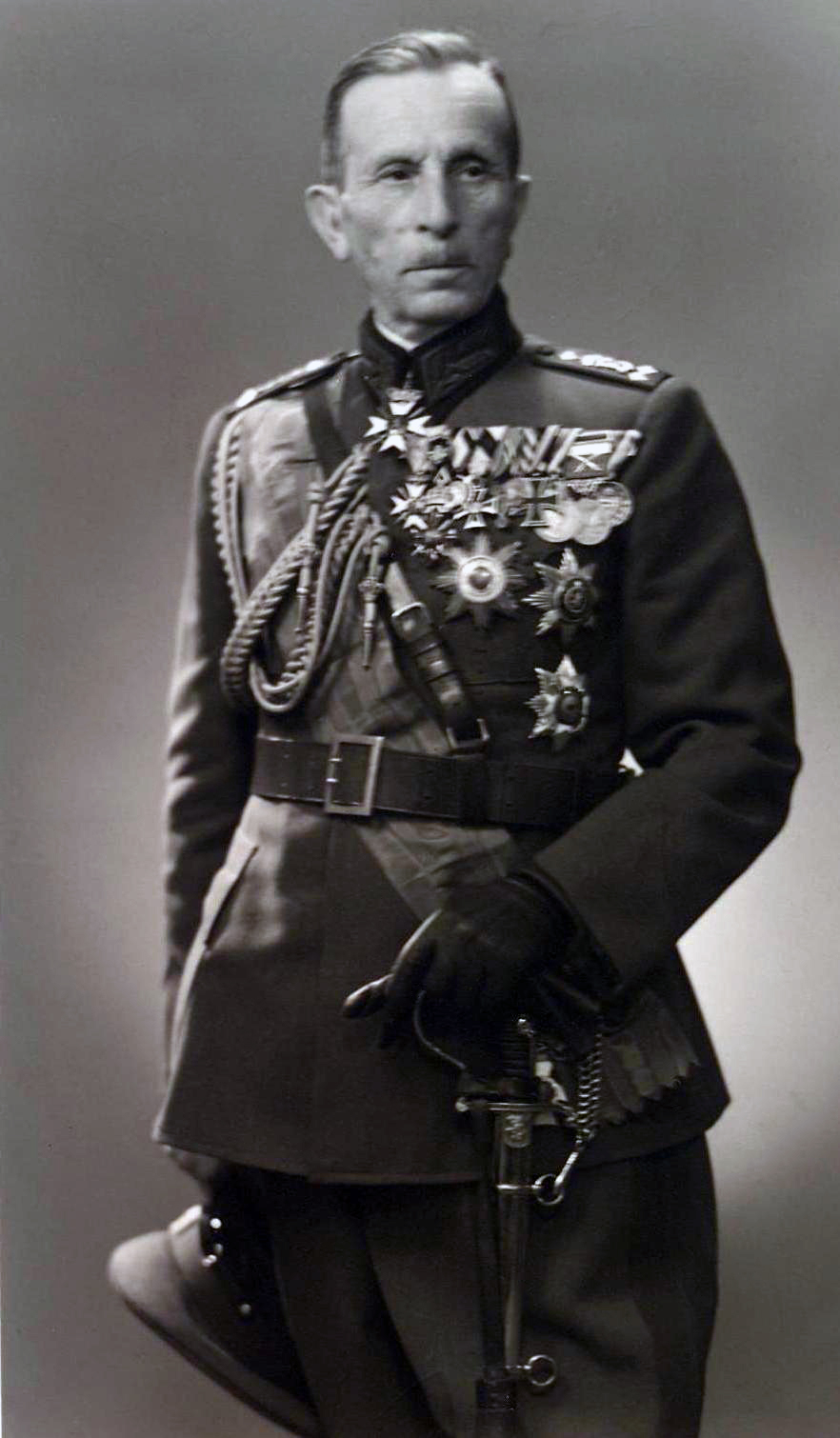
Bulgarian Commander-in-Chief with German and Turkish Decorations
St. Petersburg would hardly have considered it acceptable to cede even a scrap of its territory. But it considered it entirely possible for the Bulgarians to accept such a situation. Perhaps it made no difference to St. Petersburg who controlled Macedonia—the Serbs or the Bulgarians. Both were Orthodox Slavs. But for the Bulgarians, their claims to the region were entirely justified, and they would not tolerate their violation.
Bulgaria’s actions in 1915 were not motivated by a desire to please Berlin and Vienna, but rather by a particularly cynical desire to spite Russia. Bulgaria stood up for its own interests against its aggressive neighbors. The war in Bulgaria was even called the “War of Liberation”—it was waged to reclaim the territories lost in 1913. However, in the end, as 1918 unfolded, Bulgaria’s decision to side with Germany proved to be a mistake. Once again, the Bulgarian leadership lacked the level-headedness and ability to analyze the situation.
Romania in World War I
Among the negative consequences of World War II was the sharp escalation of Romanian-Bulgarian hostility. After Romania seized a region of Bulgaria, a bitter conflict arose between the two countries: Bulgaria sought to reclaim what had been taken from it, while Romania sought to hold on to what it had seized. It was no longer possible to expect that these two countries, which had become each other’s bitterest enemies, would become allies of Russia.
The Bulgarian factor began to hinder Romania’s entry into the war on the side of Russia and the Entente. There had been a chance for such an entry as early as the beginning of 1915. But the Romanians did not take action at that time—one reason, among others, being that they feared the Bulgarians following the events of 1913. Back then, the Romanians had stabbed the Bulgarians in the back—and ever since, the Romanians had feared that the Bulgarians would do the same to them.
In exchange for entering the war, the Romanians demanded that Russian troops secure their border with Bulgaria—specifically, the border that had been established in 1913 as a result of Romania’s seizure of Bulgarian territory. In other words, if the Bulgarians attempted to reclaim their lands seized by the Romanians, Russian troops were supposed to fight on the Romanians’ behalf. As a result, Russia had to fight the Bulgarian army—all so that the Romanians could retain their conquests.
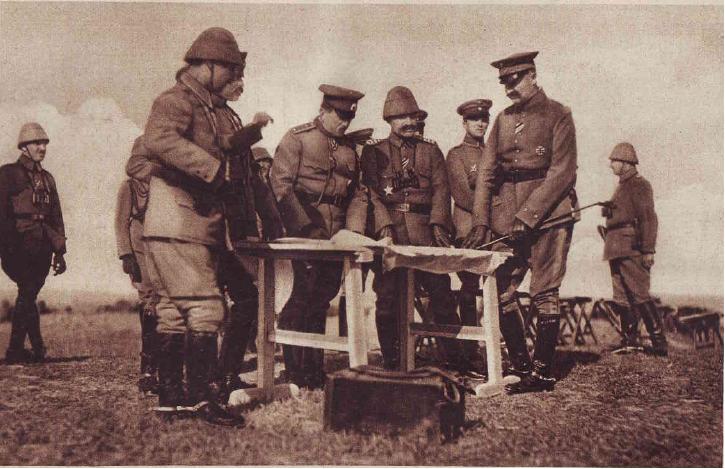
Bulgarian and Turkish commanders in the battle against Russian-Romanian forces in Dobruja
This outcome was the result of the policy pursued by Sazonov and his patron, Nicholas II, to forge closer ties with Romania by supporting its claims and aggressive intentions toward Bulgaria. First, they turned a blind eye to the Romanians’ actions against the Bulgarians. And then they sacrificed their own soldiers for Bulgarian territories that had been seized by the Romanians.
The rapprochement with Romania, which took place on the eve of World War I, was undertaken with the expectation that Romania would, at the very least, not participate in the war on the enemy’s side. Its neutrality would have allowed Russia to relieve itself of the burden of securing the Romanian border, thereby freeing up several corps for operations against its main adversaries—Austria-Hungary and Germany.
The outbreak of the war sparked massive and intense outbursts of anti-Austrian sentiment in Romania. Romania did not side with the Austro-German bloc, despite its alliance treaty with it. Contrary to Austro-German expectations for the war, the Romanians did not tie down part of the Russian forces.
But the Romanian leadership made this decision based solely on its own interests. If they had considered it in their interest to oppose Russia, they would have done so, despite all of Sazonov’s contributions. Therefore, we should not overestimate the significance of the rapprochement with Romania. That country did nothing that the Romanians would have viewed as a violation of their interests—even if it directly violated Russia’s interests. Thus, Romania remained highly useful to the Austro-German bloc, supplying it with strategically important materials.
By the fall of 1916, the Romanians had finally become Russia’s allies. They had not come to Russia’s aid when it was truly needed during the difficult year of 1915, continuing instead with their policy of blackmail and manipulation. The Romanians entered the war at such a time and attached such conditions to their entry that even Sazonov considered their participation to be of no value whatsoever. Moreover, their actions only complicated and exacerbated the course of the war for Russia.
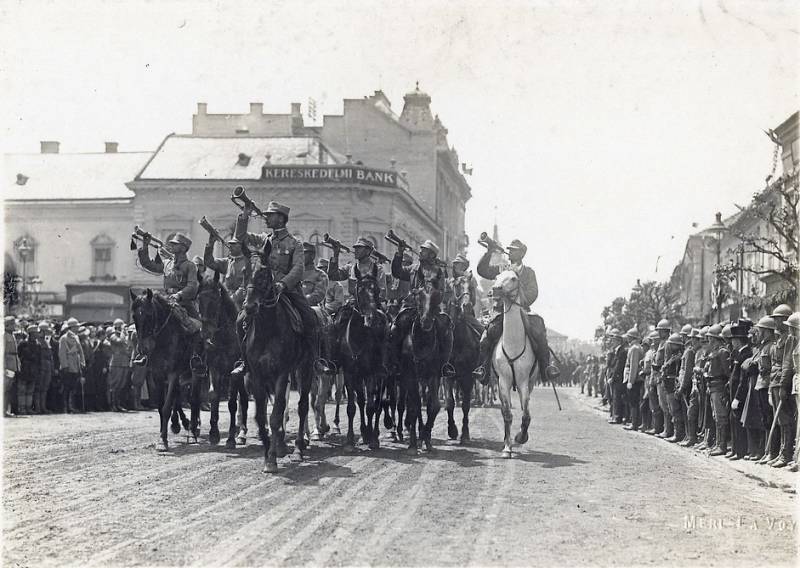
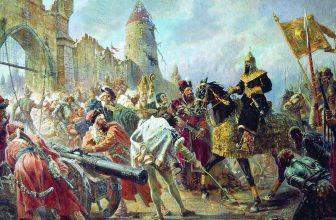
In the end, the Romanians won the war—the victory parade
In short, the tangle of conflicts in the Balkans first drew Russia into the world war, which began as an escalation in the Balkans, and then this knot—which included Bulgarian-Serbian and Bulgarian-Romanian territorial conflicts—caused the military situation to take a turn that was more severe for Russia. Ultimately, World War I proved fatal for the Russian Empire.