How the Wehrmacht Defeated Yugoslavia in 11 Days: Blitzkrieg in the Balkans

In April 1941, Yugoslavia surrendered after a rapid offensive by Germany and its allies. The defeat is often attributed to the country’s internal divisions, overlooking the fact that Yugoslav units did resist. Why, then, did its defenses collapse so quickly?
Much has been written about the Polish campaign and the fall of France. The Balkan blitzkrieg receives less attention, even though in the spring of 1941 Germany defeated both Yugoslavia and Greece, where British expeditionary forces were also deployed.
Here we will examine the Yugoslav campaign. The country had less military strength than France, and its army had not completed mobilization. But troop numbers were only part of the problem. Long borders, vulnerable communications, and a political crisis made defending the country considerably harder.
First, a clarification of what “11 days” means: the invasion began on April 6, and the surrender agreement was signed on April 17, 1941. The cessation of hostilities took effect the following day.
How the Armies Fought: A Brief Digression
On paper, the Yugoslav army looked formidable. Mobilization plans called for hundreds of thousands of men to be summoned, with still more potentially available. But there was a considerable gap between those plans and actual combat readiness. Mobilization remained incomplete when the invasion began, and the army lacked modern weapons, adequately trained commanders, and the ability to move units quickly between fronts.
Numbers alone, of course, do not guarantee victory. The Greeks demonstrated this in 1940 when, following Italy’s invasion, they halted the offensive and pushed Italian forces back into Albania. But the Greek success could not simply be repeated in Yugoslavia: the Wehrmacht attacked with large motorized formations, air support, and troops advancing from several directions at once.
It is tempting to compare Yugoslavia’s defeat with other Wehrmacht campaigns and then draw conclusions about an entire people’s resilience or “willingness to fight.” Such judgments require caution. Prisoners, the dead, the wounded, and deserters are separate categories, and combining them into a formula such as “losses of one to a thousand” is misleading. Moreover, Yugoslavia’s war against Germany and the Soviet Union’s war against Germany differed in scale, duration, and circumstances.
Yet the question remains: how did an army that was large on paper cease to function as a unified force so quickly? To answer it, we need to return to the beginning of the campaign.
From the Italo-Greek War to the Invasion of Yugoslavia
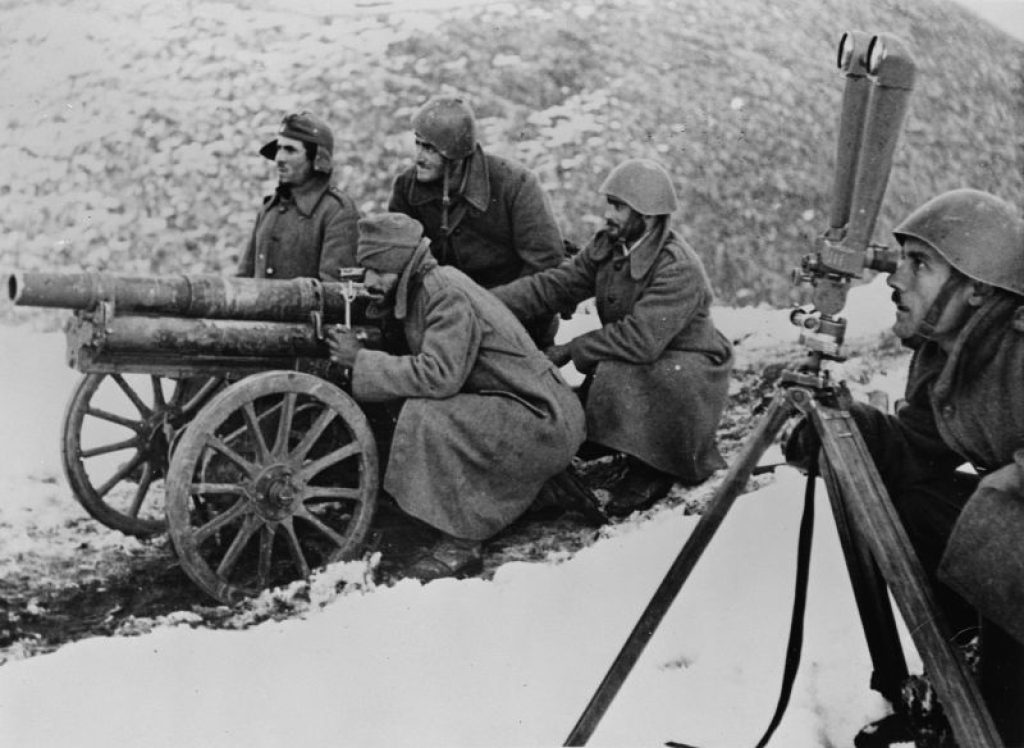
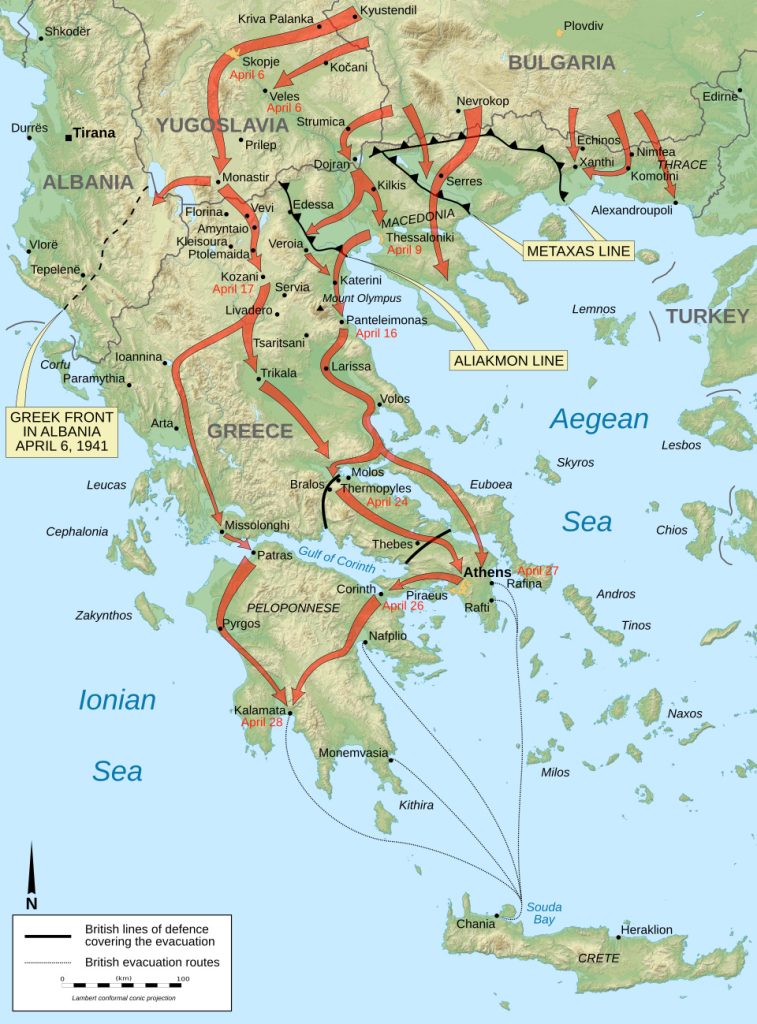
The Balkan campaign developed after Italy attacked Greece on October 28, 1940. The Italians expected a quick victory but encountered fierce resistance. By early 1941, it was clear that Germany’s ally could not prevail alone, and its positions in Albania were under threat.
Berlin decided to intervene. Germany wanted to support Italy, strengthen its influence in the Balkans, and prevent Britain from establishing a secure military foothold there. An offensive against Greece required suitable routes and regional allies. Yugoslavia was an important link in this strategy.
On March 25, 1941, the Yugoslav government joined the Tripartite Pact, which linked Germany, Italy, and Japan. The decision triggered protests within the country. Just two days later, on March 27, military officers staged a coup and proclaimed the young Peter II king. The new leadership cast doubt on the country’s previous foreign policy.
Berlin regarded the coup as a serious challenge. Hitler ordered Yugoslavia’s destruction, and German commanders began preparing an offensive against both Yugoslavia and Greece. Germany and its allies could attack from several sides—a particularly dangerous prospect for Yugoslavia’s defenses.
The Air Offensive: The Bombing of Belgrade
At dawn on April 6, 1941, German aircraft began attacking Yugoslavia. Belgrade was among the targets. The capital housed central government institutions and important communications hubs. At the same time, the Luftwaffe struck airfields, railway stations, and other facilities essential to mobilization and troop movements.
The bombing continued over the following days. Attacks on the city caused extensive destruction and killed civilians. Among the cultural treasures lost was the National Library of Serbia: its building caught fire, and much of its collection was destroyed.
Yugoslav pilots took to the air and fought back. But they struggled against German air forces, which had numerical superiority and could coordinate more closely with ground troops. Attacks on airfields further hampered Yugoslav air operations.
Italy also took part in the campaign. Italian forces advanced from the west and south, while their aircraft attacked targets in southern Yugoslavia. Yugoslav commanders consequently had to divide their troops among several fronts, without being able to concentrate them against a single main attack.
Armored Breakthroughs and the First Battles
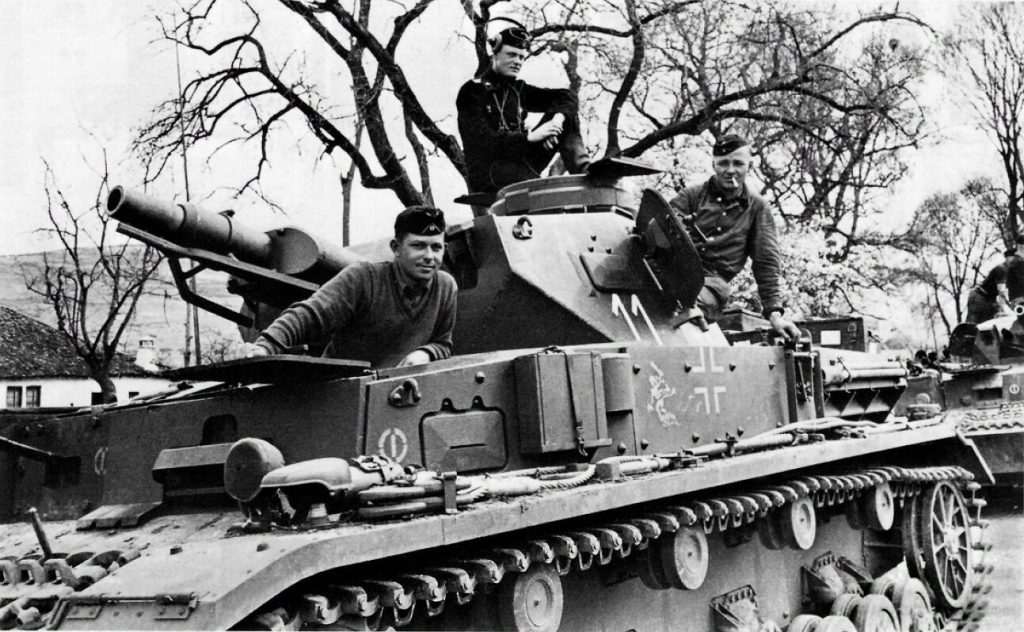
Mobilization was still incomplete when the invasion began. Troops were assembling, units were moving, and orders were being transmitted unreliably—while the German offensive was already gathering momentum. Under these conditions, even local resistance could not always be turned into an organized defense.
Italian troops entered Yugoslavia on April 7. Around the same time, fighting developed in the south against German units advancing from Bulgaria. The Yugoslav army had armored vehicles, but many were obsolete, and they had to operate under air attack.
In one engagement near Strumica, Yugoslav FT-17 tanks fought advancing German units. Some of the vehicles had already been lost in an air raid. The surviving tanks managed to delay the enemy for a time, but a small detachment could hardly change the course of the campaign.
On April 8, German armored formations advancing from Bulgaria pushed deeper into the southern part of the country, heading toward key junctions and roads. Niš fell on April 9. In the north, German units advanced through Slovenia, capturing towns and river crossings.
The main danger was not that every Yugoslav unit was immediately defeated. The Wehrmacht sought to bypass isolated pockets of resistance, seize roads and railway junctions, and sever communications between armies. Yugoslav troops found it increasingly difficult to establish where the front lay or where the next attack would come from.
The Collapse of the Front and the Proclamation of the Independent State of Croatia
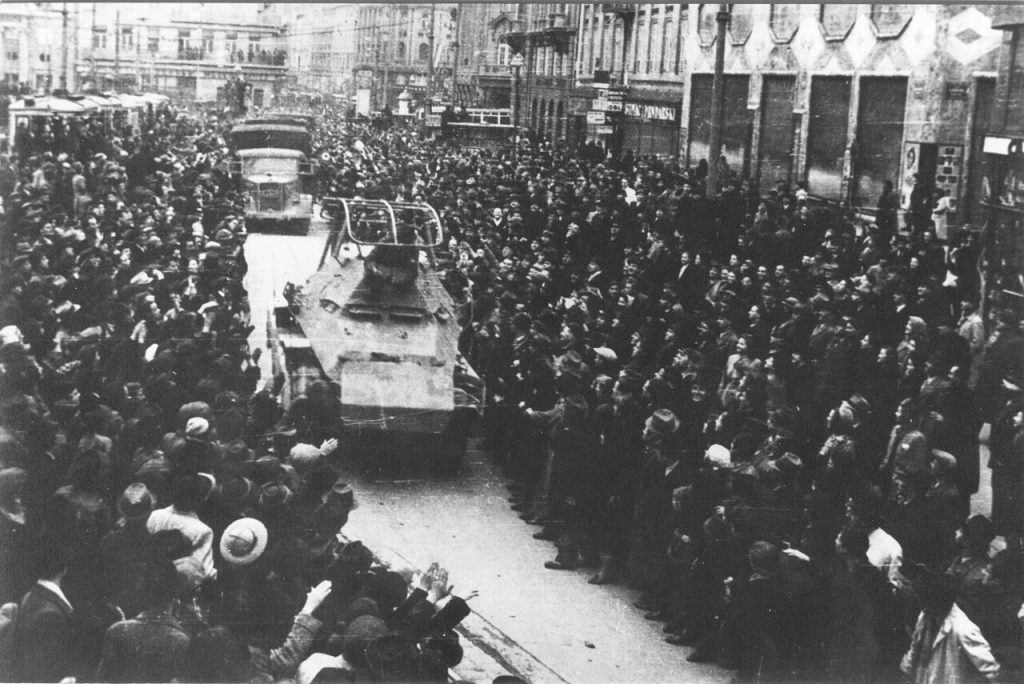
German units reached Zagreb on April 10. That same day, the Ustaše, Croatian nationalists, proclaimed the Independent State of Croatia—a state dependent on Germany and Italy. Yugoslavia began to disintegrate under the combined pressure of military defeat and a deep internal crisis.
Desertions and the surrender of weapons increased in some units. Elsewhere, troops continued fighting. Events should not be described as though every member of a particular ethnic group behaved identically: soldiers and officers responded differently, and the country’s political divisions long predated the invasion.
An army, however, depends on more than individual determination. When units lose contact with their commanders and local authorities cease to obey the central government, organizing a common defense becomes extremely difficult. The German advance accelerated that process.
Meanwhile, German, Italian, and Hungarian forces continued moving forward. The Italians entered Ljubljana, while Hungarian units began occupying northern territories. German columns advanced toward Belgrade and deeper into the country. The front broke into isolated sectors with increasingly little coordination between them.
How Belgrade Was Captured Almost Without a Fight
The best-known episode in the capture of Belgrade involves German officer Fritz Klingenberg and a small reconnaissance party. On April 12, they reached the city ahead of the Wehrmacht’s main forces. Accounts often describe a tiny detachment, although the exact number of men varies between versions.
The Germans found the capital largely unprepared for defense. Klingenberg presented himself as an emissary under a flag of truce and demanded its surrender, citing the approach of large German forces. The city authorities, lacking reliable information about the front and seeing little prospect of organized assistance, agreed to hand over Belgrade.
This produced the dramatic story of how “a handful of Germans captured an entire city.” But it should not obscure the circumstances: Yugoslav forces were retreating rapidly, communications had broken down, and the command system was in crisis. A small detachment had not defeated an entire army on its own; the capital could no longer count on dependable protection.
The main German forces entered the city on April 13. Belgrade’s capture had psychological as well as military significance, providing a visible sign that organized resistance was collapsing. German formations meanwhile continued advancing elsewhere in the country.
Yugoslavia’s Surrender
By mid-April, German forces had penetrated deep into Yugoslavia. In places, Yugoslav units were still resisting: demolishing bridges, delaying columns, and trying to hold individual positions. But local successes could no longer restore a continuous front.
On April 15, the king and government left the country. Negotiations with German commanders ended with a demand for unconditional surrender. On April 17, Yugoslav representatives signed the surrender agreement in Belgrade. Hostilities were to cease on April 18.
Even then, some servicemen continued to resist. Naval officers Milan Spasić and Sergej Mašera blew up the destroyer Zagreb in the Bay of Kotor to prevent it from falling into enemy hands.
The Yugoslav army ceased to exist as a unified organization. Hundreds of thousands of servicemen were taken prisoner, surrendered, or went home. The precise figure depends on which categories and periods are counted. Dramatic comparisons that combine prisoners, the dead, and deserters into a single “loss tally” therefore tend to confuse rather than explain the campaign.
There is another distinction to make: an army’s surrender does not mean that the country’s population was unwilling to resist. It shows that the state’s command and defense systems collapsed before they could adapt to the invasion.
The Partition of Yugoslavia and the Beginning of Guerrilla Warfare
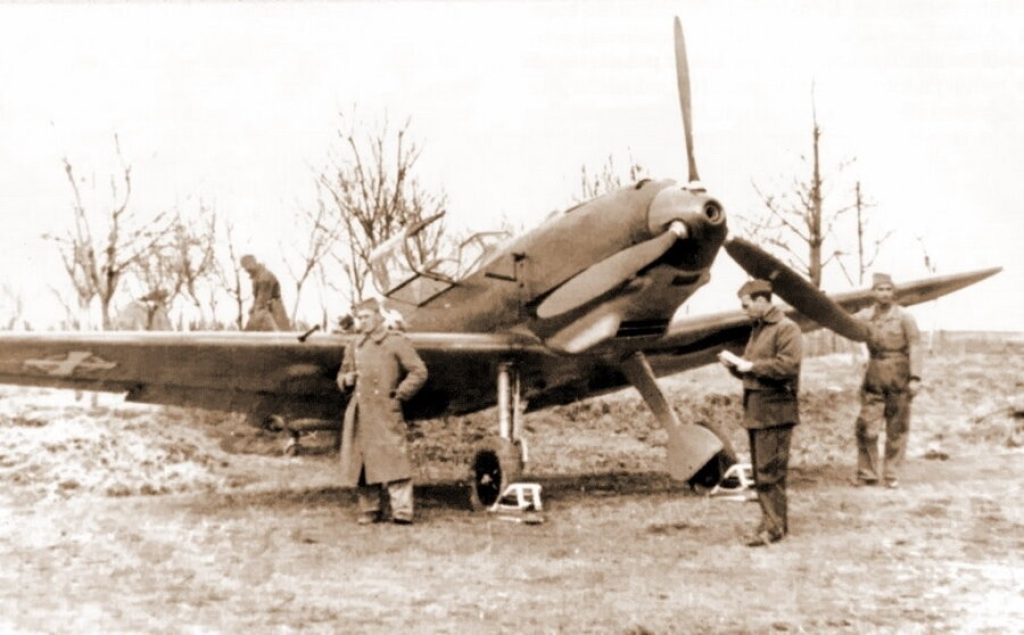
After its defeat, Yugoslavia ceased to exist as a unified state. Its territories were divided among Germany, Italy, Hungary, Bulgaria, and Italian-controlled Albania. New administrative entities and regimes dependent on the Axis powers were established in the occupied lands.
Croatia and Bosnia became part of the Independent State of Croatia. Serbia came under German military administration. Italy took control of Montenegro and part of the coast, while Germany and Italy divided Slovenia between them. Bulgaria acquired territories in Macedonia and the southeast, and Hungary occupied several northern districts.
The occupation brought repression and mass violence against civilians. But the regular army’s swift surrender did not give the occupiers peace. Armed resistance soon developed across Yugoslavia.
One movement was led by Colonel Dragoljub Mihailović, around whom the royalist Chetniks gathered. Another consisted of the communist Partisans under Josip Broz Tito. The movements had different goals and strategies and were deeply divided; their relationships with the occupying forces and local authorities also changed over time.
The April campaign ended in a matter of days, but the war in the Balkans was far from over.
Why the Blitzkrieg Succeeded
Yugoslavia’s defeat cannot be explained by a single cause. The Wehrmacht exploited a combination of advantages: air superiority, rapidly advancing mobile formations, attacks on communications, and offensives from several directions at once. The Yugoslav army, by contrast, faced the invasion with mobilization unfinished, weak communications between units, and an overstretched defensive line.
The political crisis made matters worse. Internal divisions helped the invaders, but they were not the sole explanation for the defeat, nor do they erase the resistance offered by Yugoslav troops in individual sectors.
The connection between the Balkan campaign and the timing of Germany’s invasion of the Soviet Union also calls for caution. Historians debate how far events in Yugoslavia and Greece affected the invasion schedule. Reducing a complex decision to one cause—whether “bad weather” or the Balkan campaign—is too simplistic.
The central lesson of April 1941 is not that “one nation did not want to fight.” The Wehrmacht rapidly defeated a state army whose leadership, supply system, and communications were unprepared for an attack of that scale. The resistance that the regular army had failed to organize soon took another form—and continued in the Balkans for several more years.