The “Blue Shark” Goes on the Hunt. China Is Equipping Its Aircraft Carriers with the Latest J-35 Stealth Fighters

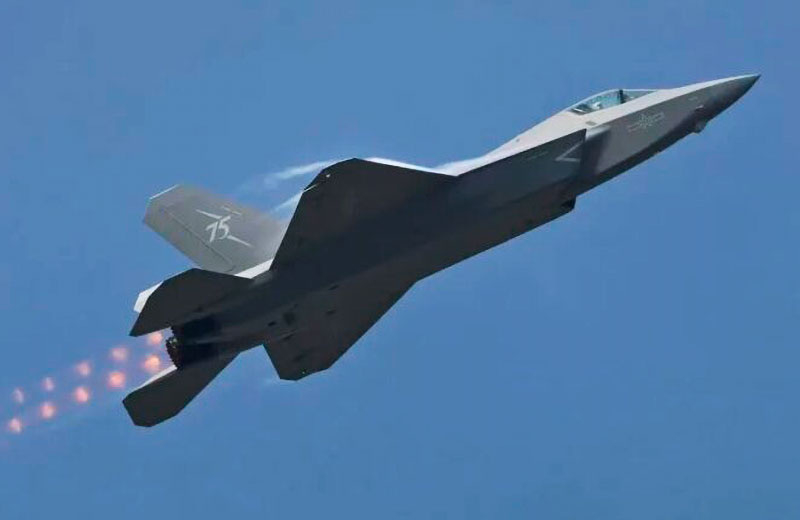
The PLA Navy has begun initial operations with the fifth-generation carrier-based fighter J-35, officially designated the “Blue Shark.” The aircraft was developed by the Shenyang Aircraft Corporation. Experts view the naming as a clear indication that the aircraft is practically ready for service.
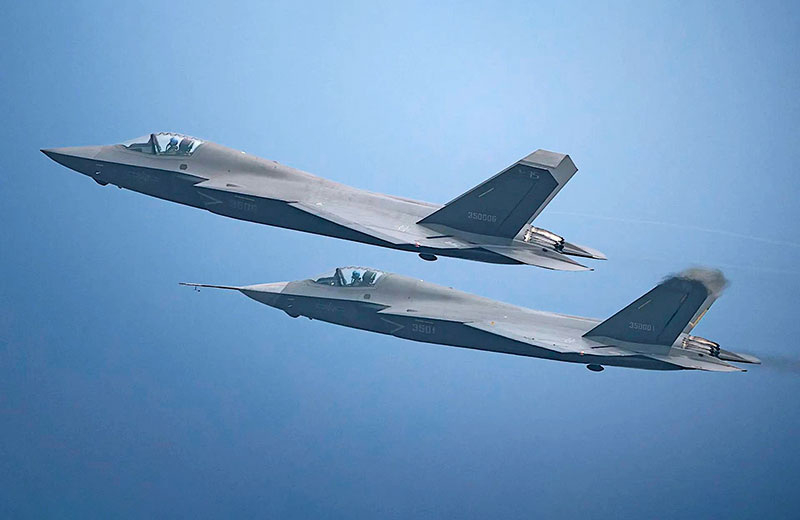
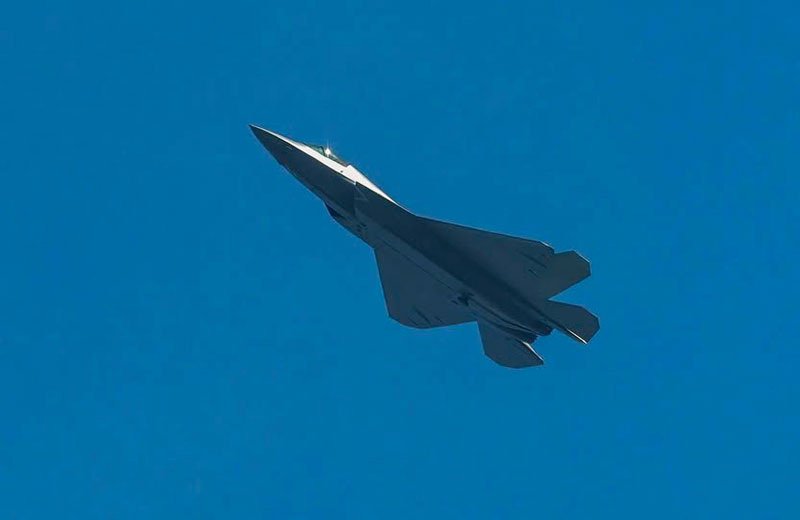
This is a landmark event: China has become the second country in the world to have two types of operational stealth fighters. The first was the land-based Chengdu J-20, and now it has been joined by the carrier-based J-35—a direct competitor to the American F-35C Lightning II. The key role of the “Blue Shark” is that it will enable the Chinese Navy to establish secure combat zones far beyond the operational range of aircraft carrier strike groups.
Integration into the PLA Navy: From Concept to Fleet
The fighter jet’s official name was revealed on April 23, 2026, confirming rumors which had been circulating in defense circles since 2022 and were actively discussed at the Zhuhai Airshow in the fall of 2024. The name fits seamlessly into the classification of Chinese carrier-based aircraft: the basic carrier-based fighter is called the “Flying Shark” (J-15), the electronic warfare version is the “Electric Shark” (J-15D), and the newest stealth fighter has been designated the “Blue Shark.”
The J-35’s development history spans more than a decade. The prototype’s first test flight took place in October 2012. The year 2021 marked an important milestone, when a catapult launch was successfully conducted—a critically important test for the carrier-based version. In 2024, the project was actively discussed at the Zhuhai Airshow, and in 2026, the fighter was officially named “Blue Shark” and entered initial service. Engineers carried out extensive design refinements: new engines were installed, aerodynamics were optimized, and critical components were reinforced for operation on an aircraft carrier.
Technical Specifications and Combat Capabilities
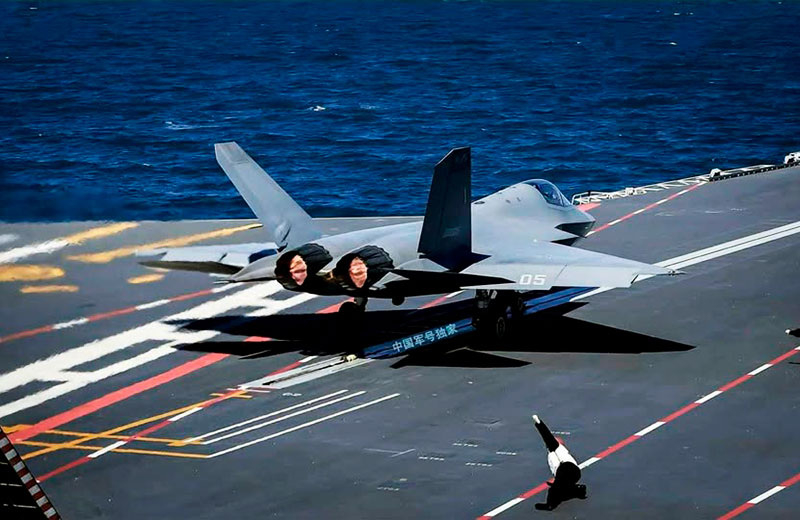
The J-35’s design and stealth technology were developed with modern Chinese aircraft carriers in mind, primarily the future “Fujian” carrier, which will be equipped with electromagnetic catapults. Adaptations for carrier operation include folding wings for compact storage in hangars, an arresting hook for deceleration on the deck, a catapult attachment system, and reinforced landing gear designed for hard landings.
Low observability is the “Blue Shark’s” main advantage. To reduce the effective radar cross-section, the aircraft features an angular airframe geometry, internal weapon bays, and S-shaped air intakes that conceal the compressor blades from radar.
Tactical and Technical Specifications:
- Operational range: up to 1,200 km
- Maximum takeoff weight: 30,000 kg
- Type: 5th-generation single-seat multi-role fighter
- Engines: two turbojet engines (the standard engine is in the final stages of development)
The J-35 offers versatility in its choice of munitions. The fighter is capable of carrying state-of-the-art air-to-air missiles: the long-range PL-15 and the ultra-long-range PL-21. The payload can be mounted either in internal compartments to maintain the stealth profile or on six external hardpoints—when engaging targets where stealth is of secondary importance. The aircraft is designed to perform a wide range of missions: from achieving air superiority to precision strikes against ground and surface targets. The tactical significance of this capability lies in the fact that the “Blue Shark” can operate covertly at a great distance from the aircraft carrier, expanding the fleet’s area of control.
Production Program Status
At this point, the J-35 is in the small-scale production phase. It is already flying and undergoing basic deck trials, and the first batch of aircraft is being sent for pilot training and comprehensive testing. However, it is still too early to speak of full combat readiness.
The program’s main technological challenge is perfecting the standard cruise engine. This issue has been the project’s “bottleneck” in recent years. As soon as engineers complete work on the power plant, mass production is expected to begin. In parallel with the carrier-based version, Beijing is developing a land-based variant, the J-35A, for the PLA Air Force, which expands the platform’s operational flexibility.
Strategic significance: What does this mean for the balance of power?
The introduction of the J-35 means that China is closing the gap with the United States in the field of next-generation carrier-based aviation, approaching parity in stealth technology. With the introduction of the “Blue Shark,” the PLA Navy’s carrier strike groups are now able to operate in the high seas without relying on coastal airfields, which significantly expands the Chinese Navy’s sphere of influence.
The successful implementation of the project could pave the way for the export of the J-35 to China’s allies, which could alter the balance of power in Southeast Asia, the Middle East, and Africa. Furthermore, the existence of two types of stealth fighters—the land-based J-20 and the carrier-based J-35—demonstrates the maturity of China’s defense industry and its ability to carry out complex programs in parallel, which sends an important technological signal to the international community.
Conclusion
The “Blue Shark” is not just a new aircraft. It is a symbol of the Chinese Navy’s transition to a qualitatively new level of power projection. If the program is successful and the J-35 enters service on schedule, the Pacific region will gain a new player with capabilities that were previously the exclusive prerogative of the U.S. Navy. The “Blue Shark” is already in the water. The only question is how quickly it will learn to hunt in the open ocean.