The "Eyes of the Special Forces" Are Heading for the History Books: Why the U.S. Decided to Phase Out the U-28 Draco Aircraft

In early June 2026, U.S. Special Operations Command (SOCOM) confirmed what had been rumored in aviation circles for several years: there will be no direct replacement for the U-28A Draco. Moreover, U.S. Special Operations Forces intend to phase out manned reconnaissance aircraft of this class entirely by the end of the decade. The decision comes as a surprise. Over two decades of service, the Draco has become one of the most sought-after aircraft of U.S. special operations forces, logging tens of thousands of flight hours over Afghanistan, Iraq, Syria, and Africa. But it is precisely this news that offers a glimpse into one of the most unusual reconnaissance aircraft of the 21st century.
Not a spy plane, but a converted business turboprop
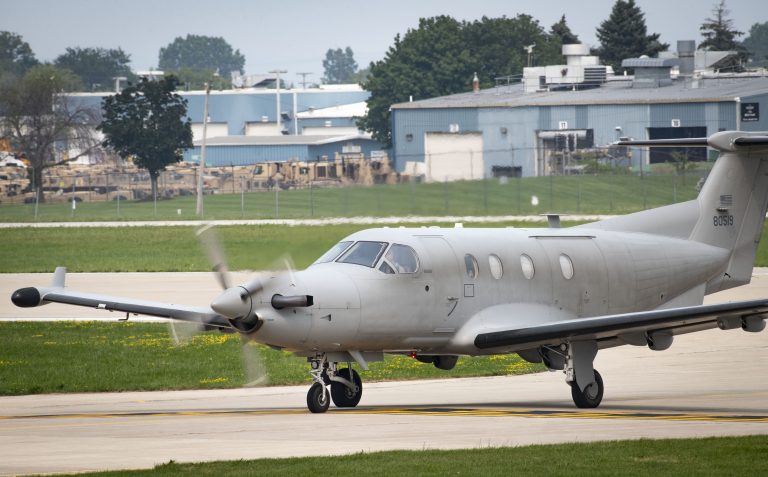
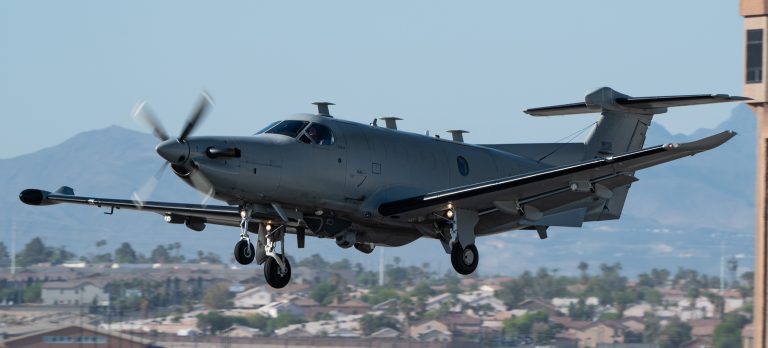
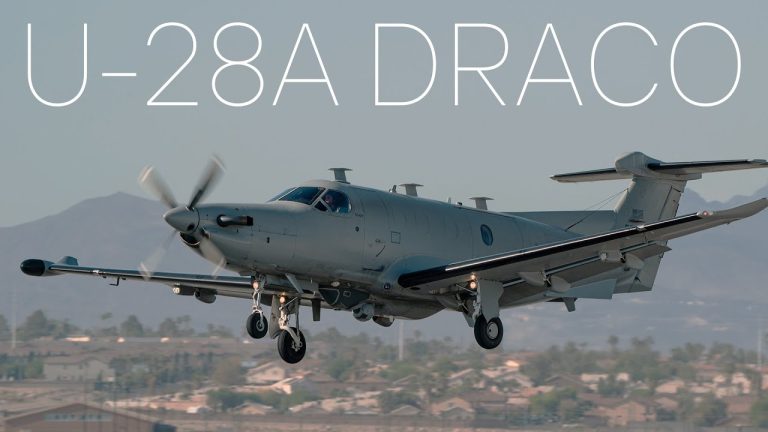
A U-28 Draco assigned to Air Force Special Operations Command lands
The history of the U-28 did not begin in military design bureaus at all. It was based on the Swiss Pilatus PC-12—one of the most successful single-engine turboprop aircraft of our time.
When, in the mid-2000s, U.S. special operations forces found themselves needing to constantly monitor vast areas of Afghanistan and Iraq, it became clear that using large reconnaissance platforms for this purpose was too expensive. What was needed was a small aircraft capable of hovering over the area of operations for hours, transmitting real-time video, and operating from unpaved airstrips.
The choice fell on the PC-12. The aircraft proved to be reliable, inexpensive to operate, and capable of landing on virtually any runway. After the installation of reconnaissance equipment and military communications systems, the U-28A Draco was introduced.
From the outside, it looked almost like an ordinary civilian aircraft. That was precisely one of its advantages. Compared to jet reconnaissance aircraft or large AEW&C aircraft, it did not attract undue attention and could operate in situations where the appearance of more advanced aircraft would have seemed too conspicuous.
The Plane That Was Searching for Terrorists

While the mission of strategic reconnaissance aircraft is to monitor entire regions, the U-28 operated at the level of individual settlements.
An optoelectronic station equipped with television and thermal imaging cameras was mounted under the fuselage. On board were radio interception systems, secure communications equipment, and data transmission equipment. All of this allowed the crew to monitor the situation on the ground in real time and relay information to special operations forces.
It was the U-28 that often served as the “eye in the sky,” providing air cover for U.S. special operations raids. While the troops were on the ground, the aircraft’s crew monitored roads, tracked the movement of vehicles, and warned of possible ambushes.
During the global campaign against terrorist organizations, these vehicles became one of the most critical elements of the “detect—identify—destroy” chain. In fact, it was precisely thanks to such platforms that U.S. special operations forces were able to conduct continuous surveillance of areas where the enemy was active.
Afghanistan became Draco’s moment in the spotlight
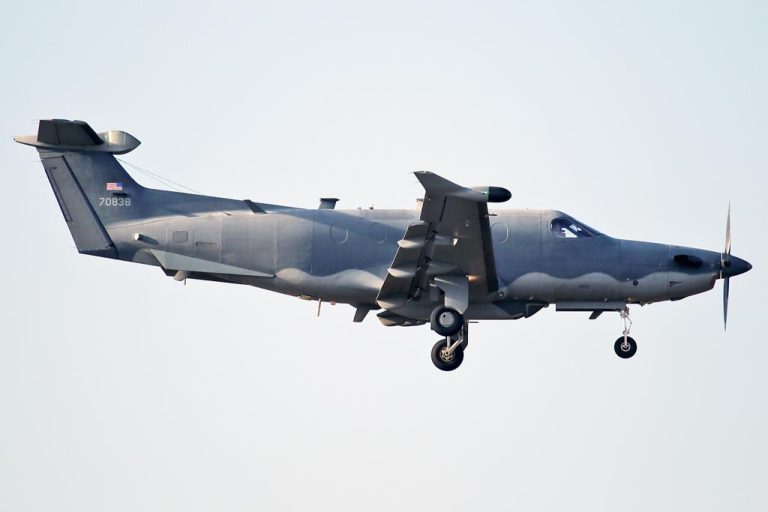
The aircraft gained the most recognition during operations in Afghanistan.
The Draco was practically ideal for warfare in this country. High-altitude airfields, remote bases, and the need for extended patrols over vast territories were perfectly suited to the capabilities of the Swiss turboprop aircraft.
His role was particularly evident in the summer of 2021 during the evacuation of Kabul. While thousands of people were trying to leave the country via the international airport, U-28 crews were in the air almost continuously, transmitting data on crowd movements and the situation around the airfield. Some aircraft were flying at the very limits of their crews’ and equipment’s capabilities.
For most people, these vehicles went unnoticed. But for ground units, they were often the primary source of information.
Why is it being rejected?
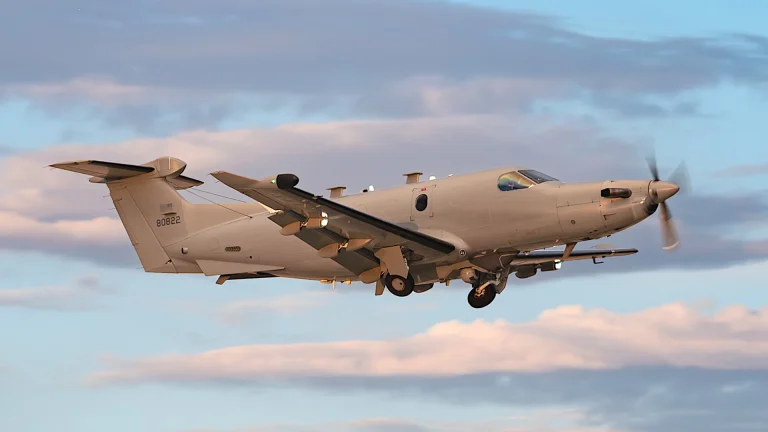
At first glance, the decision to phase out the U-28 seems strange. The aircraft has proven itself, is relatively inexpensive to operate, and is still capable of performing its missions.
The problem is that the very nature of war has changed.
The Draco was designed for low-intensity conflicts in which the enemy had virtually no modern air defense system. Over Afghanistan or Iraq, such an aircraft could remain in the air for hours without significant risk.
However, in a conflict against a technologically advanced adversary, the situation will be different. A slow turboprop aircraft flying at medium altitude becomes an easy target for modern air defense systems.
That is precisely why there is increasing talk within SOCOM of transferring intelligence functions to satellites, drones, and distributed sensor networks. According to published plans, the last U-28s will be retired by 2029, and there are no plans to develop a direct successor for them.
In fact, U.S. special forces are bringing the era of manned tactical reconnaissance aircraft to a close.
The last of his generation
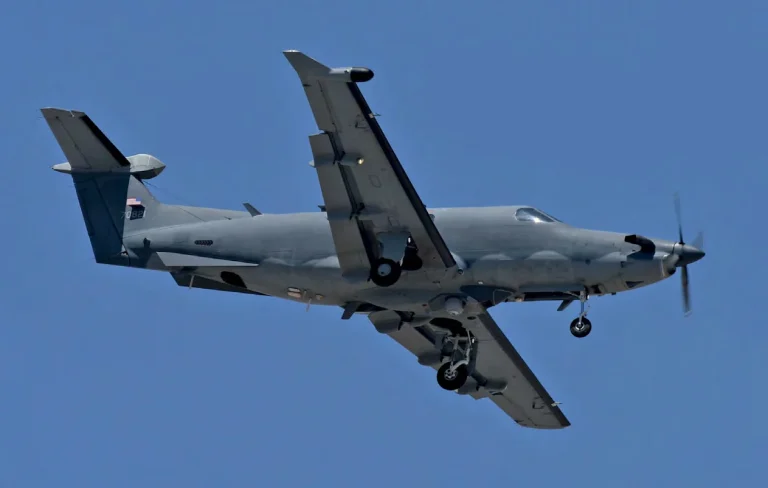
Paradoxically, the U-28 fell victim to its own success.
It became one of the best aircraft of the war on terror. Simple, reliable, inexpensive, and extremely effective. But the world changed faster than the aircraft itself.
Today, reconnaissance is increasingly being conducted by satellites, drones, and artificial intelligence systems. They do not require a crew, can operate around the clock, and do not put pilots’ lives at risk.
Nevertheless, it is aircraft like the Draco that have served as a bridge between classic 20th-century aerial reconnaissance and 21st-century networked surveillance systems. And when the last U-28s are retired, an entire chapter in the history of American special-mission aviation will come to a close.
Tactical and Technical Specifications of the U-28A Draco
Type: Tactical Intelligence, Surveillance, and Reconnaissance (ISR) aircraft
Base Platform: Pilatus PC-12
Crew: 2 pilots + reconnaissance system operators
Engine: Pratt & Whitney Canada PT6A-67P
Maximum speed: about 500 km/h
Cruising speed: about 450 km/h
Practical range: up to 2,800 km
Patrol duration: up to 8 hours
Practical ceiling: 9,100 m
Takeoff weight: approximately 4.7 metric tons
Features:
- optoelectronic and infrared surveillance systems;
- radio reconnaissance equipment;
- secure communication channels;
- the ability to operate from short runways and unpaved runways;
- real-time video transmission to ground units.