The Jet-Powered Blitzkrieg That Never Happened. What Could the German Lippisch-Messerschmitt Me 351 A-2 Bomber Have Become?

As is well known, the first German jet aircraft, the Heinkel He 178, made its maiden flight on August 27, 1939, just a few days before the outbreak of World War II. However, the main problem was not so much developing a jet engine as ensuring its reliability and service life.
A shortage of heat-resistant materials, the difficulties of manufacturing turbines, and persistent technical malfunctions plagued German engine manufacturers until the very end of the war. As a result, jet aviation, which theoretically could have given the Luftwaffe an enormous technological advantage, appeared too late to significantly influence the course of the fighting.
But what if the Germans had managed to solve this problem before the war, when access to strategic materials was considerably less restricted? What if, for example, the German leadership had made jet engine development one of its highest national priorities as early as 1937?
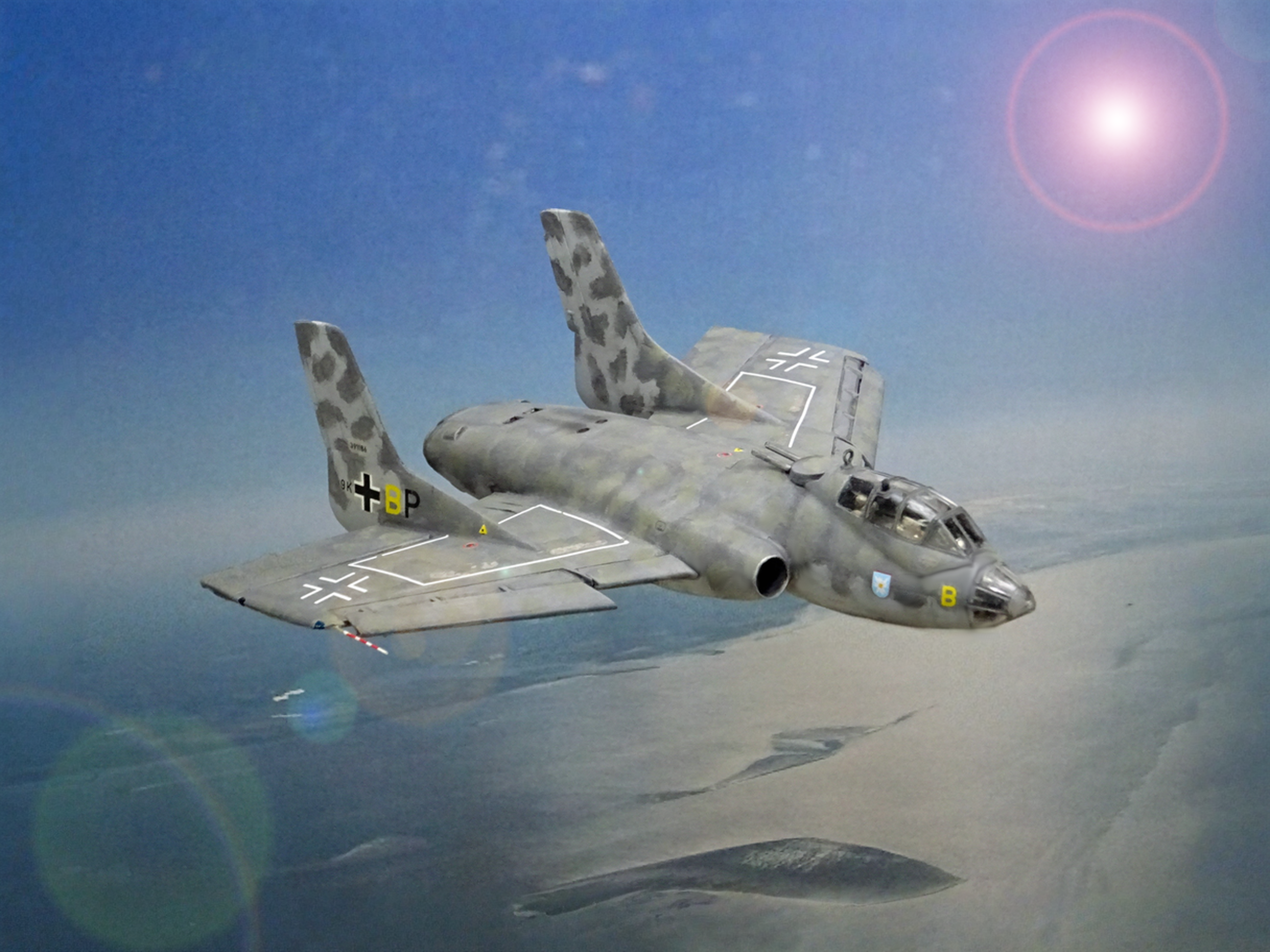
We will explore precisely such an alternative historical scenario using an unusual aircraft created by our Western fellow modeler Dizzyfugu. He is known for his numerous models of alternative-history military equipment, some of which have already been featured on our website.
In the creator’s original fictional history, the Me 351 did not enter service until 1946. We, however, will imagine that its development began considerably earlier and that the aircraft managed to participate extensively in World War II.
From Experimental Gliders to a Jet Bomber
The history of this aircraft begins with the work of German aircraft designer Alexander Lippisch, who had been experimenting with unconventional flying machines since the 1930s, particularly aircraft featuring tailless aerodynamic configurations.
In January 1939, Lippisch and his team did indeed join Messerschmitt. In actual history, one of the results of their work was the Me 163 Komet rocket-powered interceptor.
However, in our alternative reality, events unfold differently. As early as 1938, the German Reich Aviation Ministry decides to develop an entire family of jet engines, dramatically increasing funding for the program.
By the end of 1939, a relatively reliable engine producing approximately 900 kgf of thrust becomes available, followed in 1941 by a more powerful version delivering around 1,300 kgf. These are fictional specifications for our alternative development program, not the characteristics of actual production engines from that period.
With such a powerplant at their disposal, Messerschmitt’s designers begin developing a twin-engine multirole aircraft capable of replacing the heavy fighters and high-speed bombers of the previous generation.
The project receives the designation P.1113 and subsequently becomes known as the Me 351.
An Aircraft Ahead of Its Time
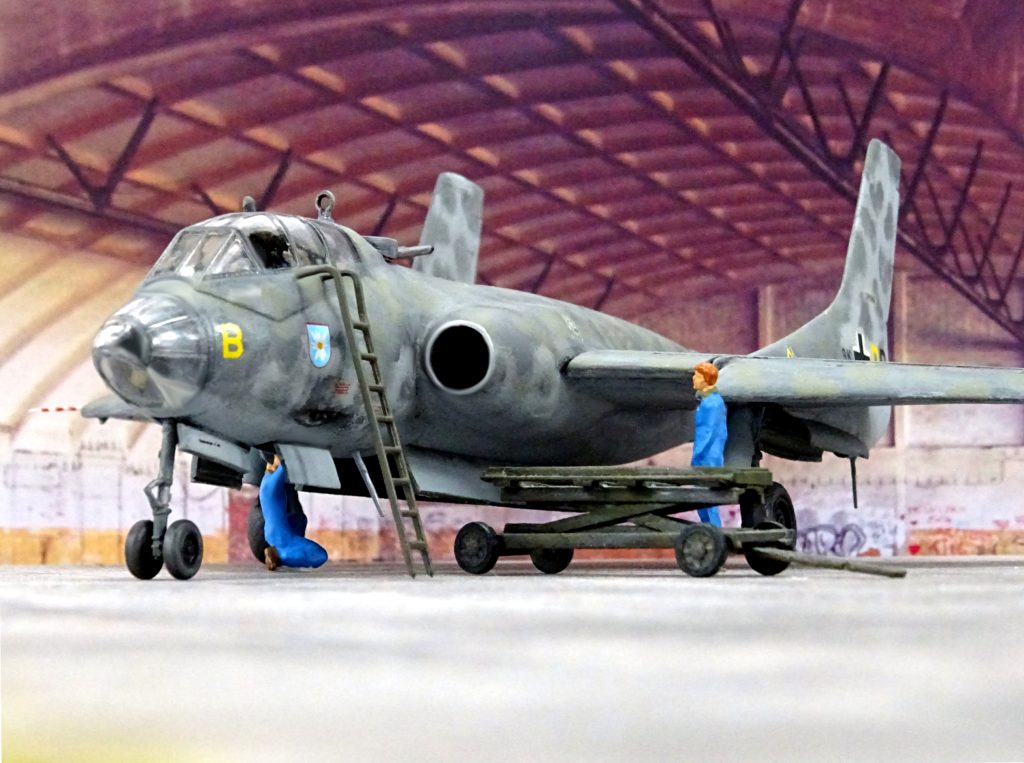
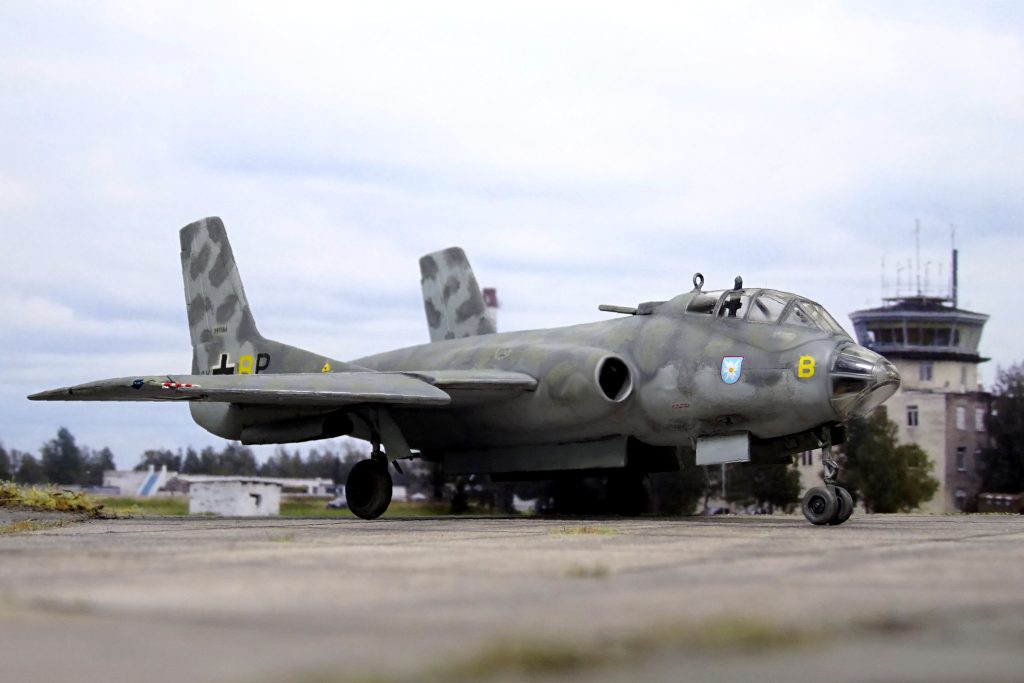
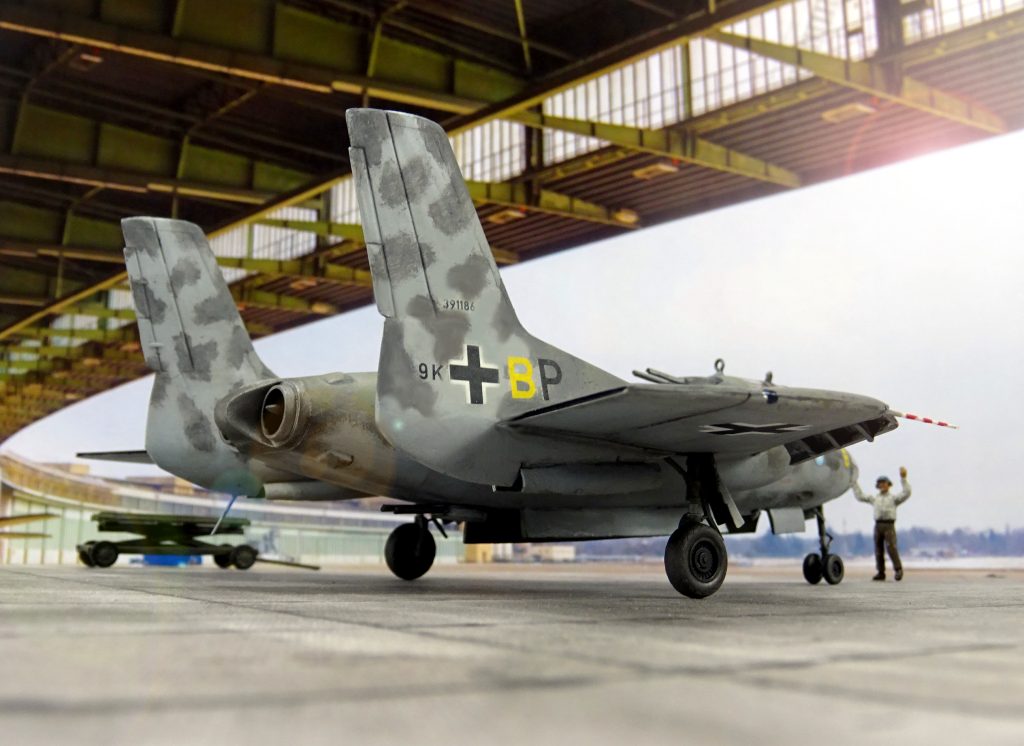
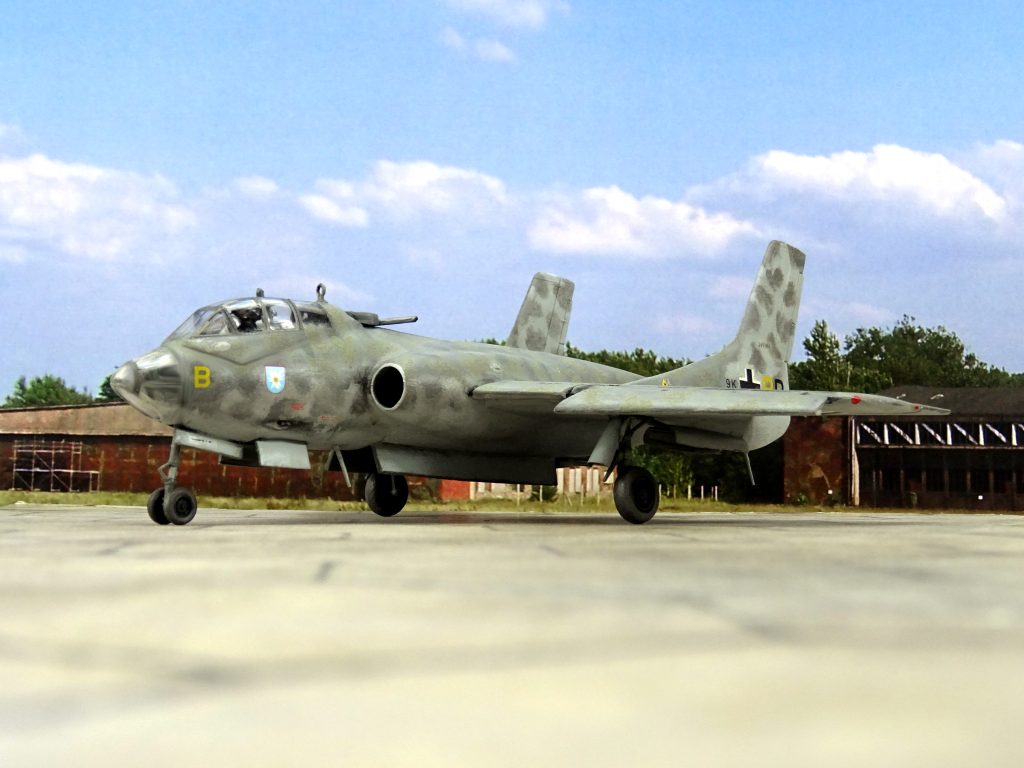
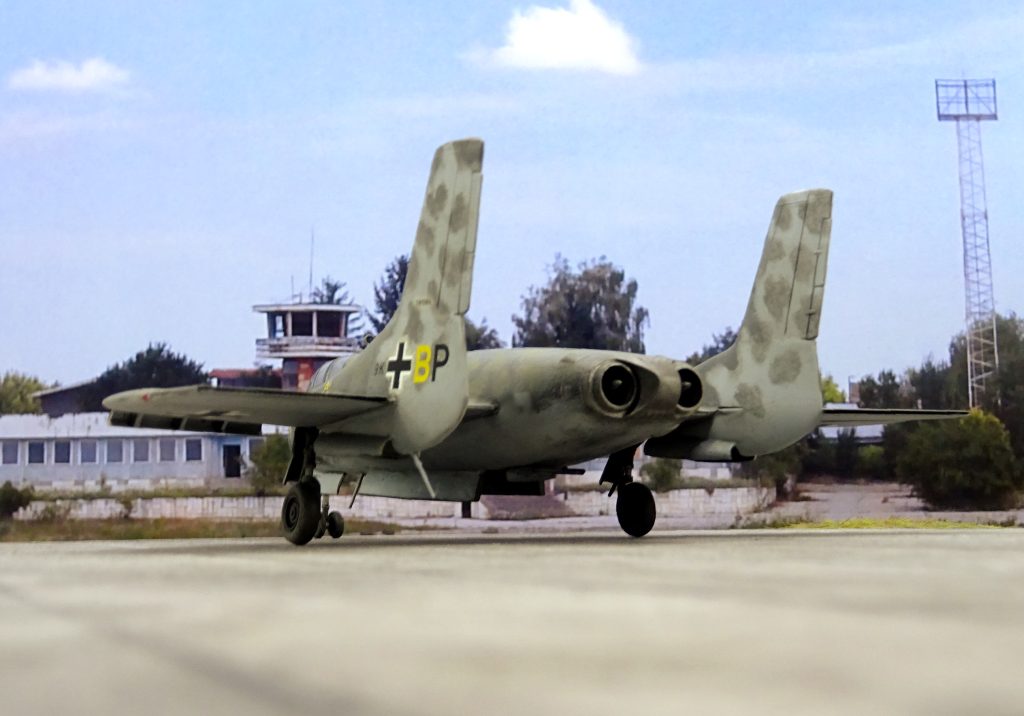
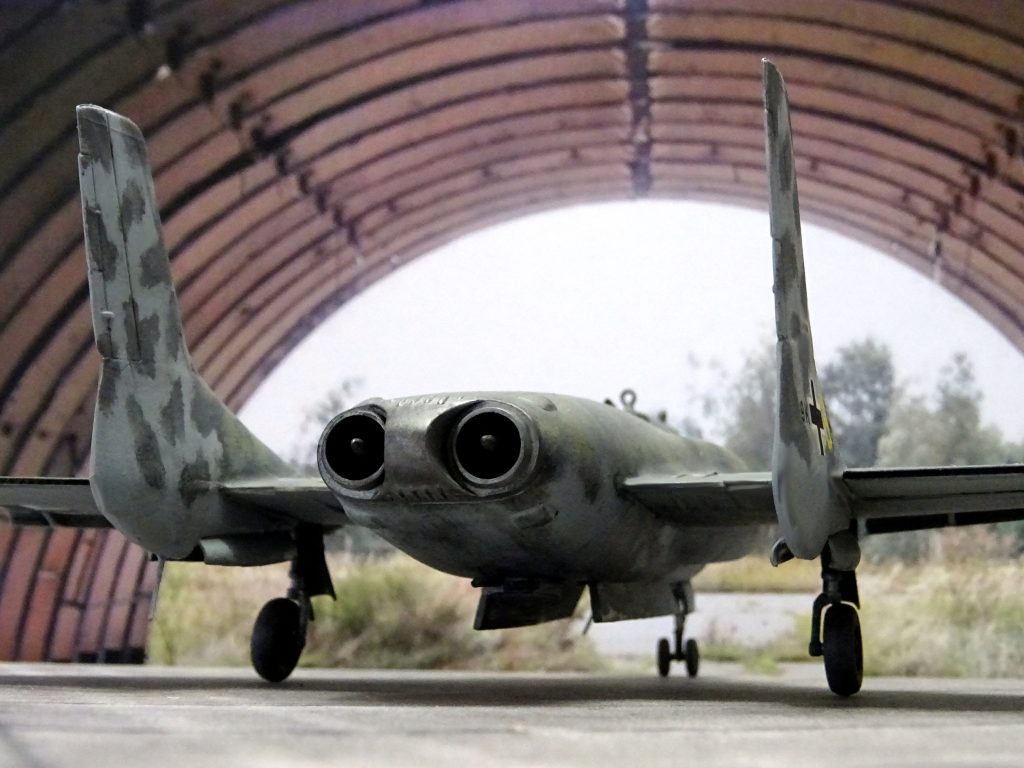
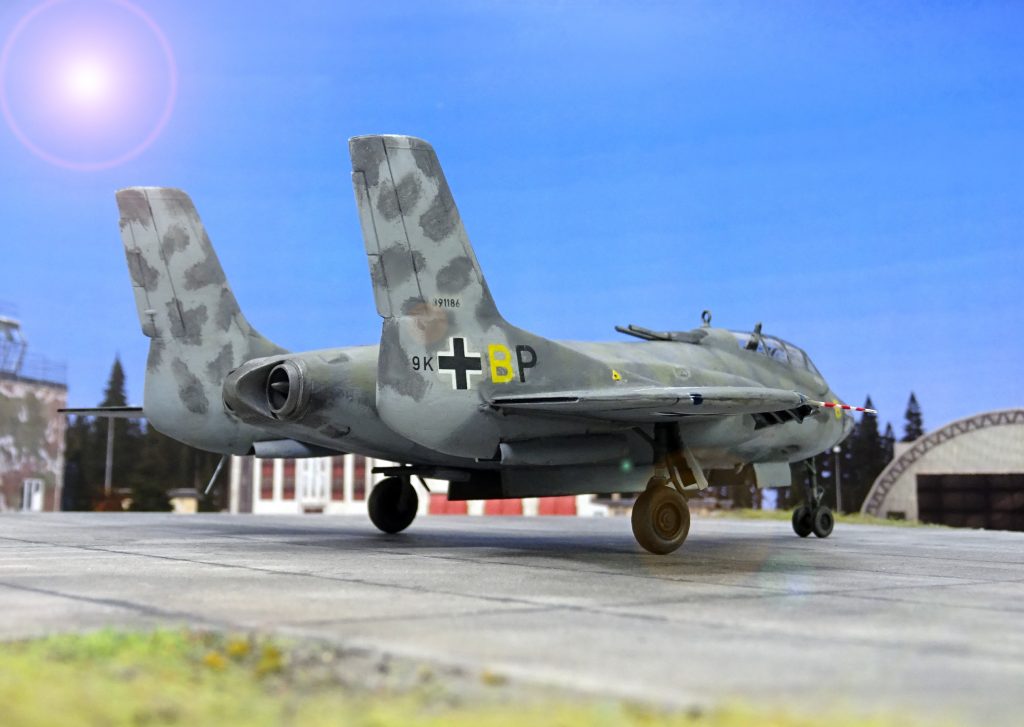
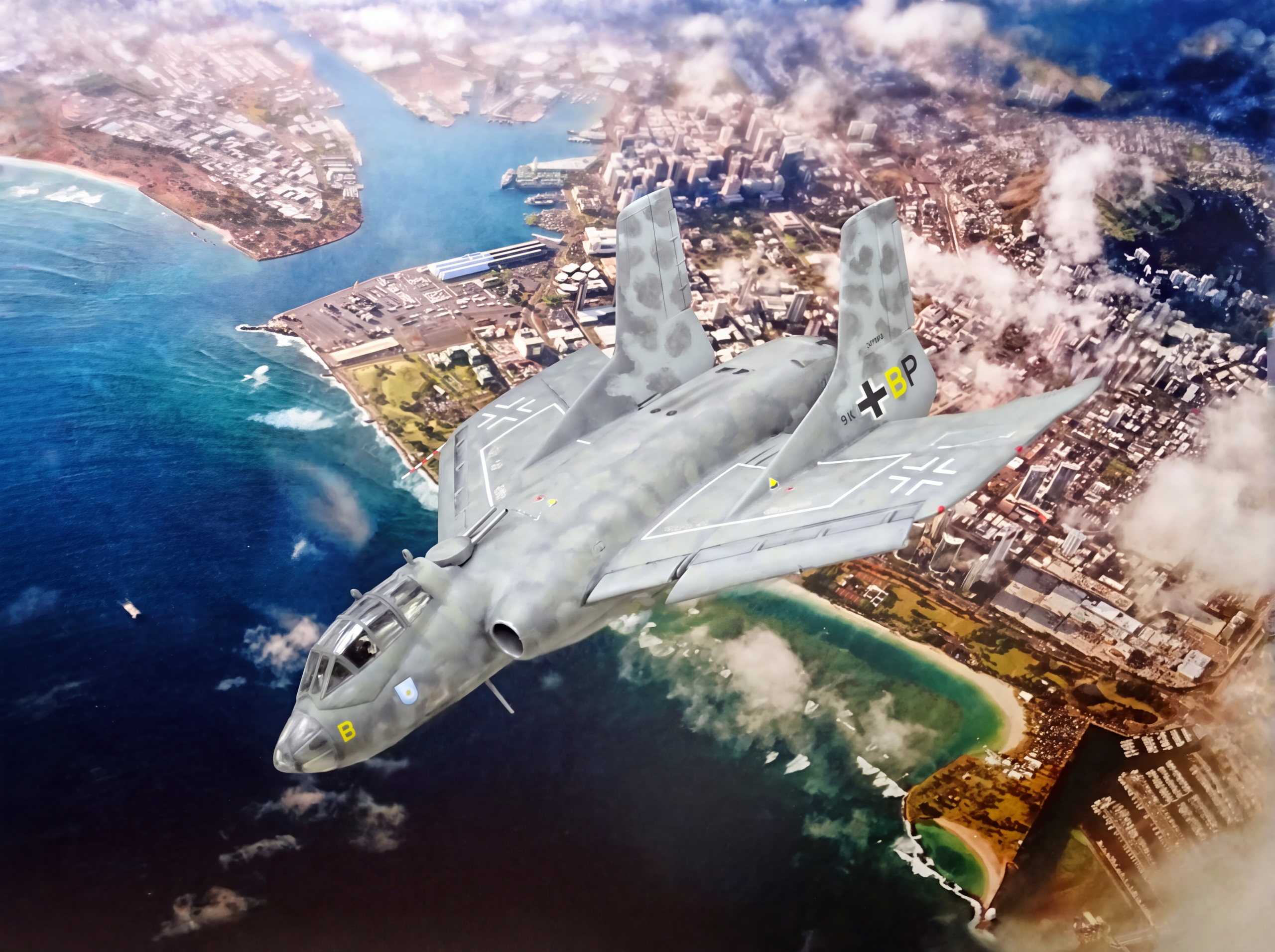
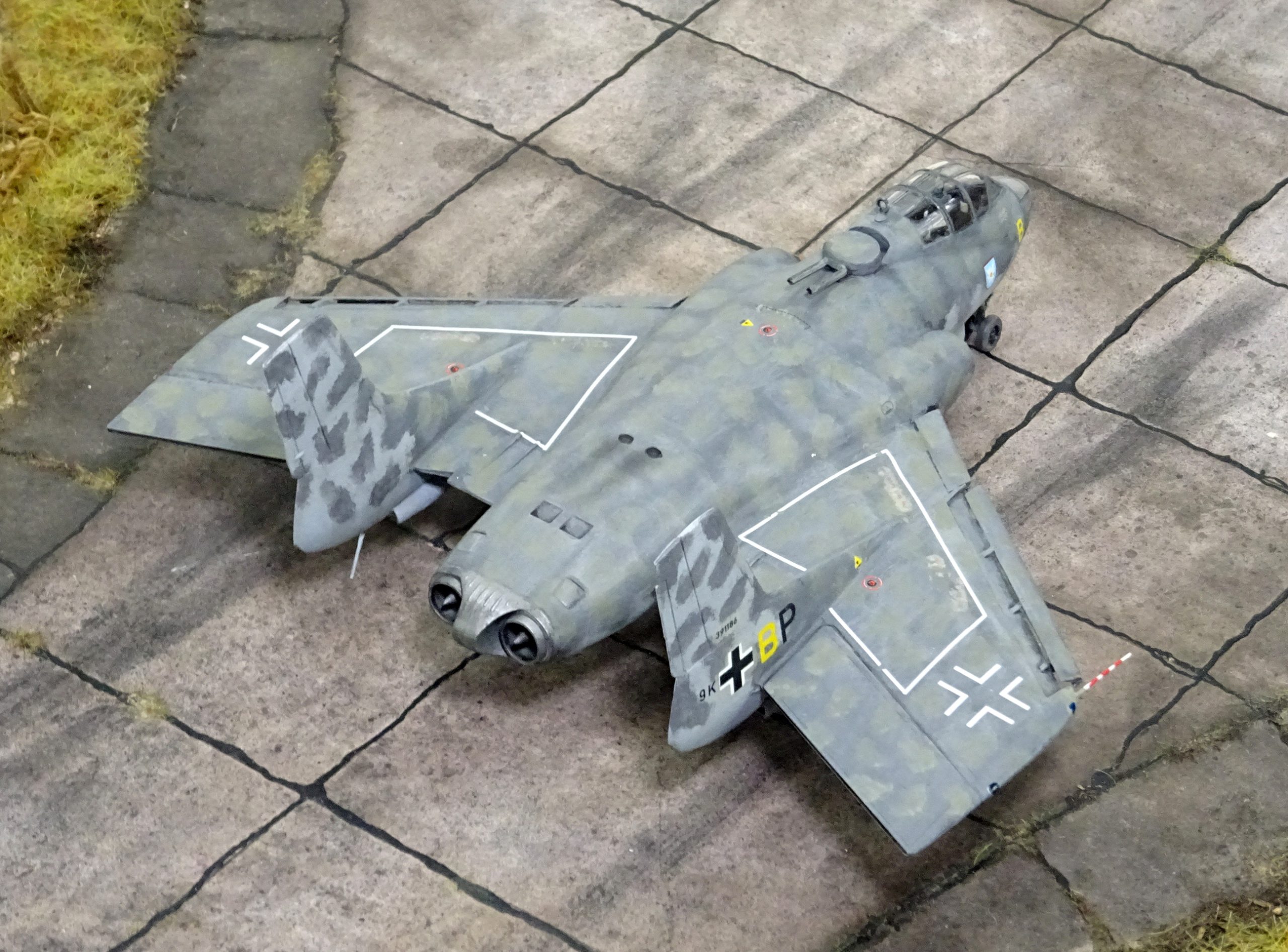
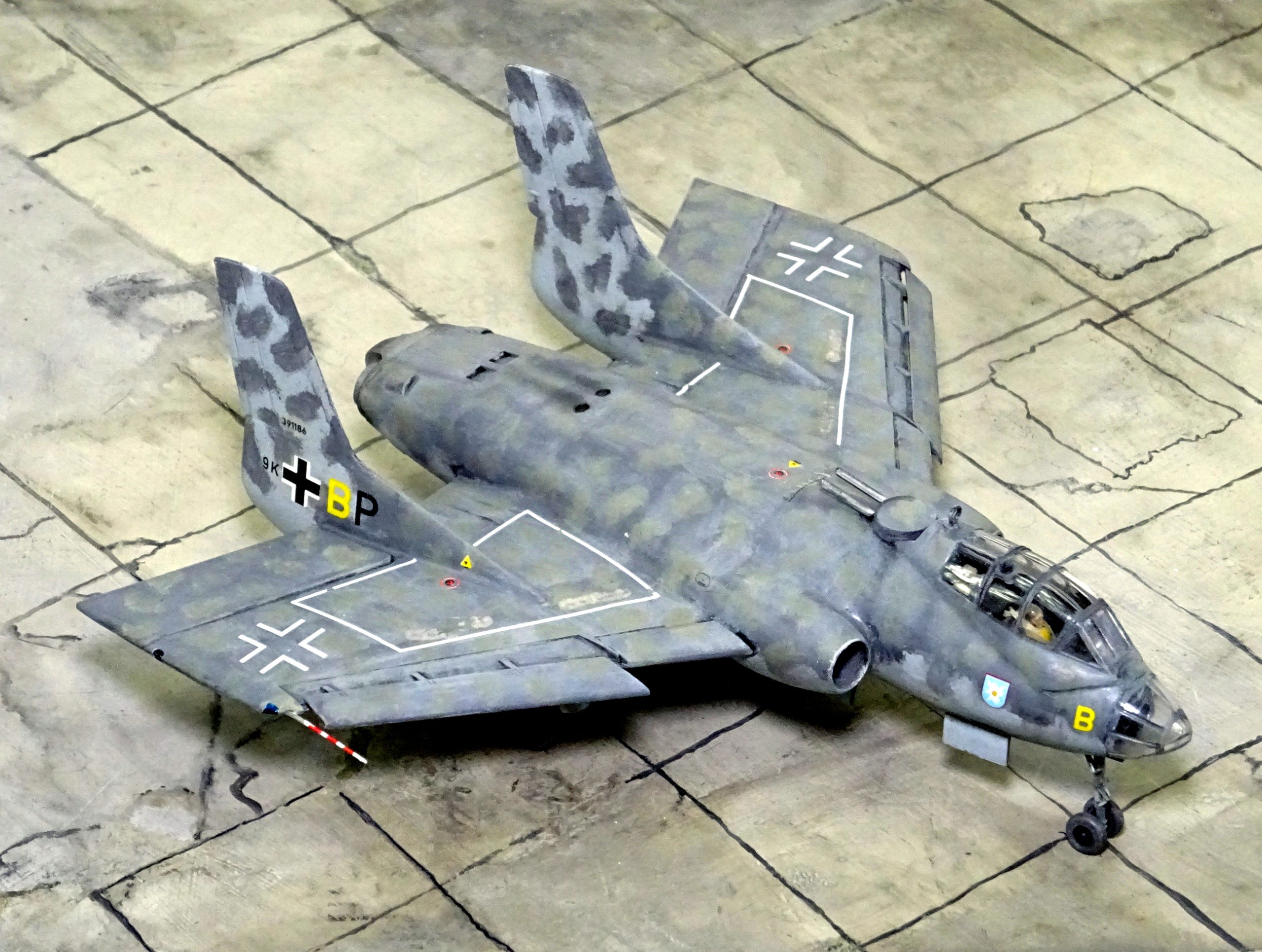
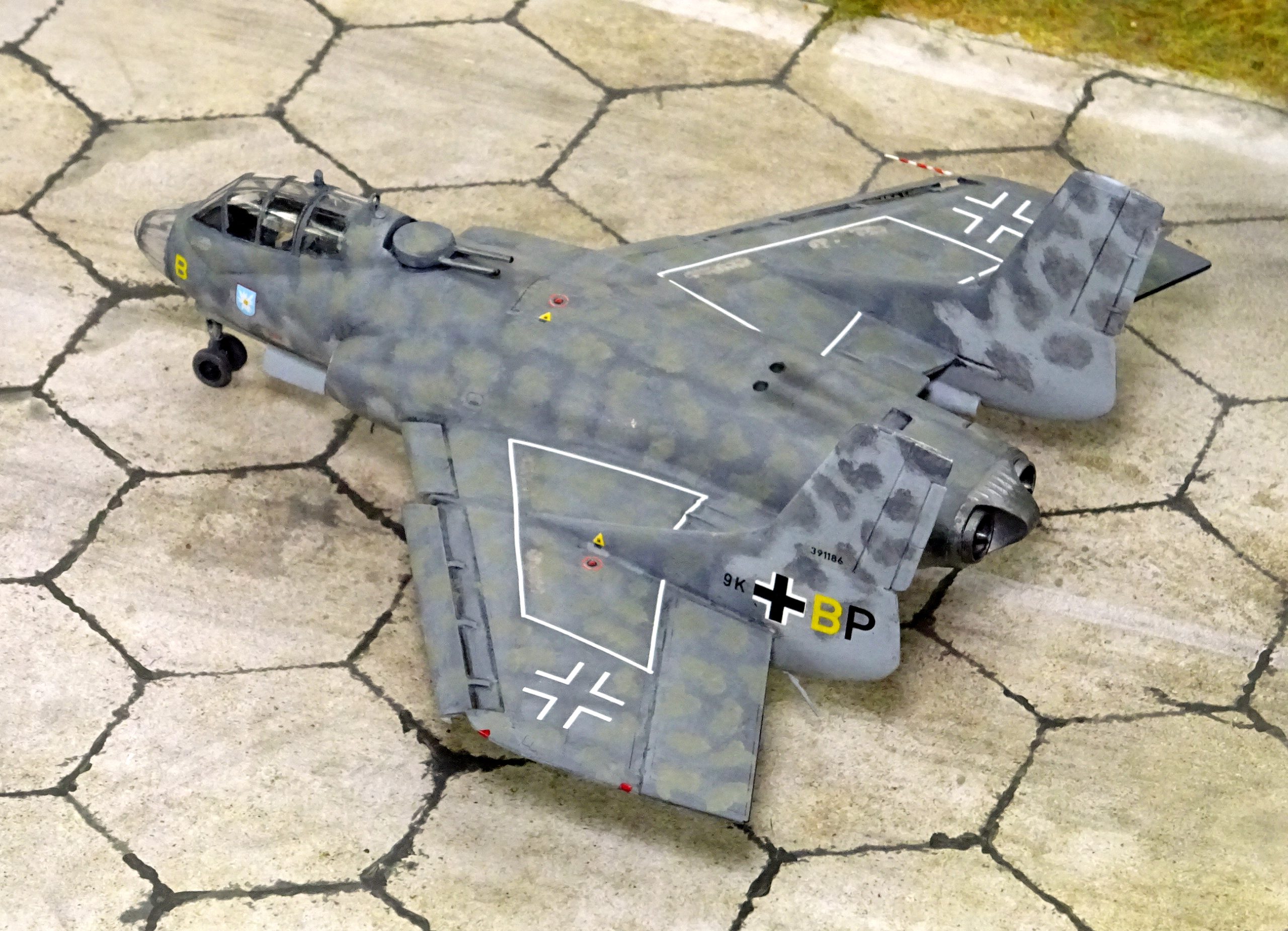
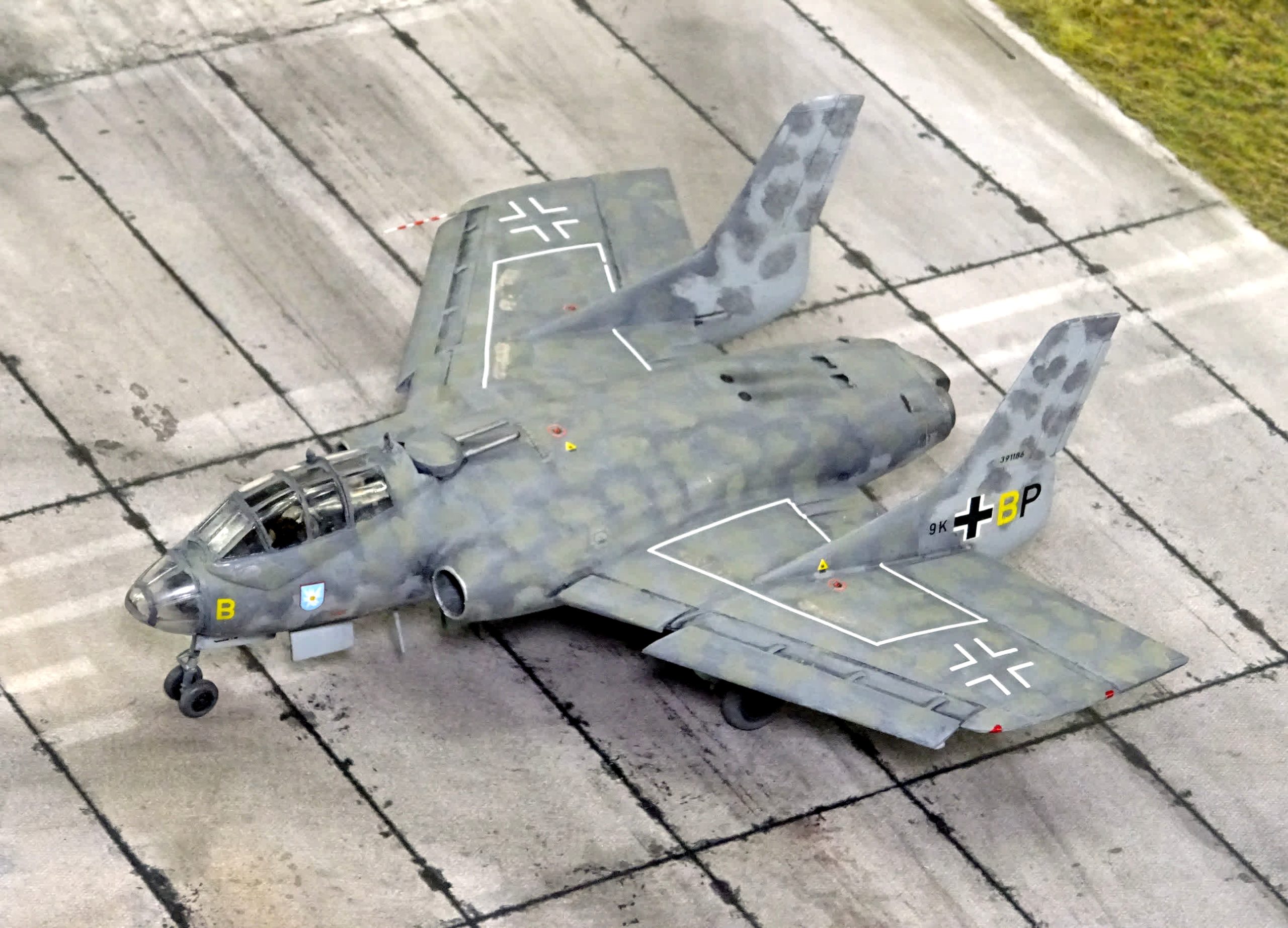
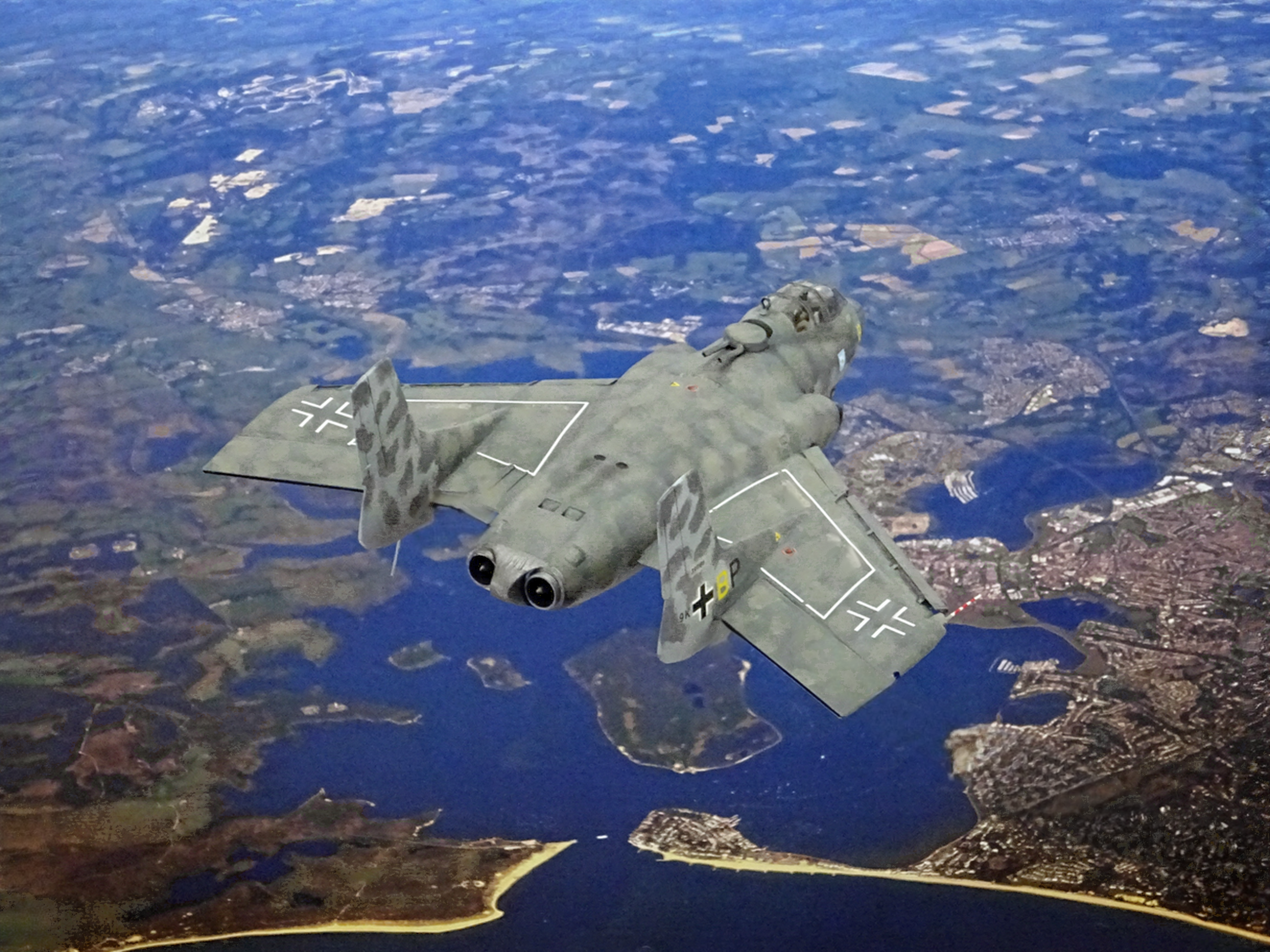
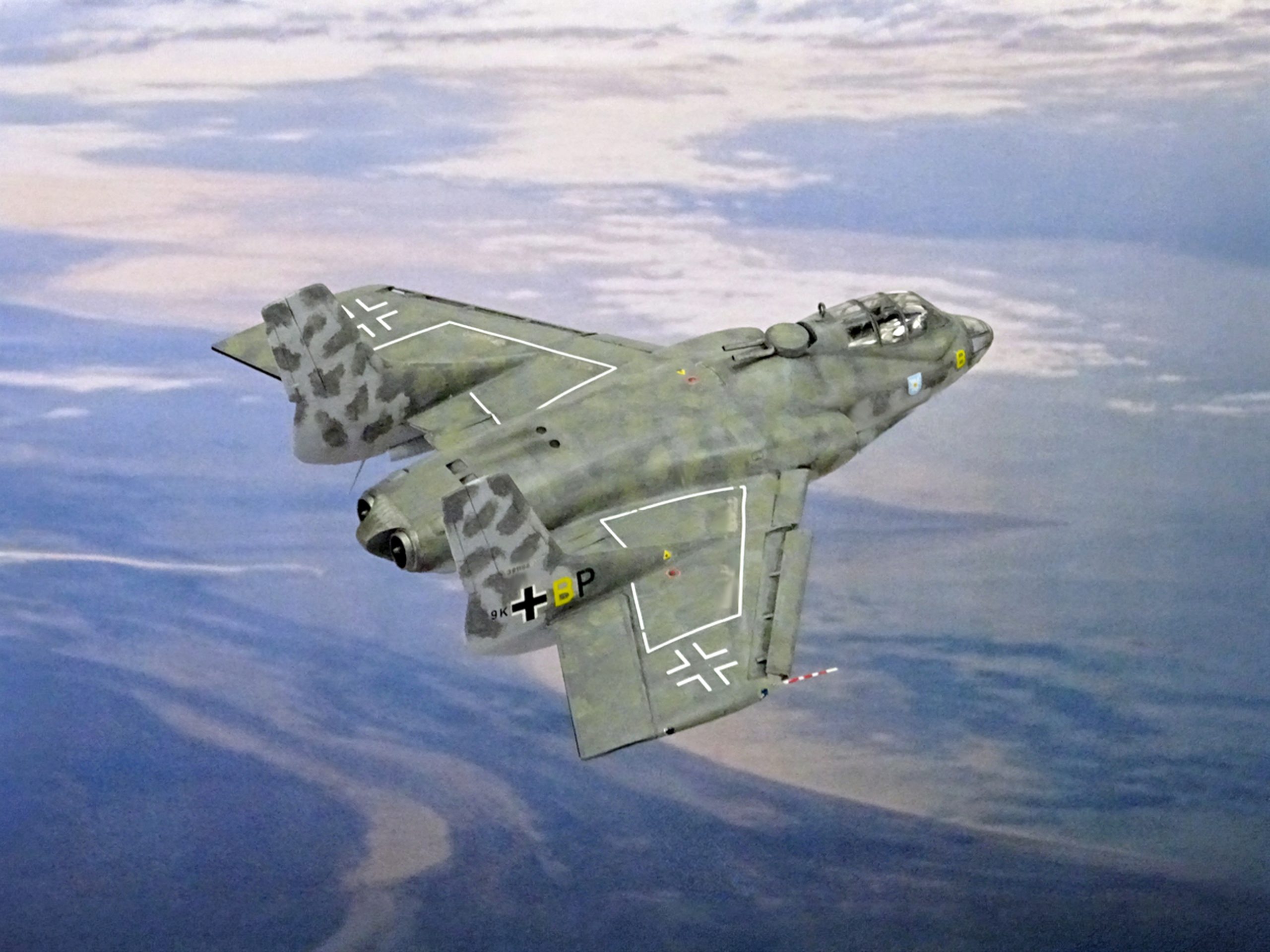
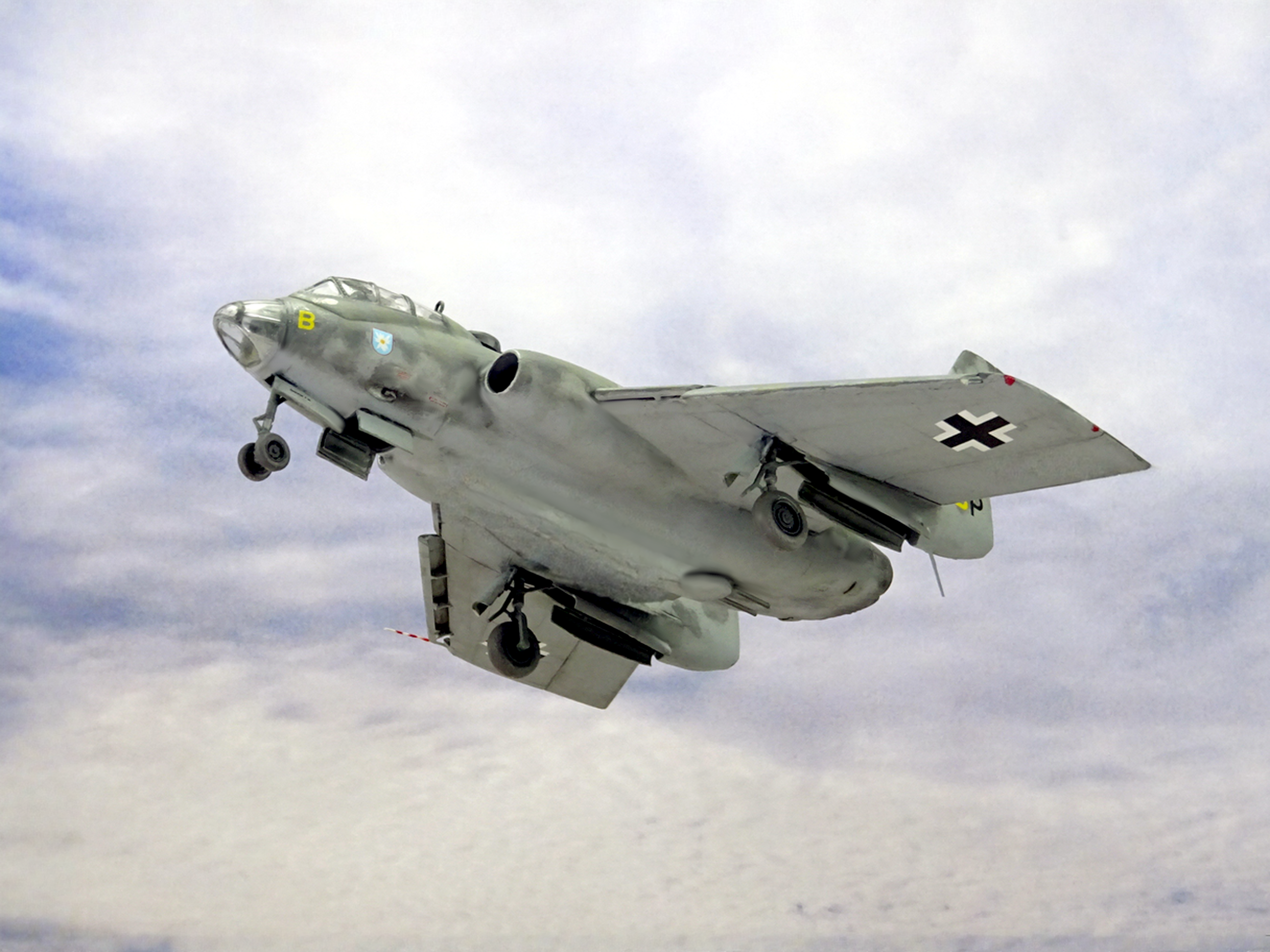
In appearance, the Me 351 differed radically from most German aircraft of its era. Its short, broad fuselage, swept wings, twin vertical stabilizers, and circular air intakes gave it the appearance of an aircraft belonging to the postwar generation.
The tailless configuration reduced aerodynamic drag but also created numerous stability problems. Pitch and roll control were provided by elevons, while leading-edge slats were incorporated to improve low-speed handling characteristics.
The crew consisted of two men seated back-to-back. The nose featured glazing for the bombsight, while the fuselage contained a relatively spacious internal bomb bay.
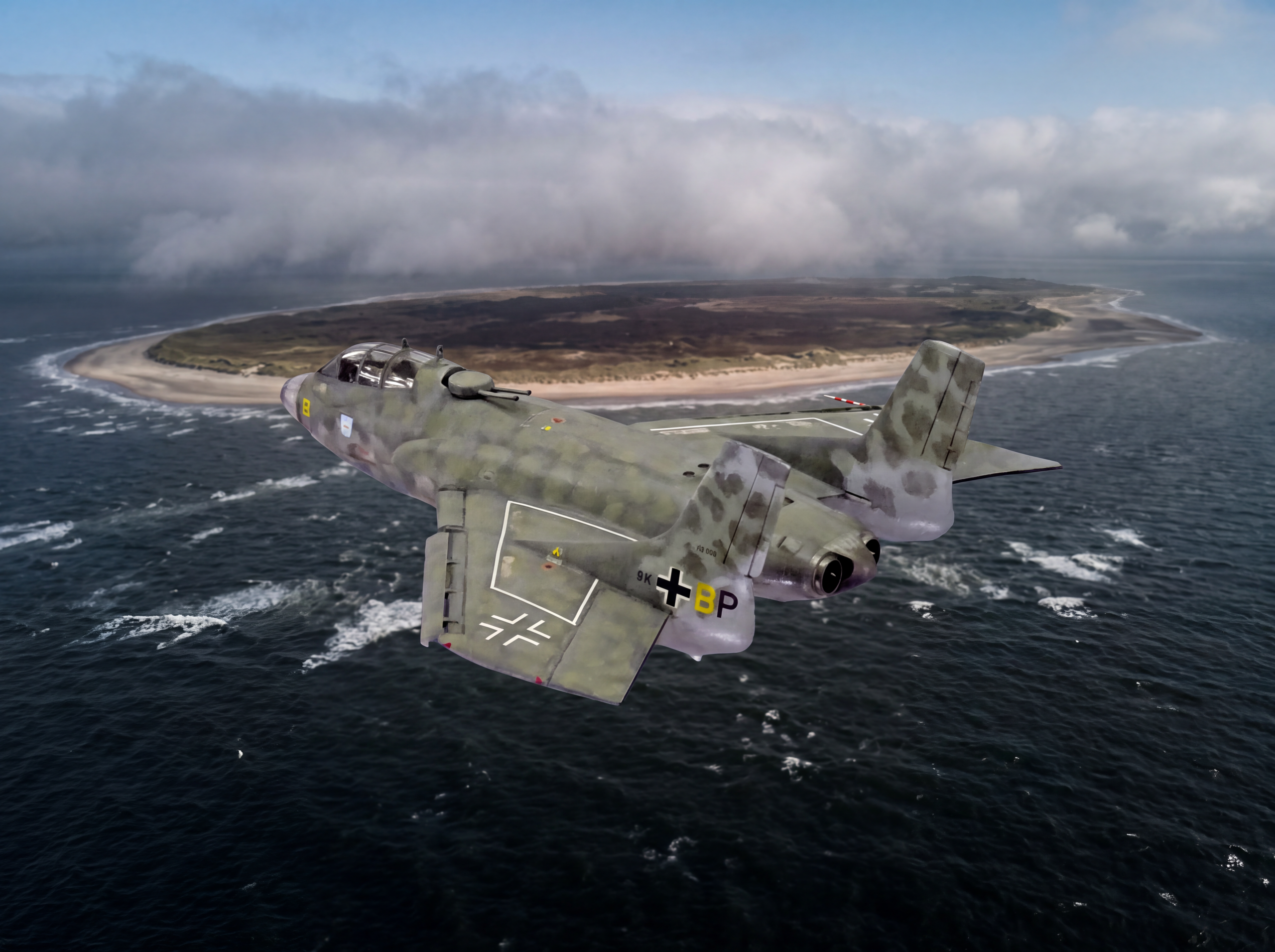
According to the model creator’s concept, the aircraft was capable of carrying up to two tonnes of bombs and reaching speeds exceeding 900 km/h. For the early 1940s, such performance figures would have seemed almost unbelievable.
Main Specifications of the Me 351 A-2 According to Dizzyfugu
-
Crew — 2.
-
Length — 11.77 m.
-
Wingspan — 12.1 m.
-
Height — 4.65 m.
-
Maximum takeoff weight — 14,353 kg.
-
Engines — 2 × Heinkel-Hirth HeS 109-011C.
-
Thrust per engine — 16.7 kN.
-
Maximum speed — 910 km/h.
-
Service ceiling — 13,500 m.
-
Range — 2,500 km.
-
Bomb load — up to 2,000 kg.
-
Armament — two 30 mm MK 108 cannons and four 13 mm MG 131 machine guns in remotely controlled mounts.
Naturally, these are the projected specifications of a fictional aircraft, not the results of actual flight testing.
Initial Flight Tests and the Start of Production
In our alternative timeline, the first Me 351 V1 prototype takes to the skies in the spring of 1942. However, flight testing proves far from trouble-free.
At high speeds, the aircraft exhibits a dangerous tendency toward oscillations, while insufficient structural rigidity limits its permissible maneuvering loads. Furthermore, the hydraulic control system proves excessively complicated and unreliable.
Over the following year, engineers strengthen the airframe, refine the vertical stabilizers, increase fuel capacity, and install upgraded engines.
The Me 351 A-1 appears in the summer of 1943, followed in early 1944 by the production Me 351 A-2, equipped with two engines generating approximately 1,700 kgf of thrust each.
The first aircraft enter service with the KG 51 “Edelweiss” bomber wing. By the summer of 1944, the Luftwaffe has approximately sixty such aircraft at its disposal.
Baptism of Fire: Normandy, 1944
The first large-scale deployment of the Me 351 takes place in June 1944, following the Allied landings in Normandy.
The German command attempts to use its jet bombers to strike ports, river crossings, railway junctions, and concentrations of enemy troops.
For the Allies, the appearance of these new aircraft comes as an unpleasant surprise. Bombers approaching their targets at speeds of approximately 850–900 km/h prove extremely difficult opponents for piston-engined fighters.
Night attacks against transport and supply routes prove particularly damaging. However, high speed also makes accurate bombing more difficult, while the relatively modest bomb load limits the destructive effect of each raid.
By August, the Germans have lost approximately twenty Me 351s, with a significant proportion of these losses resulting from accidents, technical failures, and Allied air attacks against their airfields.
The Luftwaffe’s Last Trump Card
In the autumn of 1944, Me 351 bombers are deployed in attacks against British ports and airfields, while in December they participate in supporting the German offensive in the Ardennes.
However, it gradually becomes clear that even the most advanced aircraft cannot compensate for Germany’s strategic problems.
Jet engines consume large quantities of fuel, require skilled maintenance personnel, and need long, properly prepared runways. The Allies, meanwhile, improve their radar detection and interception capabilities while intensifying attacks against German airfields.
By the spring of 1945, Germany could have built approximately 250 Me 351 aircraft of various modifications in our scenario. However, ensuring their effective combat deployment has already become virtually impossible.
Could the Me 351 Have Changed the Course of the War?
Undoubtedly, the appearance of such an aircraft as early as 1943–1944 would have created serious problems for the Allies. Moreover, the early development of reliable jet engines could have led to the emergence of an entire family of new-generation German fighters and bombers.
Nevertheless, the Me 351 should not be regarded as a miracle weapon. Fuel shortages, the destruction of German industry, Allied superiority in aircraft production, and the difficulties of maintaining jet-powered machines would not simply have disappeared.
Most likely, the air war would have become considerably more intense, and Allied losses would have increased. However, changing the ultimate outcome of the war would have required far more fundamental changes in Germany’s economy and military strategy.
Even so, projects like this allow us to imagine just how differently World War II aviation might have developed if the jet revolution had begun even a few years earlier.
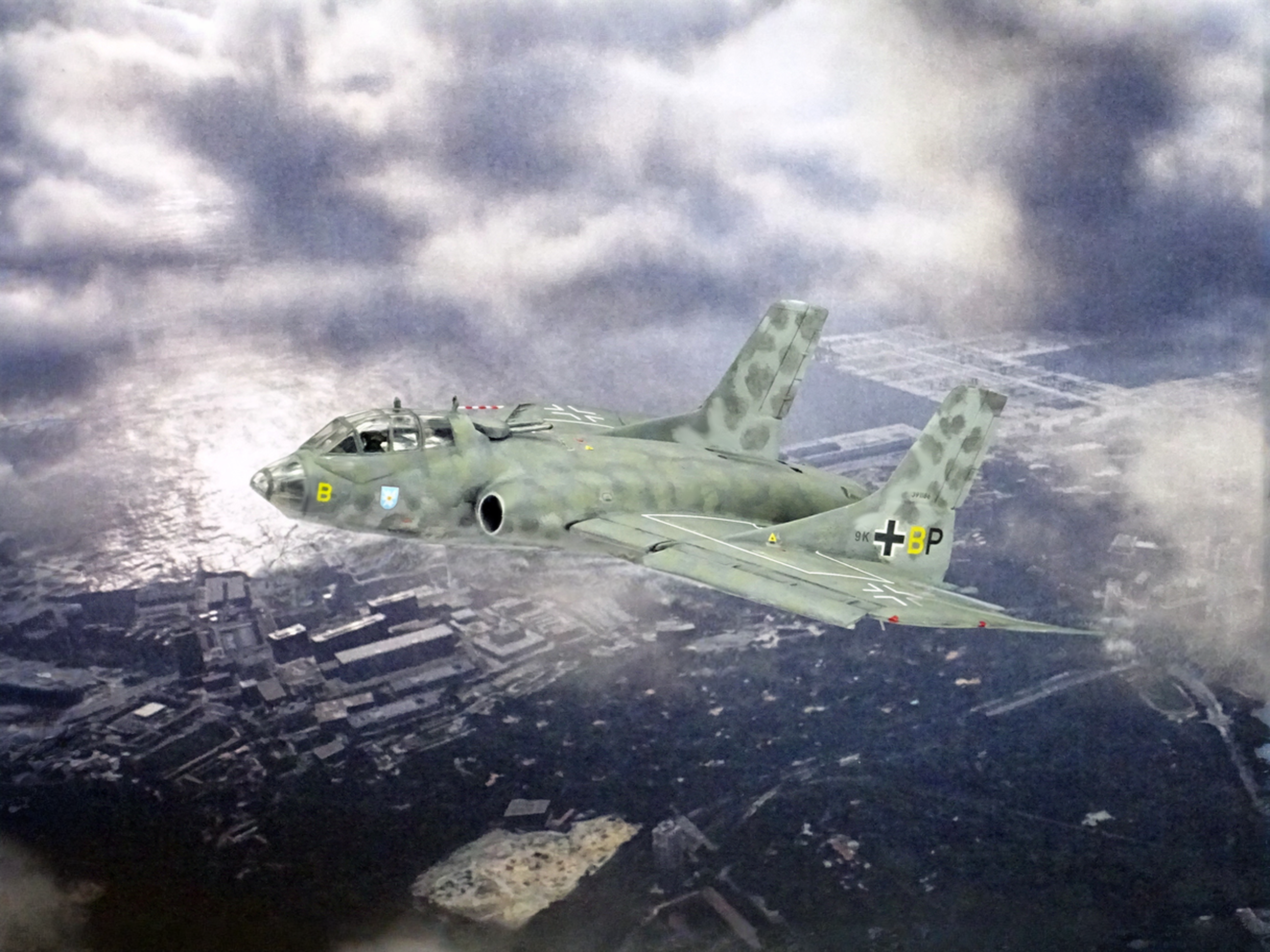
Source – https://www.flickr.com/photos/dizzyfugu/55305137514/in/photostream/