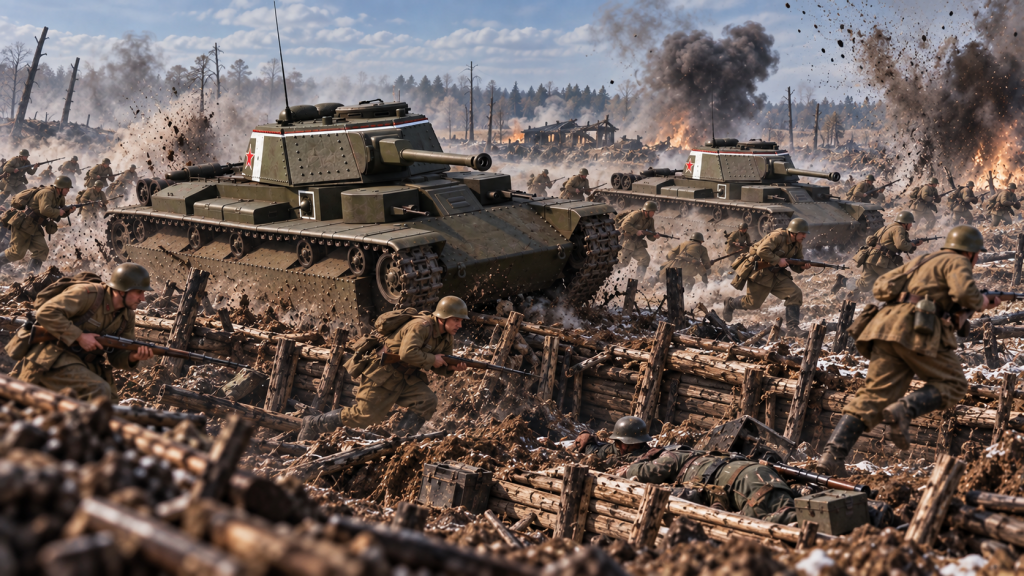
The pinnacle of the T-28 medium tank’s evolution. What the 1941 T-31 could have become.

Whichever way you look at it, the appearance of the T-34 as we know it was largely the result of an extraordinarily fortunate combination of circumstances, engineering decisions, and the determination of the people behind the new vehicle. Mikhail Koshkin managed not merely to create yet another experimental tank, but to recognize the potential of a fundamentally different design — one combining shell-resistant armor, well-sloped armor plates, a powerful diesel engine, and sufficiently heavy armament while retaining a relatively moderate weight.
But history could easily have taken a different course. Koshkin might not have received the necessary support, the A-32 project might have remained an experimental vehicle, while the idea of radically abandoning already established designs could have appeared too risky to the Red Army leadership. By the late 1930s, the Soviet Union already possessed a production medium tank that had been continuously improved and still had considerable modernization potential — the three-turreted T-28.
In such a scenario, the T-28 could have become the starting point for the further development of Soviet medium tanks. This is especially plausible considering that, in actual history, the experience of the Soviet-Finnish War did lead to attempts to strengthen the T-28. The T-28E received additional applique armor, increasing frontal protection of the hull and turret to approximately 50–80 mm and side protection to around 40 mm.
What if, instead of launching the fundamentally new T-34 into mass production, Soviet industry had taken a more conservative path and continued improving the familiar T-28?
This subject is quite popular on our website. Materials dealing with it have been collected in a separate section devoted to alternative T-28 designs. However, we have never before seen such a high-quality visualization of one of the possible descendants of this famous tank. Therefore, I am pleased to present an alternative design created by our Western colleague BullShitLatinName — the T-31, conceived as the ultimate evolution of the T-28 family.
The author himself describes it as a further development of the T-28 and acknowledges that, in terms of its overall characteristics, the resulting vehicle had effectively evolved into a heavy breakthrough tank.
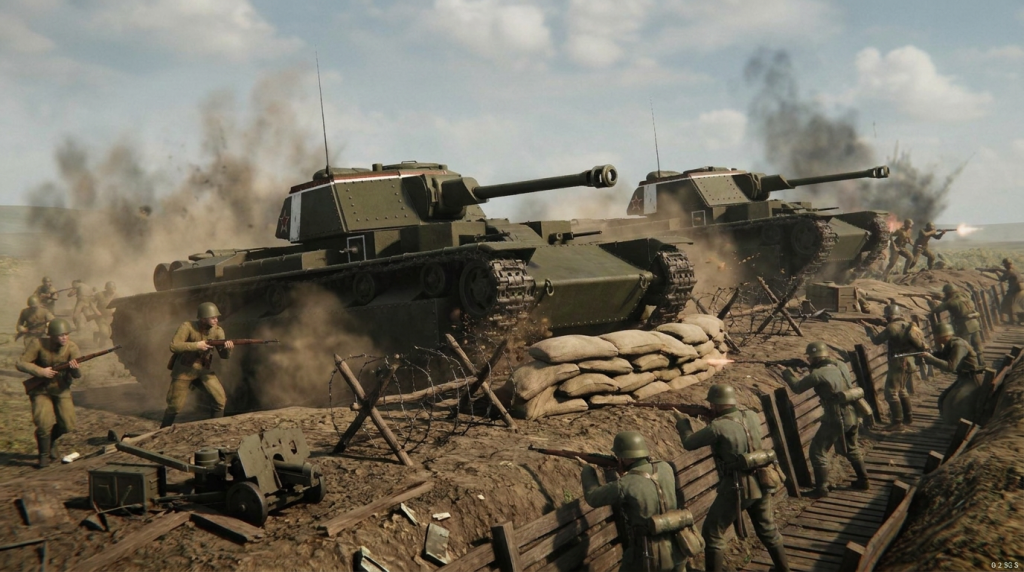
What If the T-34 Had Never Appeared?
The central assumption of this alternate history is not that Soviet engineers suddenly decided to build yet another multi-turreted monster. On the contrary, let us imagine a much more mundane scenario. The A-20/A-32 program either fails to produce the T-34 or becomes so badly delayed that the army demands an urgent modernization of the medium tank already in production.
By the end of the 1930s, the T-28 could hardly be considered hopelessly obsolete. Its principal weaknesses were its complexity, high production cost, inadequate original armor protection, and a suspension that was gradually becoming outdated. At the same time, the tank possessed a spacious fighting compartment, sufficiently powerful armament, considerable internal volume, and a large hull that allowed substantial further modernization.
The Soviet-Finnish War becomes the main catalyst for the development of the design. The real T-28E had already demonstrated the direction in which further work might proceed: instead of creating an entirely new vehicle, the Kirov Plant is ordered to develop a comprehensive modernization of the T-28 featuring shell-resistant armor, a new turret, reinforced running gear, and a more powerful powerplant.
In our alternate reality, this program gradually leads to the appearance of the T-31.
The designation itself fits naturally into the development of the family: this is no longer merely a T-28 fitted with additional armor screens, but effectively a new tank retaining the basic architecture of its predecessor.
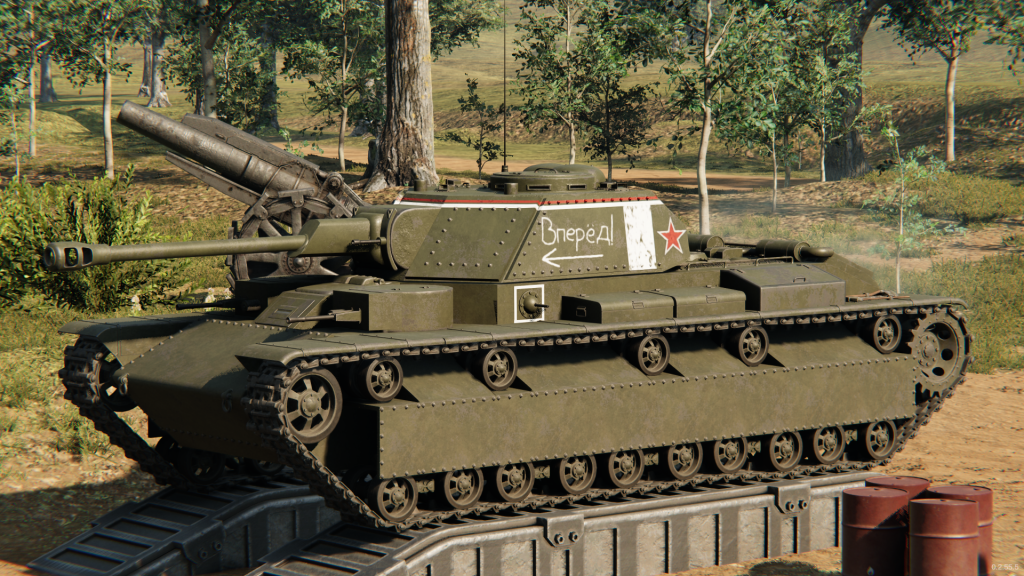
T-31 — The Old T-28 Brought Up to a New Technological Level
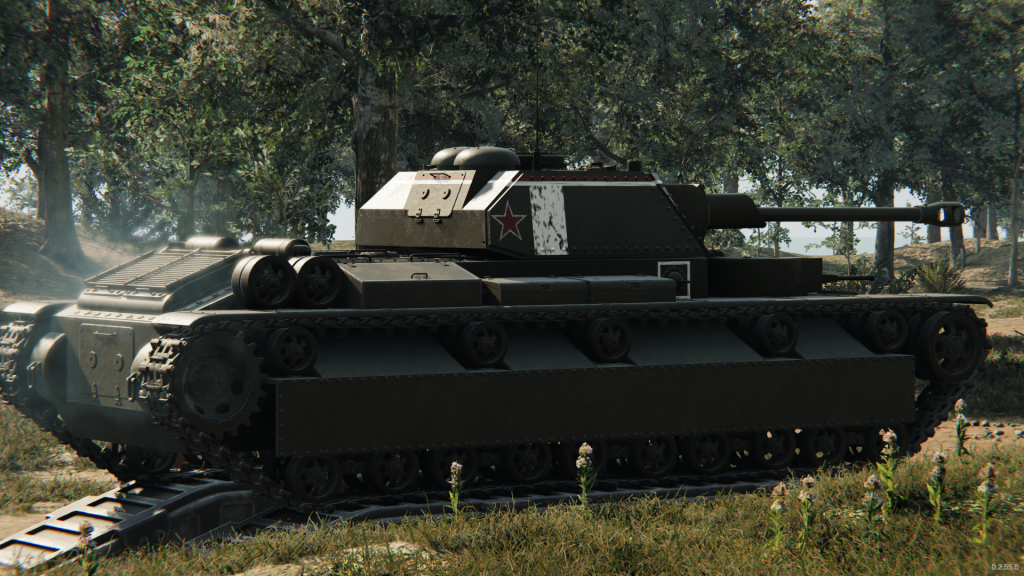
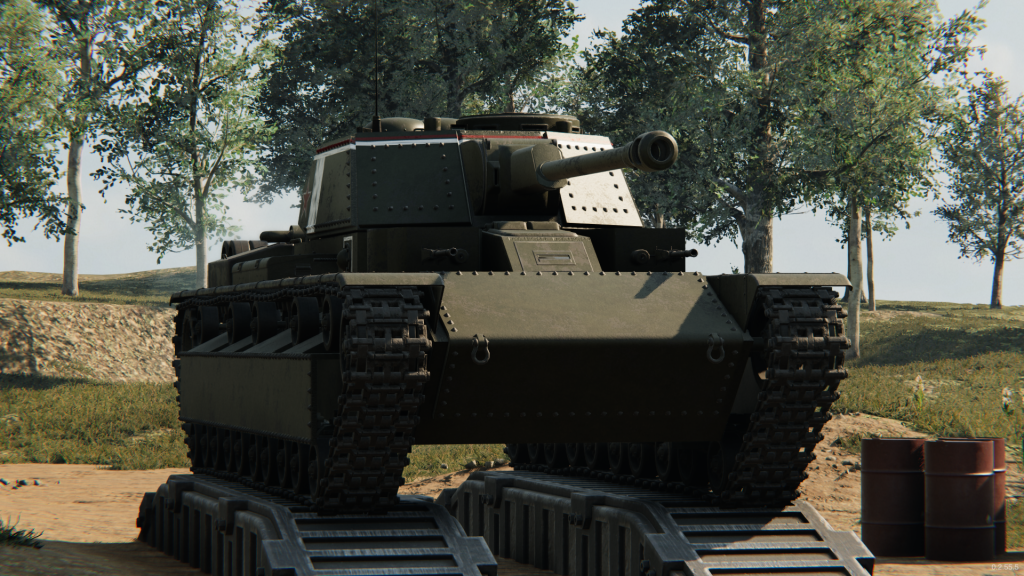
At first glance, the vehicle’s ancestry is immediately obvious. It is still a long tank with a main turret and two small machine-gun turrets at the front. Almost everything else, however, has undergone extensive redesign.
The T-31 hull is 7.87 meters long, while the overall length with the gun reaches approximately 8.9 meters. Its width is 3.25 meters and its height is 2.7 meters. The dimensions themselves reveal the vehicle’s ancestry: Soviet designers make no attempt to transform the old chassis into a compact tank, instead exploiting its considerable internal volume to accommodate heavier armor and armament.
These dimensions were specified directly by the creator of the original design.
The hull becomes considerably more massive. Instead of the relatively thin bullet-resistant armor of the early T-28, the T-31 receives genuine shell-resistant protection. The upper and lower frontal hull plates are 60 mm thick, with additional 40-mm armor plates installed over them. Thus, in certain areas, the frontal armor effectively forms a layered package with a total physical thickness of up to 100 mm.
The hull sides are 50 mm thick, while the lower sections receive an additional 35 mm of armor.
This represents an entirely different level of protection.
And it is precisely at this point that the modernization of the T-28 begins to contradict its original classification as a medium tank.
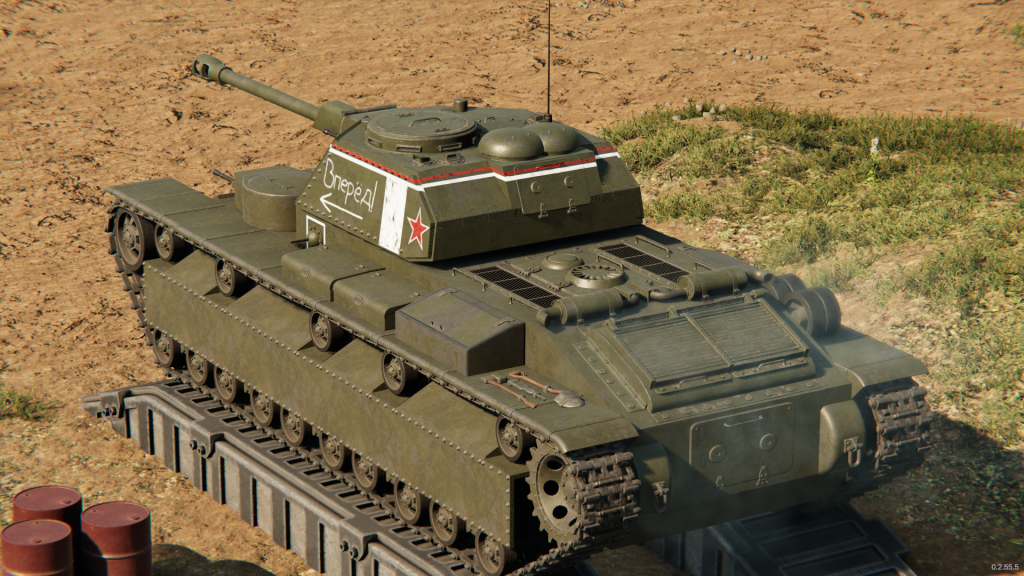
Armor Approaching Heavy-Tank Levels
The T-31’s main turret is protected even more heavily. Its front is 70 mm thick, the sides are 60 mm, and the rear is 50 mm. In addition, the frontal and side sections receive additional 40-mm applique armor plates. The hull and turret roofs are 20 mm thick.
The only conspicuously weak area is the rear armor plate of the engine compartment, which is only 10 mm thick. These are the specifications provided by the creator of the original project.
The result is a rather curious vehicle. Formally, the T-31 continues the Soviet medium-tank lineage, yet in terms of protection it is already approaching the heavy-tank category.
Indeed, the designer himself noted during the discussion of the project that he conceived the T-31 as a kind of breakthrough tank, while the resulting machine had effectively become a heavy tank. According to his concept, the T-31 was supposed to advance alongside infantry, withstand hits from weapons dangerous to ordinary tanks, and destroy enemy strongpoints.
One can reasonably assume that the weight of such a vehicle would have been far greater than that of the original T-28. And this is where alternate history encounters exactly the same problem that plagued the designers of real multi-turreted tanks: every additional millimeter of armor spread across such an enormous hull translated into additional tons of steel.
Five Machine Guns and the Legacy of the Multi-Turret Era
The most unusual feature of the T-31 remains its two forward machine-gun turrets. One might expect such a layout to have been abandoned by 1941, yet these small turrets are precisely what makes the vehicle a logical continuation of the T-28 rather than an entirely new tank.
A total of five machine guns are installed. Two are mounted in the separate small turrets, another two are positioned in the sides of the hull, and the fifth is mounted coaxially with the main gun.
For breaking through fortified defensive positions, such an arrangement was not entirely devoid of logic. The tank could simultaneously fire machine guns in several directions, suppress infantry in trenches, and cover its own flanks. This was exactly how the creators of multi-turreted tanks in the 1920s and 1930s envisioned their battlefield employment.
The price for this capability, however, was enormous.
Additional turrets required armored volume, turret rings, mechanical systems, ammunition, and dedicated crewmen. The hull had to become longer, production became more complicated, and weight increased. What had appeared to be an advantage of the T-28 in the early 1930s was gradually turning into dead weight by 1941.
The T-31 therefore appears as a kind of “last dinosaur” of the Soviet multi-turreted school — a concept pushed almost to its absolute limit.
What About the D-5S?
At this point, an important clarification is necessary.
The creator of the model armed his T-31 with a 76.2-mm gun designated D-5S. In real history, however, such a combination did not exist. Moreover, the actual Soviet D-5S was not a 76.2-mm weapon but an 85-mm gun intended for self-propelled artillery.
Development of the SU-85 and its armament began in 1943, with the D-5S-85 appearing as part of that program. Therefore, mounting a historical D-5S on a tank supposedly built in 1941 would be an obvious anachronism.
For our alternate-history T-31, it is more logical to assume that the designation “D-5S” refers to an entirely different weapon.
Let us imagine that, in this timeline, the designation belongs to a further development of Soviet 76.2-mm tank guns — a long-barreled weapon with sufficient ballistic performance to engage most tanks encountered during the opening years of the Second World War. This allows the vehicle to retain the appearance of the author’s original model while eliminating the chronological contradiction.
There is, however, an even more intriguing possibility.
The T-31’s large turret ring and spacious turret could potentially have allowed it to be rearmed with a genuine 85-mm gun later in its career. By 1943, therefore, the old multi-turreted T-31 might have received a gun from the D-5 family and evolved into an extremely powerful, if very heavy, fighting vehicle.
A Crew of Six
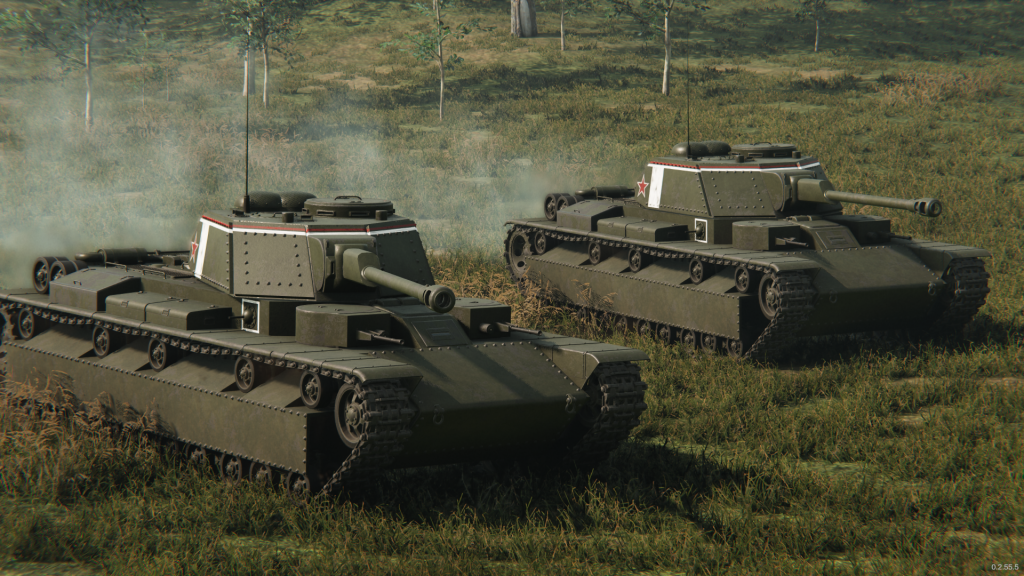
The T-31 has a crew of six: a driver, two machine gunners operating the small turrets, a gunner, a loader, and a commander.
And here the vehicle demonstrates an unexpected advantage over some of the more compact tanks of its era. The commander is freed from the need to load or directly aim the main gun and can concentrate on his actual responsibilities — observing the battlefield and commanding the crew.
A commander’s cupola is installed on the main turret, while the overall appearance of the tank combines features from two distinct eras. Below is the architecture of the mid-1930s, complete with multiple turrets and numerous machine guns. Above it sits something already much more recognizable as a Second World War tank, with a powerful long-barreled gun, reinforced armor, and improved observation equipment.
It is precisely this combination of archaic and modern features that makes the project so fascinating.
The Price of Armor — 32 km/h
There are, however, no miracles in tank design. The enormous hull, multi-turret layout, and exceptionally heavy armor inevitably affect mobility.
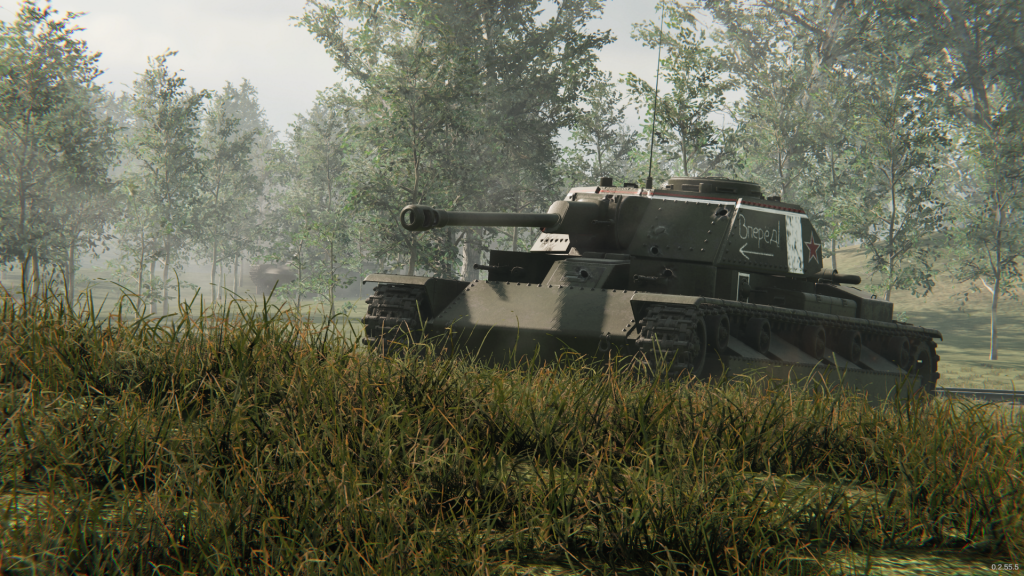
Despite receiving a more powerful engine, the maximum speed is only around 32 km/h. The tank accelerates slowly and is not particularly agile when turning. The transmission is located in the rear and has seven forward gears. The author also specifies a steering system using side clutches and brakes, characteristic of many Soviet tanks of the period.
For an infantry-support tank, a top speed of 32 km/h is not necessarily disastrous. A heavy T-31 would not be expected to conduct rapid deep-penetration raids. Its task would be to advance behind the artillery barrage, destroy anti-tank guns, machine-gun nests, and fortifications, and absorb enemy fire.
But this is precisely where the fundamental difference between this development path and the T-34 becomes apparent.
Where the real Soviet tank school pursued a balance of mobility, armor, and firepower, the alternate T-31 achieves its protection primarily through sheer mass and size.
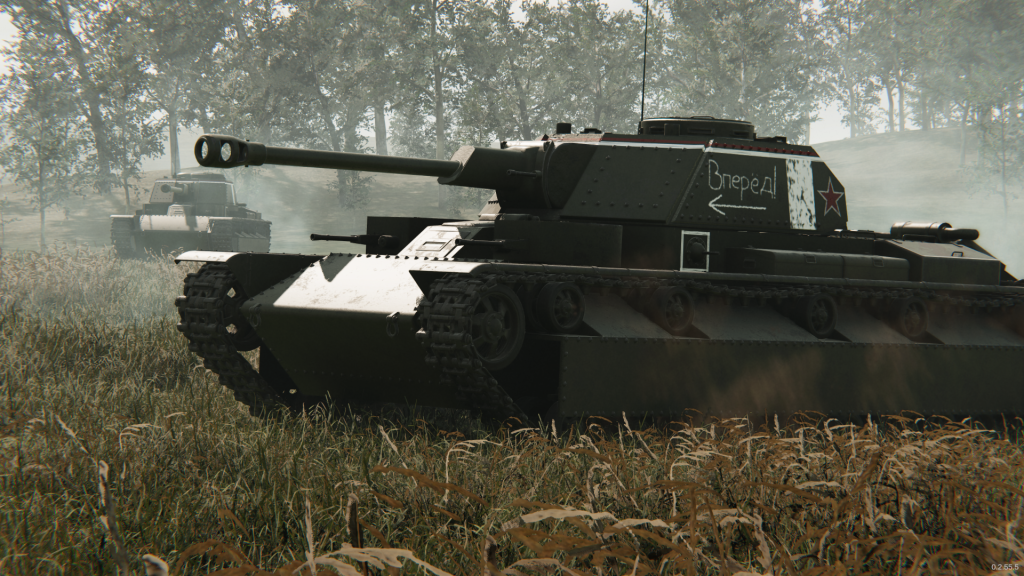
What Would the T-31 Have Been Like in the Summer of 1941?
On the battlefield of 1941, such a tank would have been an extremely dangerous opponent.
Its heavy frontal armor would have made the T-31 very difficult to defeat with the standard small-caliber German anti-tank weapons of the period. Its numerous machine guns could saturate infantry positions with fire, while the 76.2-mm gun would represent a serious threat to armored vehicles encountered during the opening stages of the war.
But the disadvantages would have been equally serious.
The tank would have been expensive, heavy, and labor-intensive to manufacture. Its enormous quantity of armor would have required substantial industrial resources. The long hull would have placed considerable stress on the running gear. Two additional turrets and a six-man crew would have complicated both production and operation.
Finally, recovering a damaged T-31 from the battlefield would have been considerably more difficult than towing an ordinary medium tank.
For this reason, it is unlikely that the T-31 could ever have become as numerous as the T-34 was in real history.
Most likely, the first months of the war would already have produced demands from Soviet tank crews and industry to simplify the vehicle.
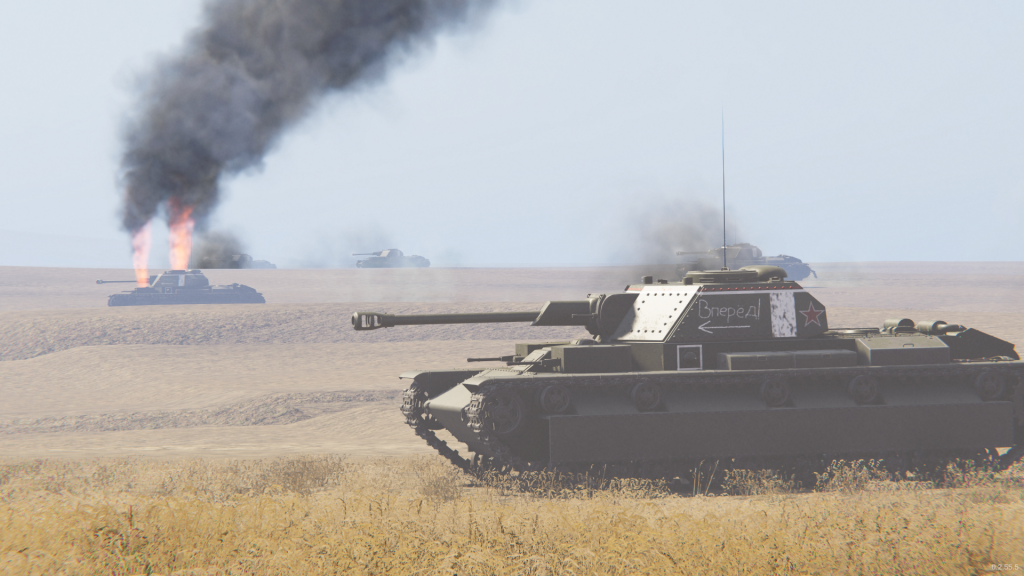
The Inevitable T-31M
And this is where the alternate history becomes particularly interesting.
Combat experience would almost certainly have demonstrated that the two small machine-gun turrets did not justify the internal volume and additional weight they consumed. Their removal would therefore have become the first major modification of the T-31.
The forward hull would receive a single armored plate, while the freed internal volume could be used for additional ammunition and fuel. The crew could also be reduced.
The next step would be a redesigned main turret. Applique armor plates would gradually give way to integral armor components of more rational shape. At the same time, engineers would attempt to reduce the tank’s weight without significantly decreasing its effective protection.
By 1942–1943, very little of the classic T-28 would probably remain.
This produces an intriguing paradox: even if Soviet industry had rejected the T-34 and instead committed itself to the gradual modernization of the T-28, the logic of wartime experience would eventually have forced designers to move in roughly the same direction — toward a single-turret tank with shell-resistant armor, a powerful gun, a diesel engine, and the smallest crew necessary to operate it efficiently.
The path toward such a vehicle would simply have been considerably longer and more expensive.
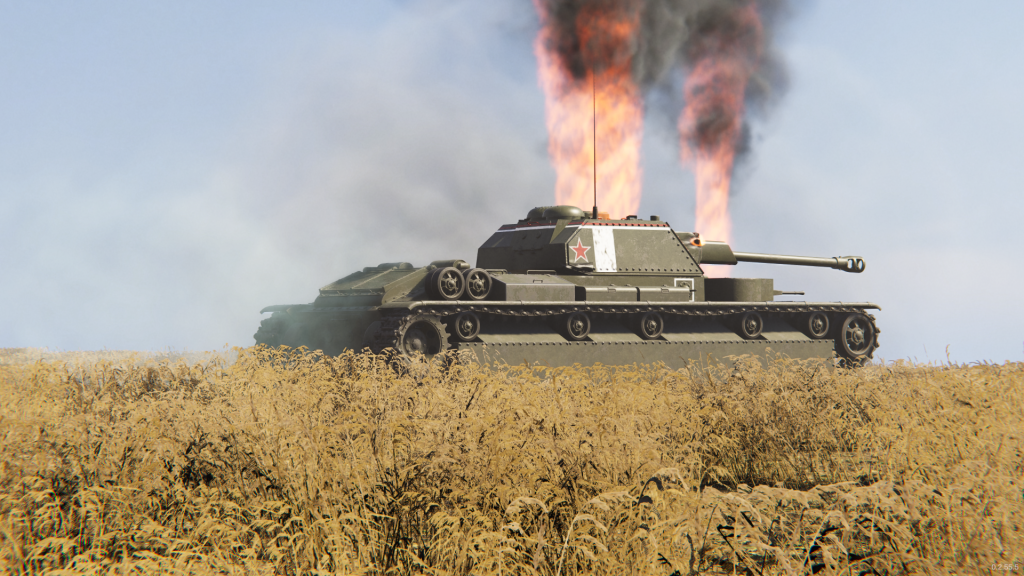
The Last and Best of the T-28 Family
This is precisely why BullShitLatinName’s T-31 is interesting not merely as an attempt to imagine an “improved T-28,” but as a visual demonstration of the limits of the original concept.
Almost every major weakness of the early T-28 has been addressed. The armor has become genuinely shell-resistant. The armament has been strengthened. The commander can concentrate on commanding the tank. Observation equipment and the powerplant have been improved.
Yet the enormous hull, two small turrets, and numerous machine-gun positions remain.
The result is a tank with one half firmly rooted in 1935 and the other already belonging to 1941.
The creator of the model effectively reached the same conclusion himself. During the discussion of the design, he acknowledged that what had begun as a modernization of the T-28 had ultimately evolved into something that was, for all practical purposes, a heavy tank.
And therein lies perhaps the most important lesson of the alternate T-31.
If one continues strengthening the T-28 indefinitely without abandoning its fundamental architecture, the ultimate result is not the perfect medium tank but an enormous, expensive, and slow breakthrough vehicle.
The T-34 triumphed in our timeline not because the T-28 was completely incapable of further modernization. Quite the opposite — it could have continued evolving for years. At a certain point, however, abandoning the old concept and starting almost from scratch proved to be the more promising solution.
In another timeline, the final and most advanced descendant of the T-28 might well have been the T-31 Model 1941.
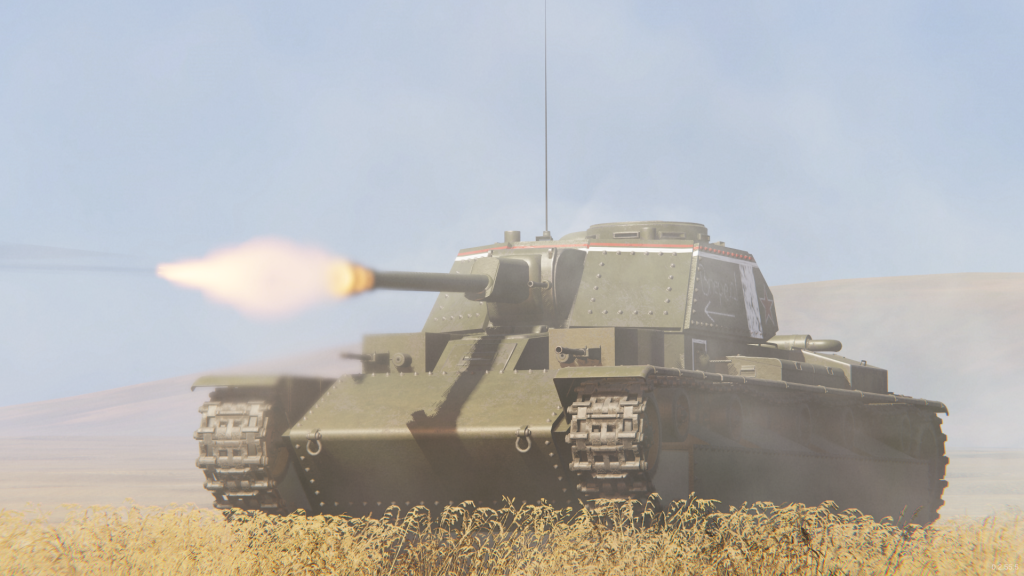
T-31 Technical Specifications
- Type: Medium tank / effectively a heavy breakthrough tank
- Year: 1941
- Hull length: 7.87 m
- Overall length with gun: 8.9 m
- Width: 3.25 m
- Height: 2.7 m
- Crew: 6
- Main armament: 76.2-mm “D-5S” gun of the alternate timeline
- Secondary armament: 5 machine guns
- Hull front: 60 mm + additional 40 mm armor
- Hull sides: 50 mm
- Additional lower side armor: 35 mm
- Rear engine-compartment armor: 10 mm
- Hull and turret roof: 20 mm
- Turret front: 70 mm + up to 40 mm additional armor
- Turret sides: 60 mm + up to 40 mm additional armor
- Turret rear: 50 mm
- Maximum speed: 32 km/h
- Transmission: 7-speed
- Transmission location: Rear
The dimensions, armor layout, crew, armament, and mobility characteristics are based on the specifications given by the creator of the original model.