The Plane That Folds Its Propellers: The Experimental X-76 and the Future of Aviation

The history of aviation is full of aircraft designed not for military service, but to test bold ideas. Such aircraft are often designated with an “X”—a sign that we are dealing with an experiment designed to test the limits of what is possible. This is exactly how legendary aircraft like the X-1, which was the first to break the sound barrier, came into being.
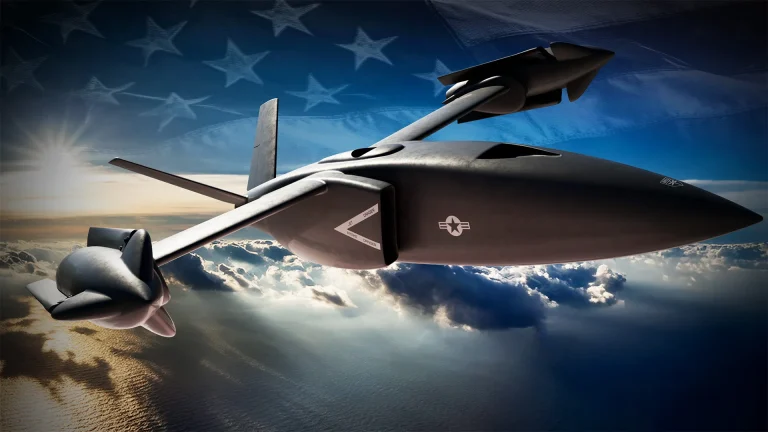
Today, a new aircraft—the Bell X-76—has been added to this tradition. This experimental aircraft is being developed by Bell Textron on behalf of DARPA. Its mission is to solve one of aviation’s oldest problems: how to combine the speed of a jet aircraft with the versatility of a helicopter.
If the project proves successful, it could change our understanding of how military aircraft take off, maneuver, and operate on the battlefield.

Contents:
An Old Dilemma in Aviation
Throughout the history of aviation, there has been a fundamental contradiction.
Airplanes are fast and fuel-efficient, but they need a long runway. Helicopters can take off almost anywhere, but they are slower and less efficient over long distances.
Designers have long been trying to combine these qualities. One well-known example is the V-22 Osprey tiltrotor, which can take off vertically and then transition to horizontal flight. However, even such aircraft have speed limitations—around 270 knots.
This is precisely the problem that the X-76 is designed to solve.
Rotors That Disappear in Flight
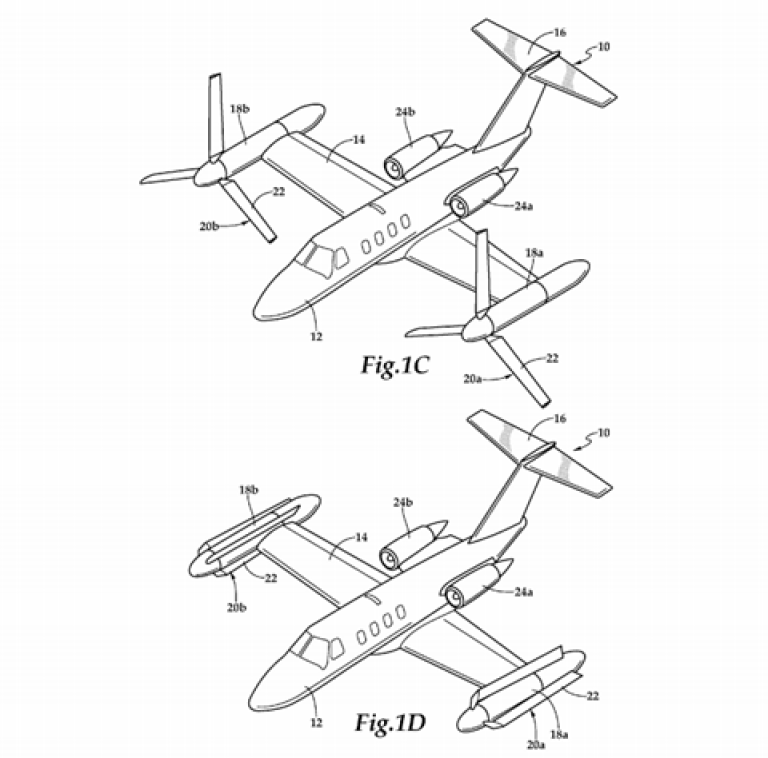
In takeoff mode, the aircraft functions like a conventional tiltrotor: its large rotors generate lift and allow it to hover in the air. But as it accelerates, an unusual transformation takes place.
When the speed reaches approximately 150–200 knots, the rotors slow down, come to a stop, and fold back against the engine nacelles. The aircraft then switches to jet propulsion and continues its flight like a conventional fixed-wing aircraft.
This design significantly reduces aerodynamic drag—one of the main challenges for rotorcraft at high speeds.
In theory, this would make it possible to reach a cruising speed of over 400 knots, which is significantly faster than most helicopters.
Part of the SPRINT program

The X-76 is being developed as part of the SPRINT program—Speed and Runway Independent Technologies.
Its goal is to create an aircraft that will be able to:
- take off vertically;
- operate from unprepared sites;
- to fly at high speeds over long distances.
The project is jointly funded by DARPA and U.S. Special Operations Command. Following the completion of the critical design phase, the aircraft has officially moved into the prototype construction phase.
The first flight of the experimental aircraft is scheduled for around 2028.
The Aircraft of Future Operations

Although the X-76 is being developed as an experimental aircraft, the military is already considering possible applications for such aircraft.
They may be particularly useful for:
- special forces operations;
- rescue missions;
- intelligence;
- the transport of troops and cargo.
The main advantage is the ability to operate without airfields.
In modern conflicts, runways are among the first targets to be struck. An aircraft capable of taking off from small airfields or temporary bases significantly increases the flexibility of military operations.
A Step in the Long History of Experiments

The idea of combining the characteristics of an airplane and a helicopter is by no means new.
Engineers had already attempted to build similar aircraft in the past. One example was the experimental Boeing X-50 Dragonfly, in which the rotor was designed to stop spinning in flight and function as a wing. However, this project ended in a series of crashes and was ultimately canceled.
The X-76 is yet another attempt to solve the same problem, but using more modern technologies and computational control systems.
What Will the X-76 Reveal?
The fate of the new aircraft remains uncertain. Many experimental X-planes never make it past the laboratory stage, but it is precisely these projects that often pave the way for future generations of technology.
Even if the X-76 does not go into production, it could demonstrate the viability of a key concept—an aircraft capable of taking off like a helicopter and flying like a jet.
And if this experiment proves successful, the aviation industry could see the emergence of a new class of aircraft—fast, versatile, and independent of airfields.
source https://www.twz.com/air/bells-x-76-fold-away-rotor-aircraft-is-darpas-newest-x-plane