The Secret AIM-260 Has Finally Been Revealed: The U.S. Is Developing a Missile Designed to Outmaneuver China in Air Combat

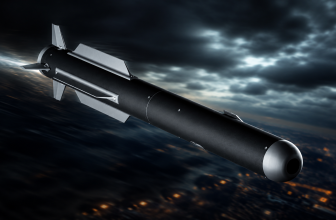
There has been talk of the new American AIM-260 JATM missile for many years, but all this time it has existed almost like a ghost. There were virtually no official images, its specifications were kept secret, and the Pentagon preferred to limit itself to the vaguest of comments. Against this backdrop, the AIM-260 gradually acquired an almost mythical status—as “the very missile” that is supposed to restore the U.S.’s advantage in aerial combat against China.
And now, for the first time, JATM has truly made its public debut.
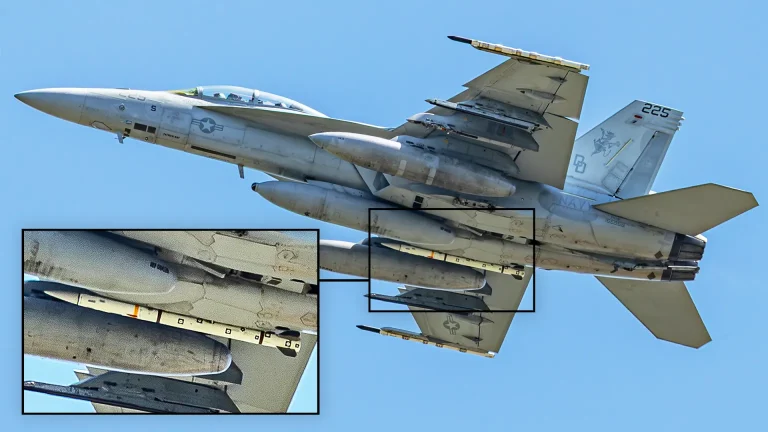
In official U.S. Air Force footage, keen observers spotted a new missile under the wing of an F-22 Raptor. And although the U.S. military traditionally avoids direct confirmation, virtually no one doubts it anymore: this is indeed the AIM-260—the most classified U.S. air-to-air missile of the past decade.
Why the U.S. Urgently Needed a New Missile

The development of the AIM-260 is directly linked to China.
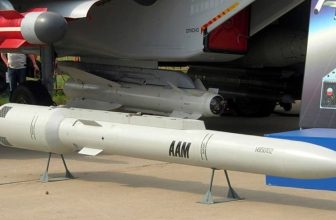
For the past twenty years, Americans have been convinced that their AIM-120 AMRAAM remains the best long-range air-to-air missile. But then Beijing began actively developing its own PL-15 missile—a heavy, long-range system equipped with a modern active radar seeker.
It was the PL-15, in particular, that sent an extremely troubling signal to the Pentagon.
The U.S. military unexpectedly discovered that Chinese fighter jets could potentially be the first to open fire on U.S. aircraft from a long distance. And in modern air warfare, this is critically important. Whoever spots the enemy first, launches a missile first, and forces the enemy into a defensive position first—that’s often the one who wins the battle.
That is precisely why the Joint Advanced Tactical Missile (JATM) program was launched in 2017. Its objective was extremely simple: to develop a new missile that would outperform the Chinese PL-15 in range, speed, and resistance to jamming.
The AIM-260 is already a missile designed for war against China
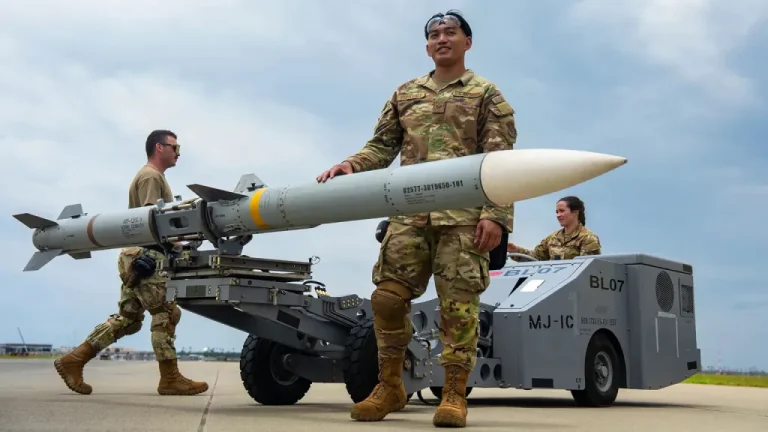
The most interesting thing is just how different the new missile is from the old AMRAAM.
In essence, the AIM-260 is no longer being developed for the local conflicts of the Middle East era, but for a major war in the Pacific. There, American F-22s, F-35s, and F/A-18s will have to face off against modern Chinese fighter jets, AEW&C aircraft, and vast air defense zones.
According to available information, the AIM-260 is expected to retain roughly the same dimensions as the AIM-120 in order to fit into the internal bays of the F-22 and F-35. However, the missile will have significantly greater range and speed.
This is considered one of the program’s major engineering achievements. The Americans are trying to literally “squeeze” the performance characteristics of a new-generation missile into the dimensions of the old AMRAAM.
According to various estimates, the AIM-260’s speed may exceed Mach 5, and its range may significantly surpass that of current versions of the AIM-120D. These specifications have not been officially disclosed, but the very level of secrecy surrounding the project speaks to how important it is considered to be in Washington.
The missile is so secret that separate storage facilities were built for it
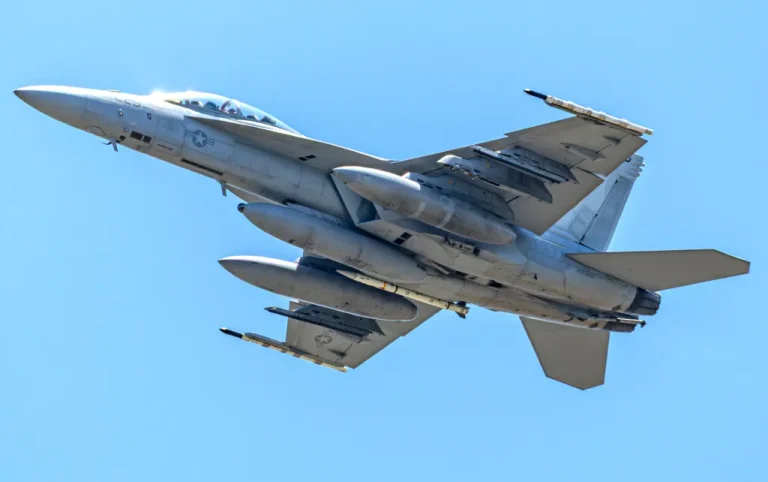
The level of secrecy surrounding the AIM-260 seems almost unusual, even by the standards of U.S. military programs.
A few years ago, it was reported that special secure storage facilities were being built at Hill Air Force Base for the new missiles. At the time, The War Zone explicitly stated that the JATM program was classified as a Special Access Program—that is, one of the Pentagon’s most highly classified projects.
And that’s a very telling point.
The U.S. clearly views the AIM-260 as one of the key elements of future air superiority. And this applies not only to manned aircraft. Earlier reports indicated that the new missile is also planned to be integrated with the next-generation Collaborative Combat Aircraft drones—which will serve as “loyal wingmen” for the F-35 and NGAD.
In fact, the AIM-260 is set to become the primary weapon of the next generation of U.S. aircraft.
Air warfare is once again turning into a race for range
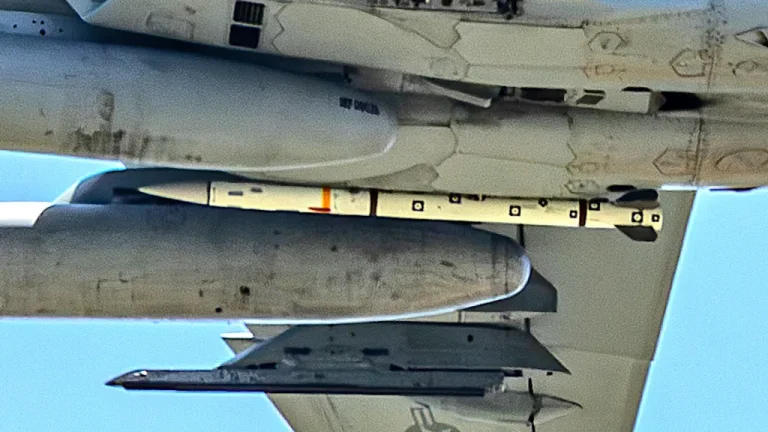
What is particularly interesting about this whole story is something else: the world is, in fact, returning to the concept of ultra-long-range air combat.
After the Cold War, many were convinced that close-range, maneuver-based combat was gradually becoming a thing of the past. But now, air warfare increasingly resembles a high-tech duel between sensors, radars, and long-range missiles.
The aircraft that spots the enemy first and fires a missile with a longer range gains a huge advantage even before visual contact is established.
That is precisely why China is actively developing the PL-15 and PL-21, Europe is working on the Meteor, and the U.S. is rushing to develop the AIM-260.
In essence, a new arms race is beginning—only this time it’s not a nuclear one, but an aviation one.
And the AIM-260 could become one of the most important American missiles of the 21st century, even if its actual specifications remain classified for a long time to come.
This material is based on a publication by The War Zone.