The Su-57, armed with an R-37M missile, has just rewritten the rules of air warfare! The first casualty has already been reported: a Saab 340 AWACS aircraft

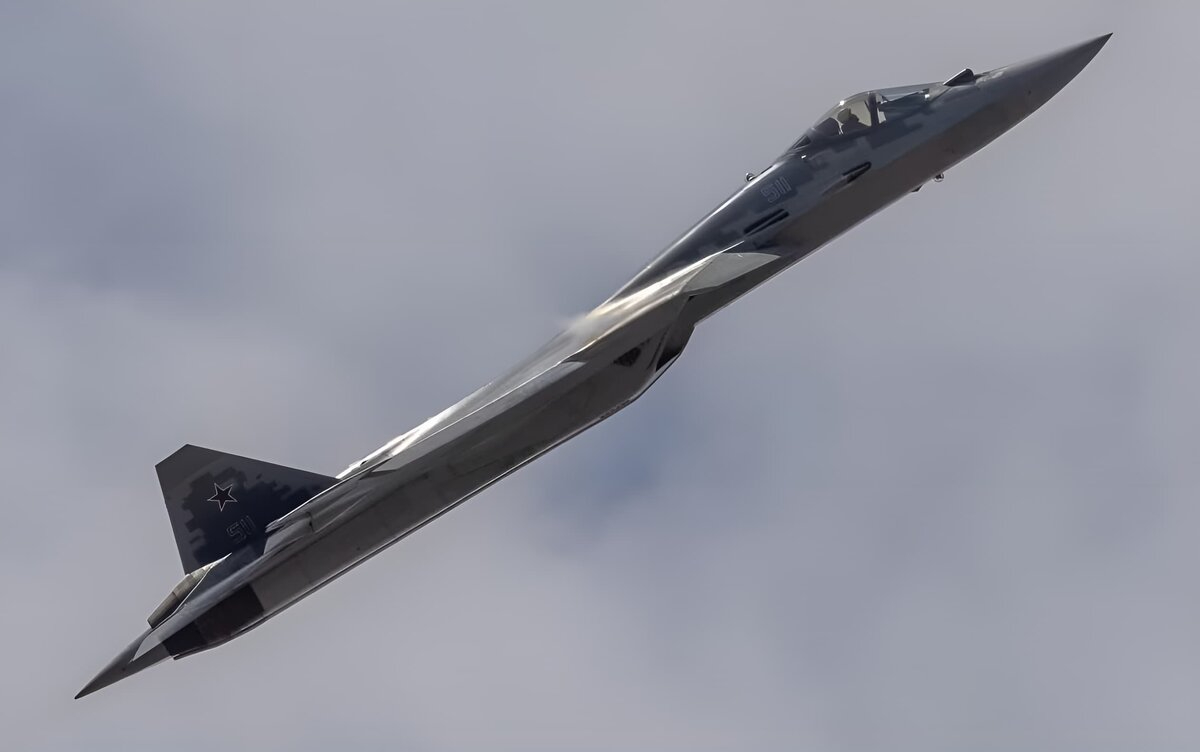
In early May 2026, reports began circulating in the media that a Russian fifth-generation Su-57 had struck a Swedish Saab 340 AEW&C long-range early warning aircraft—which had been transferred to Ukraine—with an R-37M long-range missile. If this information is confirmed, it would mark the first-ever combat use of a “stealth fighter + hypersonic, ultra-long-range missile” combination against an enemy airborne command post.
The Greek publication ProNews, cited by Russian military correspondents, claims that the incident occurred over eastern Ukraine. According to sources, an R-37M air-to-air missile, capable of striking targets at a range of up to 300 kilometers, was used to intercept the target.
Context: Why the Saab 340 Became a Priority Target
Sweden has transferred two Saab 340 AEW&C (ASC-890) aircraft to Ukraine as part of a military aid package. These aircraft are equipped with Erieye radar systems featuring active phased array antennas capable of detecting air targets at ranges of up to 450 km and tracking up to 1,000 targets simultaneously.
For any modern army, an AWACS aircraft serves as a “flying command post”: it coordinates the actions of fighter jets, guides air defense systems, and provides early warning of missile strikes. The destruction of such an aircraft inflicts not merely tactical but operational damage on the enemy’s airspace control system.
Military expert Yuri Knutov noted that the loss of the Saab 340 will make it more difficult for Ukraine to coordinate its air defense during massive airstrikes and will complicate the use of JDAM guided bombs, which require external targeting.
Technical Combination: Su-57 + R-37M
Tactical and technical specifications of the Su-57:
- Type: Fifth-generation multirole fighter
- Maximum speed: 2,600 km/h (Mach 2)
- Practical ceiling: 20,000 m
- Operational range: up to 1,500 km
- Length: 19.8 m
- Wingspan: 14.1 m
- Maximum takeoff weight: 35,000 kg
- Weapons (internal bays): R-77M, R-74M2, R-37M, Kh-59MK2, Kh-69, GSh-30-1
- Radar: N036 “Belka” with AFAR, target detection at ranges up to 400 km
- Features: Low radar signature, exceptional maneuverability, integrated avionics
Tactical and Technical Specifications of the R-37M:
- Type: Long-range air-to-air guided missile
- Maximum launch range: 300 km (in the forward hemisphere)
- Flight speed: up to Mach 6 (hypersonic)
- Starting weight: 600 kg
- Warhead weight: 60 kg (high-explosive fragmentation)
- Guidance system: Inertial with radio correction + active radar seeker in the terminal phase
- Detection range of the GSN: up to 30 km
- Targets: AEW&C aircraft, tanker aircraft, bombers, and fighter jets at altitudes up to 25 km
The key advantage of this combination is that, thanks to its low observability, the Su-57 can approach the AEW&C aircraft’s patrol zone undetected and launch the R-37M from a safe distance. Once launched, the missile operates on a “fire-and-forget” principle: its active homing seeker independently locks onto and tracks the target.
Tactical Analysis: How the Attack Might Have Unfolded
According to military analysts, the scenario for its use might have been as follows: Ground-based radars or other reconnaissance assets detected an AWACS aircraft in flight. The coordinates were relayed to the Su-57 crew, who, using data from their N036 onboard radar, guided the R-37M missile to the target.
It is important to note that, while performing its functions, an AEW&C aircraft actively emits radio signals, making it detectable by modern electronic intelligence systems. This transforms it from an “invisible observer” into a priority target for passively guided missiles or for attacks based on signal triangulation.
Military correspondent Alexander Kots emphasized that the R-37M was originally developed during the Soviet era specifically to counter American AWACS-type early warning and control aircraft, and its integration into the Su-57’s arsenal has created a unique tool for “blinding” enemy air formations.
Implications for Air Warfare
If reports of the Saab 340 being shot down are confirmed, this will have several strategic implications. First, it demonstrates the Russian Air Force’s actual capability to strike high-priority targets deep within the enemy’s operational structure. Second, it confirms the effectiveness of the Su-57’s stealth technology: had the aircraft been detected in time, the attack could have been thwarted by air defense systems or escort fighters.
Third, the Ukrainian side will likely revise its tactics for deploying the remaining AEW&C aircraft, increasing the distance at which it operates from the front line and strengthening electronic countermeasures. However, this, in turn, will reduce its effectiveness in supporting frontline units.
Official Status of the Information
At the time this article was prepared, neither the Ministry of Defense of the Russian Federation nor the General Staff of the Armed Forces of Ukraine had issued any official statements confirming or denying the incident. Sweden also did not comment on the status of the aircraft transferred to Ukraine.
The lack of official confirmation is not uncommon in today’s information warfare. The parties often refrain from commenting on tactical losses so as not to reveal details about the capabilities of their intelligence and air defense systems.
Conclusion
Reports of the potential use of the Su-57 armed with an R-37M missile against an AEW&C aircraft reflect an important trend in modern air warfare: a shift in focus from close-range maneuver combat to ultra-long-range intercepts using stealth platforms and hypersonic munitions.
Regardless of the degree to which a specific incident has been confirmed, the very possibility of such a scenario calls for a reevaluation of the doctrines governing the use of AEW&C aircraft and the methods for their protection. The future of air superiority will apparently be determined not by the number of fighter jets, but by the ability to integrate reconnaissance, stealth, and long-range, high-precision weapons into a single combat network.