The Return of a Legend. The F-14 Tomcat Is Back in the Skies, But No Longer as a Military Aircraft

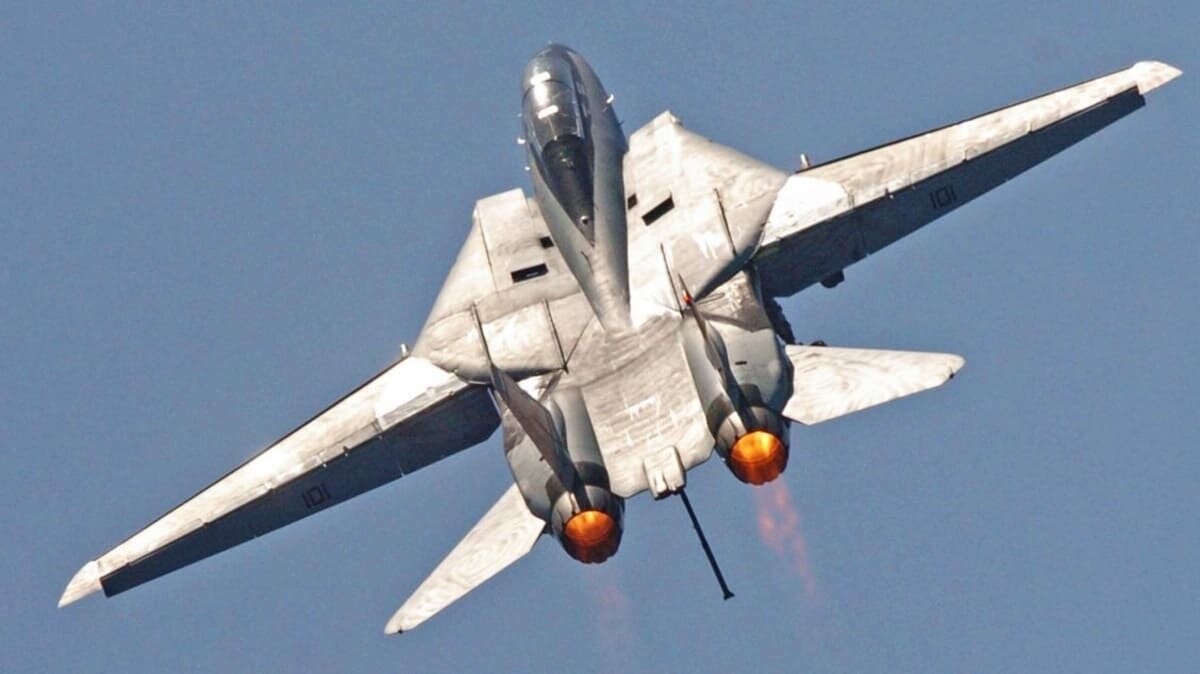
What seemed like a pipe dream just a short time ago is now becoming a reality: the legendary fourth-generation carrier-based fighter, the F-14 Tomcat, may take to the skies of the United States once again, nearly two decades after it was officially retired. This time, however, it will not be part of a carrier strike group’s combat wing, but rather a unique exhibit capable of showcasing the power and aesthetics of the Cold War era in civilian skies.
Legislative Momentum: How Congress Paved the Way for a Legend
A key factor that made the return of the Tomcat possible was a bill currently under consideration in the U.S. Congress. The bill provides for the transfer of three decommissioned F-14D fighter jets to the U.S. Space & Rocket Center in Huntsville, Alabama. The most significant aspect of the initiative is that the bill creates the legal possibility of restoring one of these aircraft to airworthy condition. This is not merely a museum restoration—it involves fully returning the aircraft to the skies.
The Story of One Airplane: From the Deck of an Aircraft Carrier to the “Graveyard”
The F-14’s last official flight on behalf of the U.S. Navy took place in September 2006, bringing to a close 32 years of flawless service. After being decommissioned, most aircraft of this type were subjected to a controlled destruction procedure. This drastic measure was dictated by national security concerns: Iran remains the only country other than the United States to have operated the F-14, and the U.S. military sought to eliminate any possibility of spare parts or technology being transferred abroad.
Today, three F-14s—serial numbers 164341, 164602, and 159437—are located at the famous Davis-Monthan storage facility in Arizona, known as the “aircraft graveyard.” According to the U.S. Air Force, these are the last surviving F-14D variants suitable for potential restoration. Several more early-model aircraft are awaiting their fate at the same base, though their technical condition remains unknown.
Geopolitical Context: Why Now?
Interest in reviving the F-14 may have intensified amid the recent escalation of tensions with Iran. According to reports from analytical sources, joint operations by the U.S. and its allies between February and April 2026 could have permanently grounded Iran’s fleet of Tomcats. In such a situation, the return of one of these American aircraft to the skies takes on not only cultural and historical significance but also symbolic meaning—a demonstration of technological heritage and superiority.
The Challenges of Restoration: The Price of a Legend
Even if the legislative process yields a favorable outcome, restoring the F-14 to airworthy condition will remain an extremely resource-intensive task. The fighter has always been known for its highly complex maintenance requirements, necessitating specialized infrastructure and qualified personnel. Modern aviation safety standards and civil flight certification requirements add additional layers of complexity. Nevertheless, the very fact that the possibility of bringing back this legendary fighter is being discussed at the federal legislative level attests to the seriousness of the project’s initiators’ intentions.
The Future of the Project: A Cultural Mission, Not a Military One
It is important to emphasize that even if the initiative is successfully implemented, the F-14 Tomcat will not return to service as a combat aircraft. Its new role will be that of a living exhibit, capable of participating in air shows, educational programs, and historical reenactments. This will allow new generations to see, hear, and experience the power of an aircraft that, in its day, defined the balance of power in the skies over the oceans.
Tactical and Technical Specifications of the F-14D Super Tomcat
- Crew: 2 people (pilot and weapons operator)
- Length: 19.1 m
- Wingspan: 11.65 m when folded, 19.45 m when extended
- Wing sweep: variable, from 20° to 68° in flight, up to 75° on the ground
- Height: 4.88 m
- Wing area: 54.5 m²
- Curb weight: 18,191 kg
- Curb weight: 26,632 kg
- Maximum takeoff weight: 33,720 kg
- Engines: 2 × General Electric F110-GE-400 dual-circuit turbojet engines with afterburners
- Maximum thrust: 61.4 kN per engine
- Thrust with afterburner: 124.7 kN per engine
- Maximum speed: 2,485 km/h (M=2) at an altitude of
- Operational range: 926 km
- Range: 2,960 km
- Practical ceiling: 16,150 m
- Lifting speed: 229 m/s
- Wing loading: 553.9 kg/m²
- Traction ratio: 0.91
- Cannon armament: 1 × 20-mm M61A-1 Vulcan six-barrel cannon (ammunition capacity: 675 rounds)
- Combat load: up to 6,700 kg
- Typical suspension configurations: combinations of AIM-9 Sidewinder, AIM-7 Sparrow, and AIM-54 Phoenix missiles, as well as various types of guided and unguided bombs
Conclusion: A Living Legend
The possible return of the F-14 Tomcat to the skies is more than just news for aviation enthusiasts. It is a symbol of respect for engineering genius, for the history of naval aviation, and for those who once flew this aircraft to defend national interests. If the project receives final approval and is implemented, the skies over Alabama will once again echo with the roar of two turbojet engines, and spectators will be able to witness firsthand what for many years was only available in archival footage and newsreels. The legend never dies—it simply changes form to continue its flight.