King George V's Flying Tanks. The Sopwith Buffalo Prototype Armored Attack Aircraft. United Kingdom

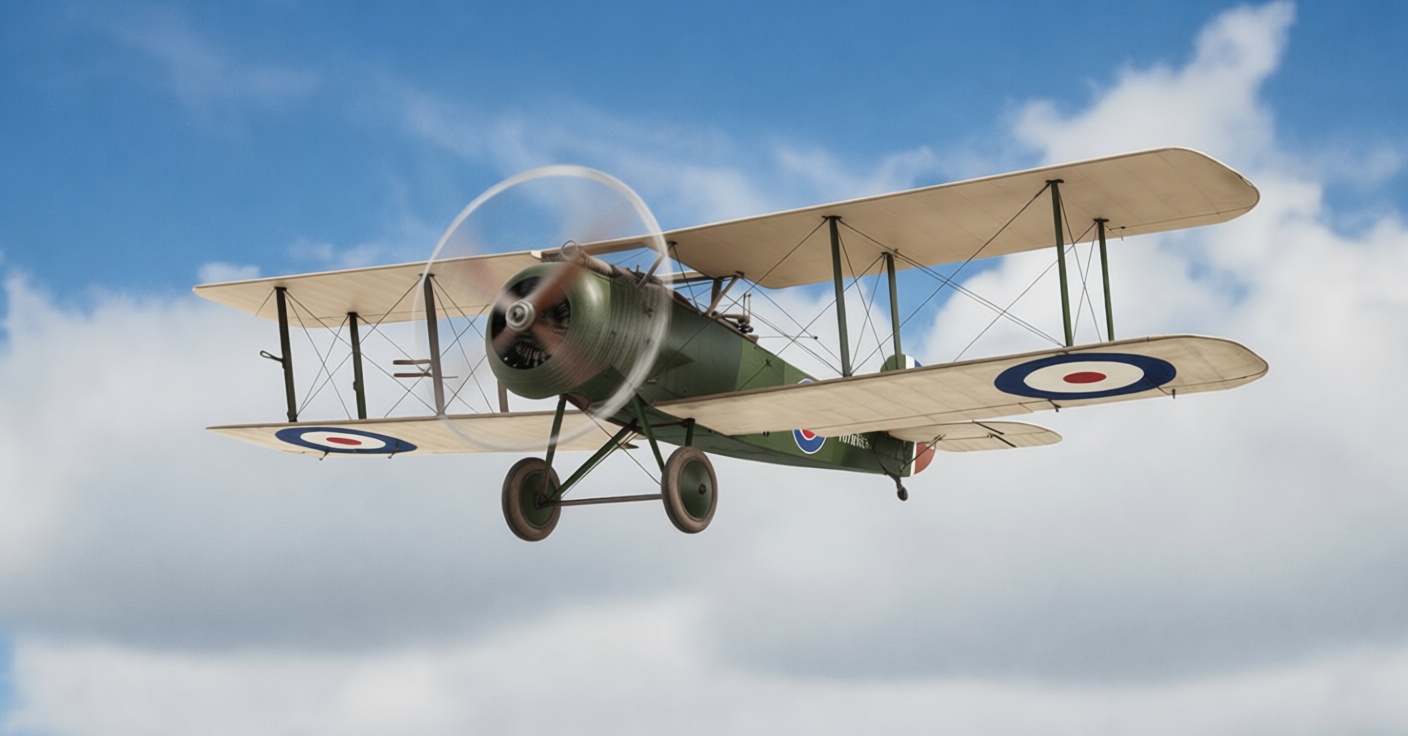
To consider the Buffalo —the last aircraft type developed by Sopwith during World War I—as a simple two-seat counterpart to the single-seat Salamander ground-attack aircraft would be to downplay its purpose and technical merits, as well as to underestimate its potential. Nevertheless, the Sopwith Buffalo possessed the same extensive armor plating required for low-altitude flights, at which enemy infantry small-arms fire could inflict serious damage on the aircraft.
Its elegant appearance, which made the Buffalo truly resemble a fighter (in this respect, the Sopwith Buffalo surpassed the Bristol Fighter and even rivaled its sibling, the Sopwith Bulldog, not to mention the two-seat fighters Austin Greyhound, the Bristol Badger, and the Westland Weasel), was completely at odds with its poor performance: in this regard, for any new combat aircraft of the 1918 model year, a maximum speed at low altitude of about 110 miles per hour (177 km/h) and a service ceiling of 9,000 feet (2,740 m) must be considered insufficient. And yet, considering that the “Buffalo’s” crew consisted of two men, each of whom was equipped with a well-armed machine gun, and that the engine’s power output was only 230 l.s., and considering that the weight of the armor (the exact figure is unknown) must have been a serious hindrance in and of itself, these performance figures appear far less disheartening.
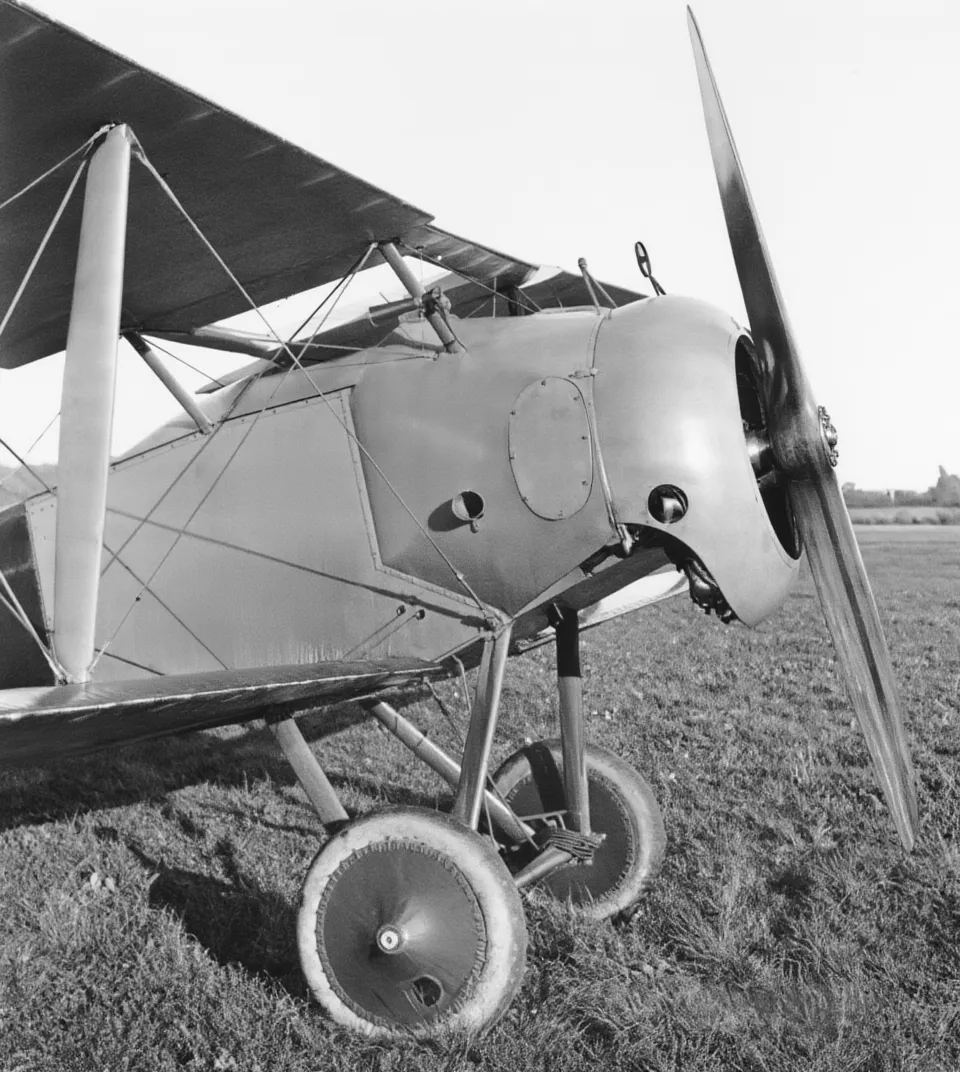
In fact, in terms of design, the “Buffalo” was a true role model. First, it was surprisingly compact, as the wingspan of its biplane airframe was only 3 feet (0.9 m) longer than that of the T.F.2 Salamander ground-attack aircraft and the 7F.1 Snipe fighter. The fuselage dimensions were correspondingly modest—a fact evidenced by photographs that highlight the relative bulk of the Bentley B.R.2 engine and its associated cowlings. The small cross-section behind the engine not only reduced weight but also provided the gunner with a wide field of view (and firing arc) as well as, to use modern terminology,
“low visibility”
for return fire from the ground.
Initially, the Sopwith Buffalo was known as the “Trench Fighter” (T.F.)—following the example of the specially designed T.F.1 Camel and T.F.2 Salamander—but its official purpose was
“community policing”
– maintaining air-ground coordination with the forward units of their own forces. This specialized and dangerous mission required flying over the combat zone at very low altitudes in order to determine the location of infantry units through visual observation or “contact.” This necessitates protective armor. In the absence of the ability to drop bombs,
“offensive patrolling”
– active combat operations – was a secondary combat mission.
It is clear that the primary requirement was to provide the pilot with a wide field of view. The pilot’s high seating position ensured a good field of view: he sat right next to the engine, and his head was positioned in a large, oblong cutout in the center of the upper wing. Right behind him was the observer-gunner, whose upward view was improved by a cutout in the rear edge of the wing; however, the observer-gunner’s downward view was obstructed—especially on the first aircraft—by the lower wing.
Great work, Buffalo H5892. The Sopwith caption for the photograph reads: “S.599 – Sopwith Buffalo – Two-Seat Trench Fighter – 1st Experimental – Sept. 19/18.” Pay special attention to the cutout in the center of the upper wing intended for the pilot
Two Buffalo aircraft—military serial numbers H5892 and H5893—were ordered in July 1918. The aforementioned “fighter” element in the aircraft’s design was emphasized by the requirement for as much standardization as possible with the Sopwith Bulldog fighter. This requirement may have partly influenced the speed with which H5892 was prepared for flight tests at Brooklands, where it was delivered on September 18, 1918, and photographed the following day (as evidenced by the two photographs attached to this article). Shortly thereafter—on October 20—H5892 was delivered to Aviation Property Supply Depot No. 1 in Marquise, Operational experience in France made it possible to implement the recommended modifications, although it is unknown to what extent they were incorporated into the design of H5893 when it was delivered to Martlesham Heath on November 18 (exactly one week after the armistice was signed).
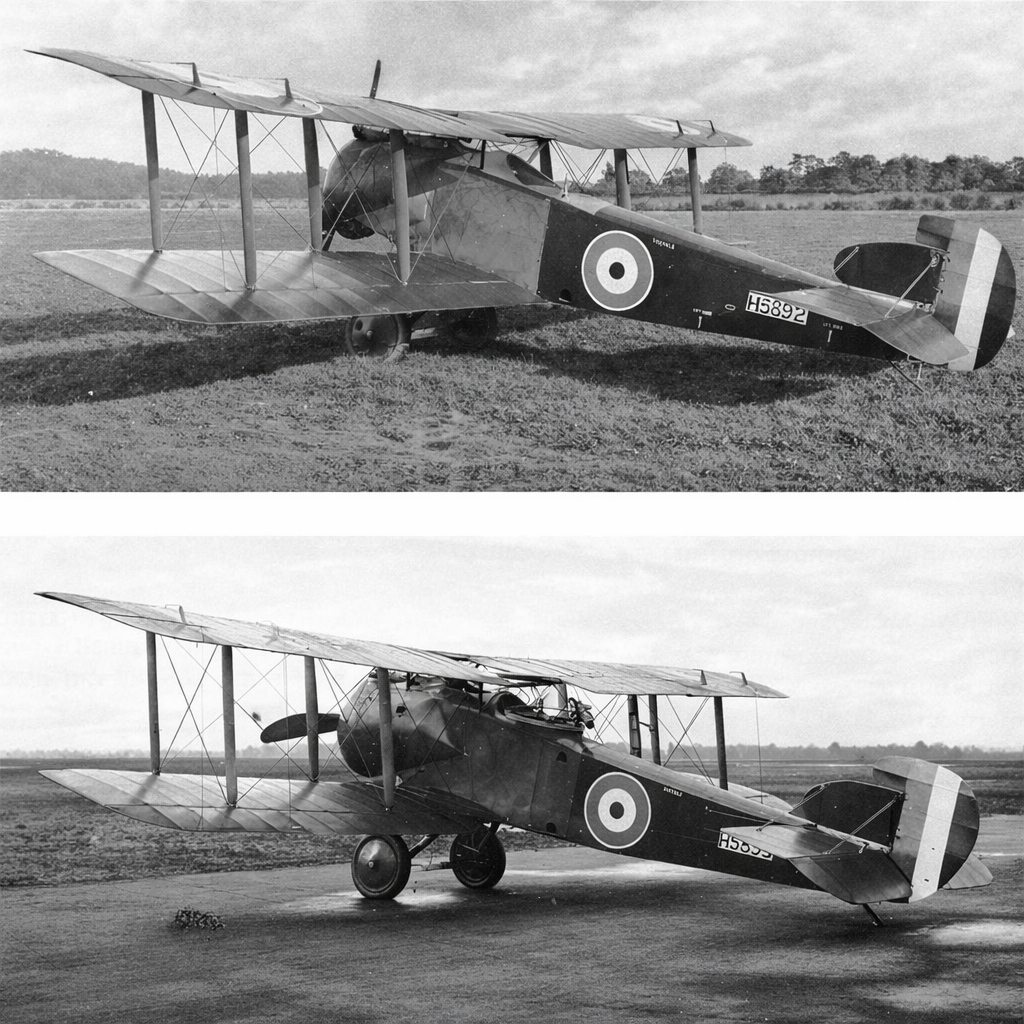
The first Buffalo, H5892, (top) is shown in a side-by-side comparison with the second Buffalo, H5893, (bottom). Sopwith’s caption for the top photograph reads: “S.596 – Sopwith Buffalo – Two-Seat Trench Fighter – 1st Prototype – Sept. 19/18.” Note the different configurations of defensive armament and the degree of armor protection
The most notable differences between the two Buffalo models concerned the engine cowling, armament, armor, and tail surfaces, and they can be summarized as follows:
The second unit, H5893, had an elongated, tapered engine cowling. The engine cowl of H5893, at least on its left side, featured (as in the earlier H5892) a link guide sleeve next to the ammunition feed mechanism of the synchronized Vickers machine gun, which was offset to the left, with the spent-cartridge chute located below it and the air intake situated even lower. In the rear cockpit of the second Buffalo, the Lewis machine gun was mounted in a Scarff ring mount, whereas on the first one, H5892, a pivot mount was used to secure the mountable machine gun. Additionally, on the second vehicle, the observer-gunner’s compartment was armored, whereas on H5893, the armor plates (as in the T.F.2 Salamander, where the armor was a structural element) extended backward into the next section of the fuselage truss. The downward field of view for the gunner (or gunner-observer) was slightly improved by means of significant cutouts in the trailing edges of the lower wing roots. The tail unit of the H5893 differed significantly from that of the H5892, as the rudder had a new shape and a longer chord length.
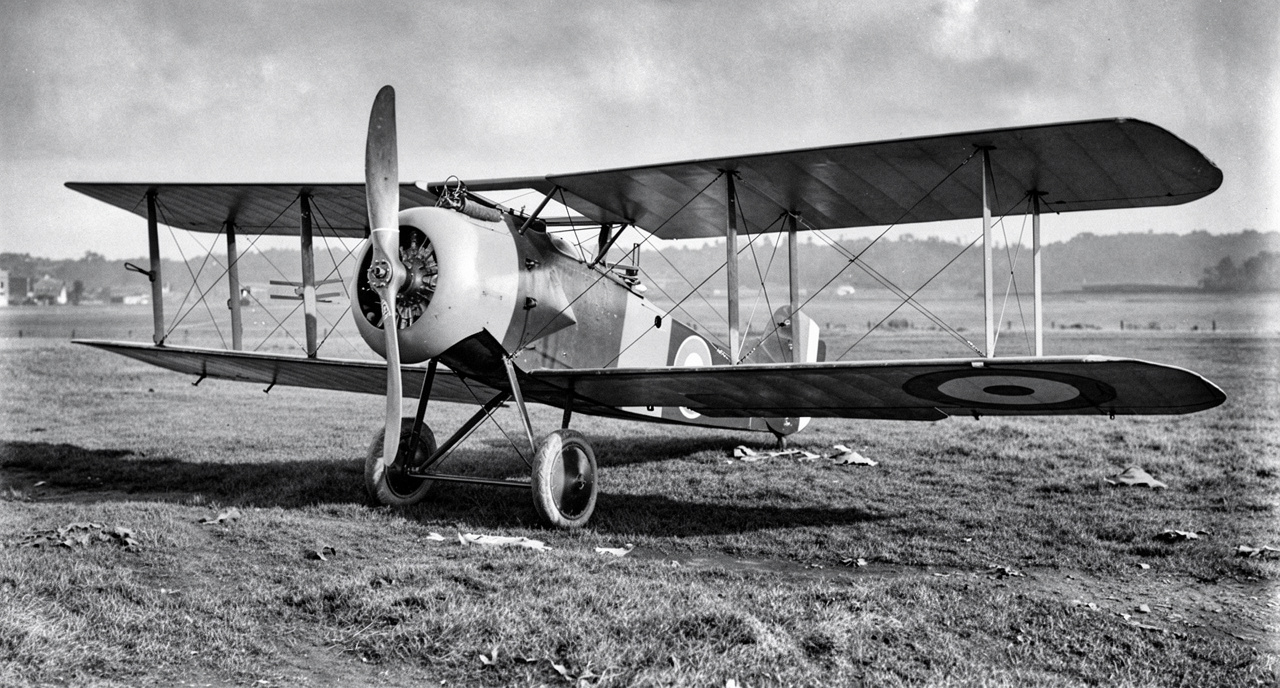
The distinctive shape of the Buffalo H5893’s engine cowling. The second example clearly looks better than the first. Sopwith’s caption for the photograph reads: “S.674—Sopwith Buffalo No. 2—Armored Two-Seat Trench Fighter—200-horsepower Bentley Rotary Engine—Nov. 8, 1918”
A notable feature on both “Buffalo” models was the ring-type sight for the pilot’s machine gun, mounted on struts attached to the engine cowling, although a central Aldis sight was also provided.
There is no doubt that if hostilities had continued, the Sopwith Buffalo would have appeared on the front lines in large numbers. However, the war ended, and development was not continued. H5893 was used for carburetor testing, and one of the Buffalos (possibly the very same one) served a different purpose. As Harald Penrose wrote:
“By the end of February [1919], the Sopwith [Atlantic] was already flying. Before dismantling the plane for transport, Lieutenant Engholm of Jury’s International Pictures, who was operating the camera from a Sopwith Buffalo flying alongside,”
FLIGHT AND TECHNICAL SPECIFICATIONS
Тип: Sopwith Buffalo (H5893)
Role: attack aircraft
Status: prototype
Manufacturer: Sopwith Aviation Company
Crew: 2 people
Powerplant: a single nine-cylinder, air-cooled Bentley B.R.2 rotary engine, producing 230 l.s. (169 kW) and driving a two-bladed wooden propeller with a fixed pitch
Dimensions:
Wingspan: 34 feet 6 inches (10.5 m)
; Length: 23 feet 3 inches (7.0 m)
; Wing area: 370 square feet (34.4 m²)
Weight:
Empty aircraft: 2,178 pounds (988 kg)
; fuel and oil: 375 pounds (170 kg)
; military payload: 158 pounds (72 kg)
; maximum: 3,071 pounds (1,392 kg)
Flight characteristics:
Maximum speed at an altitude of 6,500 feet (1,980 m): 105.5 mph (169 km/h)
; service ceiling: 9,000 feet (2,740 m)
источник: H.F. King «Sopwith aircraft 1912-1920» pages 262-265
This translation was first published at – https://vk.com/@710541705-letauschie-tanki-korolya-georga-v-sopwith-buffalo