The Swedish CV90120 Returns After 25 Years: The “Light Tank” That No One Bought Gets a Second Chance

The history of the Swedish CV90120 seems almost unique in the modern arms market. The vehicle was showcased at exhibitions as early as the beginning of the 2000s and was regularly touted as the “tank of the future,” but in a quarter-century, it has yet to find a single actual buyer. Given the success of the CV90 family, this seemed particularly strange: dozens of countries purchased the IFV, yet the version with the 120-mm gun remained exclusively a demonstration model for years.
And now, the CV90120 is unexpectedly getting a second chance.
BAE Systems Hägglunds, in collaboration with Slovak companies, is preparing a major upgrade of the vehicle—one so extensive that it effectively represents a new generation of the platform. All of this is taking place against the backdrop of a potential contract with Slovakia, which has suddenly shown interest in the “light tank” concept as an alternative to traditional heavy main battle tanks.
Why the CV90120 Was Introduced Too Early
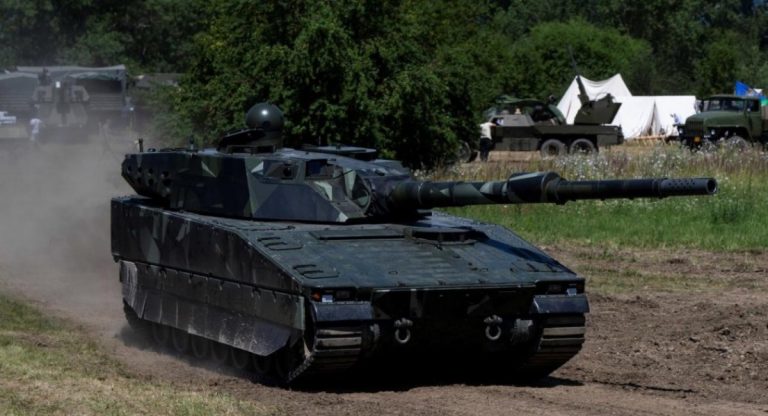
When the CV90120 was first unveiled to the public, the design looked extremely unusual.
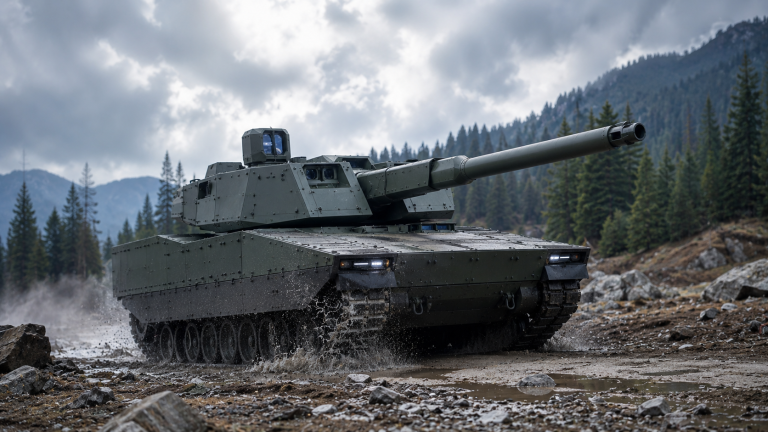
The Swedes attempted to combine the mobility of the CV90 infantry fighting vehicle with the firepower of a full-fledged main battle tank. They mounted a 120-mm smoothbore gun, an automatic loader, and a modern fire control system on a relatively light tracked chassis.
Essentially, BAE Systems Hägglunds attempted to develop a vehicle capable of performing some of the tasks of a main battle tank, but at a significantly lower weight and cost.
In the early 2000s, the idea seemed too radical. At that time, NATO armies were still relying either on heavy tanks like the Leopard 2 and the Abrams or on classic infantry fighting vehicles. The concept of an intermediate vehicle was seen as a compromise without a clear niche.
In addition, the CV90120 faced another challenge: the era of counterterrorism wars.
In Afghanistan and Iraq, landmines, improvised explosive devices, and RPGs became the main threats, rather than maneuver-based tank battles. Against this backdrop, armies either relied on heavily armored vehicles with maximum protection or switched entirely to wheeled vehicles.
The CV90120 seemed to have appeared out of nowhere.
Now the world has once again taken an interest in “light tanks”
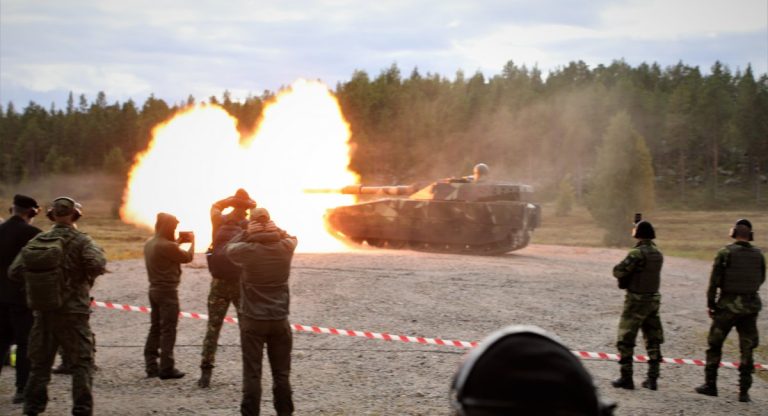
But the war in Ukraine has drastically changed perceptions of armored vehicles.
The modern battlefield has unexpectedly shown that heavy tanks are far from a one-size-fits-all solution. Their enormous weight, complex logistics, high cost, and vulnerability to drones have prompted many countries to reconsider lighter and more mobile vehicles.
It was at that very moment that an old Swedish project suddenly became relevant.
Slovakia has shown particular interest in the concept. The country is exploring the possibility of purchasing the CV90120 as a more affordable alternative to the Leopard 2A8 or the K2 Black Panther. According to Defense Minister Robert Kaliňák, light tanks can be 40–50% cheaper than heavy main battle tanks, both in terms of purchase cost and operating costs.
For a small army, this is critically important.
Slovakia is also taking into account the terrain—the hilly and mountainous landscape of the eastern part of the country, where super-heavy tanks are far from ideal. That is precisely why the idea of a mobile vehicle with a powerful gun looks appealing once again.
The new CV90120 has become much more dangerous
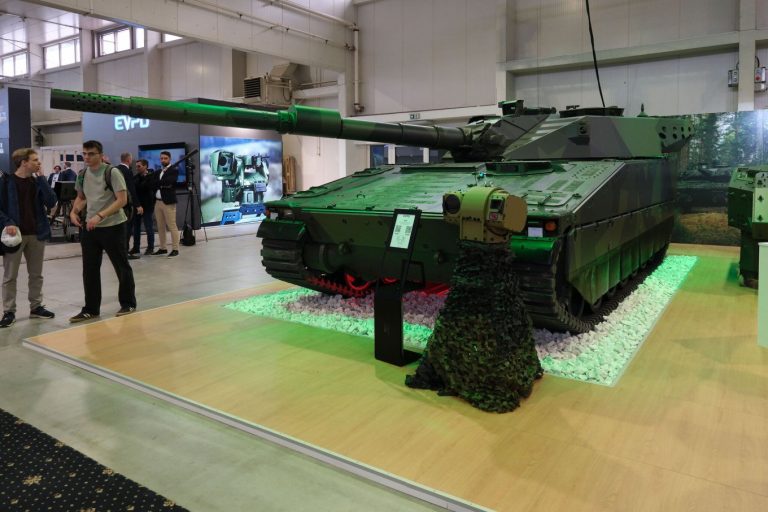
The main problem with the old CV90120 was that, for a long time, it remained more of a concept than a fully-fledged modern system. Now they’re trying to fix that.
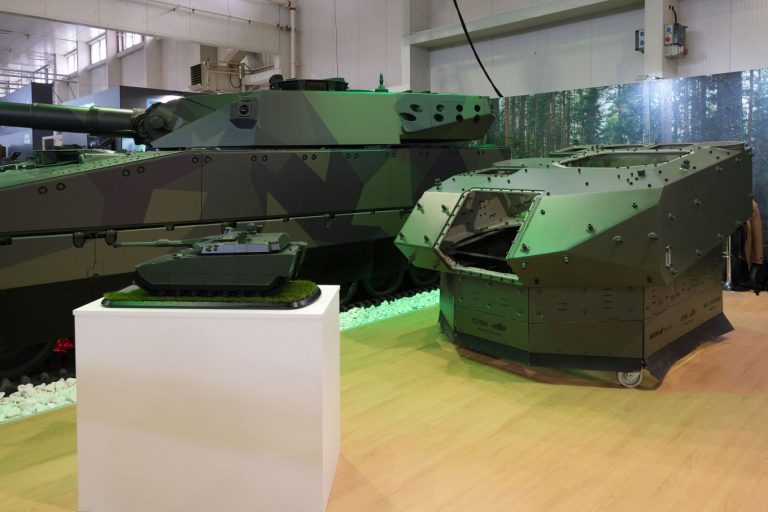
The new version will feature a completely redesigned turret equipped with the German Rheinmetall L44A1 LR gun—a modernized 120-mm cannon with reduced recoil. The vehicle will be capable of using modern programmable ammunition and new types of NATO rounds.
But the automatic loader looks even more interesting.
It is being developed by the Slovak company Koval Systems. The new mechanism has a capacity of 16 rounds and delivers a rate of fire of up to 12–14 rounds per minute—a very impressive figure for a vehicle of this class.
In fact, the Swedes and Slovaks are trying to turn the CV90120 into something halfway between a light tank, a tank destroyer, and a highly mobile firepower platform.
Furthermore, standardization with the Slovakian CV90 MkIVs that have already been procured plays an important role. Slovakia gains a common platform, logistics, crew training, and a production base.
But will he be able to survive in the age of drones?
And this is where the main question comes in.
The modern battlefield is extremely hostile to lightly armored vehicles. FPV drones, loitering munitions, and anti-tank missiles can destroy even heavy main battle tanks. And the CV90120 is still significantly lighter than a conventional tank.
In fact, his philosophy is based not on maximum protection, but on mobility, speed, and the ability to be the first to open fire.
This is very reminiscent of the old Cold War-era concepts, when the emphasis was on maneuverability and range, rather than just armor thickness.
That is precisely why the CV90120 has been the subject of debate for many years. Some believe these vehicles represent the future of armored vehicles—they are inexpensive, mobile, and sufficiently powerful. Others are convinced that, without full-fledged tank-level protection, such vehicles would be too vulnerable in modern warfare.
But the very fact that the CV90120 has returned after 25 years speaks volumes.
The world is once again beginning to seek a balance between heavy, extremely expensive main battle tanks and lighter, more mobile platforms. And perhaps the Swedish “flop”—which couldn’t find a buyer for a quarter of a century—was simply a machine that was ahead of its time.
This material is based on publications by Defense Express