The history of Soviet aviation has seen many bold and even ahead-of-their-time projects. One such area was experimentation with hybrid aircraft capable of combining the characteristics of a helicopter and an airplane. The VR-5 and VR-6 projects, known as “jet helicopters,” represented an early Soviet attempt to determine whether it was possible to combine vertical takeoff and high cruising speed in a single aircraft.
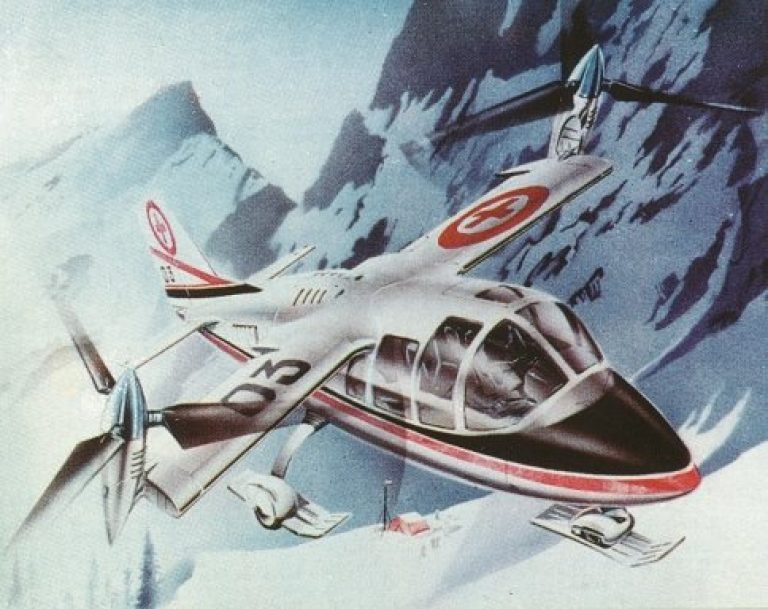
This work was carried out long before the advent of mass-produced Western tiltrotors and became an important, though little-known, milestone in the development of aviation science in the USSR.
When and under what circumstances did the VR-5 and VR-6 appear?
The VR-5 and VR-6 projects were developed in the 1960s, during a period of active exploration of alternatives to conventional helicopter and airplane designs. It was a time when the military and engineers were striving to develop aircraft with:
- the capability for vertical takeoff and landing;
- at a higher speed than helicopters;
- extended flight range;
- superior durability and flexibility of use.
The Soviet Union closely monitored foreign experiments with VTOL aircraft and convertible configurations while simultaneously conducting its own research.
The VR-5 and VR-6 projects were not conceived as production aircraft—they were flying laboratories and experimental platforms designed to study aerodynamics and controllability.
What did “jet helicopter” mean?
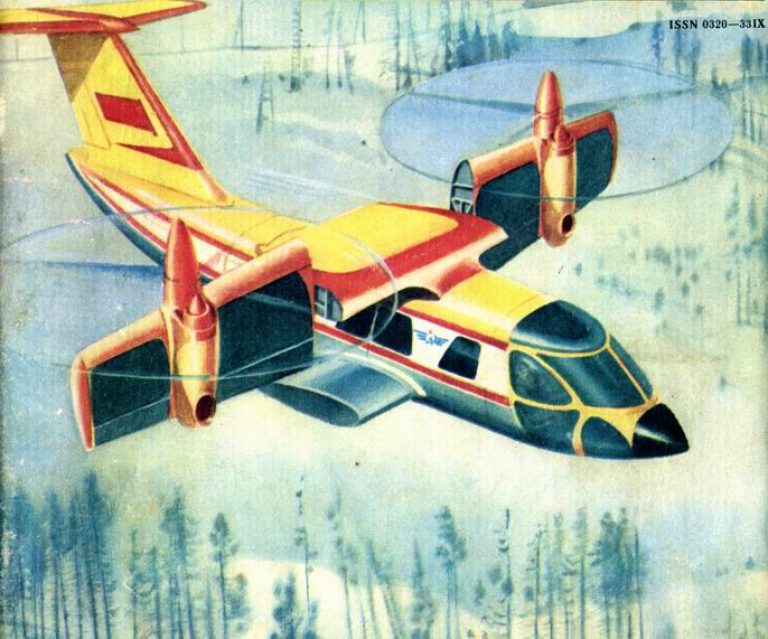
The name “jet helicopter” captured the essence of the concept. The VR-5 and VR-6 were viewed as aircraft in which:
- Vertical takeoff was achieved using propellers or rotors;
- level flight—achieved by transitioning to an airplane configuration, in which part of the lift was generated by the wing;
- Jet or combined-propulsion systems were used to increase speed.
In fact, these were the precursors to tiltrotors, albeit in a more experimental and theoretical form.
Concept and Layout
Detailed schematics of the VR-5 and VR-6 were not widely publicized, but based on the surviving descriptions, it is possible to reconstruct the general logic of the designs:
- the presence of rotary or combined screw systems capable of changing their operating mode;
- a wing that generates lift during horizontal flight;
- the transition between “helicopter” and “airplane” modes;
- an emphasis on studying stability and controllability during the transition.
Special attention was paid to the most challenging phases:
- freezing;
- acceleration;
- transition to level flight;
- a reverse transition before landing.
It is precisely these stages that are still considered the most dangerous for convertible aircraft.
Why Were the VR-5 and VR-6 Developed?
The projects did not have a specific combat mission. Their main objective was to gather scientific and engineering data:
- How does the aircraft respond when the thrust vector is changed?;
- what kinds of fluctuations and flow disruptions occur;
- how the control system should work;
- How reliable is the device if one of its components fails?
The plan was to use the data obtained in future projects:
- transport vehicles;
- troop transport platforms;
- reconnaissance aircraft;
- promising military VTOL aircraft.
Why the projects did not move forward
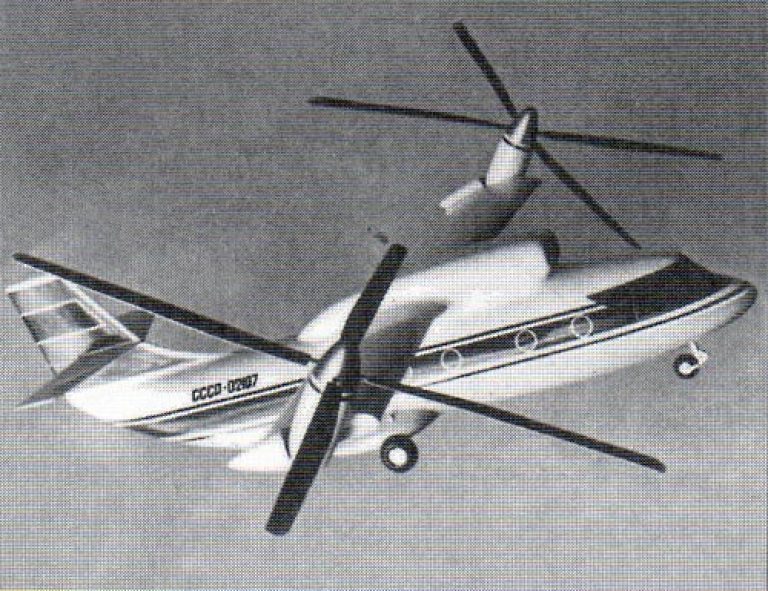
Despite their scientific value, the VR-5 and VR-6 never progressed to production models or even full-scale prototypes. There were several reasons for this.
1. Excessive complexity
Even for the Soviet Union’s advanced aviation industry, operating such aircraft required:
- complex automation systems;
- highly accurate calculations;
- reliable drives and transmissions.
At that time, the state of the technology made the project too risky.
2. Absence of an urgent military necessity
The Soviet Army already had at its disposal:
- reliable transport helicopters;
- the rapidly developing jet aviation industry.
The advantages of the convertible scheme did not outweigh its complexity.
3. Focus on Other Areas
The USSR chose to focus on:
- the development of Mi and Ka helicopters;
- the development of supersonic aircraft;
- missile and space programs.
Under these circumstances, experimental tiltrotor aircraft found themselves on the periphery of interest.
The Importance of BP-5 and BP-6 for Aviation
Although the projects remained experimental, they played an important role:
- became one of the first Soviet studies of convertible circuits;
- laid the theoretical foundation for future projects;
- demonstrated the limits of the technology of their time;
- helped avoid mistakes in later developments.
To a large extent, it is precisely these types of projects that explain why the USSR and, later, Russia viewed tiltrotors with caution and skepticism.
Why Are They Being Remembered Today?
Interest in the VR-5 and VR-6 is resurging against the backdrop of:
- the emergence of mass-produced tiltrotors abroad;
- the development of unmanned aerial vehicles;
- new materials and digital control systems.
What was practically unattainable in the 1960s has now become technologically feasible—and early Soviet research appears far more visionary than it seemed at the time.
Conclusion
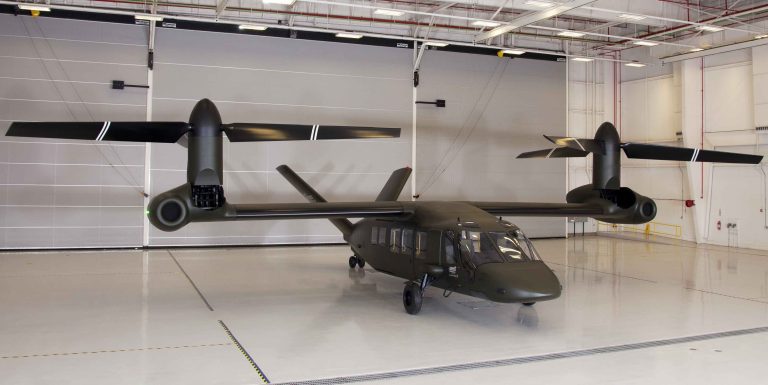
The VR-5 and VR-6 projects are examples of how the Soviet aviation school sought to look into the future by experimenting with extremely complex and unconventional designs. Although they never entered mass production or saw practical use, they helped clarify where the line lies between bold engineering concepts and the practical limits of technology.
This is a forgotten but important chapter in the history of aviation, demonstrating that the concept of tiltrotors emerged in the Soviet Union long before they were widely adopted in the West.