A Story About the “Duks-Boevoy” Scooter (Bicycle) from the Collection of the Polytechnic Museum in Moscow
War is, as a rule, one of the driving forces behind progress. This is particularly true of the automotive industry, as well as other modes of transportation. In this sense, World War I served as a quintessential catalyst for progress. It is often called the “War of Motors,” but it could just as easily be called the “War of Pedals.” The fact is that during World War I, bicycles—which had first taken shape in the 19th century—became truly popular in military service. Many armies put them to the test, and at the same time, their design began to evolve. This also applied to the bicycles of the Russian Imperial Army (military bicycles were called “samokats”).
Not all visitors realize what a treasure lies before them
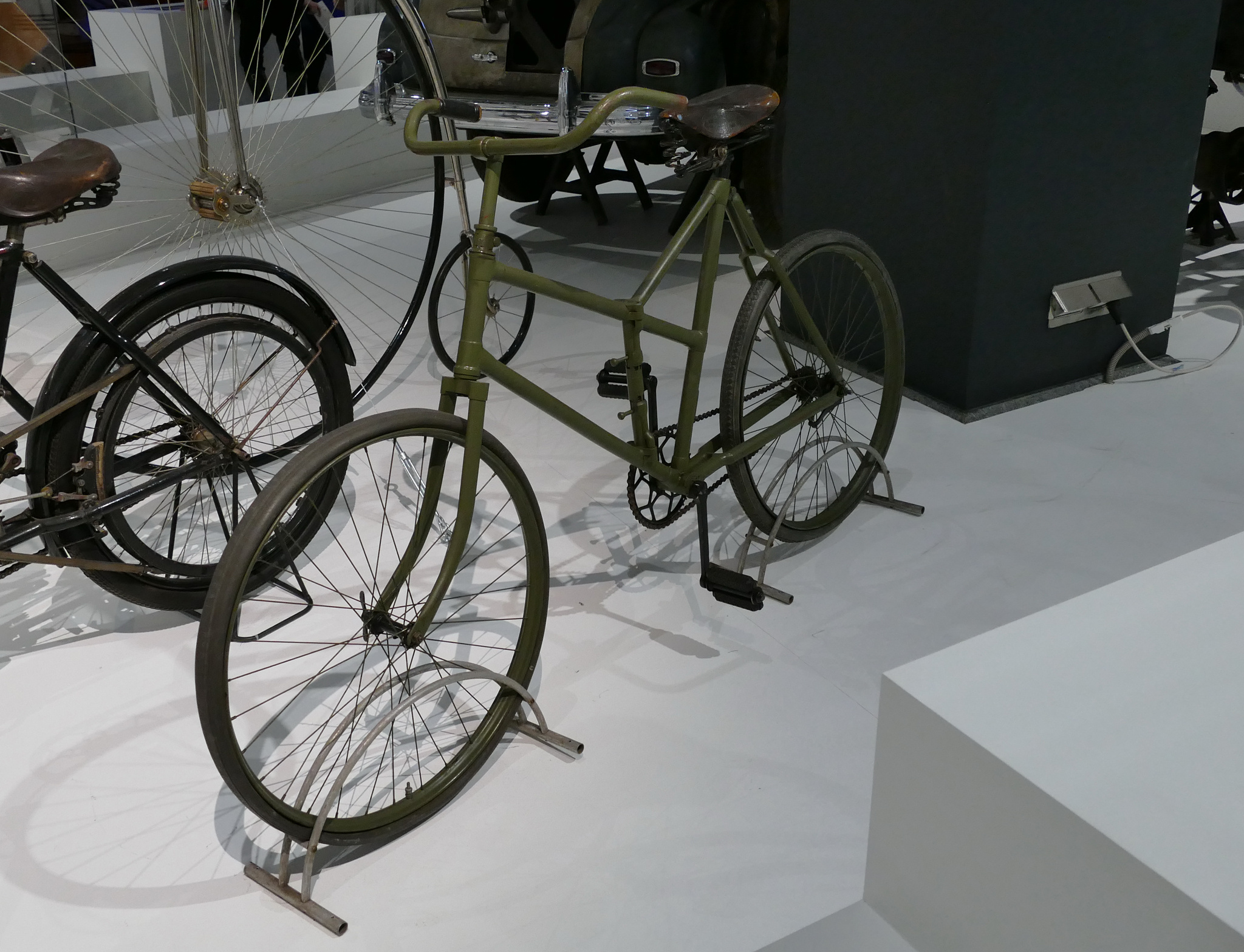
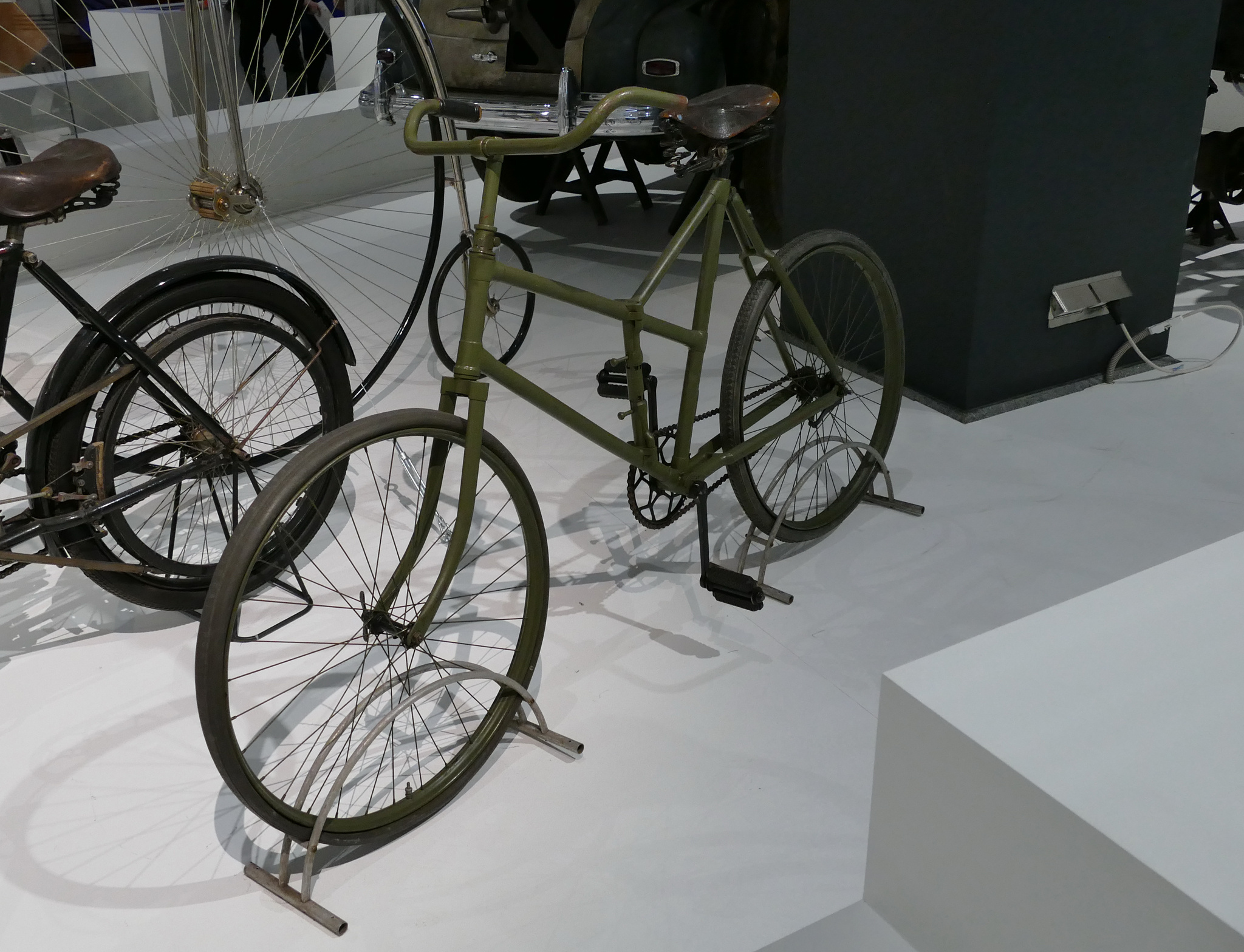
The collection of the Moscow Polytechnic Museum includes many unique exhibits that stand as monuments to Russian technical innovation. As it happens, some of these exhibits are directly related to military equipment. This also applies to the subject of this article. For some reason, we tend to recall the “Russo-Balti”—and there is indeed such a car in the Polytechnic Museum’s collection. But in reality, the pinnacle of Russian industry’s achievements in the field of wheeled vehicles was the bicycle. We’re talking about the Duks-Boevoy scooter (bicycle), a true source of pride for Russian industry.
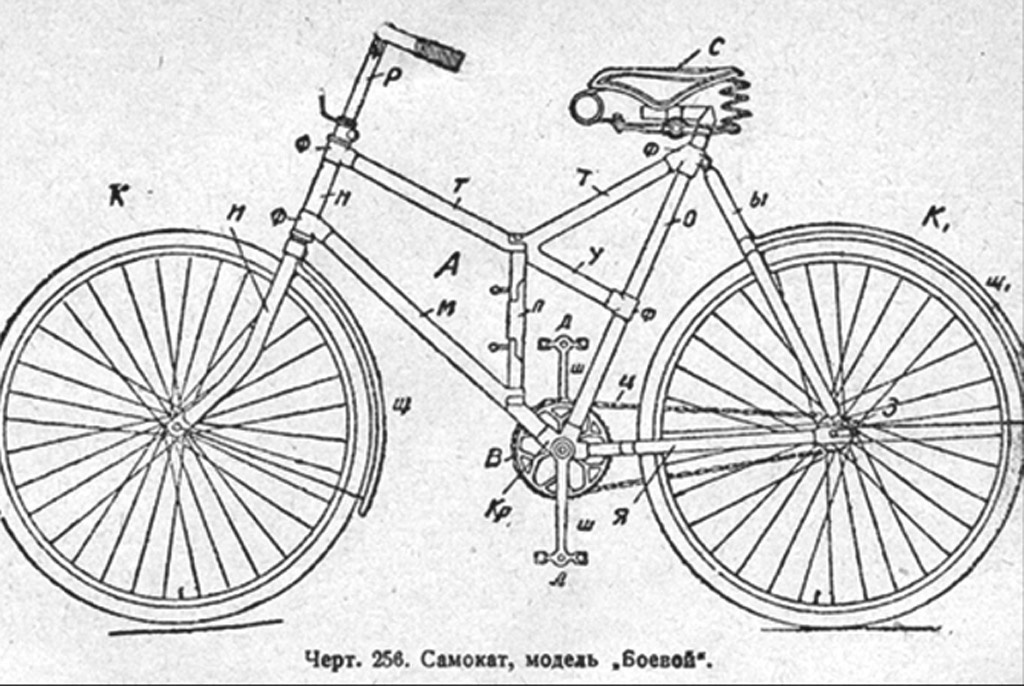
A “samokat” was the name given to a military bicycle
In 2024, the military bicycle celebrated its 130th anniversary. It was created by Henri Gérard and Charles Morel, who—independently of one another—had been developing a folding bicycle for military use. At some point, they decided to collaborate. Gérard, the main visionary and advocate, promoted the bicycle. Morel, owner of the Bonnet & Morel factory, manufactured them. However, the French army was not entirely satisfied with the quality of these bicycles, nor with the production volumes. Therefore, production of the bicycles was subsequently transferred to Peugeot, without the right to sublicense.
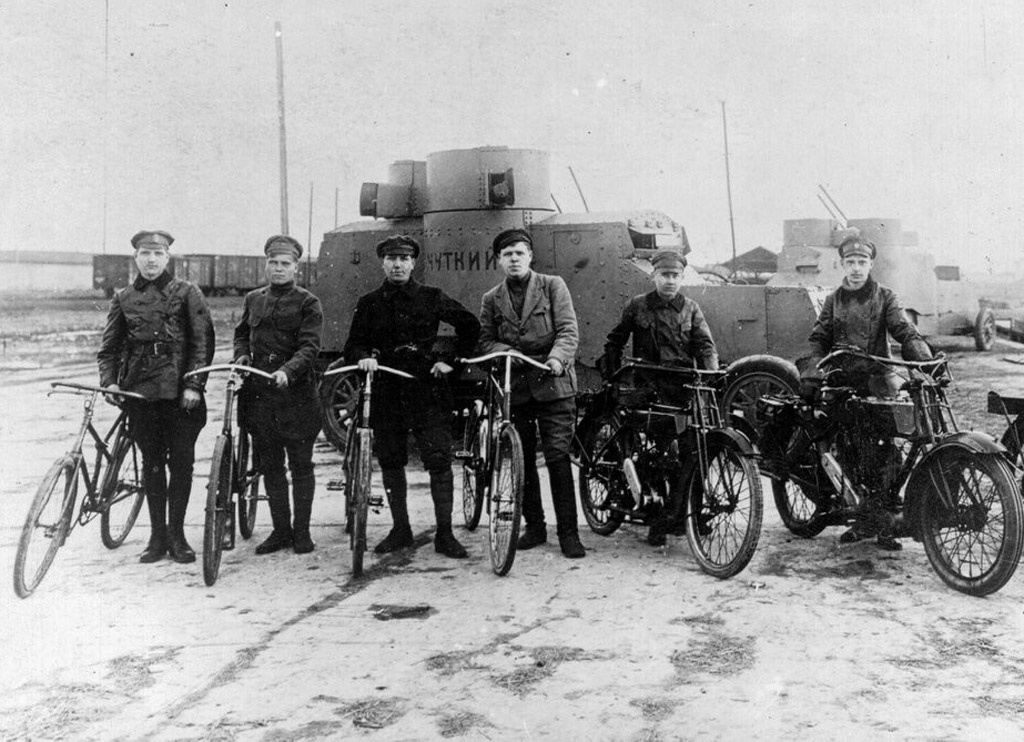
“Combat Dukas” are extremely rare
That is how the Peugeot System Gerard folding bicycle came into being. From the very start of production, the bicycles designed by Captain Gerard were associated with the Russian army. They were tested there, and trial batches were purchased, while the French, in the meantime, used the results of our tests to refine the bicycles. This was beneficial for both the French and Russian armies. Gerard, incidentally, never lived to see the day when Russia finally purchased a large batch of his bicycles. André Gérard died in 1908, and the order for 12,000 “Bicyclette Pliante Peugeot System Gérard transformée 1912 (modèle l’armée)” bicycles was placed in 1914.
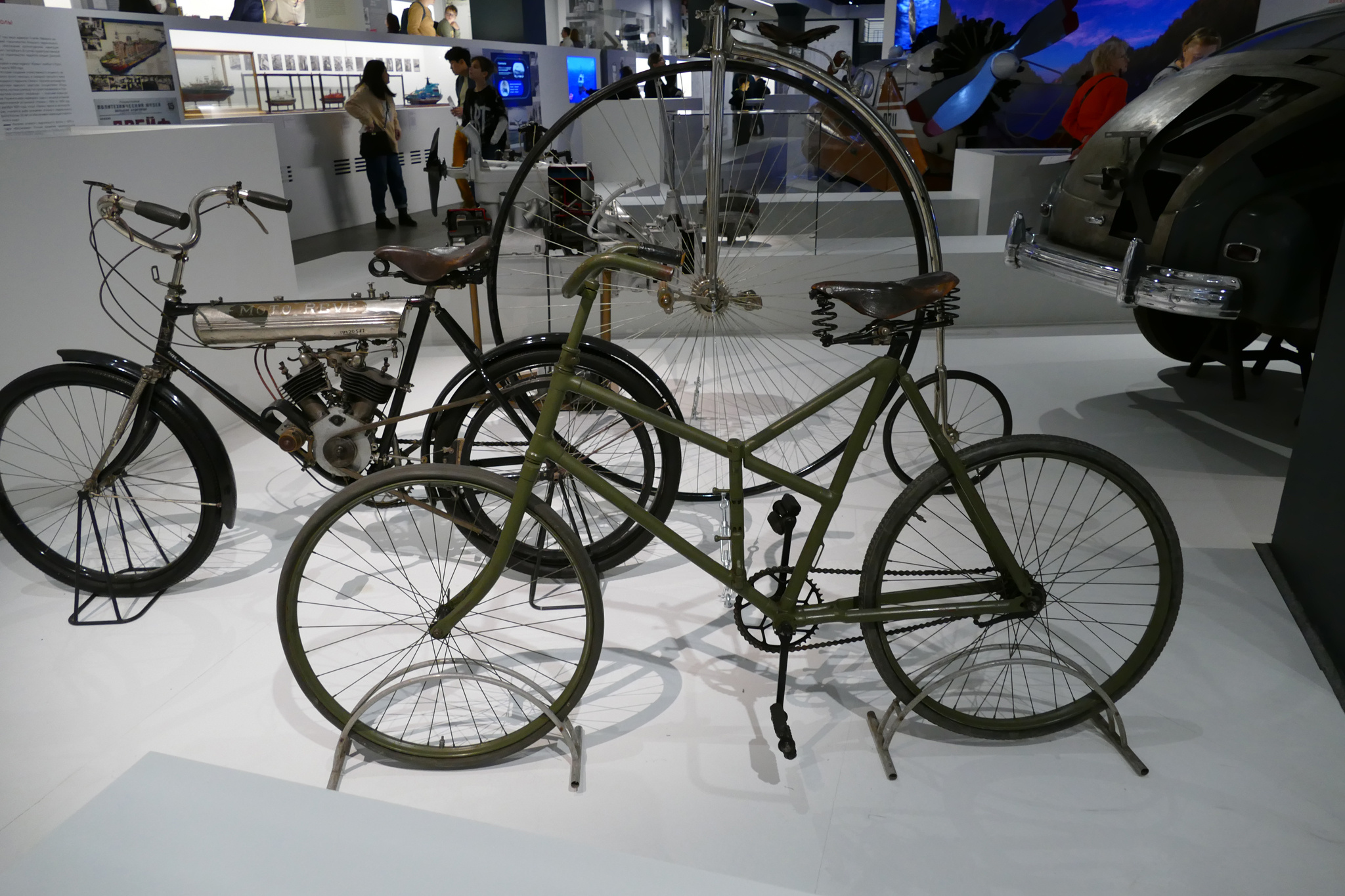
There are currently four known examples of such bicycles (scooters)
It must be said that Gérard’s “scooters” (as we called the military bicycle) were not considered the ideal solution. There were complaints about both the weight and the design features of the bicycle, as well as its quality. Equally important was the fact that the Russian government could not purchase a license for the Bicyclette Pliante Peugeot System Gérard transformée 1912 (modèle l’armée). There were issues with dual licensing. Therefore, the decision was made to create their own bicycle. And this was by no means a matter of copying a foreign bicycle.
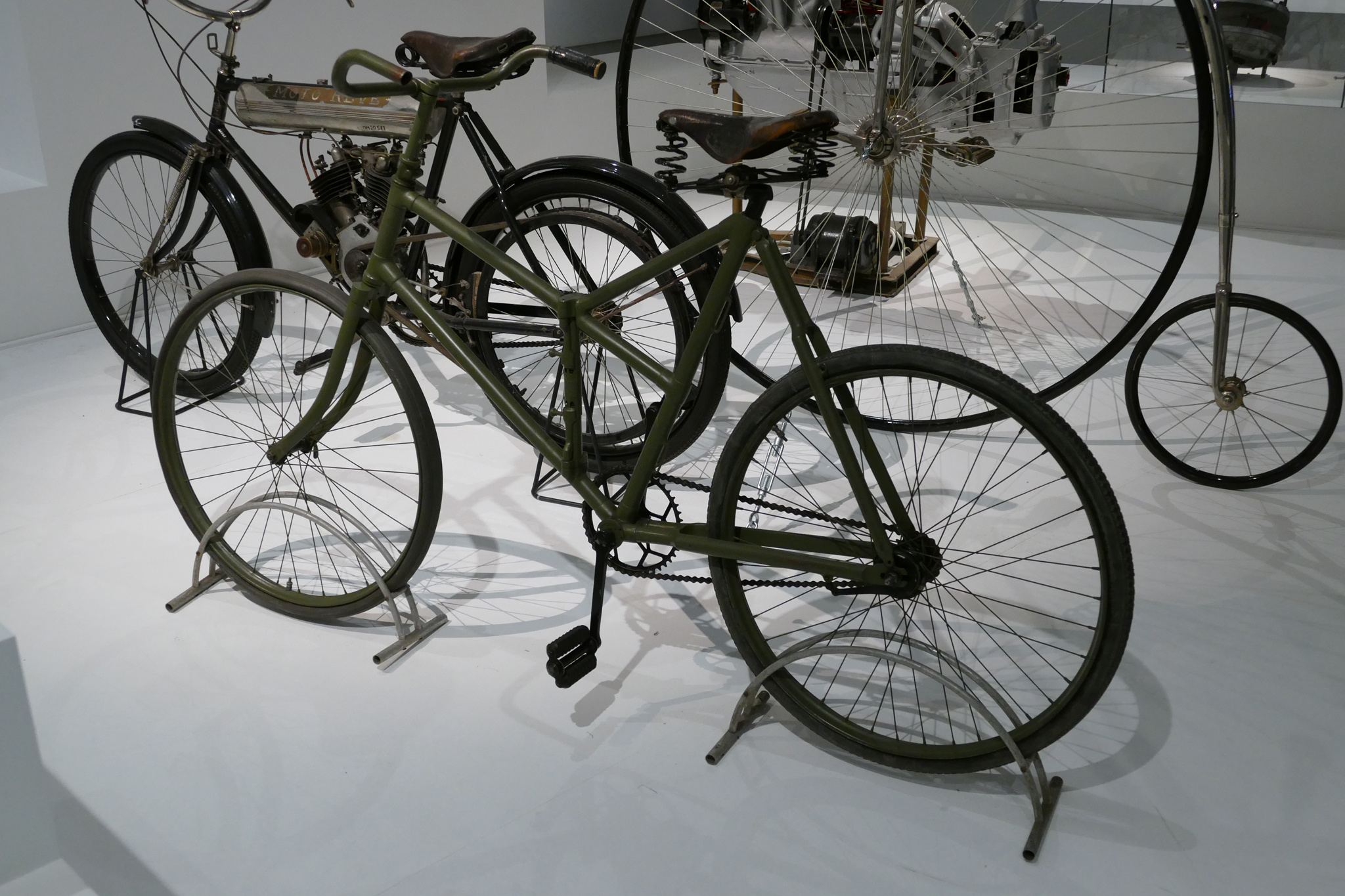
This item has been in use for a long time, which has taken a toll on its appearance
Unlike automobiles, the situation with bicycles in Russia was much better. This was especially true for “Duks” (Moscow), which produced a wide range of products. Y. A. Meller began manufacturing bicycles as early as the very end of the 19th century. After the outbreak of World War I, products from “Duks” and another company, “Leitner” (Riga), began to be supplied to the Russian army. And in 1915, there was a demand for a folding military bicycle. It was developed by engineer Mikhail Mikhailovich Shchipanov. Since he was working on behalf of “Duks,” the model was designated “Duks-Combat.” Or “scooter, Combat model.”
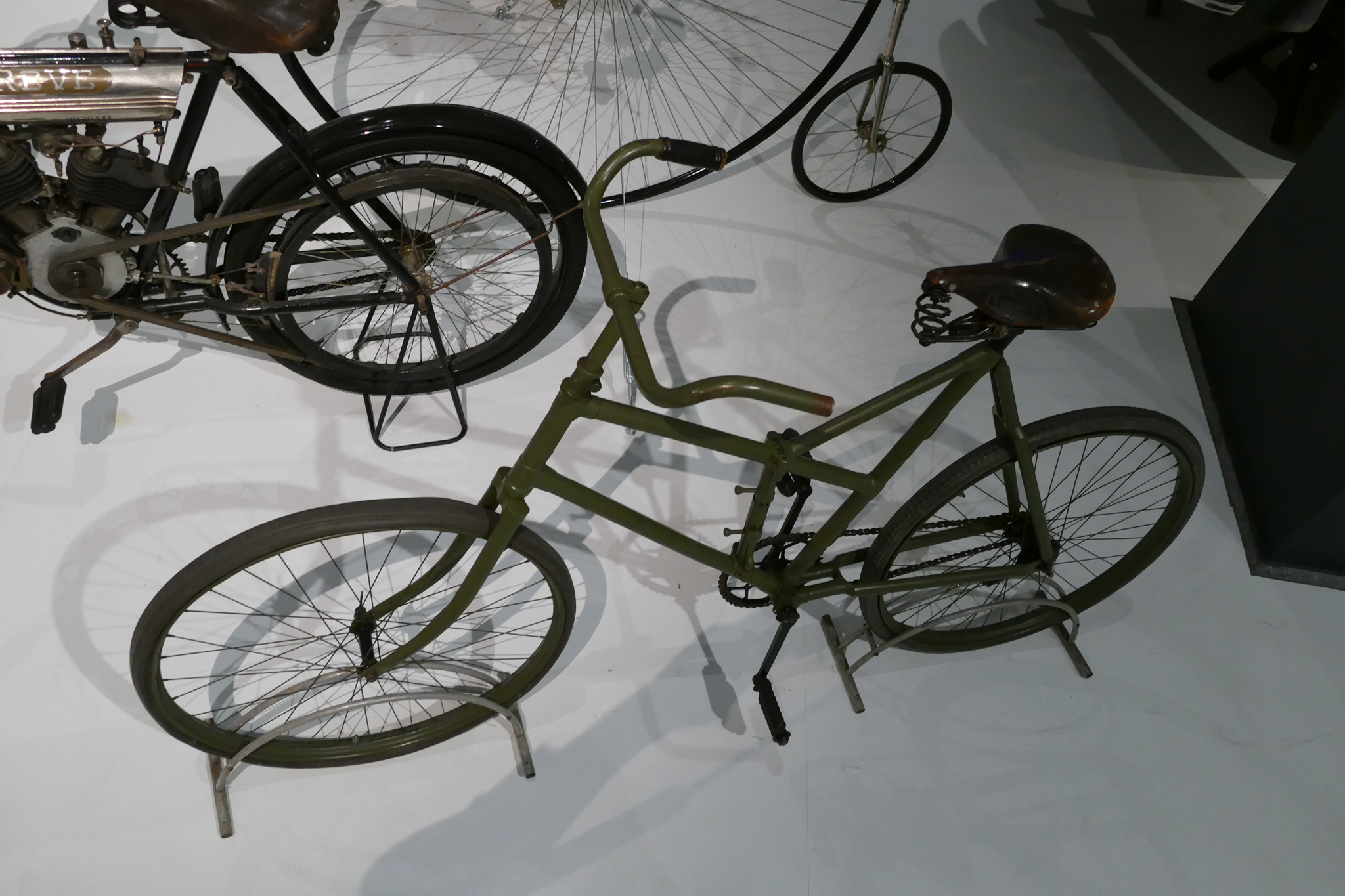
Overall, the bike is complete, but some parts are missing
Production of these bicycles began in 1916, at which point Leitner’s bicycle manufacturing operations moved to Kharkiv, while Dux gradually ceased production. Airplanes were more essential than bicycles. Nevertheless, by the end of 1917, both factories had produced more than 4,000 bicycles. Production continued after the revolution, this time for the Red Army, and the bicycles were manufactured in both Moscow and Kharkiv. Later, the bicycle division of “Duks” faded into obscurity, and in the late 1920s, construction began on the Moscow Bicycle Factory. It was there that the MD-1, the Red Army’s main bicycle, was produced. However, the military bicycle was no different from the civilian model.
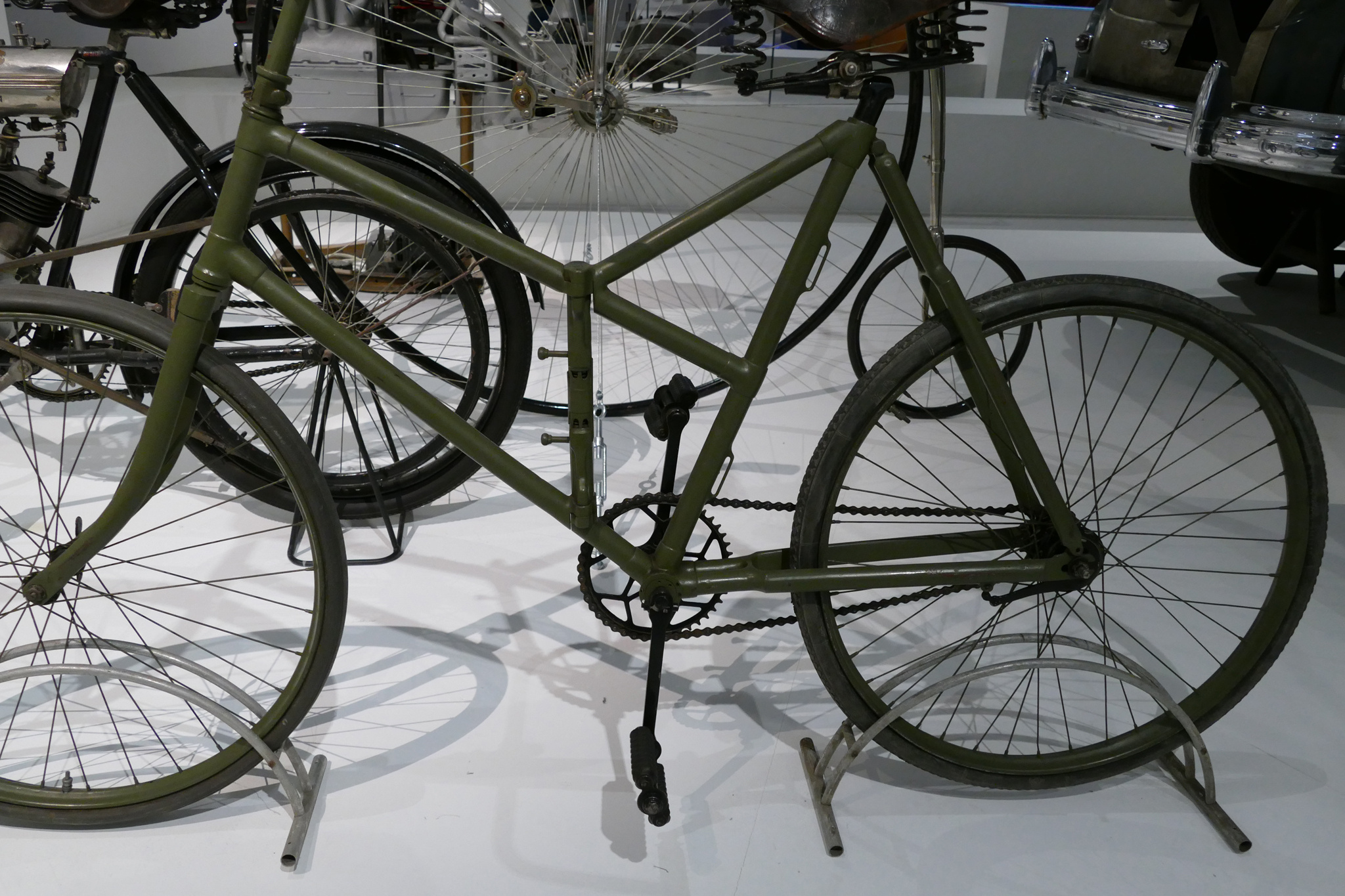
The folding system made it possible to put the “Duks-Combat” into transport mode in a matter of seconds. Or into combat mode.
Unfortunately, it just so happens that the “Dux-Boevoy” is rarely seen in photographs—unlike “Peugeot scooters of the Gérard system.” As a result, this bicycle has remained relatively unknown. At least four of them are known to exist today. In addition to the bicycle featured in this article, there is one in Andrei Myatiev’s collection (the most complete and authentic), another in Verkhnyaya Pyshma, and a frame that recently surfaced. What’s more, the new owner wasn’t even aware at first what a treasure he’d gotten his hands on—even though he’s been involved with bicycles for quite some time.
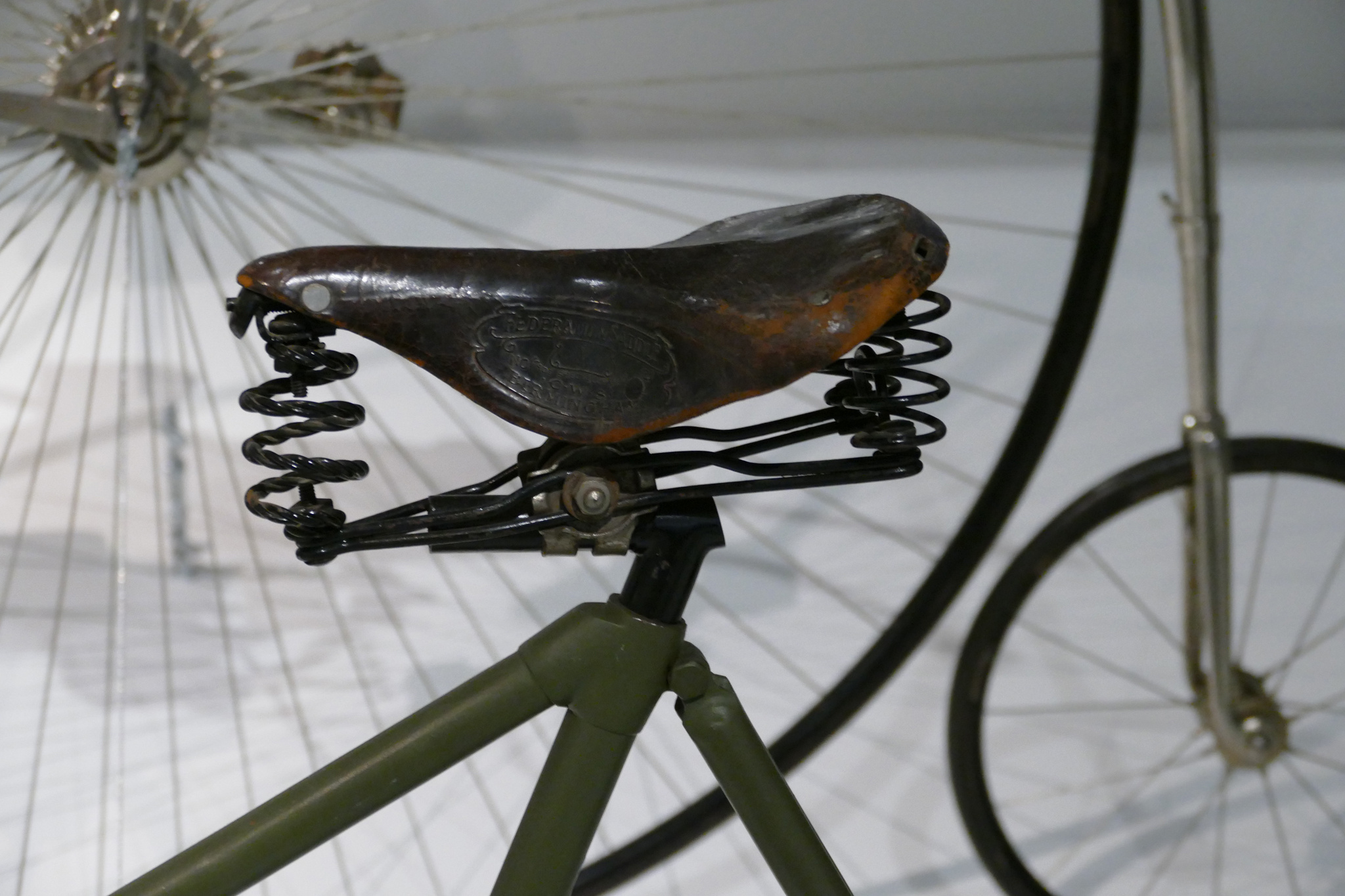
Foreign-made seat
At that time, folding bicycles were evolving in several directions. The first, and simplest, was the creation of a folding version of a road bike; it was the “sturdiest,” but also the heaviest. The second direction was pioneered by Henri Gérard; these bicycles were lighter but more complex. Shchipanov, however, forged his own path, arriving at an optimal bicycle design. Without a doubt, it was one of the best—if not the best—military bicycles of World War I. It remained relevant even by the late 1930s.
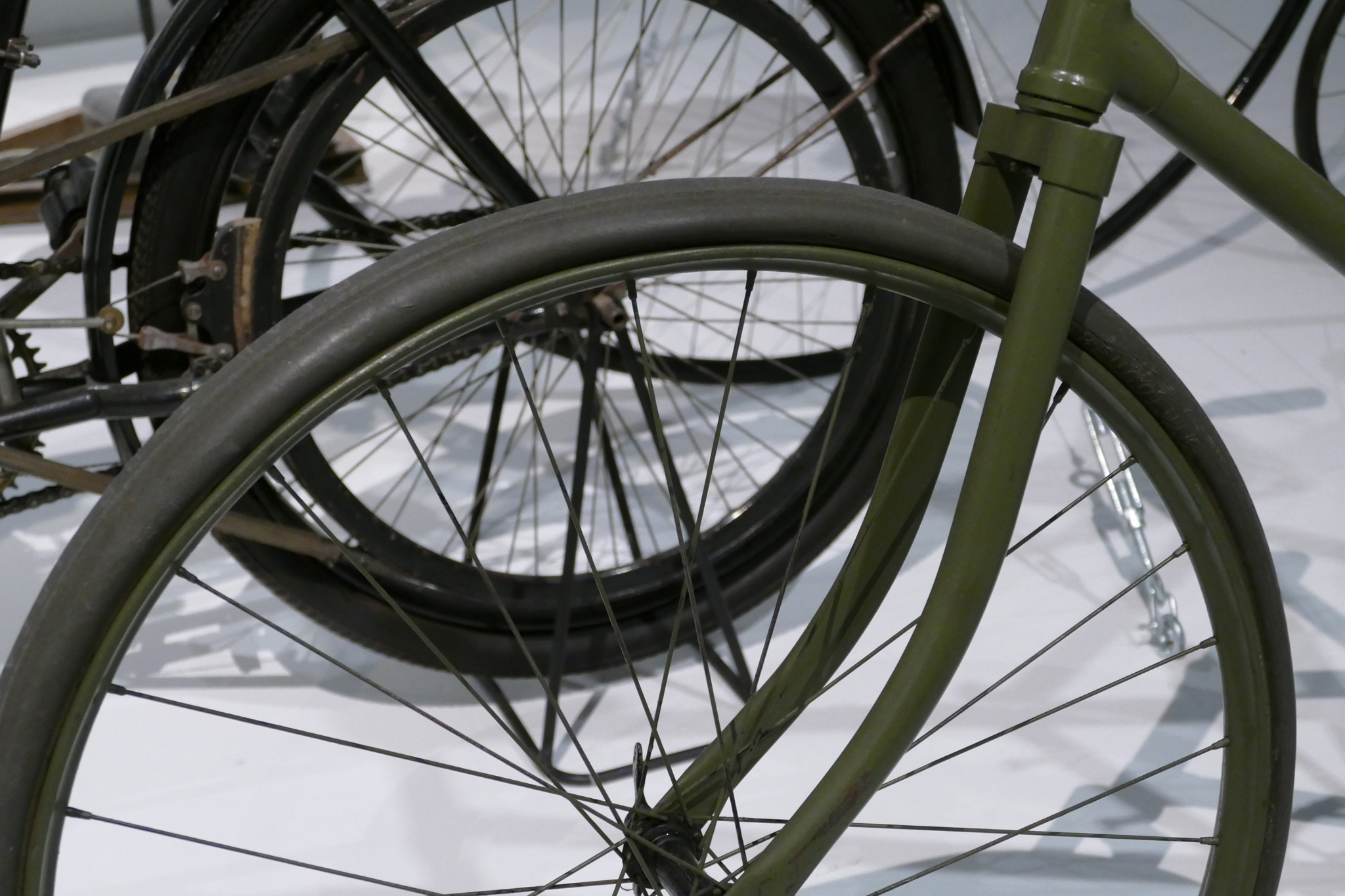
Signs of heavy use
The “Duks-Boevoy” featured an original frame that was free of the shortcomings found in similar models. It was sturdy, and its unique folding mechanism allowed the bike to be folded or unfolded in a matter of seconds. There was no need to turn any knobs—no other bike had that feature. At the same time, the bike could be carried on your back like a backpack. Weighing, according to various sources, between 16 and 18 kilograms, it was just as convenient as “Gérard’s scooter,” while being easier to use.
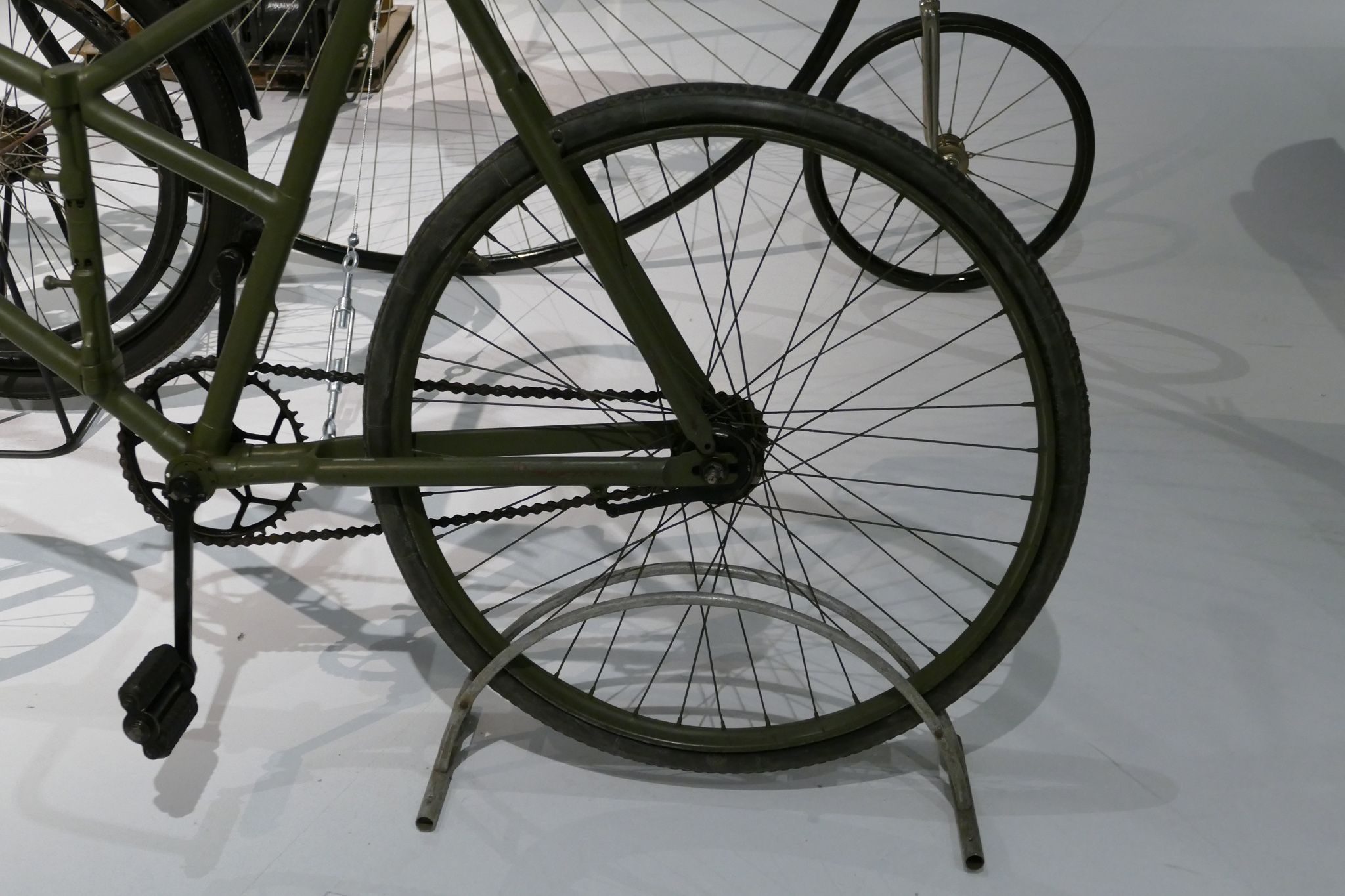
The bike used to have fenders, but they’re missing now
Since the bicycles were manufactured at different times and by different factories, the surviving examples of the “Duks-Boevoy” may vary. In addition, the surviving bicycles no longer have fenders, which, like those on the “Gérard scooter,” quickly fell into disrepair. Meanwhile, the fenders were a very important component for military use. On military roads, a rider could get splattered with flying mud in the blink of an eye. So it’s best to ride today’s bicycles on dry ground.
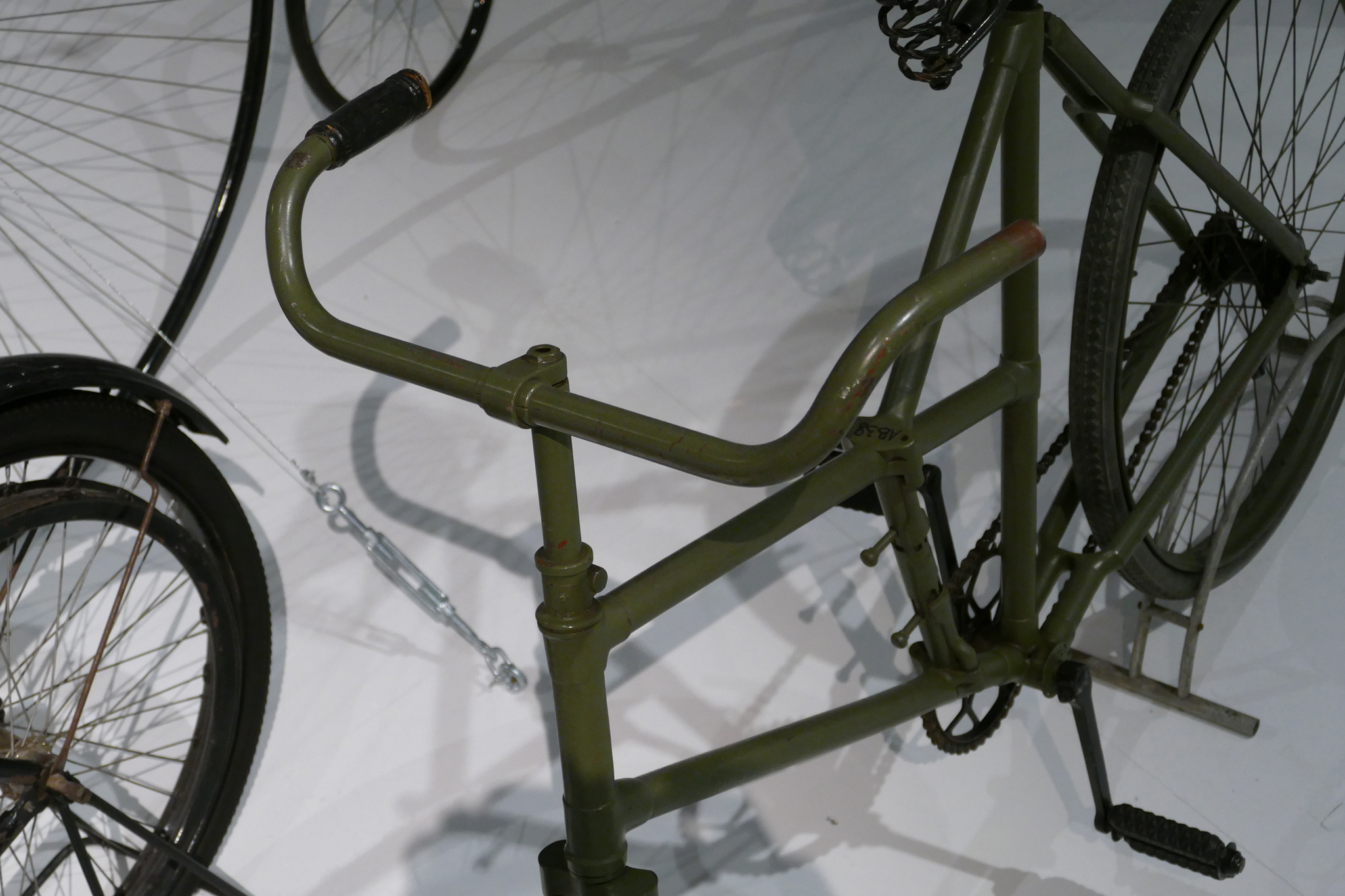
One of the handles is missing
The Polytechnic Museum is currently closed for renovation. However, the “Duks-Boevoy” is available for display. On October 26, 2024, the exhibition “Polytechnic Museum: Creating the Present” opened in the central exhibition hall “Manege” in St. Petersburg. This bicycle is on display there. You can also often see a bicycle from Andrei Myatiev’s collection; it is currently the only one in working condition.