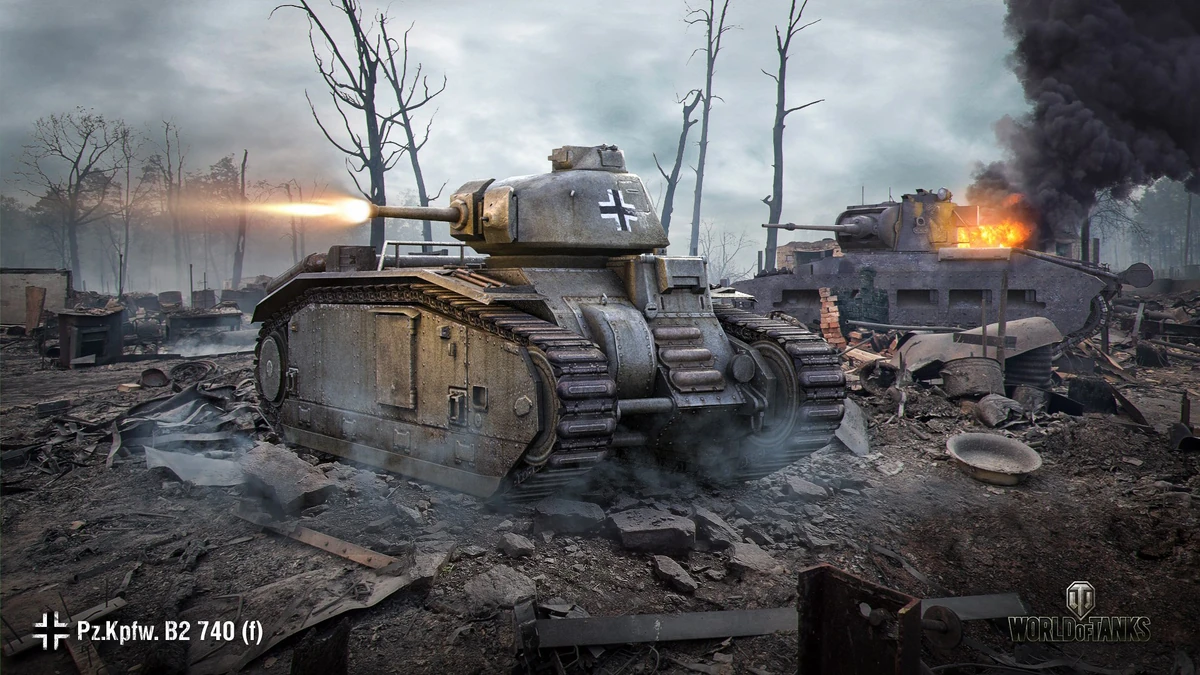
An article by Yuri Pasholok from the WARSPOT website, dated March 17, 2017.
The campaign in France in May–June 1940 clearly demonstrated the mistake of using a “battle” tank (Char de bataille) as the main tank. The French tank industry never managed to effectively switch to a wartime production footing. As a result, by the start of the German offensive, the rate of tank deployment among French forces—specifically the Char B1 bis—was far below what had been planned. Furthermore, a portion of the French tanks was quickly lost, either due to technical issues or as a result of poor fuel and ammunition supplies. A significant number of them also fell into German hands. How were the Char B1 tanks and vehicles based on them used in the German army?
32 metric tons of contradictions
Whether the Germans used the Char B1 bis as early as the French campaign of May–June 1940 remains an open question. Most of the tanks that were not lost permanently sustained various types of damage. Restoring a “combat” tank to working order, unlike the less massive light and cavalry tanks, was no easy task. In German documents, these vehicles were initially listed as “Renault 32 to,” meaning “32-metric-ton Renault tanks.” Special teams were formed to evacuate damaged or abandoned vehicles and transport them to collection points. Those tanks that were found to be technically serviceable were sent to the Fontainebleau area.
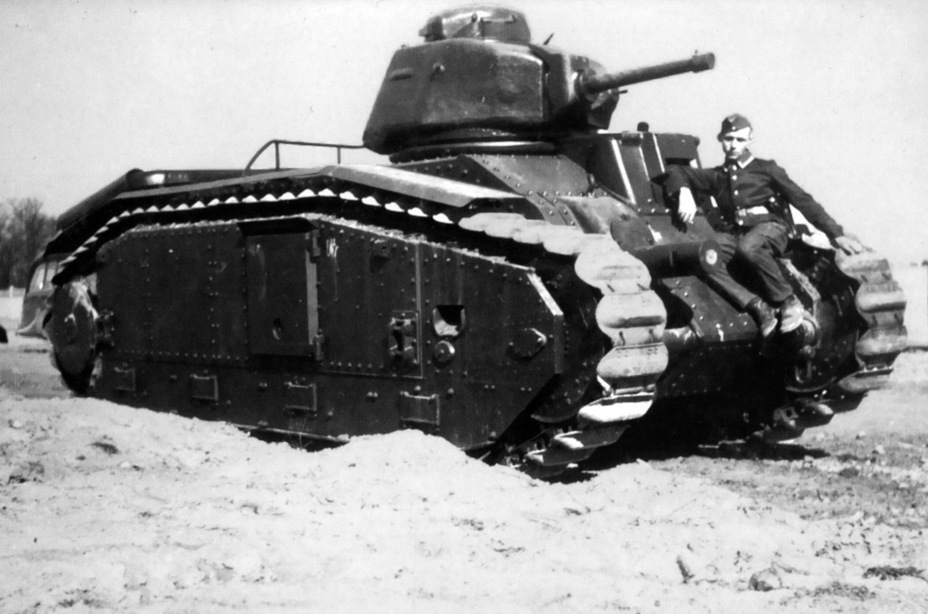
Pz.Kpfw. B2, 1941. As you can see, the commander’s turret on this vehicle was not replaced
Of the companies involved in the production of the Char B1 bis, two fell into German hands. These were the Renault plant in the Paris suburb of Boulogne-Billancourt and AMX. However, AMX did not appear on the Germans’ list as a company that manufactured or repaired the Char B1 bis. Contracts were signed with both AMX and Renault for the repair of Renault R 35 light tanks. As for the Renault 32 to, their major overhauls were carried out only in Boulogne-Billancourt. French workers periodically went on strike, refusing to repair captured vehicles, but by the end of 1940, the situation had stabilized.
In January 1941, the factory in Boulogne-Billancourt came under the control of Daimler-Benz. As of October 1941, 150 Renault 32s had been repaired there; the remaining vehicles were awaiting spare parts. The maximum number of tanks returned to service, as cited in various studies, is 180. During repairs, the top of the commander’s turret was cut off on some of the tanks and replaced with a double-hinged hatch. The radio and antenna were also replaced.
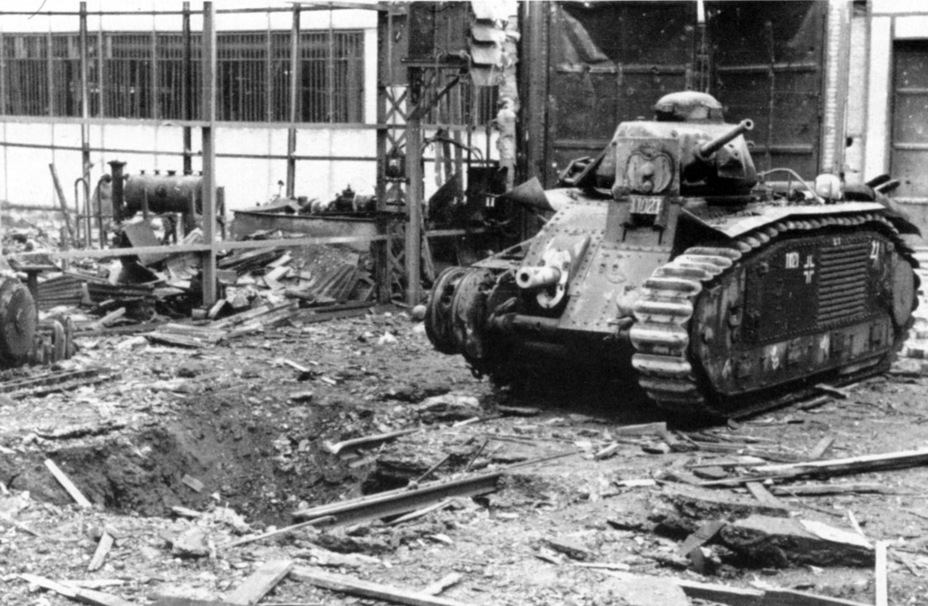
The aftermath of the bombing of the Renault plant in Boulogne-Billancourt on March 4, 1942
In early 1941, captured French armored vehicles were given German designations. The Char B1 and Char B1 bis were designated Panzerkampfwagen B1 Bis 740 (f). In practice, however, they were usually designated as Pz.Kpfw. B2.
French tanks evoked mixed feelings among the Germans. Unlike the Czechoslovak tanks—particularly the Pz.Kpfw.38(t)—which fit perfectly into the German arsenal, the French tanks did not. Even the Somua S 35, the most successful French tank, proved unsuitable for use as a front-line vehicle. The tank saw action in the German army, but not as part of tank divisions—and that speaks volumes.
An even stranger situation arose with the Pz.Kpfw. B2. The Germans found themselves with a tank featuring heavy armor, but they had absolutely no idea what to do with it. Its 75-mm short-barreled gun proved to be a rather ineffective weapon, the single-seat turret made the commander’s job much more difficult, and the tank’s mobility left much to be desired. It’s no surprise that the vehicle ended up on the front lines in a rather peculiar state.
The Thick-Skinned Arsonist
The inability to use the Pz.Kpfw. B2 as a standard front-line tank forced the Germans to seek other ways to deploy it. The simplest and most logical option turned out to be converting it into a flamethrower tank. For the Germans, this was not the first time they had modernized combat vehicles with questionable combat performance in this way. Previously, the Pz.Kpfw. II Ausf. D and Ausf. E had been converted into flamethrower tanks. The issue of conversion was raised by Hitler during a meeting with representatives of Daimler-Benz held in March 1941.
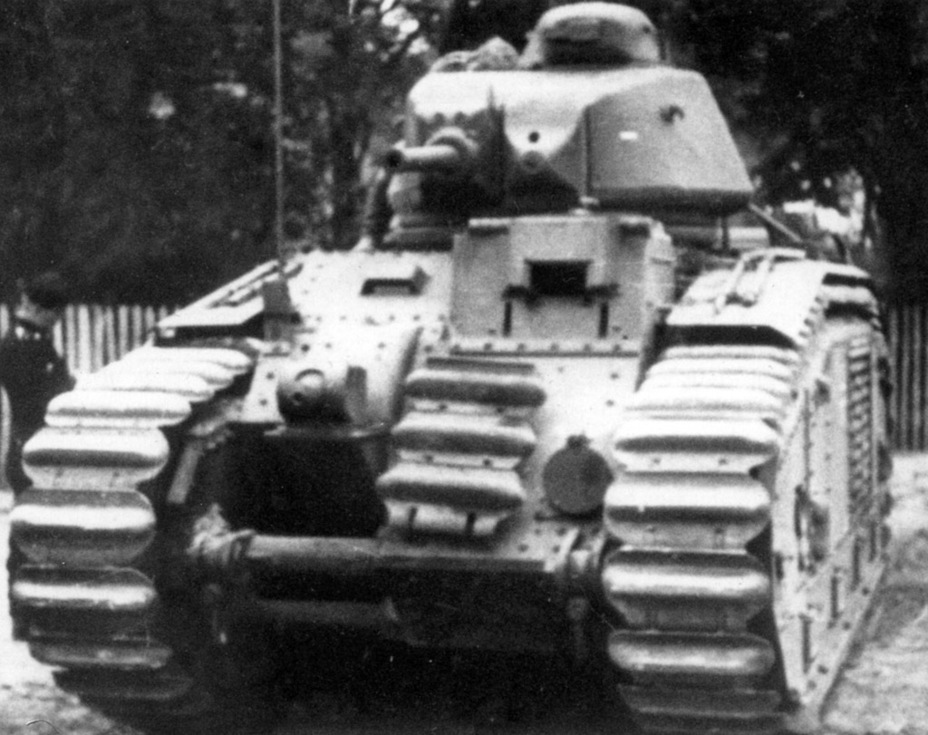
The first version of the Pz.Kpfw. B2 (Flamm), developed by Wegmann
On March 11, another meeting took place, attended by Daimler-Benz’s chief designer, Möning, and Colonel Fichtner, head of the 6th Section of the Armaments Department. The discussion focused on options for converting the Pz.Kpfw. B2 into a flamethrower tank. The first option involved removing the 47-mm SA 35 gun from the turret and installing a flamethrower in its place. The 75-mm SA 35 gun mounted in the hull was to be replaced with a German 7.5 cm KwK 37 gun with horizontal traverse angles of 10 degrees to the left and right. The second variant called for replacing the 75-mm gun in the hull with a flamethrower mount with azimuth angles of 30 degrees in all directions. The first variant was developed as a preliminary design, while the second was produced as a scale model.
On April 3, 1941, both options were presented to Hitler, and he chose to mount the flamethrower in the hull. The firm Wegmann & Co., which already had experience converting tanks into flamethrower vehicles, was selected to carry out the work. In Kassel, they didn’t try to overcomplicate things and simply adapted the Pz.Kpfw.II (F) flamethrower mount to the new chassis. The modifications were minimal: the 75-mm gun was removed and replaced with a flamethrower with a wider firing arc (90 degrees to the left and right). A periscope was added to the upper front hull plate. The French radio was replaced with a German one, and a whip antenna was mounted on the upper front hull plate. A 160-liter fuel tank was added inside the hull, the same as on the Pz.Kpfw.II(F).
In May, the first flamethrower tank, designated Pz.Kpfw. B2 (Flamm), was ready. Exactly how many were produced at Wegmann remains unclear. According to correspondence, 17 Pz.Kpfw. B2s were converted (or were in the process of being converted) in Kassel, and the total order was for 84 vehicles.
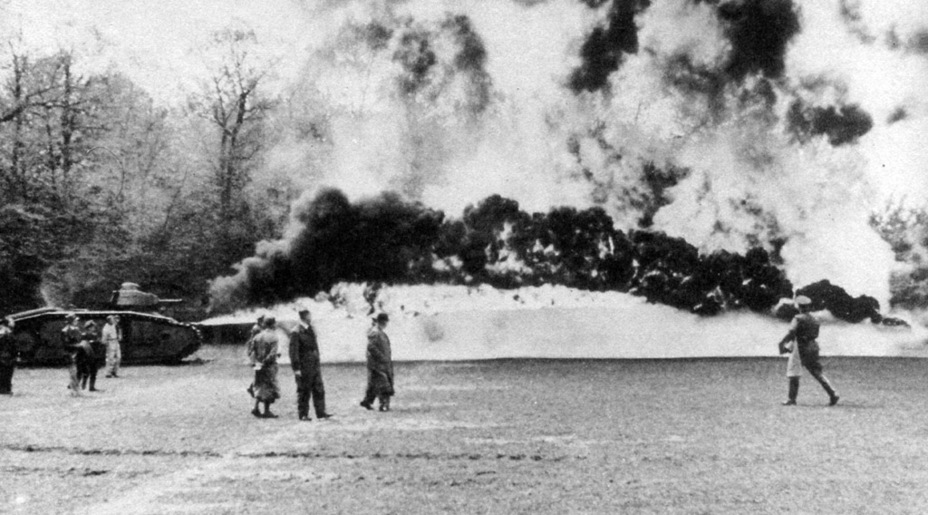
A Franco-German flamethrower tank undergoing testing
Production difficulties, as well as design flaws that had come to light, led to the start of work in mid-May 1941 on developing a different design for a flamethrower tank. Daimler-Benz oversaw the project, while the fire-thrower system was developed by Feuerwehrgerätefabrik Hermann Köbe of Lückenwalde. It is somewhat ironic that this company specialized in firefighting equipment.
The first and simplest modification involved replacing the 75-mm gun with a flamethrower; however, this tank had neither the ability to aim the flamethrower sideways nor a sighting device. Inside the vehicle, two fuel tanks, each with a capacity of 500 liters, were installed, along with a 2-horsepower gasoline engine. This modification was immediately put into mass production. By the start of the invasion of the Soviet Union, manufacturers had delivered a total of 24 flamethrower tanks equipped with systems designed by Wegmann and Köbe.
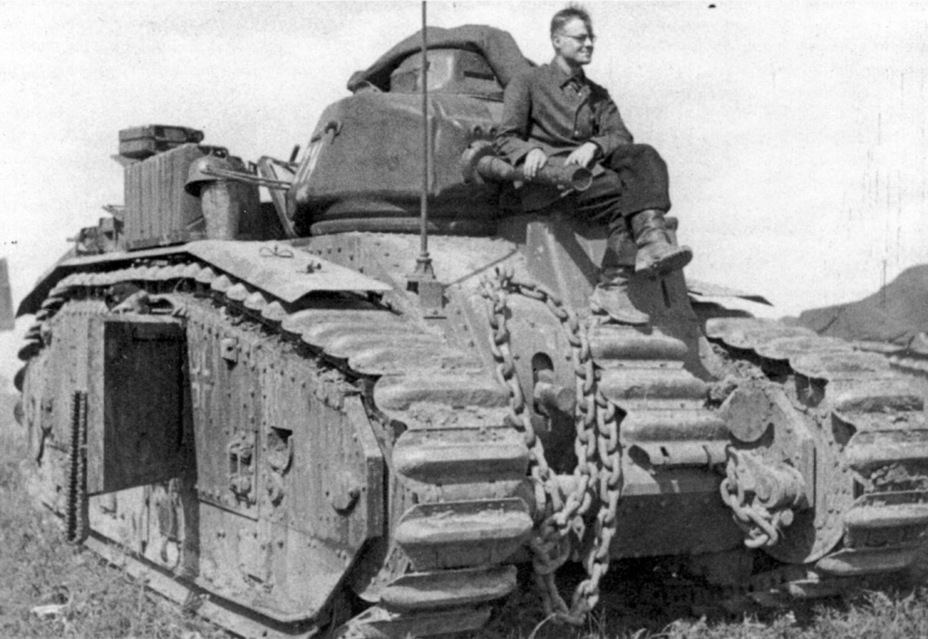
The second variant of the flamethrower tank based on the Pz.Kpfw.B2, developed on an emergency basis by Köbe
All Pz.Kpfw. B2 (F) tanks built up to that point, as well as 6 Pz.Kpfw. B2 tanks, were assigned to the 102nd Flamethrower Battalion (Panzer-Abt. (F) 102), which consisted of two heavy flamethrower companies. It was formed on May 31, 1941, in France. Due to a number of problems, primarily production-related, the tanks were delivered to the unit at irregular intervals; the last vehicles arrived just days before the start of the war against the USSR. Main battle tanks were used as command vehicles (three per company), while the flamethrower tanks were assigned to platoons (four platoons, three tanks each). At least three Char B1 tanks were converted into flamethrower tanks. Additionally, due to the rush, some of the tanks were not equipped with radios.
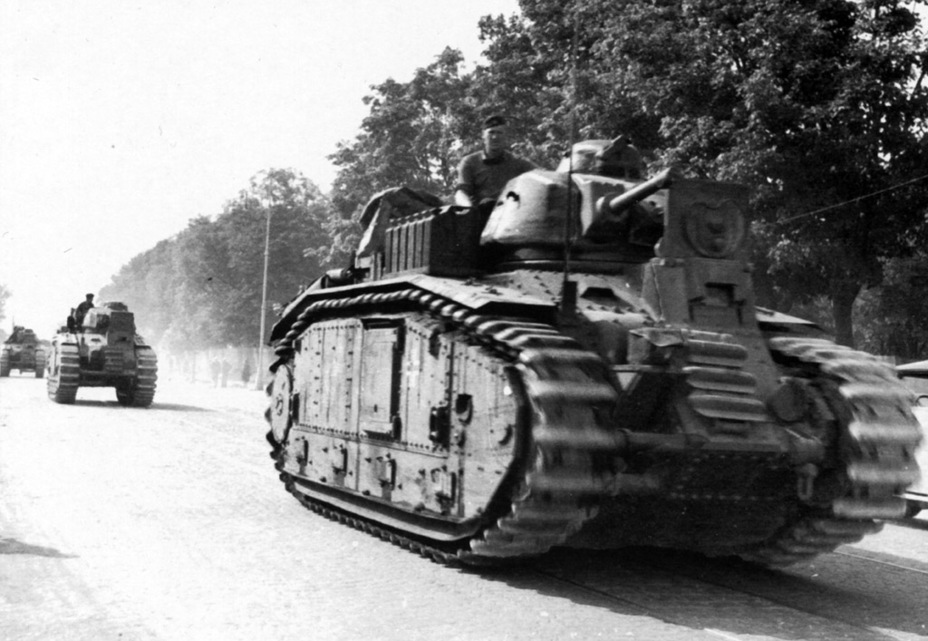
Troops of the 102nd Flamethrower Battalion on the march. Lviv, July 1941
The combat career of the 102nd Flamethrower Battalion proved to be short. By June 20, it had reached full combat readiness, and on the 23rd, it was placed under the command of the 17th Army. The next morning, the battalion was assigned to the 24th Infantry Division, which was storming the Rava-Ruska defensive position in the Dakhani area (northwest of Verkhrat). The battalion managed to quickly neutralize the pillbox located there, and the surviving defenders withdrew.
The next day, the battalion was reassigned to the 296th Infantry Division, which was storming the stronghold at Wielki Dział, west of Dahanie. The situation there was different. The tanks began to experience technical problems. Furthermore, Velki Dzial proved to be a tough nut to crack. They were unable to take it on June 26, 27, or 28. By 7 a.m. on the 29th, the Germans had brought in 88-mm Flak 18 anti-aircraft guns and began firing at the embrasures. This had some effect, and the flamethrower tanks went into battle. The results of the attack were dismal. It turned out that the flamethrower mixture could not penetrate inside the pillboxes. Worse still, the tanks came under return fire; apparently, the 76-mm L-17 caponier guns had come into action. Two tanks were hit and burned, including the former Char B1 No. 103.
A day later, the battalion was placed under the direct command of the 17th Army. The tanks moved eastward but did not see any more combat. Constant technical problems were becoming increasingly frequent, so it was no surprise that on July 17—less than a month later—the battalion was disbanded. The tanks were sent to Boulogne-Billancourt for repairs. Judging by the photographs, they were left there indefinitely.
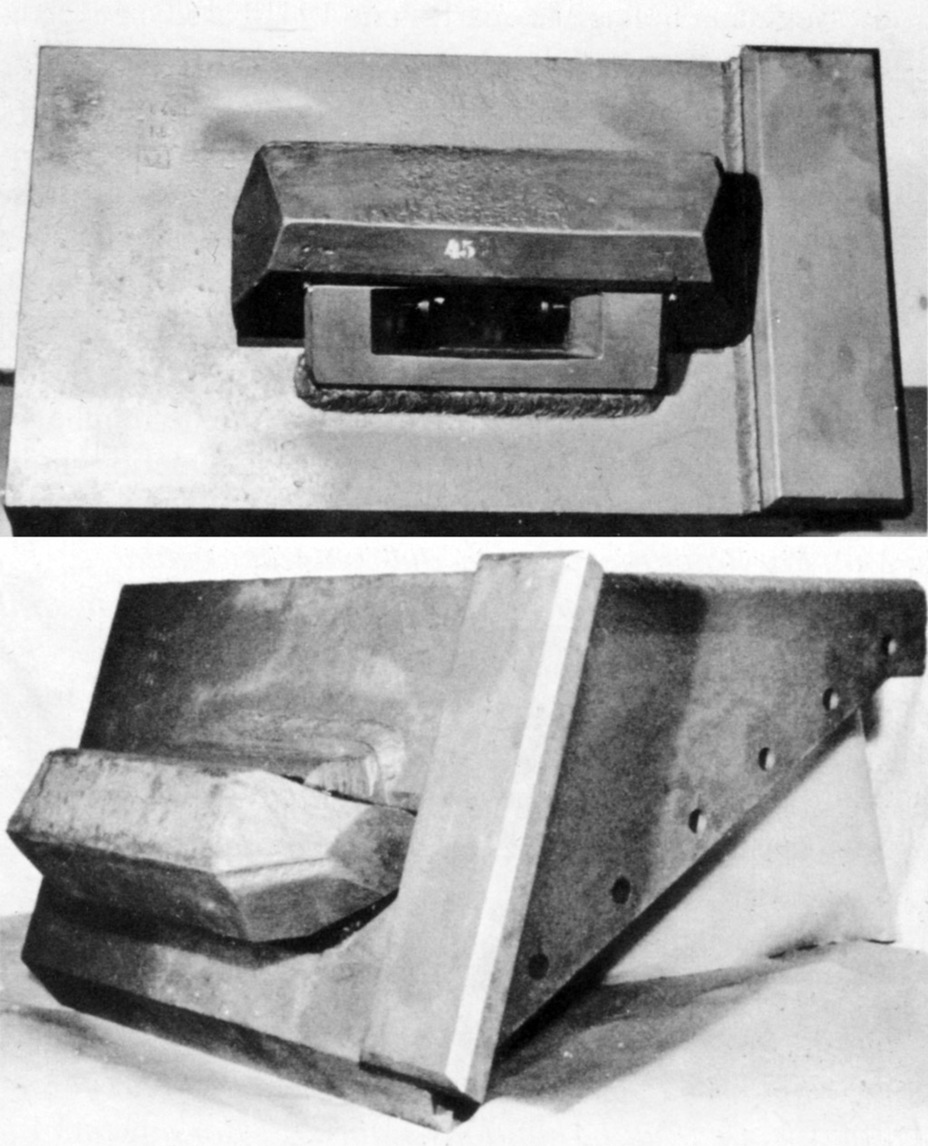
The modified superstructure to the right of the engineer-driver’s cabin
By the time the urgent order for the production of the Pz.Kpfw. B2 (F) with simplified Köbe mounts was placed, it was clear that this was a temporary solution. As early as May 20, the leadership of the Armaments Directorate and the 6th Division of the Armaments Department held a meeting at which the issue of a flamethrower tank with an improved design was raised. Placing the fuel tank inside the tank did not meet with enthusiasm among military officials, nor did the fact that the flamethrower operator on the “urgent” series tank was effectively blind. The improved design developed by Köbe eliminated these shortcomings. A new type of flamethrower mounting was developed, capable of being aimed not only vertically but also horizontally.
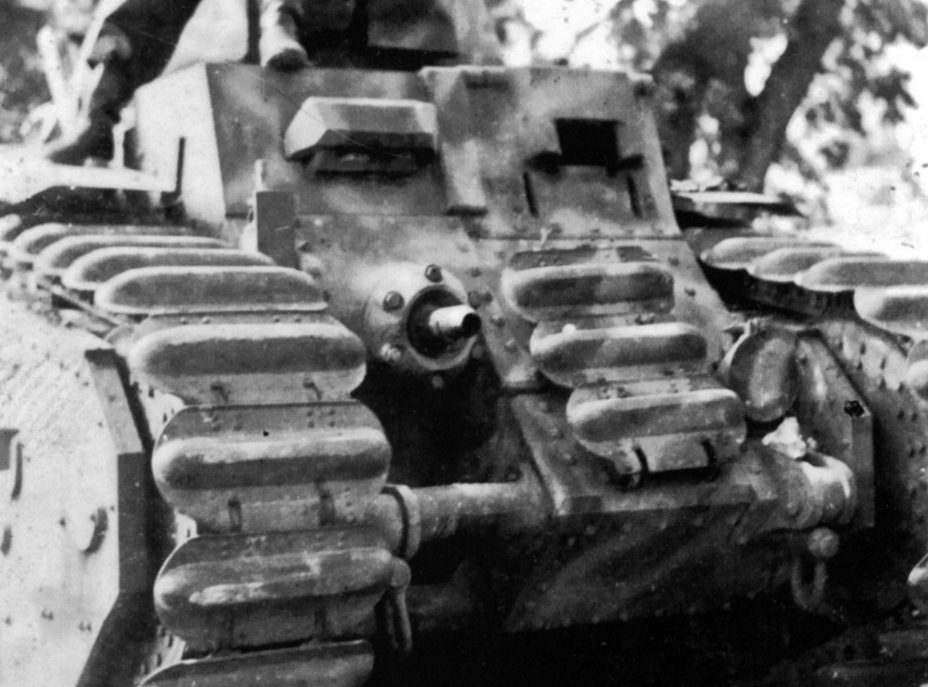
An improved flamethrower system developed at Köbe
Unlike the first two designs, the mounting of the 75-mm SA 35 gun was completely redesigned here. Another significant change was the addition of a special turret for the flamethrower operator. As a result, the driver lost the viewing port on the right side, but in this case, that sacrifice proved worthwhile. The new turret was equipped with a periscope similar to the one installed on the Pz.Kpfw.III Ausf.F series and later models. Finally, the fuel tank was moved to a special box attached to the rear hull plate. It held enough fuel for 200 shots, and the firing range reached 40–45 meters.
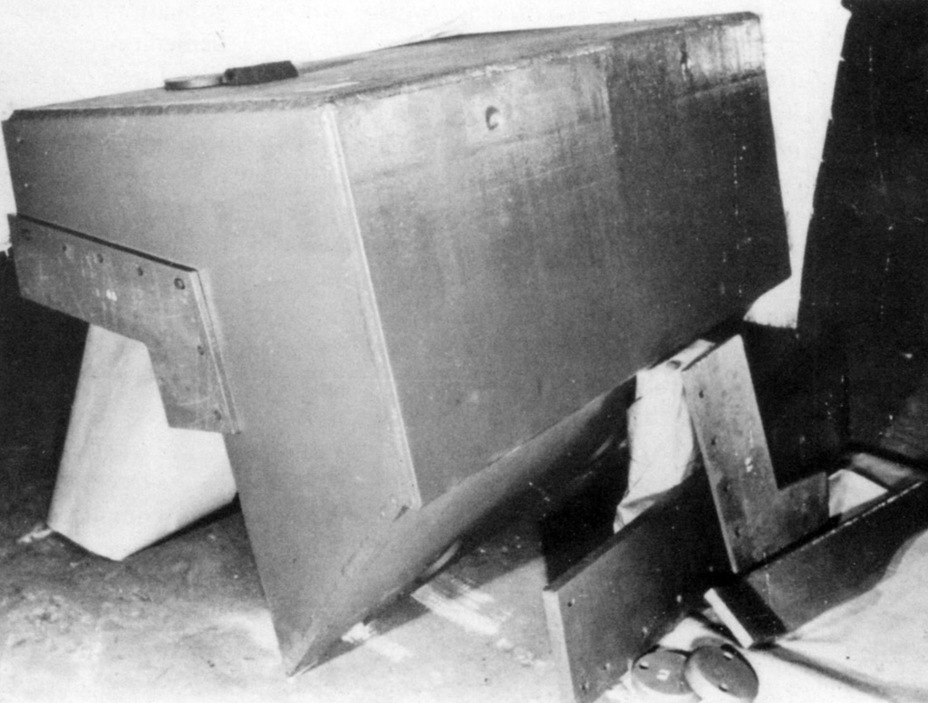
The tanks containing the incendiary mixture were moved to a special compartment that was mounted in the stern of the hull
Daimler-Benz retained overall responsibility for the project and also developed the new turret and external fuel tank. The improved flamethrower system was manufactured by Köbe, while Wegmann was responsible for the interior fittings. Deutsche Edelstahlwerke AG (DEW) was selected as the manufacturer of the turret and other armor components. Initially, it was expected that DEW would be able to manufacture the components as early as May or June, but production was delayed. This was the reason for the development of a simplified version of the flamethrower tank.
According to the revised plan, 20 tanks were to be converted into Pz.Kpfw. B2 (F) models—10 in December 1941 and 10 in January 1942. In reality, the first 5 vehicles were converted as early as November 1941. In total, 60 tanks were converted in this manner.
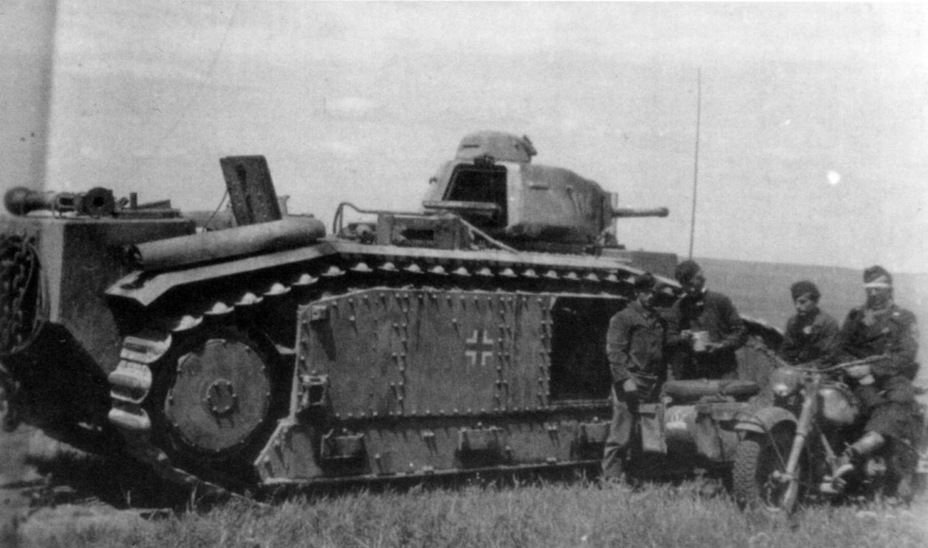
The 223rd Company of Captured Tanks in Crimea, 1942
The first unit to receive the modernized tanks was the 223rd Captured Tank Company (Panzer-Beute-Kompanie 223), formed on February 6, 1942. It consisted of 5 main battle tanks and 12 flamethrower tanks. In May 1942, the company was sent to Crimea, where it was attached to the 22nd Tank Division. The company took an active part in the assault on Sevastopol. On June 24, 1942, it was reorganized into the 1st Company of the 223rd Tank Battalion. This marked the end of its active combat service. In essence, the history of the 102nd Flamethrower Battalion was repeated with this unit as well. Most of the time, the crews struggled with their own equipment. The situation was exacerbated by the fact that the combat weight of the Pz.Kpfw. B2 (F) had increased by 3 metric tons, which placed an even greater strain on the engine and running gear.
As of March 27, 1943, the tanks were still in Crimea. Virtually every one of them had some sort of mechanical malfunction. The company was used for defense, as the German command no longer harbored any illusions about the Pz.Kpfw. B2 and its flamethrower variants. On May 20, 15 tanks were loaded onto flatcars and sent to the Blue Line in the Feodosia area. They did not stay there long: in June, the tanks were replaced with Pz.Kpfw. IVs, and the French equipment was sent back to France.
For campfires and training
The Pz.Kpfw. B2 (F) was not the only conversion based on the French “battle” tank that was discussed at the meeting attended by Hitler. To support the flamethrower vehicles, plans called for the development of a self-propelled howitzer that would be equipped with a 105-mm leFH 18 gun instead of its standard armament. The 6th Division of the Armaments Department and the Armaments Office delayed the launch of the program to develop this vehicle. Although the discussion took place back in March, approval for the work was not received until May 28, 1941.
The Rheinmetall-Borsig Group was selected as the contractor; by that time, it was one of the leading developers of self-propelled artillery. The Düsseldorf-based company already had experience converting less-than-ideal chassis into quite successful self-propelled guns. The Rheinmetall-Borsig design bureau worked quickly—the first prototype was ready as early as June. The 75-mm gun was removed from the hull, as were the turret and the turret ring. A hexagonal-shaped crew compartment was installed in place of the turret and expanded as much as possible to increase interior space. This allowed the crew to be increased to five people. Inside the conning tower was a leFH 18M howitzer, which was shielded from the front by a large gun shield consisting of several sections.
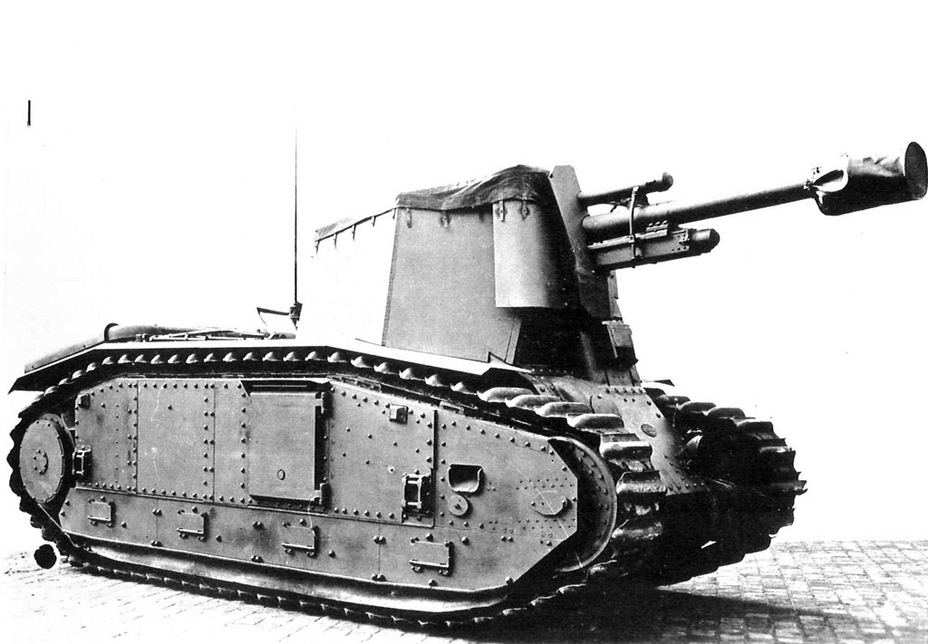
10.5 cm leFH 18/3 (Sf.) on GW B2
The delay in starting development meant that the vehicle never made it to the Eastern Front. It was already too late to begin mass production in the summer of 1941; moreover, that summer brought far from flattering reports on the combat performance of the Pz.Kpfw. B2 (F) in combat. By mid-July, there was simply no one left to provide fire support, and for this reason, the self-propelled gun was temporarily forgotten.
The issue was not revisited until early January 1942. Whether this was due to the start of production of the improved Pz.Kpfw. B2(F) or to other reasons is unknown. One thing is certain: the Armaments Office authorized the production of a series of 16 self-propelled guns designated 10.5 cm leFH 18/3 (Sf.) auf GW B2, that is, the 105-mm leFH 18 self-propelled howitzer on the B2 chassis. They were manufactured at the Alkett plant in Spandau, with 5 vehicles produced in January–February and the remaining 6 in March 1942.
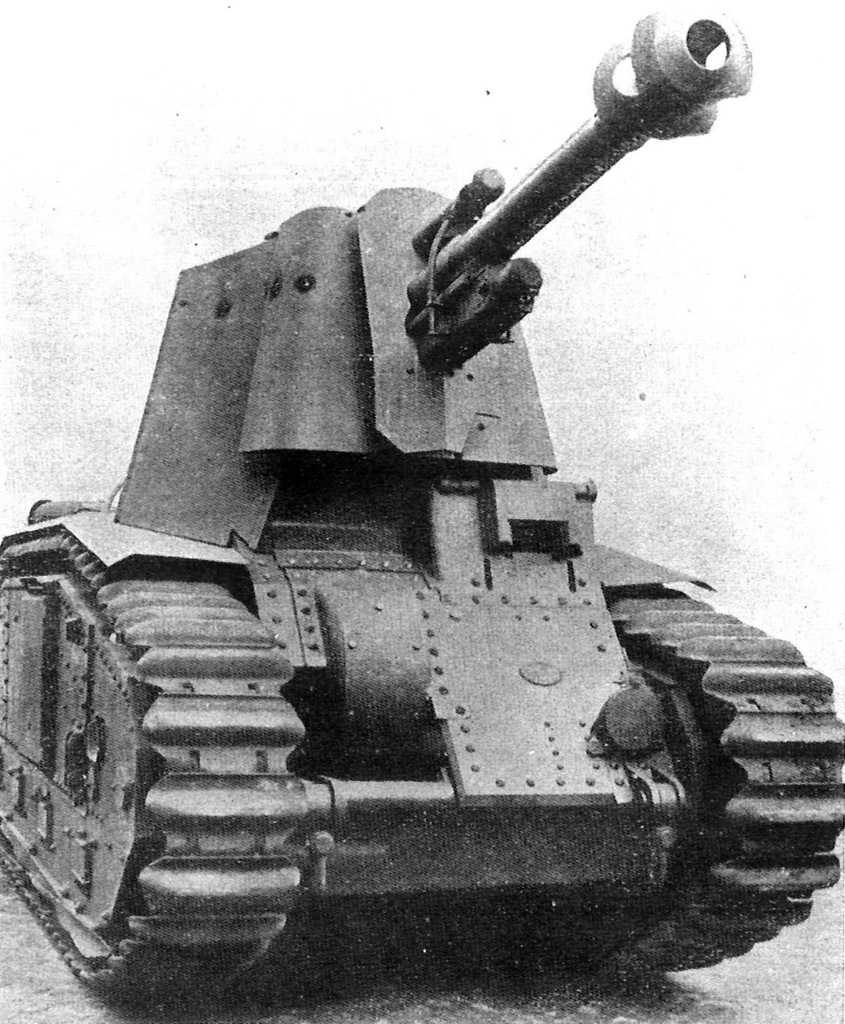
The same setup at the front
Contrary to the original concept, the 10.5 cm leFH 18/3 (Sf.) auf GW B2 flamethrower tanks were never used as support vehicles. The self-propelled guns were assigned to the 26th Panzer Division, which was formed in September 1942. The division, formed from the remnants of the 23rd Infantry Division, was created to defend occupied French territory. Within its ranks, the 93rd Tank Artillery Regiment was organized, consisting of a three-battery battalion. Each battery was equipped with four 10.5 cm leFH 18/3 (Sf.) auf GW B2 guns. The remaining vehicles were not officially assigned to any unit but were still listed as part of the 26th Tank Division. As of May 31, 1943, there were 15 of them, 14 of which were operational.
There is no information available on how the 10.5 cm leFH 18/3 (Sf.) auf GW B2 performed as part of the 26th Panzer Division. There are serious doubts that the crews were particularly pleased with their vehicles. Their combat weight had increased by half a metric ton, which inevitably affected the vehicle’s reliability. Furthermore, the gun’s high mounting position hardly contributed to improved firing accuracy. In May 1943, the 93rd Artillery Regiment began re-equipping with Wespe self-propelled guns. Although they were armed with the same gun, their design was far superior. As for the 10.5 cm leFH 18/3 (Sf.) auf GW B2, they were “exiled” to Sardinia, where the 90th Panzer Grenadier Division was formed on July 6, 1943. There, they were incorporated into the 190th Artillery Regiment. The subsequent fate of these self-propelled guns is unknown.
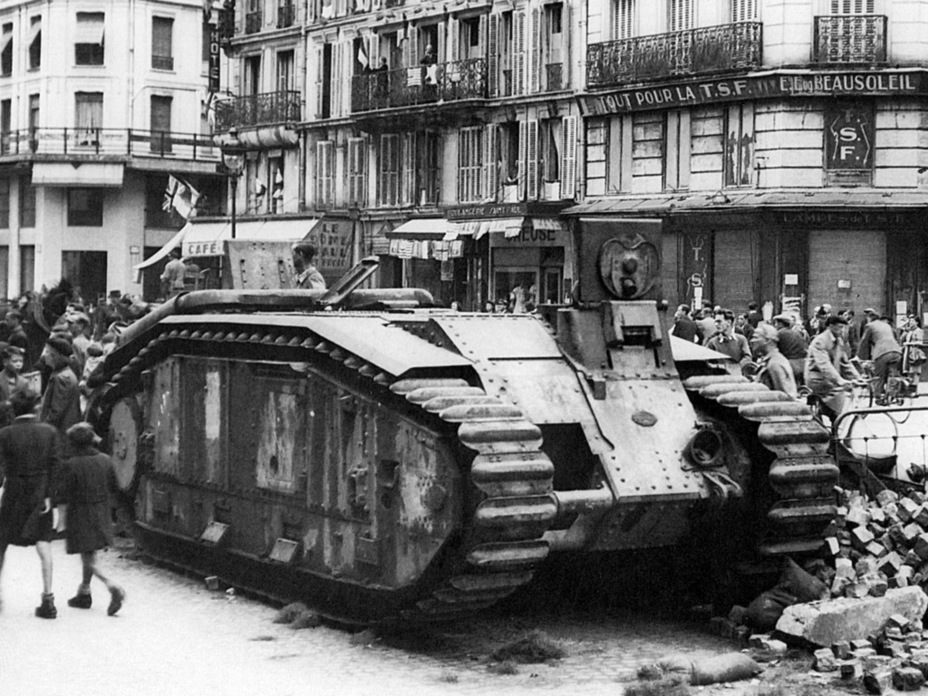
An abandoned Fahrschulpanzer B2 (f) in Paris, August 1944
The Pz.Kpfw. B2 was also used as a training tank. Apparently, the most recently produced B1 bis tanks were partially used for this purpose, some of which were sent to the front without turrets. The procedure was simple: the tank’s armament was removed, and benches and handrails were sometimes installed on top. These tanks were designated as Fahrschulpanzer B2 (f).
On Both Sides of the Front
The highly controversial combat debut of the Pz.Kpfw. B2 (F) on the Eastern Front demonstrated once again that tanks of this type were ill-suited for use as front-line combat vehicles. Had the campaign in France lasted longer, the French use of the Char B1 bis would likely not have differed significantly from the German experience. The only way for the Germans to derive any benefit from the captured tanks was to equip units formed on French territory with them.
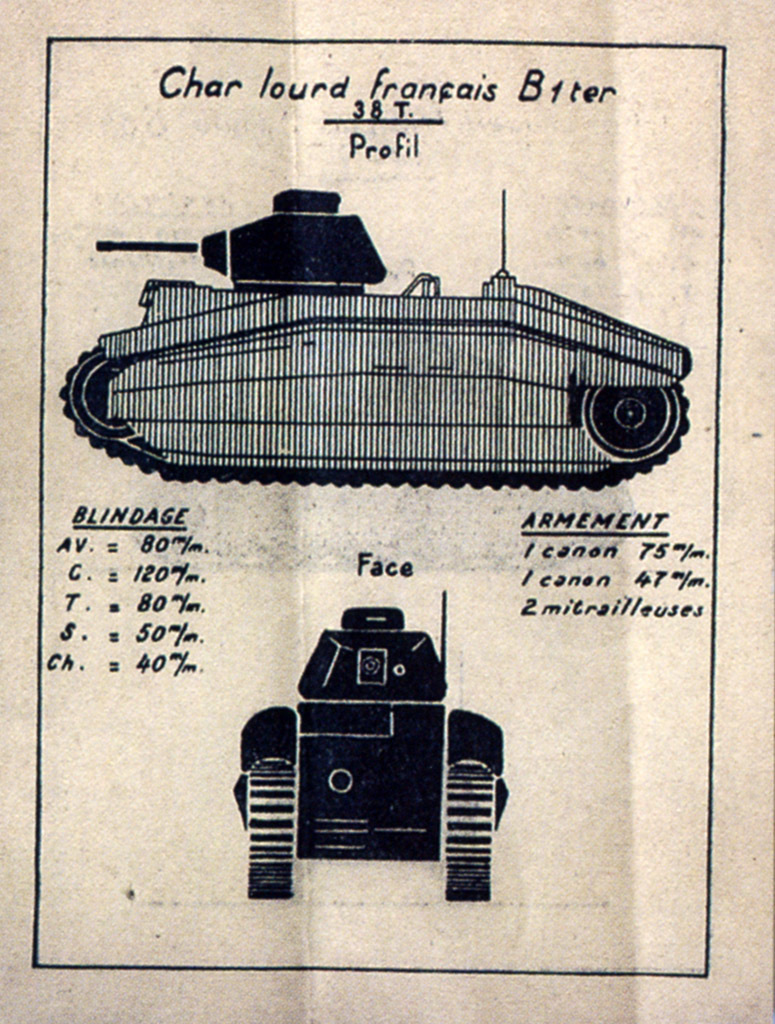
Diagram of a captured Char B1 ter from a French guide to enemy tanks, 1944
Information that the Germans had put French tanks into service began reaching England in the summer of 1941. Similar reports also appear in the intelligence summaries of the Red Army’s Main Armored Directorate. Interestingly, the list of captured vehicles that fell into German hands includes not only the Char B1 bis but also the Char B1 ter. Moreover, this tank was even included in a handbook on enemy tanks compiled in 1944 with French participation. Of course, in reality, the Germans did not have any B1 ter tanks.
As for the repair facility set up by the Germans in Boulogne-Billancourt, the British did not tolerate its existence for long. On the night of March 3–4, 1942, 235 RAF aircraft carried out a massive raid on Paris, targeting the Renault factory. The factory was reduced to ruins, and the tanks located there were destroyed along with it. A total of 370 civilians were also killed.
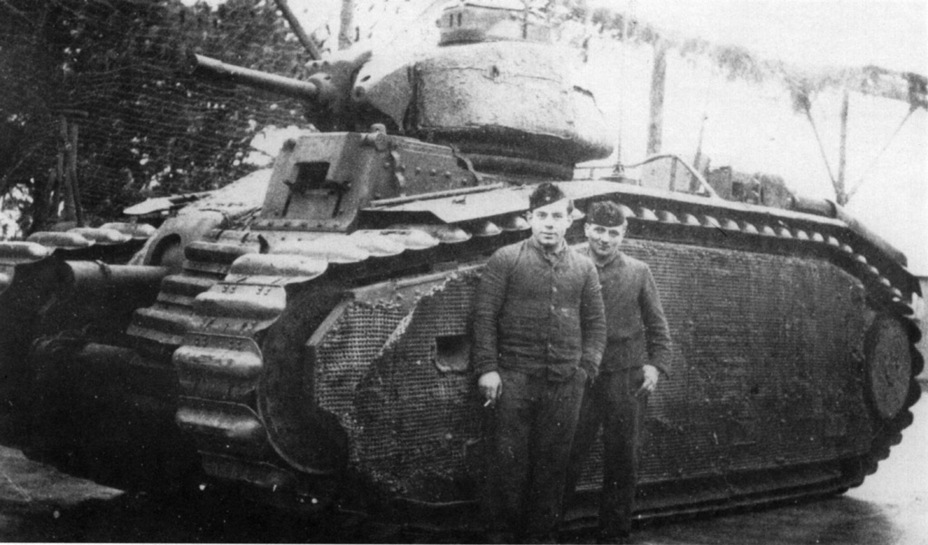
A Pz.Kpfw. B2 from the 213th Tank Battalion. This unit had the largest number of these tanks. Their crews were the last to surrender—on May 8, 1945.
The loss of the maintenance base inevitably affected the number of Pz.Kpfw. B2 tanks and vehicles based on that design that remained in service. As of March 1, 1943, the troops of Army Group West had 52 standard tanks of this type, as well as 44 flamethrower tanks. The largest number were in the 1st Tank Division (13 standard tanks and 10 flamethrower tanks), which was undergoing reorganization, as well as in the 213th Tank Battalion (26 standard tanks and 10 flamethrower tanks). By the end of May, 10 main battle tanks and 24 flamethrower tanks were transferred to the 100th Tank Brigade. Another 17 standard tanks were assigned to the SS Division “Prinz Eugen.” A number of flamethrower tanks were later assigned there as well.
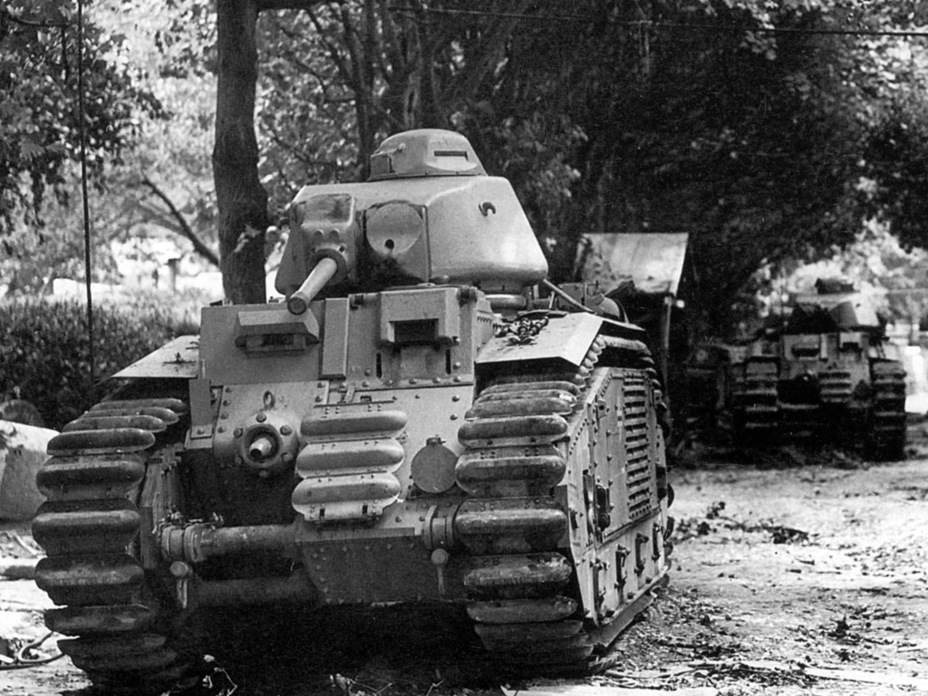
Pz.Kpfw. B2 (F) tanks abandoned in August 1944 by the German garrison in Paris
By mid-spring 1944, the composition of the units equipped with Pz.Kpfw. B2 tanks and flamethrower tanks based on them had changed somewhat. In April 1944, a tank flamethrower company was formed from the 224th Tank Company, comprising 17 tanks. The 213th Tank Battalion, which had the largest number of tanks, was redeployed to the Channel Islands. Pz.Kpfw. B2 tanks also remained in service with the 100th Tank Brigade, while individual vehicles, including training tanks, were stationed in Paris. It was with this force that the former French tanks met the landings in Normandy.
The tanks of two units remained in service the longest. The 224th Tank Company took part in the battles for the Netherlands in the fall of 1944. As of December 30, it still had 9 Pz.Kpfw. B2 and B2 (F) tanks in its ranks. The last unit still operating tanks of this type was the 213th Tank Battalion. It did not surrender until May 8, 1945. The Char B1 bis currently on display at the Bovington Tank Museum is, in fact, a Pz.Kpfw. B2 that belonged to the 213th Tank Battalion.
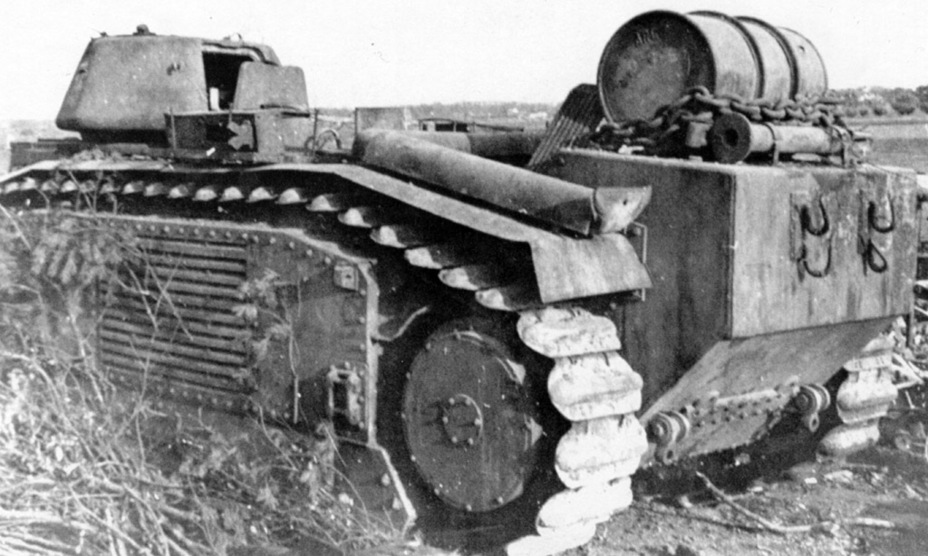
One of the flamethrower tanks of the 224th Tank Company, late 1944. The French-style commander’s turrets on these vehicles had been completely cut off.
The history of captured tanks would be incomplete without mentioning their reuse by French units. In the summer of 1944, units of the FFL (Forces françaises libres, Free French Forces) managed to capture a number of tanks from the Germans. On October 7, 1944, the 13th Dragoon Regiment (13ème Régiment de Dragons) was formed. It included 19 Pz.Kpfw. B2 tanks, which were assigned to the second squadron. The composition of the equipment was quite varied: some of the tanks remained in their original condition, while others had been modified by the Germans. Flamethrower tanks were also included.
The French should view the creation of their own tank regiment more as a gesture of prestige: over the course of four years of war, the tanks that had been assigned to it had become noticeably obsolete, and the vehicles’ technical condition was far from ideal. Until early April 1945, the regiment remained at its base near Orléans.
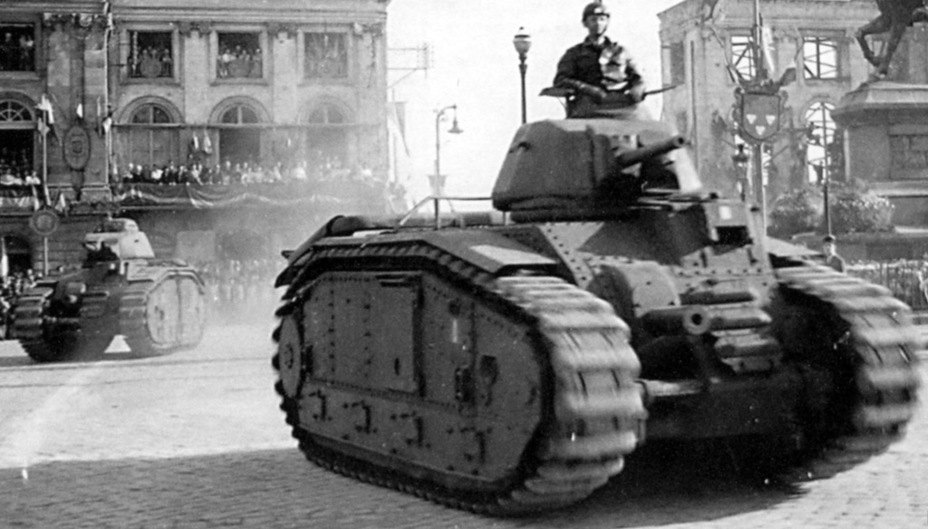
Char B1 bis from the 2nd Squadron of the 13th Dragoon Regiment. May 1945
On April 2, the regiment advanced toward Royan. There, its tanks took part in the assault on German fortifications located in Saint-Georges-de-Didon. Similar operations followed later in the same sector. The final operation was the mop-up of the port of La Rochelle on May 8, 1945. After the war ended, the regiment became part of the 3rd Armored Division. Its tanks were incorporated into the occupation forces stationed in the Palatinate (Pfalz). The Char B1 bis tanks remained in service with the French Army until 1950.
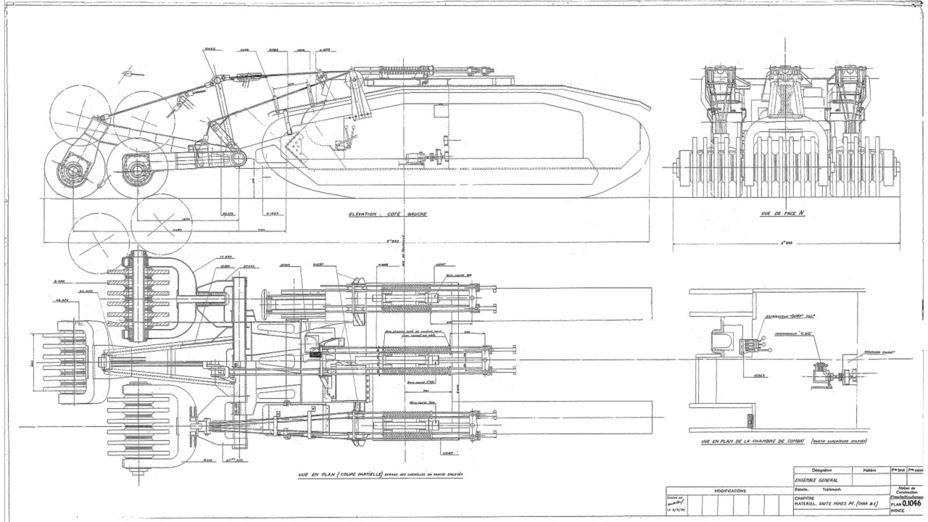
The final version of the roller trawl, developed in 1945 based on the Char B1 bis
The latest version of this tank was a self-propelled roller mine-clearing drag, developed by AMX. Work on this vehicle began even before the end of the war—in April 1945. The reason was simple: after the war, there were many minefields left behind, as well as a huge number of unexploded mines and shells. The trawl’s design was finalized in September 1945. It consisted of three sections. A total of two such trawls were built, one of which has survived to this day. It is on display at the tank museum in Saumur.
Sources and References
-
-
- NARA Materials
- Panzer Tracts No. 10: Self-Propelled Artillery Mounts, Thomas L. Jentz, Hilary L. Doyle, 2002, ISBN 0–9708407–5–6
- Panzer Tracts No. 19–1 Captured Tanks: Czech, Polish, and French Tanks Captured from 1939 to 1940, Thomas L. Jentz, Werner Regenberg, 2007, ISBN 0–9771643–7–3
- Captured Motor Vehicles and Tanks of the German Wehrmacht, Walter J. Spielberger, Motor Buch Verlag, 1989
- http://nemirov41.forum24.ru
-
Source: https://warspot.ru/8600-bolshoy-frantsuz-s-balochnym-krestom