A 19th-century battlecruiser. An alternative “Super-Ryurik” for the Russian Imperial Navy

The idea for this ship came from our colleague Stvolyar, but I’m posting this on my own behalf since I didn’t contribute anything beyond the general concept and the black-and-white drawings. Anyway, enjoy the read.
FIRE AT ULSAN: A MATCH THAT SHOULDN’T HAVE ENDED THIS WAY
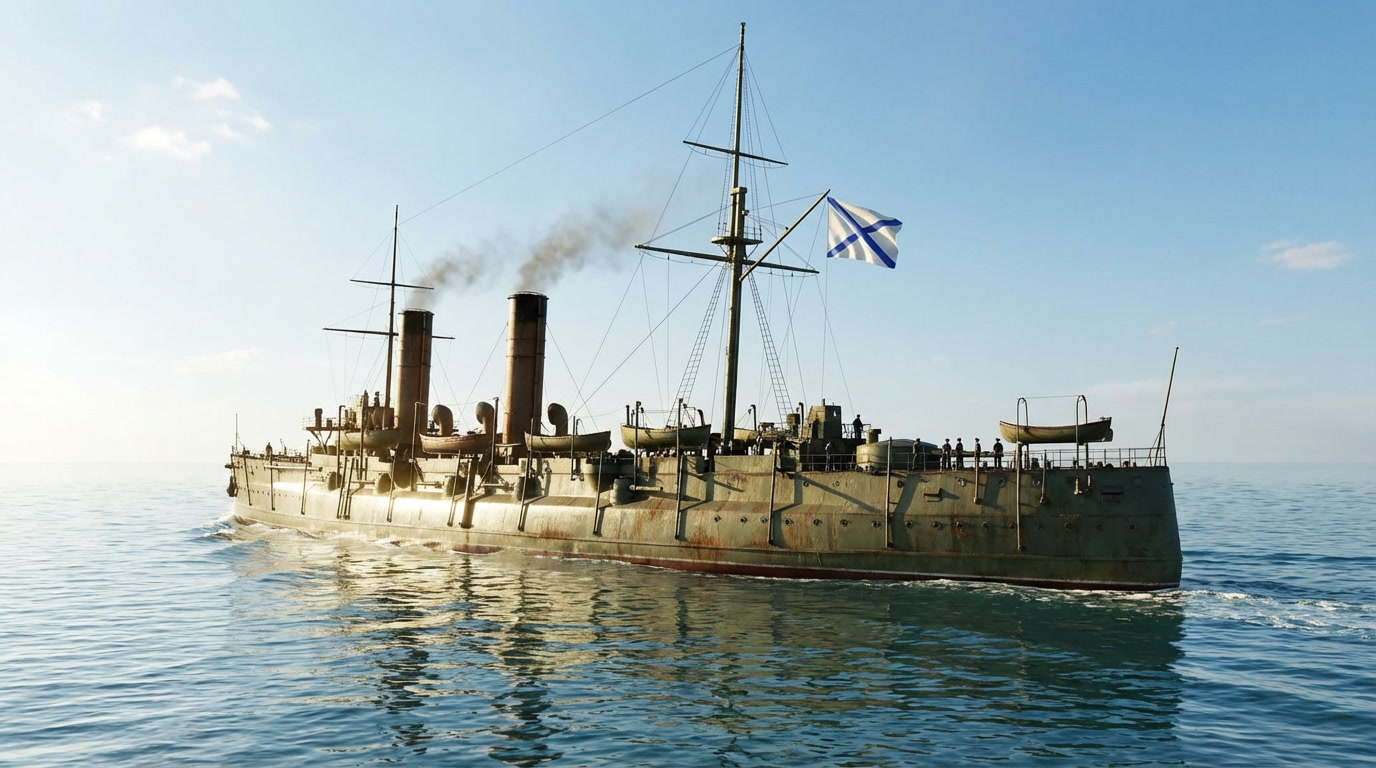
August 14, 1904. Sea of Japan, off Cape Ulsan. Admiral Hikonojo Kamimura’s squadron, consisting of the armored cruisers *Izumo*, *Azuma*, *Tokiwa*, and *Asama*, caught up with a detachment of the Vladivostok Force. The Japanese calculation was simple: one fast but lightly armored Russian cruiser would be easy prey for the four of them.
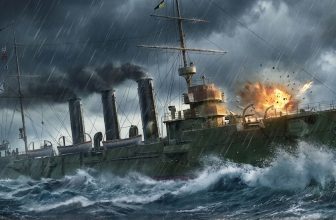
However, when the distance closed to 30–35 cable lengths, a different silhouette emerged from the morning mist. The decks of the *Rurik* were suddenly shrouded in gunpowder smoke. Nine 8-inch guns opened fire simultaneously on the port side. A volley—comparable in shell mass to the firepower of an entire battleship—rained down on Kamimura’s lead ships. Armor-piercing and high-explosive shells tore through the decks, piercing the upper edges of the armor belts, putting the medium-caliber artillery out of action and causing uncontrollable fires. The *Izumo* listed to port, the *Asama* lost propulsion, and the *Tokiwa* was forced to lurch, falling out of formation.
Kamimura, realizing that his squadron was not prepared for such concentrated fire and risked losing two cruisers in the very first serious engagement, ordered a retreat under cover of a smoke screen. The Russian ship, riddled with shrapnel, with its funnels shattered, its bridge scorched, and its port propeller jammed, was barely moving at low speed. For three days, it crept toward the shores of Primorye, maintaining boiler pressure using emergency steam pipes and temporary brass clamps. On the evening of August 17, the *Rurik* dropped anchor in the Golden Horn. Not a single undamaged boat remained on its deck, but the flag was flying. Vladivostok rejoiced. The Japanese fleet had learned its first lesson, one that would change its tactics for the remainder of the war.
THE BIRTH OF THE PROJECT: THE PARALLEL BRANCH OF THE 1890s
In our reality, this battle ended with the loss of the *Rurik* and dealt a severe blow to the morale of the Pacific Squadron. But in a parallel timeline, the Russian Empire’s Ministry of the Navy made a different choice in the mid-1890s. Influenced by the “battlecruiser” doctrine, actively promoted by a number of officers in the General Naval Staff, a design was approved not merely for a fast raider, but for a full-fledged battlecruiser capable of engaging in squadron-level combat.
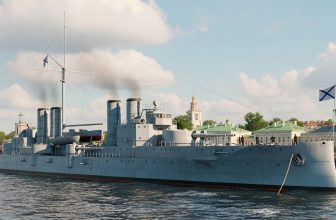
The prototype was the actual “Rurik” (1892), but the design underwent a radical overhaul. The designers abandoned doctrinal eclecticism in favor of a strict priority: maximum firepower over a limited cruising range while maintaining sufficient combat stability.
CONSTRUCTION: TONS, PROTECTION, AND CASUALTIES
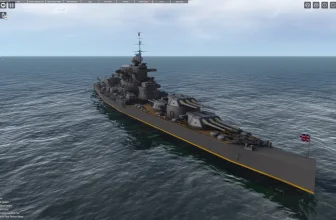
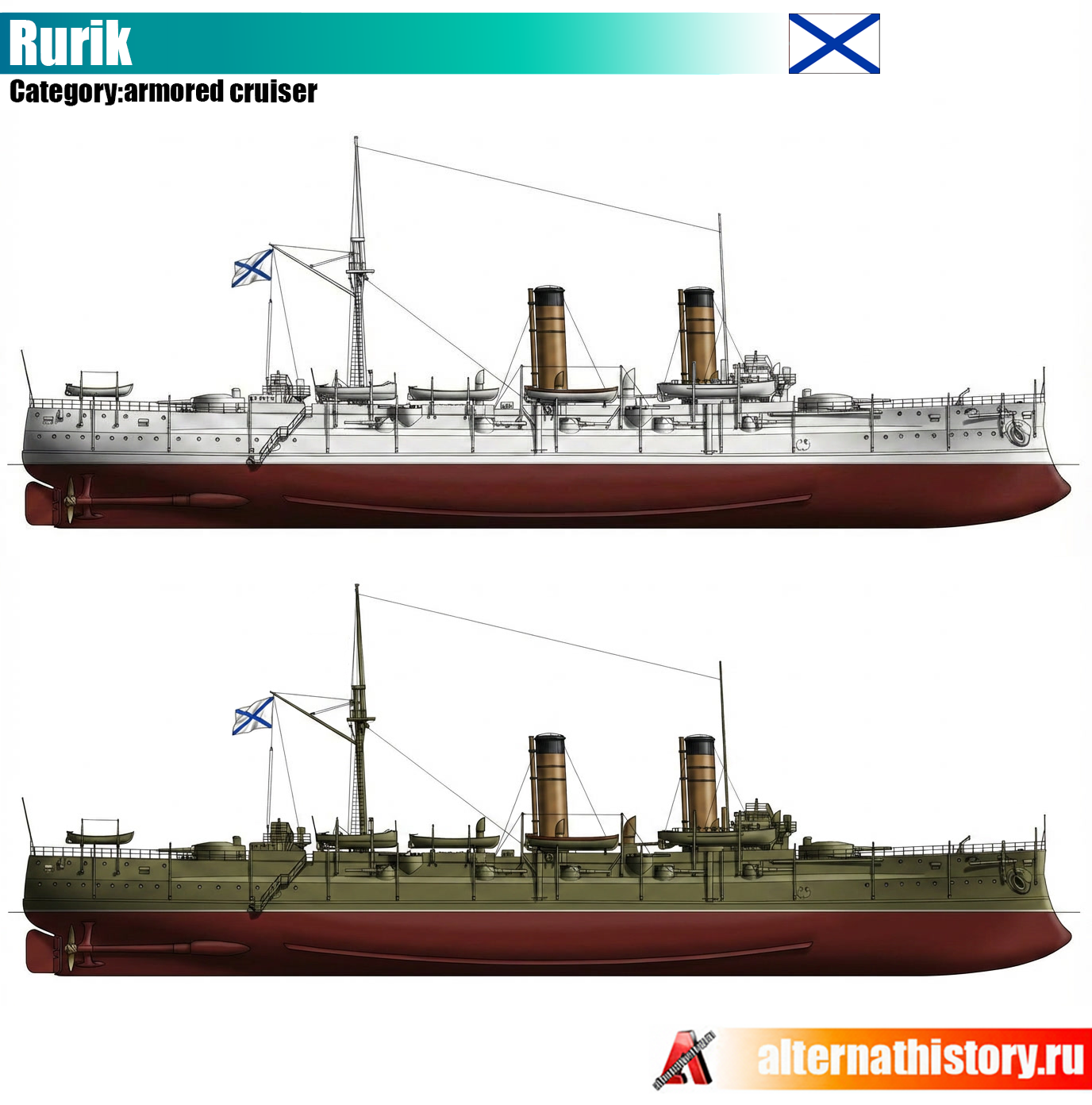
The main armament of the alternative “Rurik” consisted of fourteen 203-mm/35 guns of the 1889 model. The artillery layout was a bold hybrid of the casemate-turret type:
- Ten guns were mounted in the side casemates, providing a massive broadside on one side;
- Four guns were mounted in two twin-gun barbette mounts at the bow and stern of the hull, which allowed the ship to fire along its length and engage a retreating enemy.
Six 120-mm/45 rapid-fire Kane guns were added to the upper deck, designed to engage destroyers and light cruisers at close range.
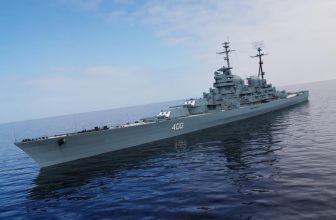
The most noticeable external change was the removal of the sailing rig. Instead of a heavy three-masted configuration with a full set of sails, a “Navarino-style” rig was installed: a light single-mast foremast and an equally slender mainmast, supporting only combat yards, signal yards, and searchlight platforms. This freed up not only weight but also space in the superstructure, improving visibility and fields of fire.
The engineers managed to reduce the displacement by approximately 150 metric tons by eliminating the fore peak, reducing the armor on the light casemate (due to the reduced number of main-caliber deck guns), and simplifying the masts. These metric tons were used to reinforce the barbette structures, which had originally been designed without armor. However, full protection of the guns required more:
- 152-mm barbettes;
- 76.2-mm feed pipes beneath them;
- Hoods with 50.8 mm armor on the sides and 25.4 mm armor on the roof.
To accommodate this protection, part of the power reserve had to be sacrificed. Of the planned 1,625 metric tons of coal, the modified “Rurik” carried only 1,375 metric tons. Its cruising range at economical speed was reduced, but the combat stability and survivability of its artillery positions increased significantly. This was a deliberate compromise: the ship was not designed for round-the-world voyages, but to dominate the waters of the Sea of Japan and the Yellow Sea.
STRATEGIC REFLECTIONS AND LEGACY
In an alternate reality, the launch of such a ship in 1898 forced the Japanese Navy to reconsider its plans to blockade Vladivostok and Port Arthur. The *Rurik* became the core of a cruiser squadron operating on the principle of “rapid breakthrough—massive broadside—withdrawal under cover of coastal batteries.” Its appearance forced Japan to accelerate the construction of its own “Tsukuba”-class armored cruisers and reallocate resources in favor of battleships, thereby easing the pressure on Russian lines of communication.
The Battle of Ulsan in 1904 was not a tragedy, but a demonstration of military doctrine. The Japanese navy learned a valuable lesson: even a single well-designed cruiser with squadron-class armament is capable of thwarting a concentric attack and inflicting unacceptable losses. Kamimura no longer risked bringing his ships within effective firing range of the Russian 8-inch guns without the cover of battleships.
EPILOGUE: WHAT IF…
The 19th-century battlecruiser never became a widespread phenomenon in real history. Budget constraints, the inertia of conservative thinking, and the pursuit of speed at the expense of defense meant that Russian cruisers of the 1890s and 1900s remained “glass cannons.” But in a parallel timeline, the *Rurik* proved otherwise: even with limited resources, it is possible to build a ship capable of shifting the balance of power. Its fate serves as a reminder of how a single decision to abandon sails, a single shift in priorities from range to defense, and a single act of engineering audacity can rewrite the course of war.
In the archives of the Ministry of the Navy of the alternative reality, the “Rurik-1898” project is still studied as an example of a rational compromise between doctrine, technology, and the realities of the maritime theater. And in the Golden Horn, where the battered hull of the cruiser is forever etched into the history of Vladivostok, a monument still stands: a bronze sailor points toward the open sea, and the plaque reads: “Here he returned. Here the new fleet began.”