I’m reposting this article because new illustrations have been added.
A recently conceived idea to “compile and distribute” the technical specifications of Russian cruisers from the Russo-Japanese War in roughly equal proportions.
https://stvolar.livejournal.com/352705.html
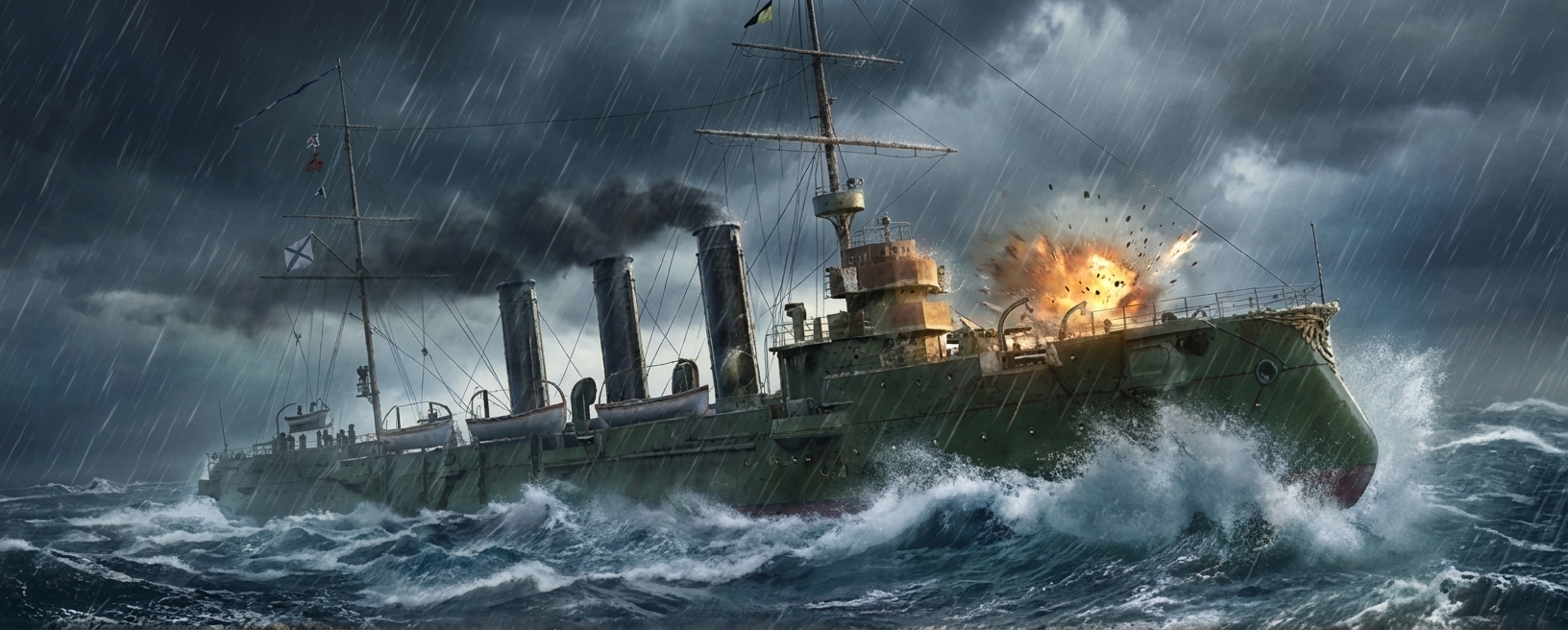
After the initial outlines, another thought occurred to me—why are we, in UKV-78, focusing only on an alternative gun system for armored cruisers? For whom, one might ask, were the alternative 87×43 and 107×45 guns proposed here some time ago?!
So, in the end, after all the technical specifications had been worked out, they were bound to turn out as follows:
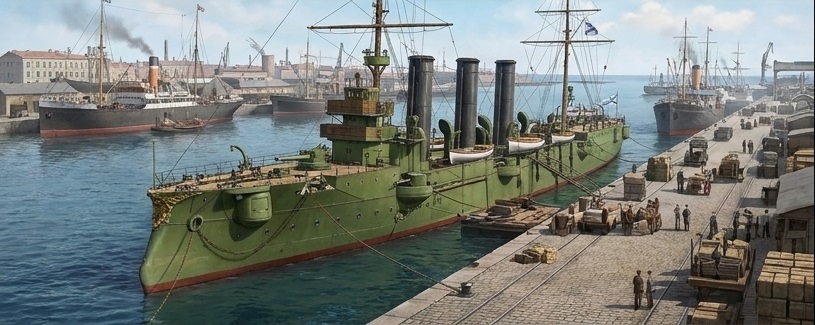
The first series of armored cruisers
(6 ships):
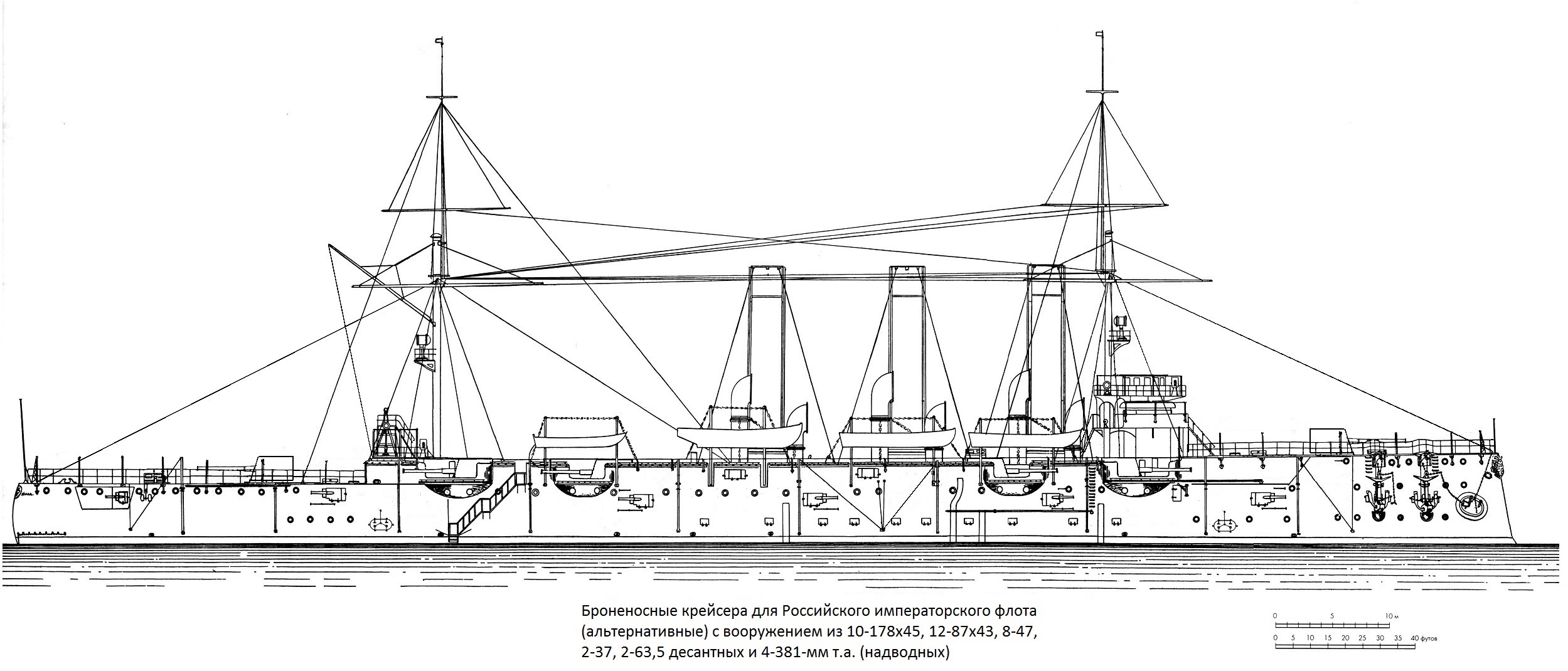
According to the design specifications, the standard displacement is 7,500 metric tons, 435 feet or 132.59 m (length along the waterline)/442 feet or 134.72 m (maximum length)/57 feet or 17.37 m (maximum beam)/22 feet or 6.71 m (draft at standard displacement), 875/1,250 metric tons of coal (normal/full supply), 26 Belville water-tube boilers of the 1894 model, engine power 13,500 metric horsepower (3 triple-expansion steam engines), speed 20.5 knots, Harvey armor and stainless steel (decks, roof, and floor of the conning tower), full belt along the waterline (7 feet 6 inches or 2.29 m high) – 152 mm (102 mm at the bottom) (50%) / 76.2 mm (50%), lower armor deck (carapace-type with bevels, including 12.7 mm thick deck plating) – 50.8 mm, combat conning tower – 152 (side)/50.8 (roof)/38.1 (floor)/76.2 (communication pipe) mm, funnels – 38.1 mm, ammunition elevators – 38.1 mm, main battery gun shields – 76.2 (front)/25.4 (sides and roof) mm, armament – 10x178x45, 12-87×43, 8-47, 2-37, 2-63.5 assault guns, 4-381-mm torpedo tubes (surface).
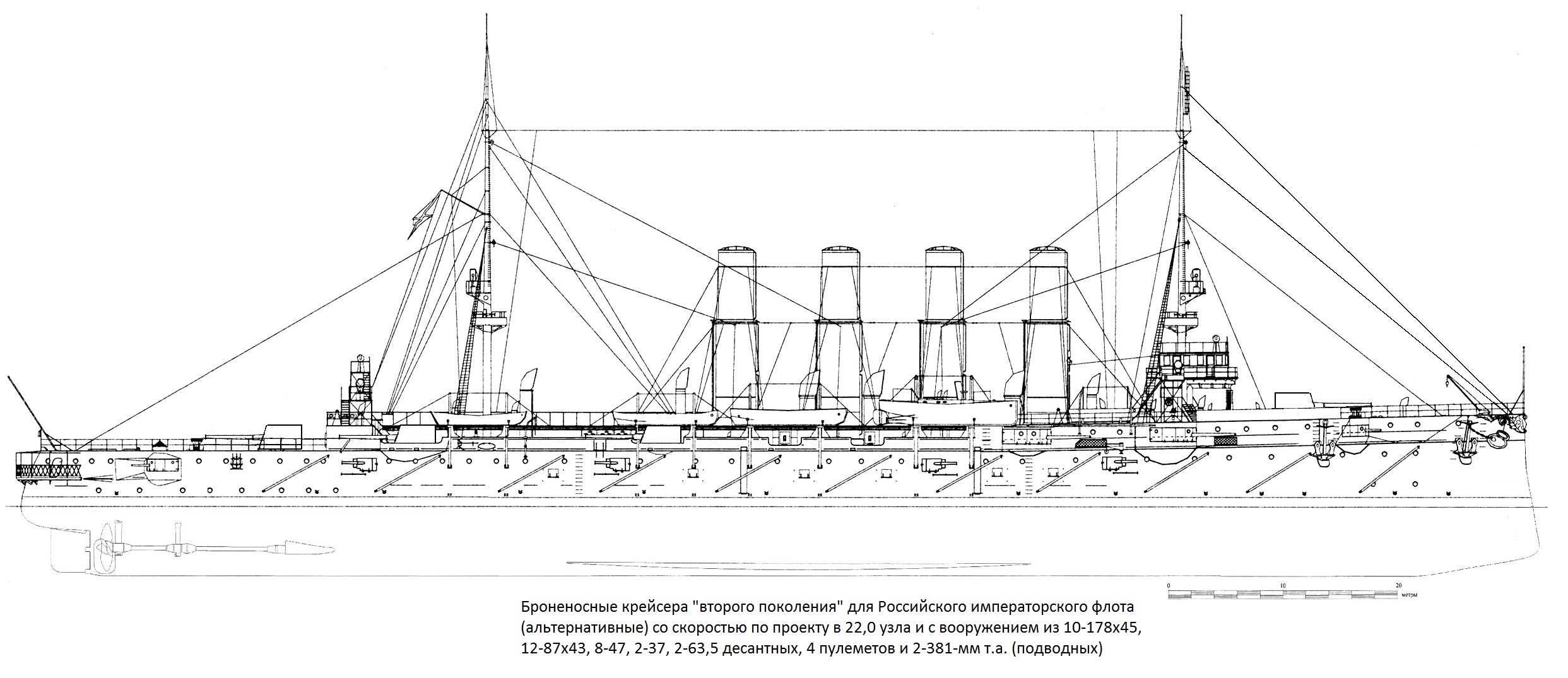
The second series of armored cruisers
(6 ships; dimensions and armor thickness are given for ships built using the British system of measurement):
According to the design specifications, the standard displacement is 7,500 metric tons, 435 feet or 132.59 m (length along the waterline)/442 feet or 134.72 m (maximum length)/57 feet or 17.37 m (maximum beam)/22 feet or 6.71 m (draft at standard displacement), 1,000/1,375 metric tons of coal (standard/full supply); all six ships were equipped with boilers of different designs (to select the best type—Schihau, Torncroft-Schulz, 1898-model Belville with economizers, Normann, Niklos, and Yarrow; engine power 19,000 l.s. (2 triple-expansion steam engines), speed 22.0 knots, Krupp armor and chromium-nickel steel (deck, roof, and floor of the conning tower), full belt along the waterline (7 feet 6 inches or 2.29 m in height)—152 mm (102 mm at the bottom) (50%) / 76.2 mm (50%), lower armored deck (carapace-type with bevels, including 12.7 mm-thick deck plating) – 50.8 mm, combat conning tower – 152 (side)/50.8 (roof)/38.1 (floor)/76.2 (communication tube) mm, funnels – 38.1 mm, ammunition elevators – 38.1 mm, main battery gun shields – 76.2 (front)/25.4 (sides and roof) mm, armament – 10 × 178×45, 12-87×43, 8-47, 2-37, 2-63.5 paratrooper rifles, 4 machine guns, 2 381-mm torpedo tubes (underwater).
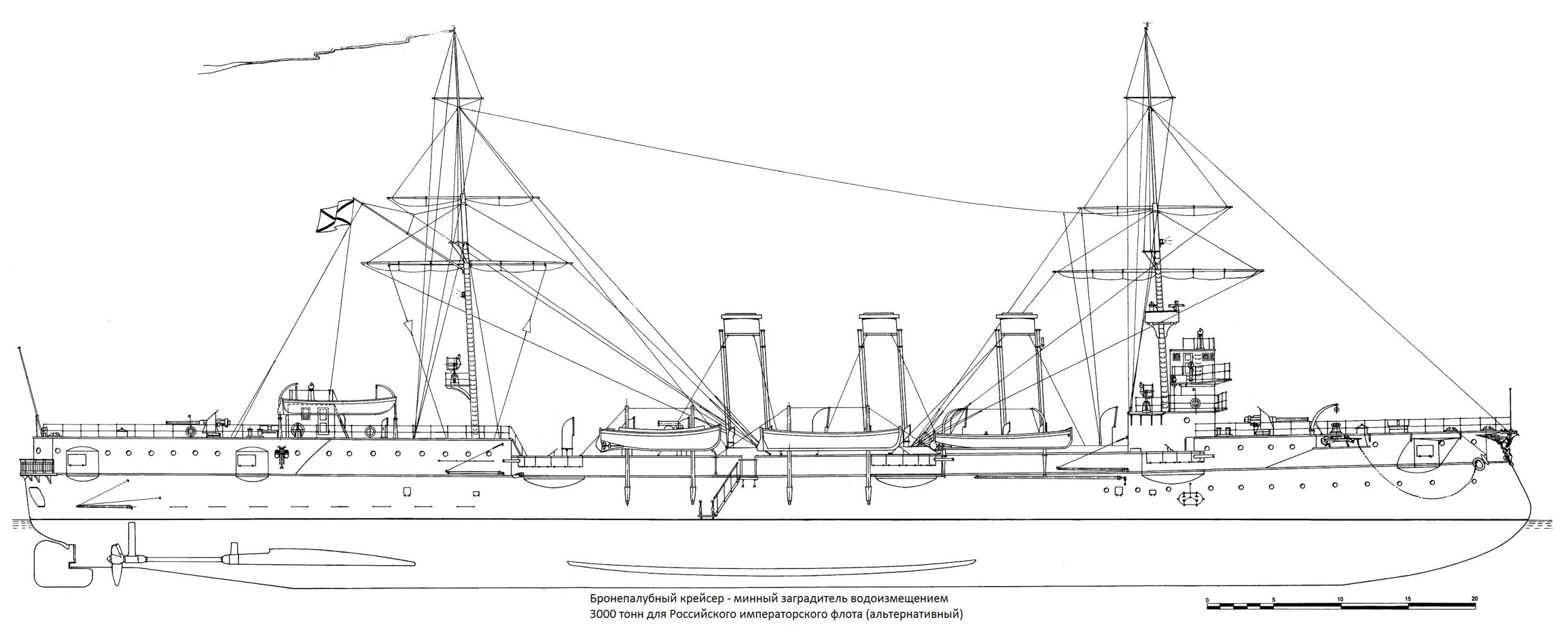
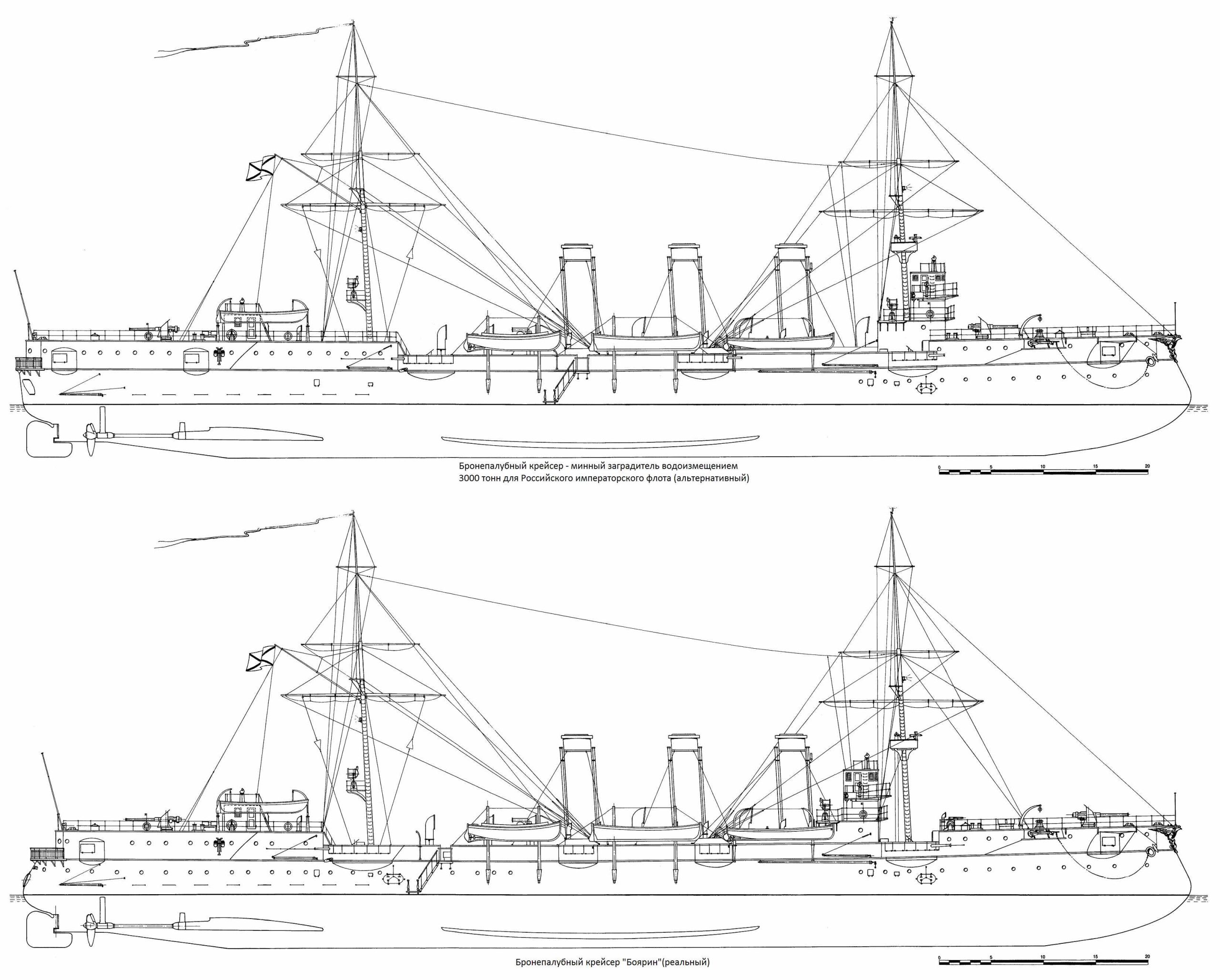
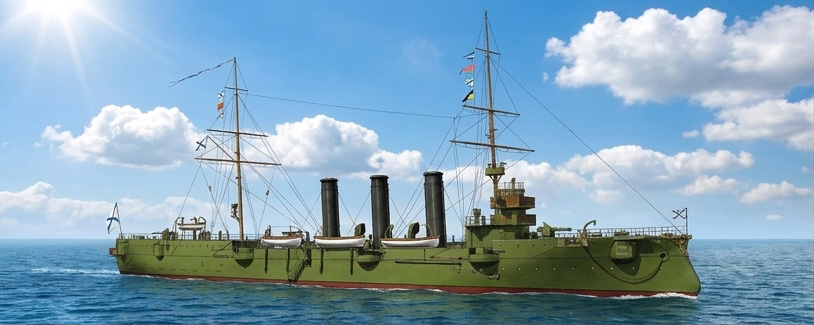
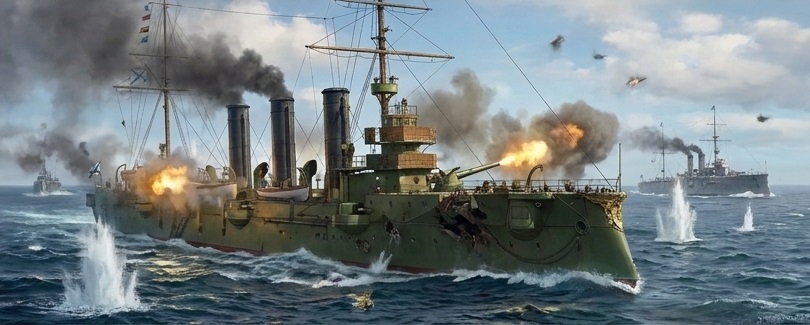
Small armored cruisers—mine-laying vessels
(10 ships):
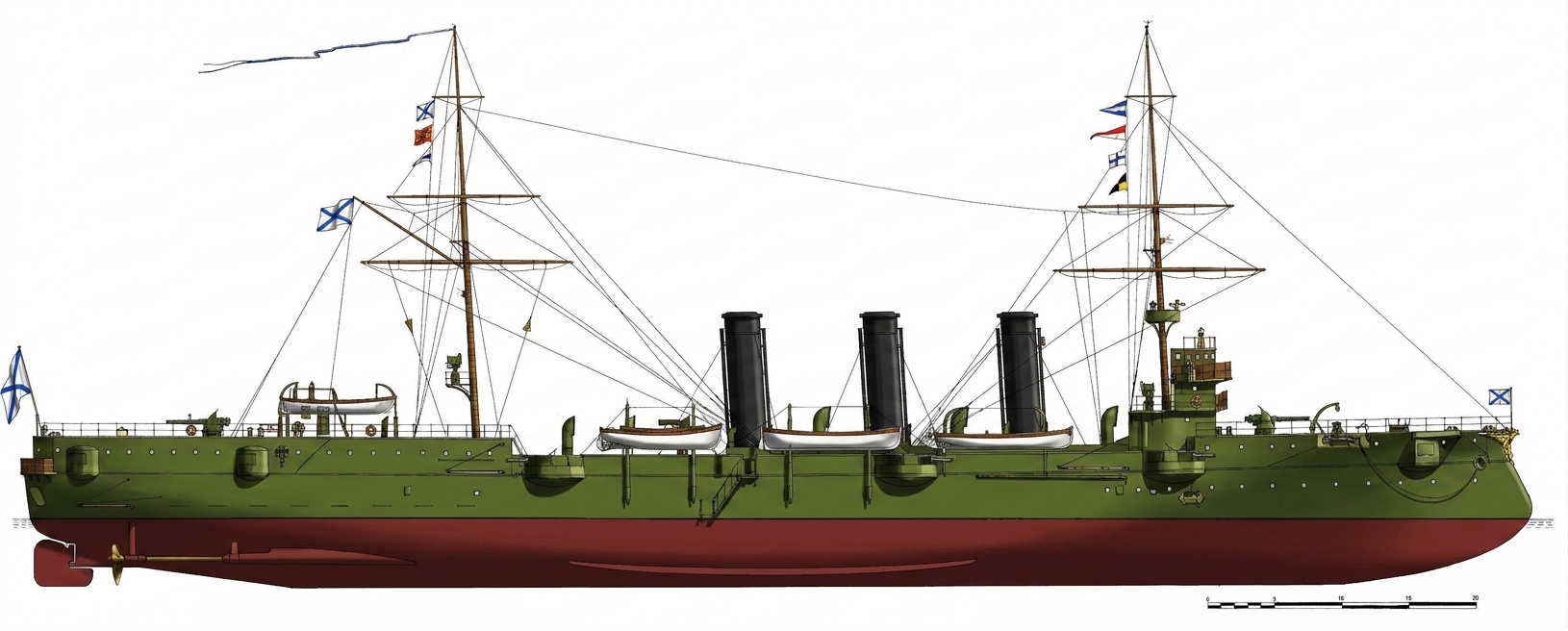
Design specifications: standard displacement 3,000 metric tons, 350 feet or 106.68 m (length along the waterline)/355 feet or 108.2 m (overall length)/42 feet or 12.8 m (maximum beam)/16 feet or 4.88 m (draft at standard displacement), 375/500 metric tons of coal (standard/full supply), 1898-model Belville boilers with economizers, engine power 9,000 l.s. (2 triple-expansion steam engines), speed 21.0 knots, Krupp armor and chromium-nickel steel (deck, roof, and floor of the conning tower), lower armored deck (carapace-type with bevels, including deck plating 12.7 mm thick) – 38.1 (bevels)/25.4 (flat section) mm; conning tower – 50.8 (side)/25.4 (roof and floor)/25.4 (communication tube) mm; ammunition elevators – 25.4 mm, main battery gun shields – 25.4 mm, armament – 8 × 107×45, 6 × 47, 2 × 37, 2 machine guns, 2 × 381-mm torpedo tubes (surface), 150 mines.
Sincerely, Stvolyar.
Sources: