Superbattleship or Unrealistic Fantasy? The "Yamato" British-Style: The Battleship HMS Empire

In late 1938, British naval intelligence received detailed information about the Japanese “Yamato”-class super-battleships. The information, obtained through diplomatic channels and from Japanese shipyards in Kure, sent shockwaves through the Admiralty: 460-mm guns, a displacement exceeding 65,000 metric tons, and armor impervious to British 406-mm shells at standard ranges demanded an immediate response. While in real history these specifications remained classified until 1945, in the alternate timeline the leak became the catalyst for an arms race that Britain entered reluctantly but resolutely.
The response was the HMS Empire project. The keel was laid in 1942 at the John Brown & Company shipyard in Clydebank. The war shifted priorities: construction was suspended, and the shipyard was reoriented toward building escort aircraft carriers and frigates. Work on the project resumed only in 1946, when postwar Britain, having lost its colonial hegemony, needed a symbol of naval power and a safeguard in case of a confrontation with the resurgent Soviet Navy. The battleship entered service in 1950, becoming the largest battleship in the history of the world’s navies and a living paradox: a technical masterpiece born of fear of an enemy that no longer existed, and entering an era in which dreadnoughts were rapidly losing ground to aircraft and missiles.
Design and Architecture: Britain’s Answer to the “Yamato”
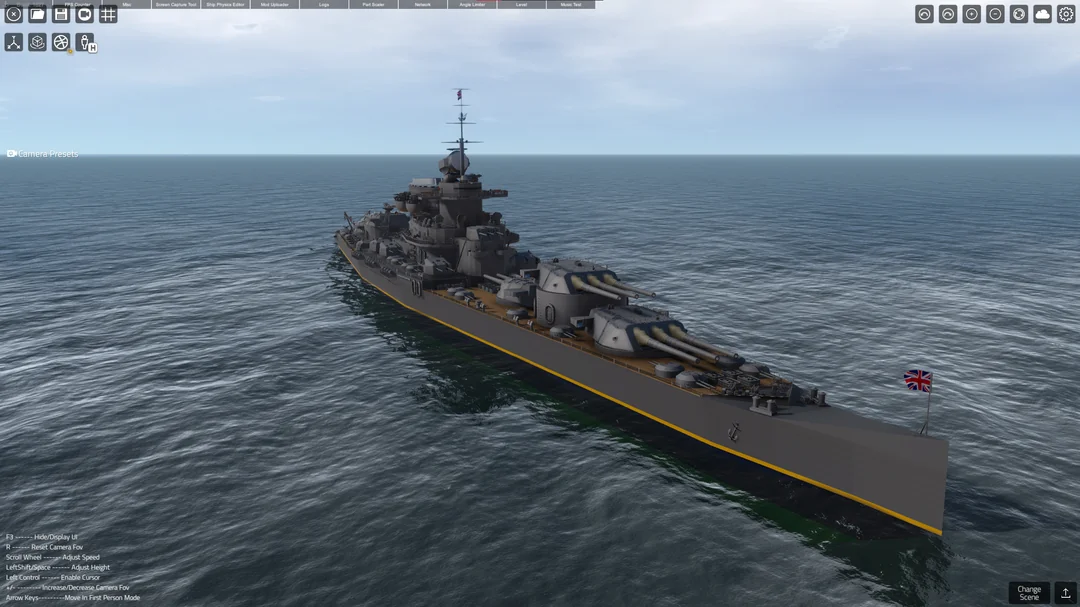
The DNC (Directorate of Naval Construction) design team, led by Sir Charles Lillicrap, rejected the idea of copying the Japanese design. Instead, they adopted the doctrine of “asymmetric superiority” and rigorously optimized the design for British manufacturing capabilities.
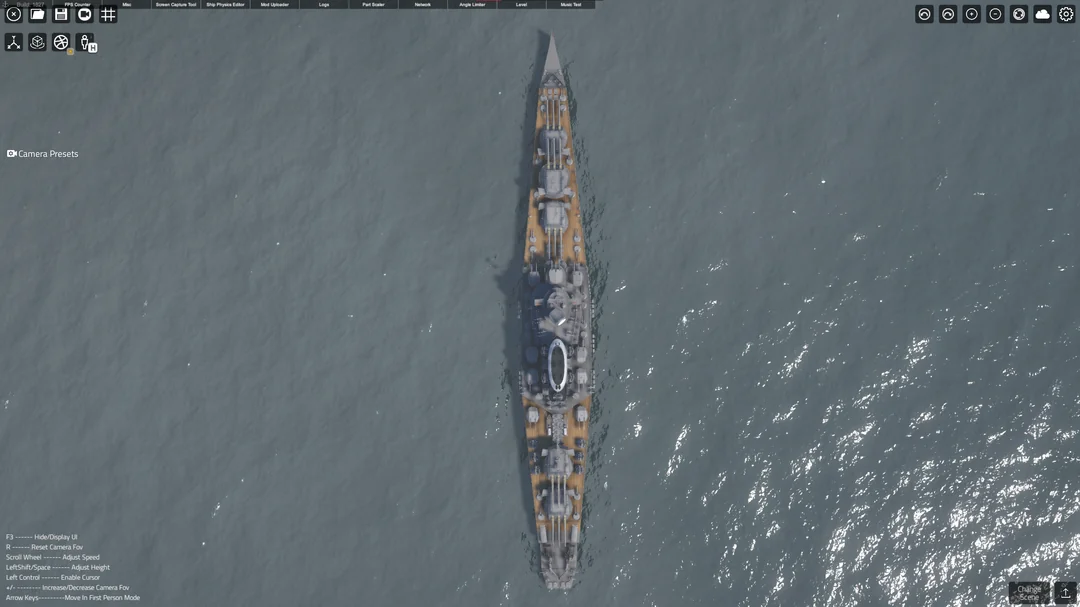
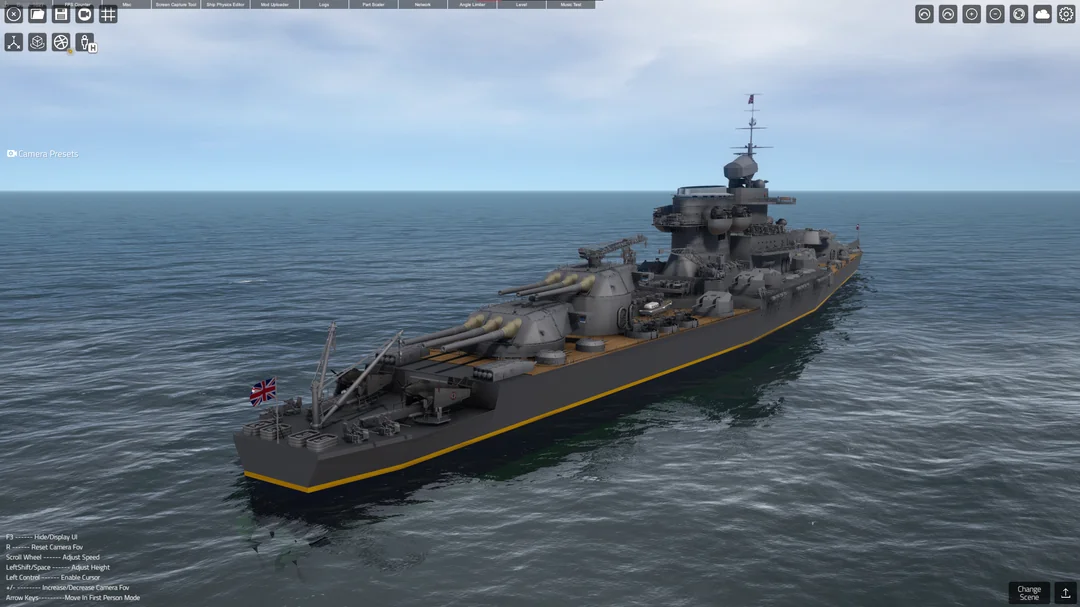
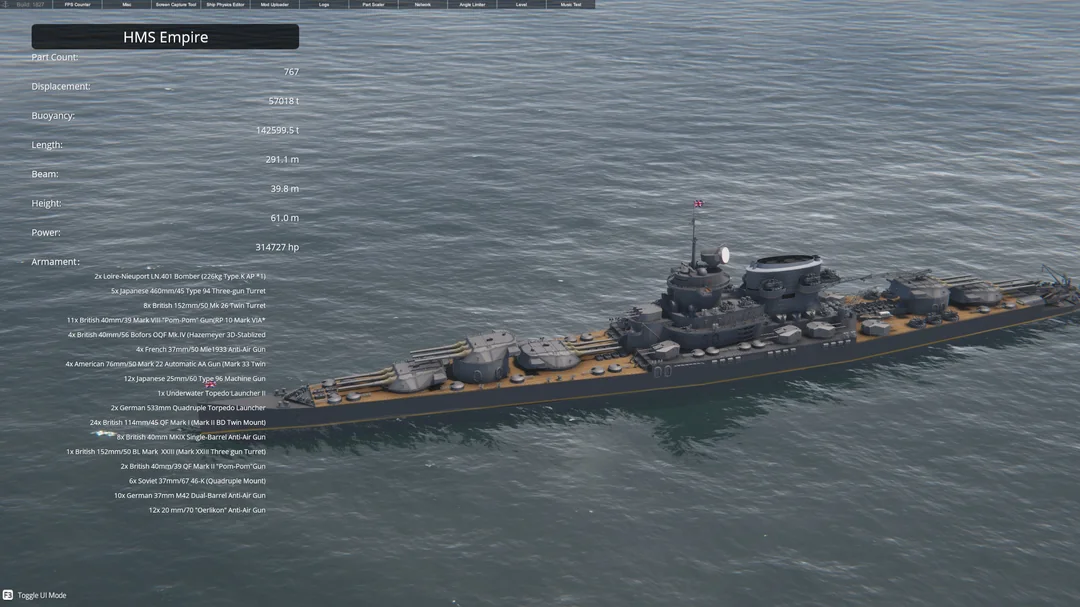
A key feature was the arrangement of the main-caliber turrets: in the bow, three 400-mm triple-gun turrets were arranged in a pyramidal formation (A, B, Q), which allowed for a six-barrel broadside to the bow and maximum concentration of fire during pursuit. At the stern, two turrets (X, Y) were arranged in a linear, elevated configuration, ensuring a full stern salvo and maintaining stability when firing astern. This layout reduced the length of the armored citadel, saved weight, and allowed for the placement of powerful anti-mine artillery in the unprotected ends of the ship.
The armor layout followed an “all-or-nothing” logic, but taken to the absolute extreme. The main belt, 410 mm thick with a 12° inward slope, a 152-mm deck above the magazines, and 410-mm-thick main battery turret fronts—all of which made the Empire virtually invulnerable to any naval guns of the time, except for the Japanese 460-mm guns, and even then only at maximum ranges exceeding 25 km.
The propulsion system originally consisted of 8 Admiralty-type water-tube boilers and 4 Parsons steam turbines, producing 314,000 l. s. At full displacement, the battleship reached a speed of 29.5 knots, which was in line with the doctrine of a “high-speed battleship” capable of operating as part of strike carrier task forces.
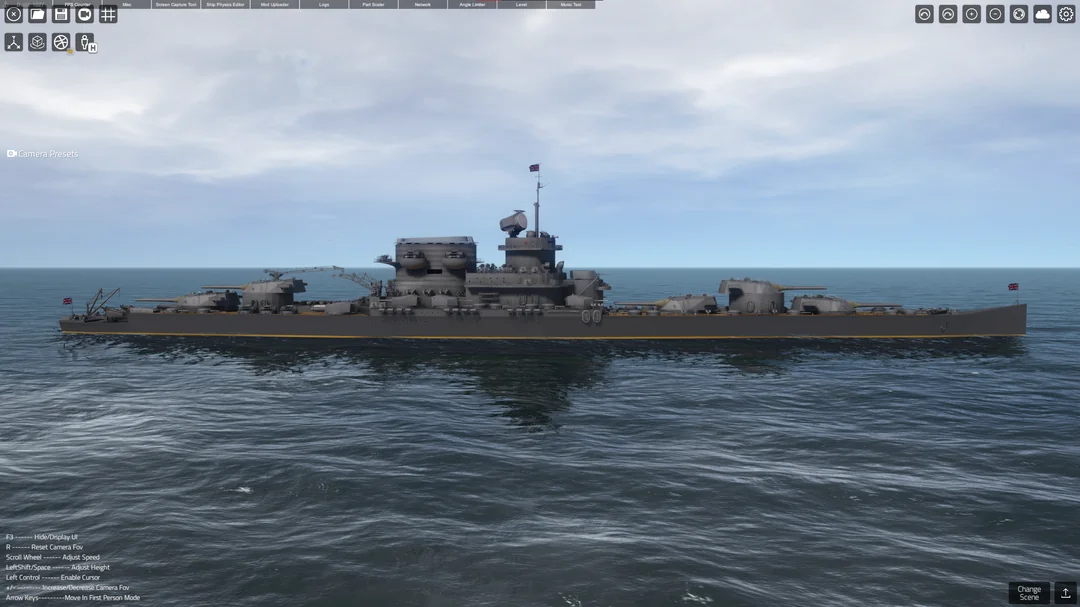
Tactical and Technical Specifications:
Displacement:
- Standard: 88,000 metric tons.
- Total: 98,500 metric tons.
Dimensions;
- Length: 291.1 meters
- Width: 39.8 m,
- Draft: 12.2 m,
- The machines have a total power output of 314,000 l. s.
Armament:
- GK – 5 x 3 x 400 mm
- PMK – 8×2×152 mm, 1×3×152 mm/50 Mk-26
- Universal caliber – 24 × 114 mm
Anti-aircraft guns:
- 24 x 2 x 25 mm
- 18 x 2 x 40 mm
- Torpedo tubes – 2 × 4 × 533 mm
- Air Group – 2 seaplanes
Reservations:
- Main belt – 410 mm
- End pieces – 152 mm
- Deck – 152 mm
- GK Tower – 410/210/380
(Note: During its service life, the ship was equipped with Type 984/965 radars, the Mk X fire control system, and upgraded electronic warfare and communications systems. The crew complement ranged from 2,650 to 3,100 personnel, depending on the configuration.)
Service, 1950–1961: The Last Artillery Parade
On October 12, 1950, HMS Empire joined the Home Fleet. She spent her early years in the Mediterranean and the Indian Ocean. The battleship was used as a “flag-showing” platform, exerting diplomatic pressure in areas undergoing decolonization and participating in NATO exercises. In 1956, during the Suez Crisis, the Empire joined the task force off Port Said. Its 400-mm guns conducted live-fire exercises against coastal fortifications, demonstrating their firepower, but even then it became clear that a traditional battleship was excessively vulnerable against modern coastal aviation and missile boats.
By 1958, maintenance costs exceeded 3.2 million pounds sterling annually. The Admiralty acknowledged that artillery duels were a thing of the past. In 1961, the ship was placed in reserve. However, instead of being decommissioned, a decision was made to radically refit her, transforming the Empire into an experimental nuclear-powered missile platform.
Modernization, 1961–1964: The Transition to the Nuclear-Missile Era
Work began in Dock No. 4 at the Devonport Shipyard in March 1961 and took exactly three years. The modernization project, codenamed “Operation Forge,” became one of the most ambitious in the history of British shipbuilding.
The main change was the removal of two main-caliber bow turrets (B and C) and one stern turret. The space freed up and the weight saved (about 14,500 metric tons) made it possible to install new armament and a new propulsion system. In their place, the following were installed:
- Mk 4 twin-tube launchers for Mk 2 “Sea Slug” medium-range anti-aircraft missiles (96-missile load);
- Two twin launchers for “Martel” ASHM anti-ship missiles (early model, with a warhead load of 24 missiles);
- Four quad-mounted “Seacat” short-range weapon systems;
- Reconnaissance, Target Acquisition, and Squadron Command System (Type 984 BREO, 1006/992 navigation radars, data processing center).
The most revolutionary step was the replacement of the steam turbine plant with a nuclear reactor. Under the 1958 Anglo-American Mutual Defense Agreement, the United Kingdom acquired from the United States a prototype of the compact PWR-S2 water-cooled reactor, adapted for use on a surface vessel. The reactor, two cooling circuits, and turbogenerators with a combined output of 75,000 l. s. were installed in the former boiler rooms and engine rooms. The nuclear power plant provided the battleship with virtually unlimited cruising range, an endurance of up to 90 days, and the ability to operate at high speeds for extended periods without refueling.
Replacing the ship’s reactor reduced its maximum speed to 20 knots, and one of its defining features—the massive smokestack—disappeared. Paradoxically, however, this made the battleship look more elegant.
In addition, the 152-mm PMK, torpedo tubes, and seaplane catapult were removed. The superstructure was rebuilt to accommodate radar antenna masts and a helicopter deck (capable of carrying up to two Westland Wessex helicopters for anti-submarine warfare and communications). The ship was given a new designation: HMS Empire (Missile Battleship / Nuclear), remaining the world’s first and only nuclear-powered battleship.
The cost of the modernization totaled 61 million pounds (in 1964 prices), which was comparable to the cost of building two “County”-class destroyers. On September 14, 1964, the battleship was recommissioned.
Service After Modernization (1964–1989)
After returning to active service, the Empire took on a new operational role. From an artillery behemoth, it became a floating command-and-reconnaissance center and the flagship of air defense squadrons. Its nuclear propulsion system allowed the ship to remain in remote areas for years without calling at ports, a capability that was actively utilized during the Cold War.
From 1965 through the 1970s, the battleship was based in Malta and Singapore, providing radar cover for aircraft carrier strike groups in the Indian Ocean. In 1973, during the Yom Kippur War, the Empire was stationed in the Eastern Mediterranean, carrying out electronic warfare missions and coordinating the air defense of British and allied forces. In 1977, the ship took part in Operation “Silver Jubilee,” serving as the centerpiece of the naval parade honoring the 25th anniversary of Queen Elizabeth II’s reign.
By the early 1980s, it had become clear that the reactor required a costly core replacement and that the missile systems were obsolete. However, the ship’s unique nature made it impossible to decommission it quickly. In 1982, during the Falklands Crisis, the Empire was used as a reserve flagship and a long-range radar reconnaissance platform, maintaining communication with the aircraft carrier strike group in the South Atlantic. Although there was no direct fire engagement, its radar and control systems made it possible to coordinate the squadron’s air defense operations.
In 1987, the Admiralty made a final decision: replacing the reactor would cost more than building new Type 42 destroyers and Type 22 frigates. On November 30, 1989, HMS Empire was decommissioned. The reactor was placed in storage, and the armament was dismantled. In 1991, the ship was transferred to private ownership to be converted into a museum, but due to financial difficulties, it was scrapped in 1995. The only surviving parts—the bow anchor plate and a model of one of the 400-mm turrets—are housed at the National Maritime Museum in Greenwich.
Conclusion
A superbattleship or an impossible fantasy? HMS Empire turned out to be both at the same time. It was a monument to a fading era, born of fear, completed out of pride, and reimagined through engineering genius. It never fired on an enemy battleship, but its guns spoke for an entire fleet, and its nuclear-missile modernization served as a bridge between dreadnoughts and modern strike groups.
In an alternate history where British admirals believed the 1938 leak, the Empire proved that even the heaviest ship is capable of adapting if backed by technological determination. And perhaps it was precisely its existence that accelerated the realization that the future belonged not to armor and caliber, but to atomic energy, radar, and guided weapons.