The Fascinating Story of a Ship That Never Existed. What If the “Novik” Were Built as an Armored Cruiser?

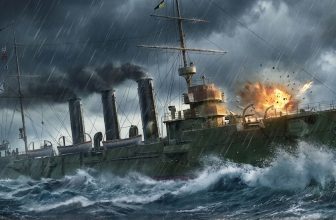
The August sun of 1904 beat down mercilessly, turning the surface of the sea into a molten mirror across which steel silhouettes glided. Heavy, gunpowder-laden smoke hung in the sky, and the roar of the guns mingled with the rumble of explosions, causing the deck planks to tremble. The *Novik* led the formation of cruisers from the Port Arthur Squadron, cutting through the waves with its sharp bow like a knife slicing through a cloth. The Japanese cruisers tried to concentrate their fire on it, firing salvo after salvo, but the Russian ship’s armor merely clanged as the shells ricocheted off it, sending shrapnel flying into the foamy wake. The water boiled around the ship’s side, and geyser-like columns rose dozens of meters high, but the hull remained intact. Only in a few places did the plating crack, and smoke seeped through a hole in the cruiser’s bow, which was immediately caulked and patched. The crew worked in unison, without panic, following the precise rhythm of the commands and the whistles of the boatswain’s pipes. When the *Tsarevich* began circling in a loop and the horizon turned black with the approaching Japanese squadron, Captain Schulz gave the order to withdraw. The appropriate signal flags were hoisted on the cruiser, and the *Novik* turned, picking up speed, and vanished into a veil of smoke, dragging the remaining cruisers behind her, leaving in her wake only billowing trails and the deafening silence of the enemy. That evening, the ship dropped anchor in the neutral waters off Qingdao, where urgent inspections were carried out under the cover of a German squadron. The damage proved to be minor, and the crew’s morale remained high. The next day, after leaving the wounded behind and taking on a supply of fresh water, the cruiser set out into the open ocean to take the long and dangerous route around the Japanese islands northward, toward its home shores.
As the ships approached Vladivostok, they were met by a cold fog and leaden ripples on the water. Just as the Novik could make out the outline of Cape Egersheld in the distance, the heavy silhouettes of Admiral Kamimura’s cruisers emerged from the fog. The Japanese squadron blocked their path, forming a battle line and opening concentrated fire. But the Russian armored cruiser did not swerve. Turning its side toward the enemy, it responded with powerful volleys from its main guns, whose shells tore through the water and the decks of the enemy ships with terrifying accuracy. Its high speed allowed the *Novik* to constantly vary its range and angle of approach, throwing off the Japanese gunners’ aim and forcing the Japanese ships to scatter their fire. The battle turned into a deadly whirlwind: smoke, flashes of gunfire, signal flags soaring into the sky, and the ceaseless clatter of machinery. The stokers shoveled coal into the furnace, the engineers monitored the steam pressure, and the gunners kept track of the number of rounds fired. When the distance closed to the limit, the cruiser made a sharp turn, using its speed and momentum to slip between the two Japanese armored cruisers, the *Tokiwa* and the *Iwate*, firing at them from point-blank range on both sides with its main 8-inch guns. The Japanese did not expect such audacity and failed to anticipate this maneuver. The heavy shells set them ablaze, and they were unable to adjust their fire on the Russian cruiser, which, having broken out of the ring of fire, raced toward the Golden Horn Bay, where coastal batteries and lifeboats were already waiting for it. The port welcomed the hero with the horns of steamships and the shouts of sailors who knew that this ship had restored their faith in the strength of the Russian fleet.
The Birth of the Steel Leviathan
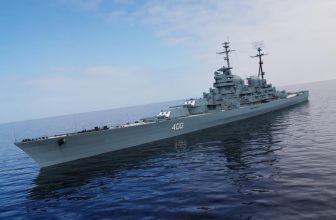
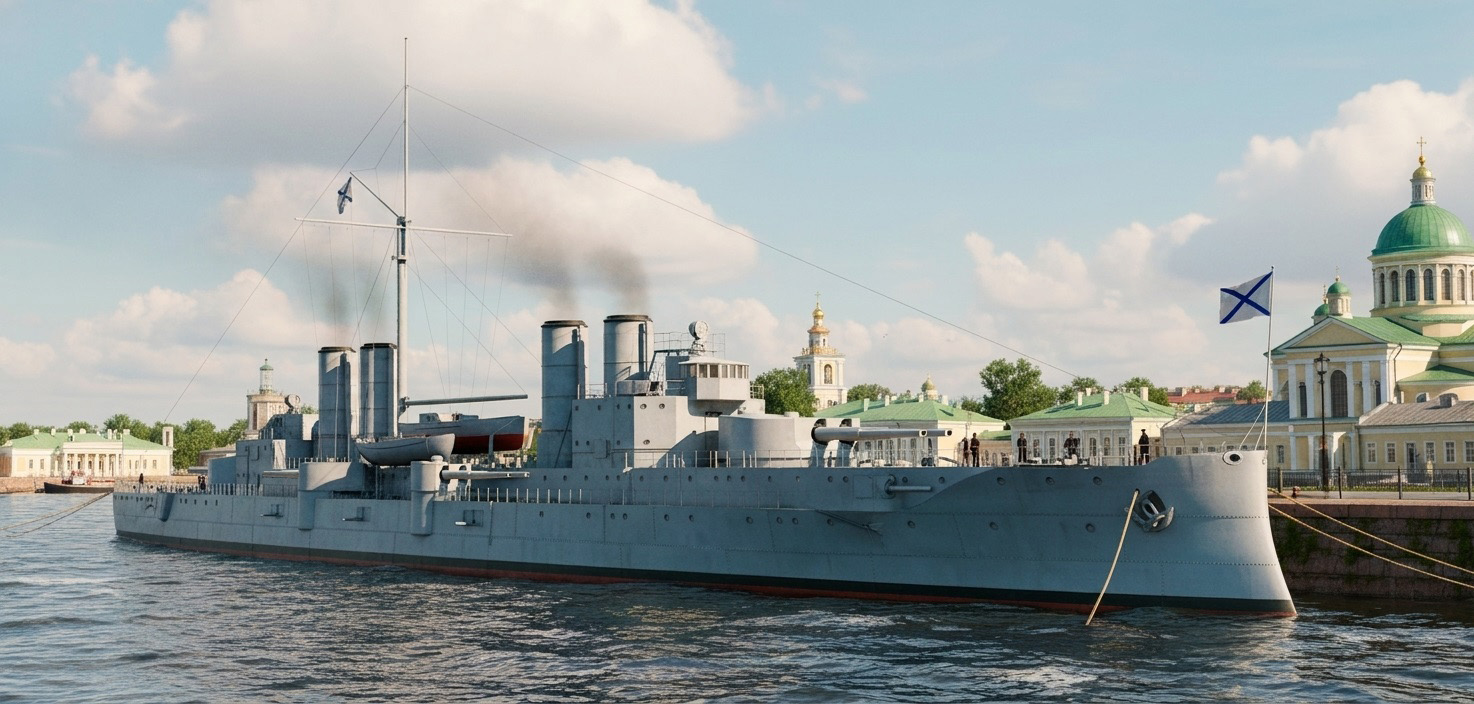
The ship’s design originated during a period of intense naval rivalry, when the Russian Imperial Navy was seeking an alternative to heavy, slow-moving squadron battleships. In 1897, the Naval Ministry commissioned the Shihau shipyard in Elbing, where German engineers were renowned for their ability to combine high speed with reliable protection. The chief designer of the German design bureau adapted the armored cruiser layout to meet Russian requirements, abandoning the traditional gun arrangement in favor of four main-caliber turret mounts. The hull was designed with an elongated bow for better wave-cutting, and the engine rooms were arranged in a staggered pattern to enhance survivability. Particular attention was paid to the drainage system and anti-torpedo protection, which was an innovative solution for ships of this displacement. The keel was laid in the spring of 1898, and the ship was launched in the presence of the Russian Naval Commission and representatives of Emperor Nicholas II. Completion took three years, during which boiler tests, artillery firing drills, and rudder calibration were conducted. In 1901, the ship joined the Baltic Fleet and was later transferred to the Pacific Ocean, where it was named “Novik” in honor of the legendary sail-and-screw corvette. Its German origins did not prevent it from becoming a symbol of the Russian naval school, and Schichau’s engineering solutions proved so successful that many of them were later adopted in domestic projects.
Tactical and Technical Specifications:
Years of construction: 1898–1901
Displacement — 12,000 metric tons
Dimensions:
- Length – 158 m
- Width – 20.9 m,
- Draft – 7.9 m,
Machines;
- Boilers – 28 Belville water-tube boilers
- The engines have a total power output of 16,000 l. s.
- Maximum speed: 21 knots
Weapons;
- GC – 4 × 203 mm/45
- SK – 4 × 2 × 120 mm/45,
- PMK – 16 × 76.5 mm/50,
- Assault guns – 2 × 63.5-mm/19,
Armor;
- Waterline beam – 152 mm,
- Deck – 63.5 mm,
- bow crossbeam – 152 mm,
- feed crossbar – 102 mm,
- casemates – 120 mm,
- combat compartment – 203 mm,
Crew: 930 people
The Battle Path After the Breakthrough
Upon arriving in Vladivostok, the cruiser became the flagship of the reorganized cruiser group operating against Japanese lines of communication. Its primary mission was to disrupt supplies to the Japanese army in Korea and along the Manchurian coast. The ship regularly went to sea, escorting transports and launching surprise attacks on convoys. Its powerful armament allowed it to successfully counter Japanese armored cruisers, while its speed ensured a swift retreat in the event of larger forces appearing. During the winter of 1905, the *Novik* participated in the defense of the Primorye coast, providing fire support for coastal fortifications and patrolling the straits. The crew conducted dozens of exercises in firing, maneuvering, and survival, honing their coordination with coastal artillery positions and destroyers. The ship became a sort of floating arsenal and training center, where specialists were trained to replenish the fleet. Despite the harsh conditions of winter storms and mechanical wear and tear, the cruiser maintained a high level of combat readiness, and its presence in the Golden Horn Bay deterred Japanese attempts to blockade the port. By the time the Treaty of Portsmouth was signed, the *Novik* remained one of the few large ships in the Russian fleet that had retained full combat capability and was ready to continue service in the Far East.
Heritage in Peacetime
After the end of the Russo-Japanese War, the cruiser underwent a major overhaul in the docks of Vladivostok, where its worn-out boilers were replaced, the shell-feeding system was modernized, and the anti-torpedo bulkhead was reinforced. In 1907, the ship was transferred to the Siberian Flotilla, where it performed patrol duties and participated in hydrographic expeditions. World War I found it in the Pacific Ocean, but after Germany was declared at war, the cruiser was sent to the Baltic Sea to reinforce anti-submarine defenses and escort convoys. It patrolled the Gulf of Finland, coordinated with British allies, and ensured the security of maritime supply routes. During the revolutionary years, the crew supported the new government; however, the poor condition of the ship’s machinery and a lack of spare parts led to its gradual withdrawal from active service. In 1922, the *Novik* was disarmed and transferred to the Artillery Training Unit, where it served as a floating base and training vessel for young sailors. It was finally decommissioned in 1928, when the hull was beyond repair. But the memory of the ship lives on in the archives of the Ministry of the Navy, in the memoirs of its commanders, and in the legends passed down from generation to generation. The history of the *Novik* as an armored cruiser remains a striking milestone in the alternative chronicle of Russian shipbuilding, serving as a reminder of how a bold engineering vision and the courage of the crew can turn even the impossible into reality.