A Cheap Long-Range Missile: Why the U.S. Is Developing the "Rusty Dagger" and Why Cost Matters More Than Firepower

In recent years, the military has increasingly faced a paradox: high-precision weapons perform exceptionally well, but are so expensive that it is difficult to deploy them on a large scale. The new American Rusty Dagger missile, developed as part of the ERAM program, was created precisely to address this problem.

Recent tests have shown that the missile not only exists “on paper,” but also successfully hits real targets. And that is a crucial point.
Tests in Florida: A Rocket That Actually Reaches Its Destination

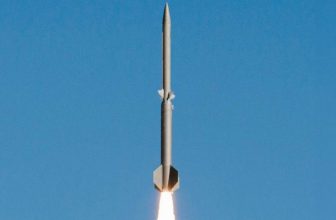
The Rusty Dagger underwent live-fire testing at a range in Florida, where it was captured on video as it struck its target. This is not a computer simulation or a demonstration model—the missile was launched from an aircraft, followed its calculated trajectory, and struck a ground target.
For the military, such tests are more important than any press releases:
- the actual range is confirmed;
- navigation stability is being tested;
- Accuracy is evaluated under combat flight conditions;
- It demonstrates readiness for mass production.
The fact that the tests were successful means that the Rusty Dagger has already moved from the category of “promising development” to that of a weapon that is practically ready for use.
How much does Rusty Dagger cost, and why is that unusual?

According to publicly available estimates, the cost of a single missile is about 200,000–300,000 dollars. In the context of global military budgets, this is an extremely low price for a long-range, high-precision munition.
For comparison:
- JASSM cruise missile — more than $1 million;
- Tomahawk — about $2 million per launch;
- Even “simplified” versions of guided munitions are rapidly approaching half a million as their range increases.
Against this backdrop, the Rusty Dagger stands out as a rare exception: a full-fledged missile, yet priced close to that of a large-caliber aerial bomb equipped with a guidance system.
Why is she so cheap?

Low cost is a deliberate engineering and strategic choice.
Use of Off-the-Shelf Solutions
The rocket relies as much as possible on existing components: engines, navigation systems, and control systems. This significantly reduces both the cost and the production time.
A departure from “elite
” designs: The Rusty Dagger is not designed to penetrate the densest air defense systems. It lacks complex, stealthy shapes and expensive materials. It is intended for missions where the volume and frequency of strikes are more important.
Simple and Scalable Design
: The simpler the product, the easier it is to manufacture it in the thousands. The ERAM program was originally designed with mass production in mind, rather than small batches.
What does she offer for that price?

Despite its simple design, the Rusty Dagger remains a formidable weapon:
- The range is estimated at 300–400 km;
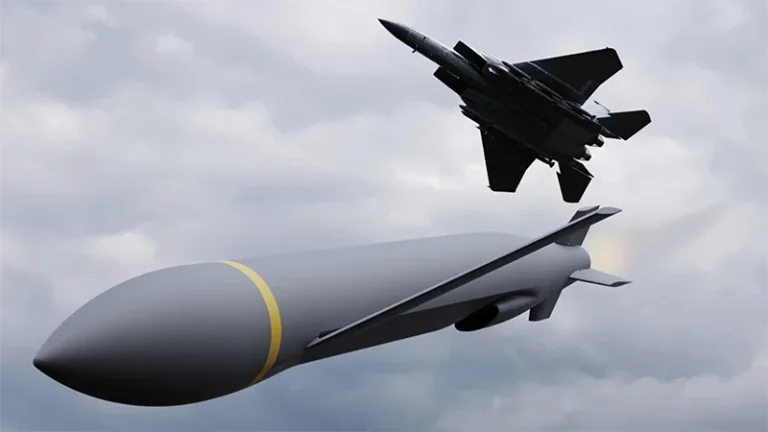
- An air launch allows the aircraft to avoid entering the air defense engagement zone;
- the accuracy is sufficient to engage stationary targets;
- The combat unit has sufficient firepower to destroy or disable infrastructure facilities.
This is not a “miracle weapon,” but a practical tool designed for systematic use.
Why Cheap Missiles Are Changing the Logic of War
Expensive rockets force you to make every launch count. Cheap ones let you think differently.
When the cost per impression decreases:
- it becomes possible to deliver a series of strikes rather than single strikes;
- The enemy’s air defense is overwhelmed by sheer numbers;
- Aviation is used more flexibly, without the constant risk of “wasting too expensive weapons.”
In this sense, the Rusty Dagger is not an alternative to elite cruise missiles, but rather the cornerstone of the future arsenal, upon which the bulk of the missions will fall.
Conclusion
The Rusty Dagger is an example of how the philosophy of weaponry is changing: from high-tech, one-off luxuries to mass-produced, proven, and cost-effective solutions. Successful tests in Florida have shown that this concept is already working in practice.
Based on https://www.twz.com/air/watch-rusty-dagger-standoff-missile-now-headed-to-ukraine-hit-its-target