Hiding Radars and Keeping Supplies Moving: Why the U.S. Army Is Changing How It Prepares for War in the Pacific

A missile launcher can be deployed to an island, camouflaged, and connected to a wider command network. Keeping it operational over time is considerably harder: ammunition, fuel, spare parts, and personnel must arrive while an adversary watches ports and shipping routes. On a map, separate positions form an elegant network. In reality, an ocean lies between them.
This problem is increasingly shaping U.S. Army preparations in the Pacific. At AUSA 2026, commanders told The War Zone what they were learning from conflicts in Ukraine and the Middle East. Among their main concerns were mobility, camouflage, and the ability to keep operating under persistent surveillance.
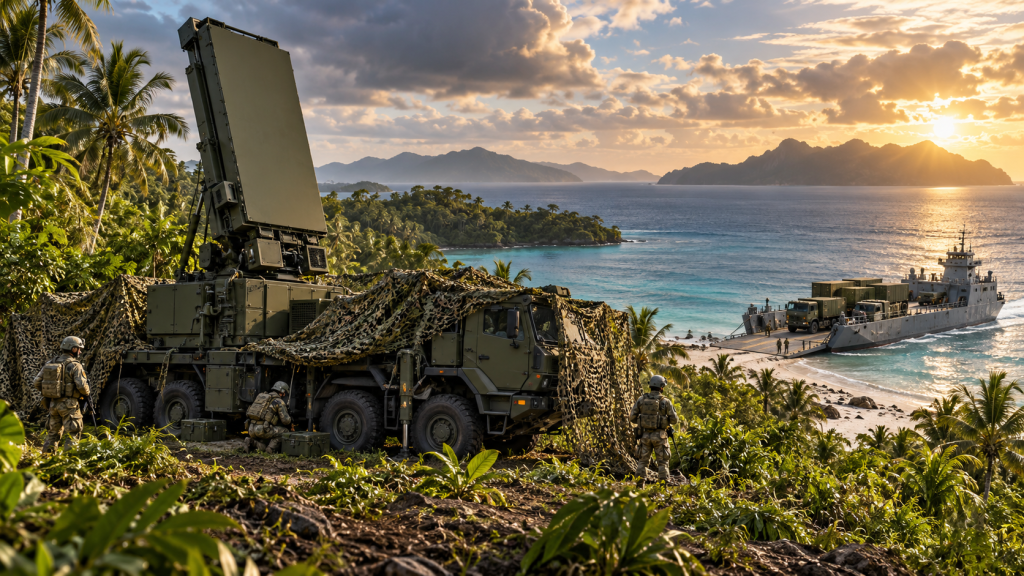
A Large Base Becomes a Large Target
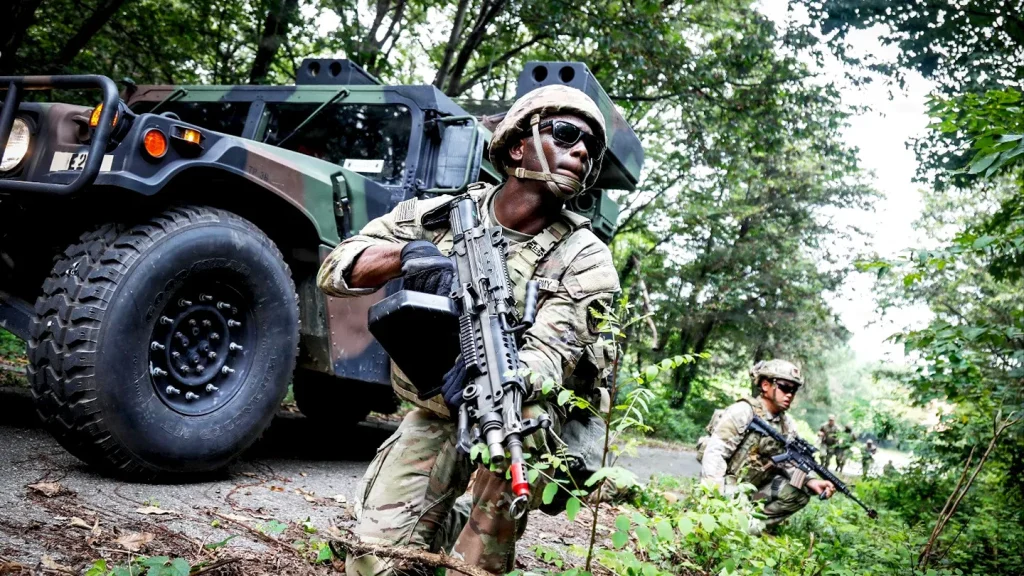
A major military base is convenient for everyday operations. Warehouses, maintenance facilities, communications, and headquarters share one location. Supplies can arrive on familiar schedules, while equipment remains on prepared sites for years.
That arrangement has a downside: an adversary can more easily identify valuable assets and understand how they connect. Long-range weapons make this predictability particularly dangerous.
The professional journal Army Sustainment has already explored moving from large, stationary logistics hubs toward smaller, mobile elements. Its authors argue that the visibility of storage sites, vehicles, and communications equipment deserves attention alongside their capacity. Even rear-area units are being urged to prepare for persistent surveillance and attack. This remains a direction of professional debate, rather than evidence that the entire Army has already adopted a new structure.
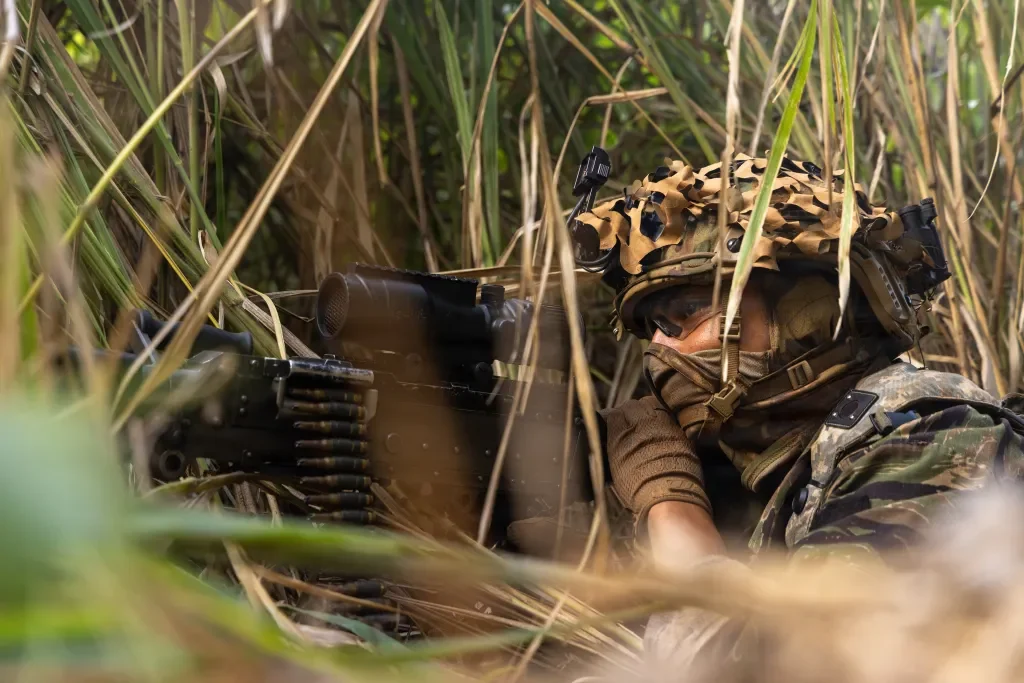
Hence the renewed interest in things that rarely feature prominently in presentations about future warfare: shelters, camouflage, decoys, and the ability to relocate quickly. They affect whether expensive equipment survives long enough to do its job.
Missile Defenses Must Move Too
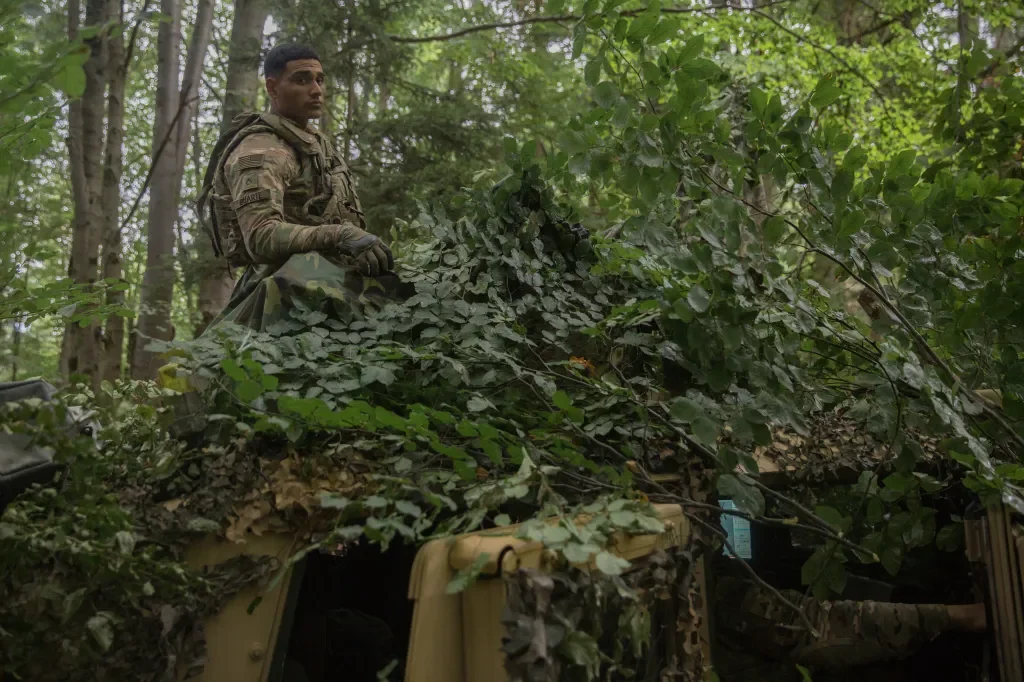
The issue is especially pressing for air defense units. Their equipment protects other assets while also being a high-value target itself.
Colonel Rosanna Clemente, commander of the 35th Air Defense Artillery Brigade, told TWZ that U.S. crews in South Korea practice moving their systems between alternative positions. The aim is to maintain defensive coverage while making those systems harder for an adversary to locate. Training also includes passive protection, including deception.
This creates an organizational puzzle: individual elements must move while the overall system continues to function. Dispersion places greater demands on communications and coordination. During Freedom Shield 2026, American and South Korean units practiced integrating intelligence, fires, space, and cyber capabilities, as well as strengthening network resilience.
The equipment becomes more mobile, but coordinating it becomes more complicated.
Mobility Comes at a Price on Islands
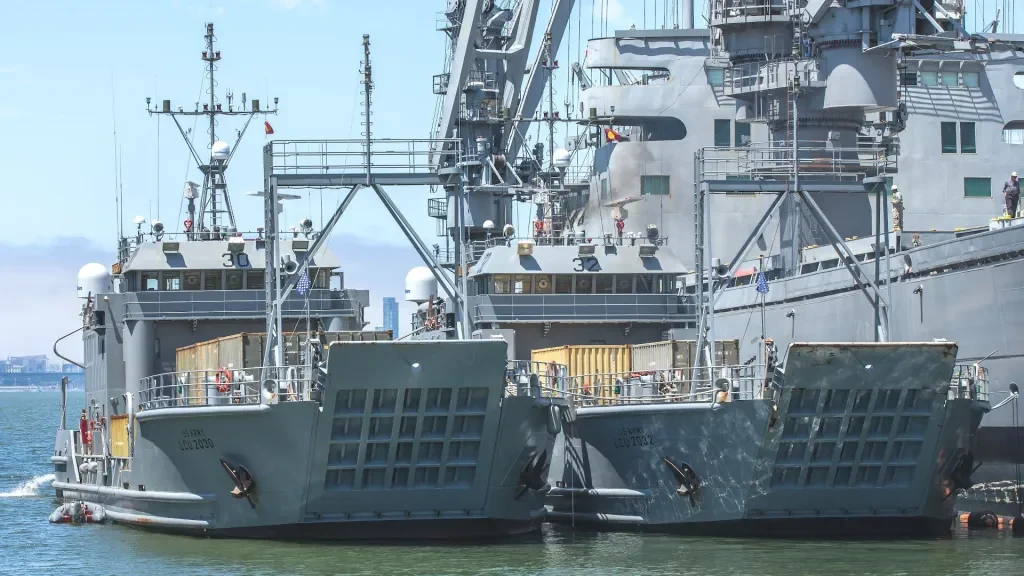
U.S. Army Pacific leadership considers movement between islands an essential part of potential operations. That requires the service’s own transport vessels, landing craft, and supporting units.
Here, geography quickly tempers ambitious plans. On a continent, several dispersed positions may still share a road network. Across an archipelago, each additional location may require a separate sea movement, unloading arrangements, and stocks of essential supplies.
An Army publication on Pacific sustainment describes this problem as the “tyranny of distance.” Its proposed response is a network of distribution points using allied infrastructure, temporary facilities, and sea-based platforms. Such a network also depends on diplomacy: agreements are needed for access, basing, and the use of transport infrastructure.
Dispersing units on a map takes minutes. Creating the conditions to keep every one of them supplied takes years.
The Army Has a Fleet—and Auditors Found Problems With It
U.S. Army vessels rarely headline dramatic military coverage. Yet they carry personnel, equipment, and supplies where ports have limited capacity or suitable infrastructure is missing altogether.
In October 2024, the U.S. Government Accountability Office published troubling findings. The Army fleet it examined comprised 70 watercraft, while the average fully mission-capable rate had fallen from 75 percent in 2020 to less than 40 percent during the portion of 2024 covered by the review. Auditors identified lengthy repairs, maintenance problems, and management shortcomings. Those figures describe conditions during the review, rather than the fleet’s current readiness in the autumn of 2026.
For an island theater, this is a serious constraint. Transport shortages hinder both movements and crew training even before an adversary enters the picture. According to the same report, one vessel had been out of service for more than five years as of May 2024.
Against this backdrop, discussions of distributed operations acquire a distinctly practical meaning: working engines, available maintenance facilities, and vessels that can sail on time.
Logistics Needs Uncrewed Systems Too
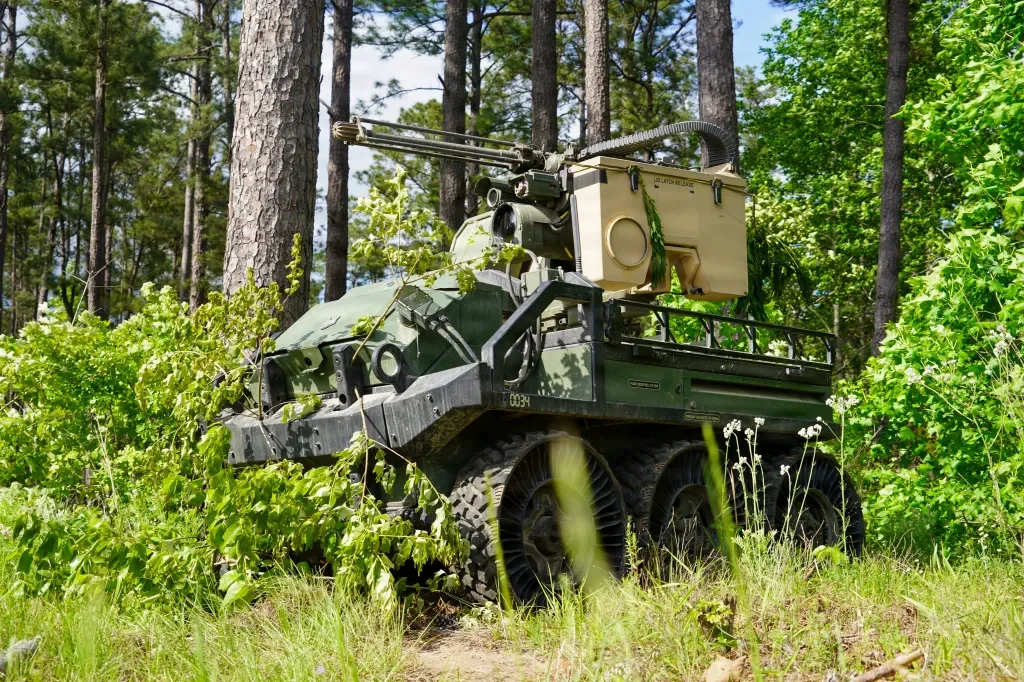
One way to ease the supply burden is to assign some deliveries to autonomous machines. An aircraft, ground vehicle, or uncrewed vessel can transport cargo without a crew aboard. Each system must still demonstrate that it can contribute to a real supply chain.
In August 2026, the U.S. Army announced a competition for autonomous sustainment systems supporting distributed forces in the Pacific. It covers three areas: aerial delivery, ground transport, and surface vessels capable of carrying one to four standard twenty-foot shipping containers.
The shipping container is a revealing detail. The military needs machines that fit into the routine movement of cargo from a warehouse to a unit. Autonomy is useful when it helps deliver essential supplies reliably and reduces the burden on personnel.
Demonstrations of selected systems are scheduled for November 2026 in Hawaii. There, the elegant diagrams of a distributed Army will meet a simple question: can the next shipment reach the people waiting for it?