Without a Constant Satellite Link: Why Starlink Problems Have Fuelled Interest in Germany’s HX-2

A strike drone can have sufficient range, a functioning propulsion system, and a suitable warhead — yet still become ineffective because its communications link is unavailable. For an aircraft controlled through a live video feed, losing that connection is a major limitation. Difficulties with Starlink have therefore drawn additional attention to Germany’s HX-2: its developer says the drone can continue its mission without a continuous connection to the operator.
According to Defense Express, citing a Janes report published on 16 October, interest in the HX-2 has increased among Ukrainian units operating in areas where Starlink is unavailable. Janes attributes the information to a defence-industry source; the scale of the reported increase in demand has not been independently verified. The story nevertheless raises a technical question: what makes the HX-2 less dependent on communications?

Satellite Communications and Satellite Navigation Are Different Things
Discussions of autonomous drones can easily conflate two problems. The first is transmitting commands and imagery between the aircraft and its operator. The second is determining position using satellite navigation systems such as GPS.
Starlink addresses the first task: it provides a communications link. Satellite navigation alone cannot transmit video to an operator, while a functioning control link does not guarantee accurate positioning.
Helsing says the HX-2 can operate without a GNSS signal and without a continuous data connection. These are separate capabilities that, together, are intended to reduce the aircraft’s dependence on external systems. The company attributes them to onboard computing and artificial intelligence.
The HX-2 should therefore be understood as a different approach to flight and mission control, rather than a direct replacement for a Starlink terminal. Some tasks normally performed by a person through a communications link are transferred onboard.
A Compact Aircraft with Electric Propulsion
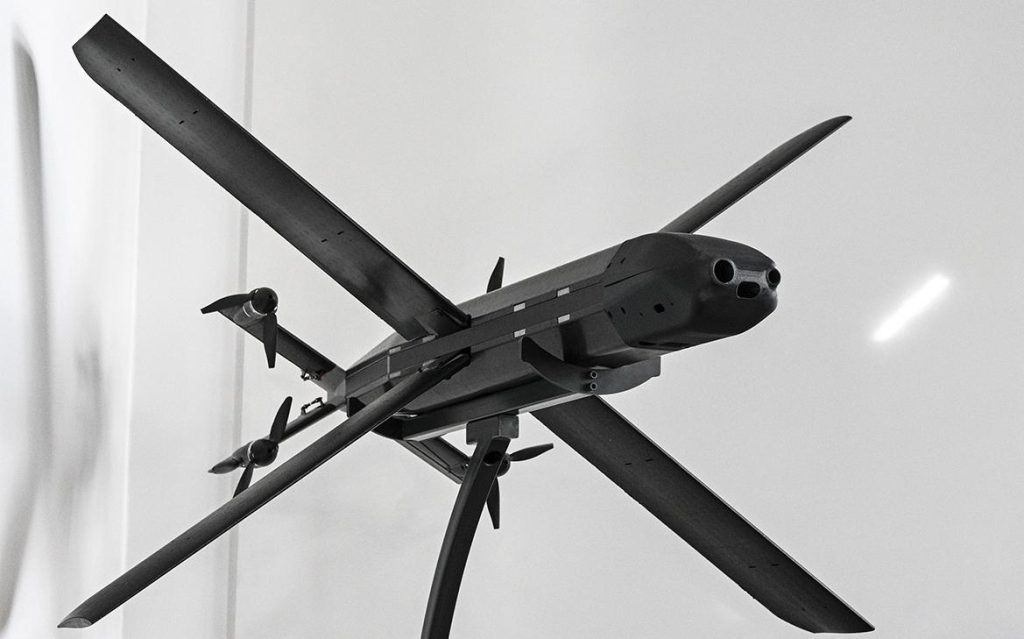
The HX-2 is a strike drone with a cruciform wing arrangement and electric propulsion. Helsing unveiled it in December 2024 as an aircraft designed for mass production and operation within a wider reconnaissance-strike system.
A fixed-wing layout uses aerodynamic lift, allowing energy to be spent primarily on forward flight. For a small electric aircraft, this is one way to achieve substantial range despite limited battery mass.
Range, maximum speed, and time over an operating area should not, however, be treated as simultaneously available figures. High-speed flight requires more power, while the available energy must be divided between transit, searching, and the terminal phase.
Manufacturer-stated HX-2 specifications:
| Type | One-way strike drone |
| Propulsion | Electric |
| Aerodynamic layout | Cruciform wing arrangement |
| Weight | 12 kg |
| Range | Up to 100 km |
| Maximum speed | Up to 220 km/h |
| Payload options | Anti-tank, multipurpose, and anti-structure |
| Software platform | Altra |
The brief specifications do not disclose the precise conditions under which the maximum figures are achieved.
What the Aircraft Is Supposed to Do Independently
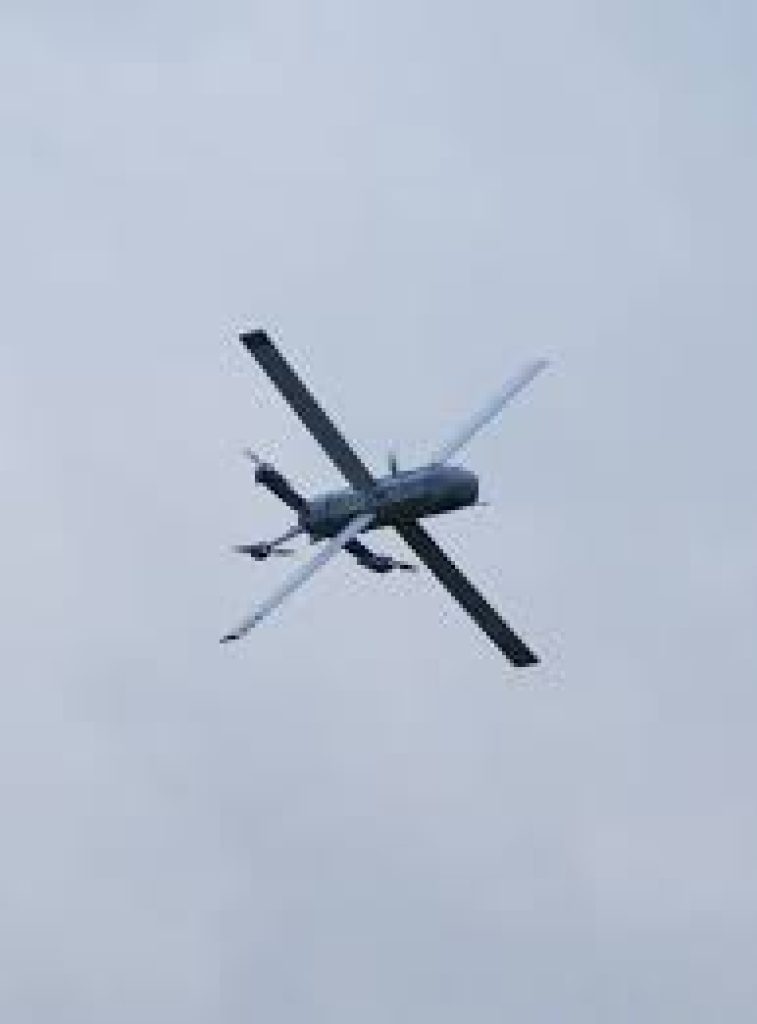
Helsing’s central claim concerns target engagement. According to the company, the HX-2 can search for, re-identify, and engage targets without a continuous connection. A human remains involved in, or supervises, all critical decisions.
The technical purpose of onboard processing is to reduce the need to transmit imagery continuously to a person and wait for a command in return. Once the system has received the necessary information, it can perform some subsequent tasks using its own equipment.
Autonomy does not eliminate the need for reliable initial information, however. The aircraft must interpret the situation correctly and distinguish the intended object from similar ones. Obscured imagery, camouflage, and changes in a target’s appearance test the algorithms as well as the communications system.
Electronic-warfare resistance does not mean invulnerability, either. Reduced dependence on GNSS and continuous communications addresses some vulnerabilities, but does not establish equal reliability under every operating condition. Helsing’s description of “immunity” to electronic warfare should be read as a manufacturer’s claim.
Why Altra Matters
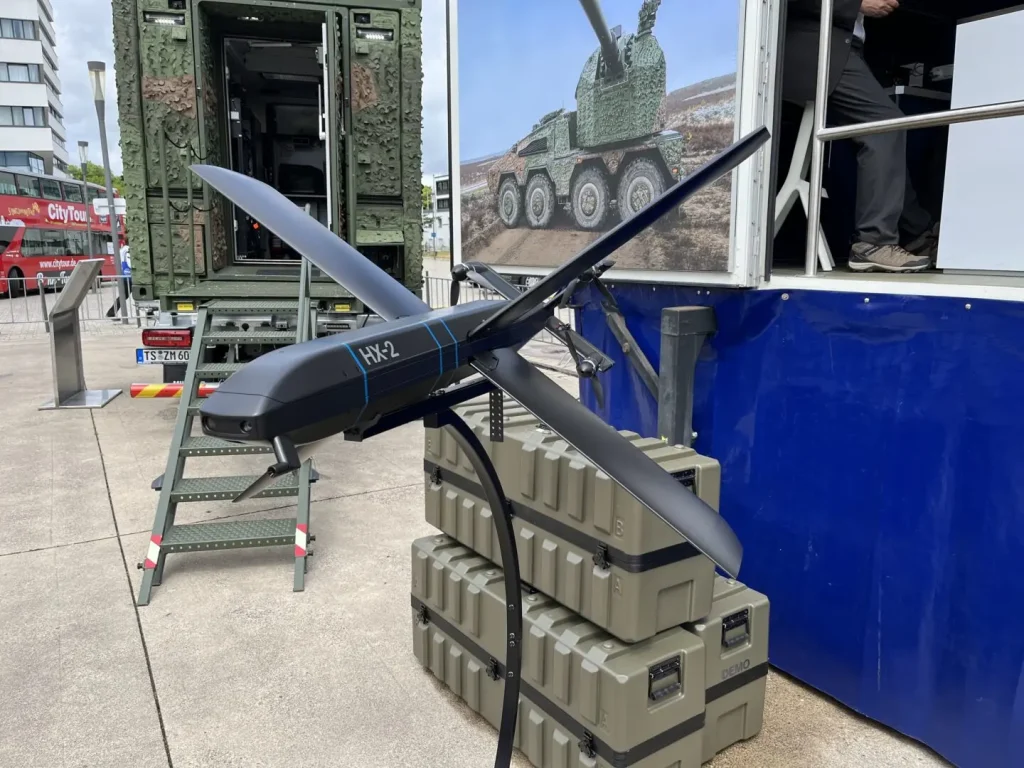
The HX-2 was developed alongside the Altra software platform. Helsing describes Altra as a means of connecting strike drones, reconnaissance assets, artillery, and battle-management systems. It is intended to coordinate multiple drones under a single operator.
The practical objective is to shorten the process between detecting an object and assigning a suitable weapon. Reducing the manual transfer of information between separate systems can lower the risk of delays or errors.
The stated ability to operate as a group does not reveal every detail of that capability, however. A meaningful assessment requires knowing how complex a mission the aircraft can perform simultaneously, how much operator intervention is needed, and what happens when individual participants lose communications. Public descriptions of these operating modes remain insufficient for definitive conclusions.
What the Trials Demonstrated
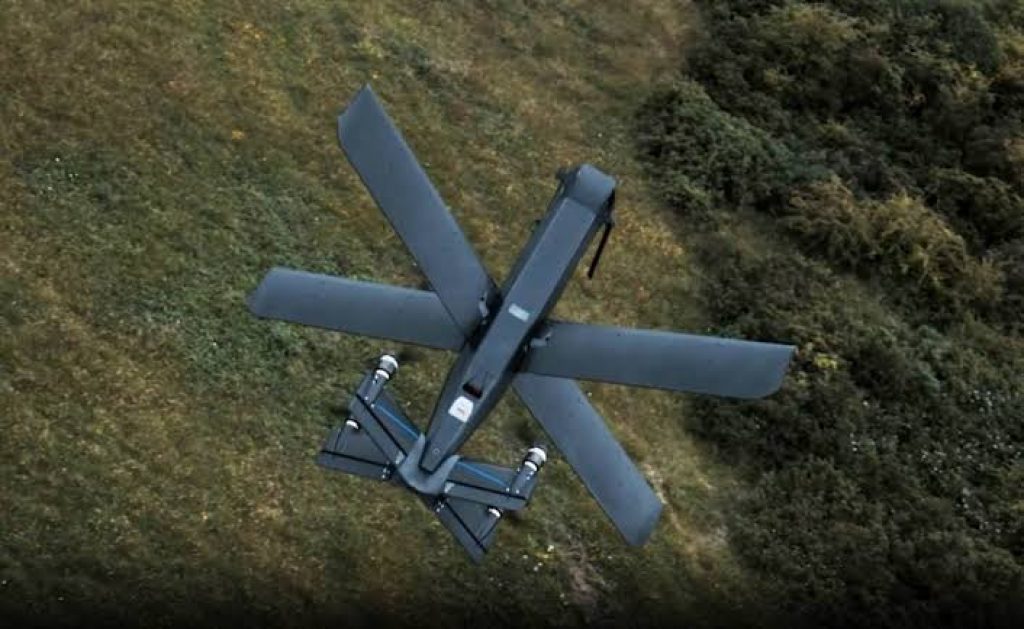
Defense Express reports that the HX-2 underwent trials in Portugal from 21 September to 14 October 2026 under the European EU OPEX programme. According to the publication’s account, Helsing claimed a 100 percent target-hit rate, including tests without GNSS and engagements against moving targets.
That figure cannot automatically be treated as the probability of success on any mission. Without the number of launches, test conditions, and assessment criteria, the percentage describes a particular demonstration much better than routine operational performance.
For the Starlink story, the relevant point is that the developer is attempting to demonstrate operation when external signals are restricted. Further testing and operational experience must establish how consistently those results can be reproduced.
Interest Still Has to Become Deliveries

There is an industrial dimension to the HX-2, too. In February 2025, Helsing announced production of 6,000 aircraft for Ukraine and the opening of its first Resilience Factory in southern Germany. The company put its initial capacity at more than 1,000 HX-2s a month. That was a stated production capability at the time, rather than confirmation of the current delivery rate.
Output must increase across the complete system: aircraft, warheads, control equipment, and support packages. Operators also need training, while software requires updates.
Starlink problems have highlighted the advantage Helsing placed at the centre of the HX-2 concept: operating without a continuous external link. The company must now demonstrate that advantage through consistent performance from production aircraft. That is where autonomy proves its value — when communications disappear and the aircraft must continue its mission within the instructions authorised by a human.